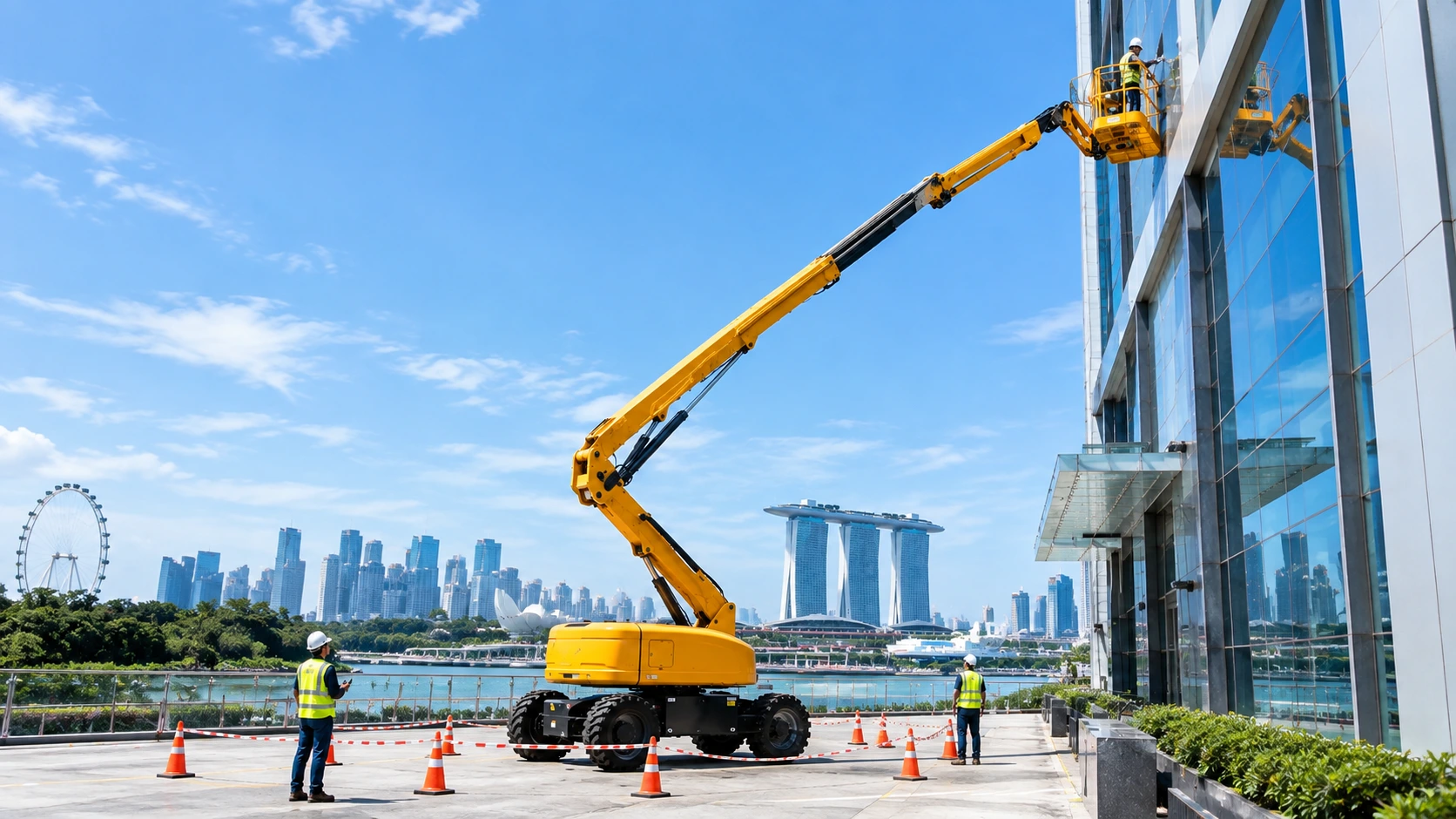
A boom lift is one of the most useful pieces of equipment for reaching elevated work areas safely, whether that means painting a building facade, installing signage, or carrying out maintenance on structures a ladder or scaffold simply cannot access efficiently. For construction, facility management, and event businesses across Singapore, understanding how boom lifts work, which type suits a specific job, and what actually affects rental cost makes the difference between a smooth project and an expensive mismatch.
This guide brings together the essentials, how boom lifts work, the main types available, sizing and capacity, rental considerations, and how to choose the right one, with links to more detailed guides on each topic for anyone who wants to go deeper into a specific area. Whether this is your first time specifying a boom lift or you are refining an existing equipment strategy, the sections below are organised to be read individually or in sequence.
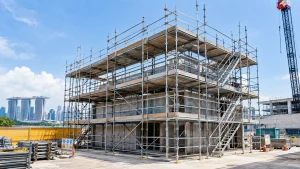
What Is a Boom Lift and How Does It Work? A boom lift is an aerial work platform mounted on a hydraulic arm, or boom, that raises a platform to allow workers to access elevated areas safely. Unlike scaffolding, which is built and dismantled in place, a boom lift can be driven into position and repositioned repeatedly across a site, making it considerably faster to deploy for tasks spread across multiple locations. This mobility, combined with the ability to reach heights and angles scaffolding often cannot, is what has made boom lifts standard equipment across construction, facility maintenance, and events work.
Boom lifts are powered by diesel engines for outdoor and rough terrain work, or electric motors for quieter, zero-emission indoor use. A detailed breakdown of the hydraulic system, boom mechanism, and stability principles behind how a boom lift actually lifts and positions its platform is covered in our guide below, useful background before deciding which type and size best suits a specific task.
Also read : How Does a Boom Lift Work? Mechanics & Components Explained
Types of Boom Lifts
Boom lifts are built in two main configurations, each solving a different access problem, along with a trailer-mounted variant that prioritises portability over raw capacity.
Articulating Boom Lifts Articulating boom lifts, sometimes called knuckle lifts, have a jointed arm that bends at multiple points, allowing the platform to reach up and over obstacles rather than only extending in a straight line. This makes them well suited to tasks where structures, equipment, or landscaping sit between the machine and the actual work area. A full breakdown of this configuration, including typical working height, outreach, and capacity figures, is available in Articulating Boom Lift: How It Works, Uses, and When to Choose One .
Telescopic Boom Lifts Telescopic boom lifts extend in a straight line, similar to how a car aerial extends, giving them greater maximum reach and outreach than an equivalent articulating model for tasks where a direct, unobstructed path to the work area is available. These are generally the preferred choice for construction tasks needing maximum height rather than manoeuvrability around obstacles.
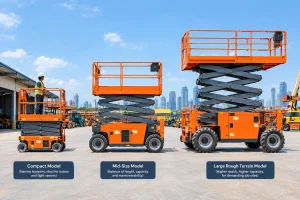
Boom lifts are sometimes confused with scissor lifts, which raise a platform vertically using a crossed-arm mechanism rather than a boom, and are better suited to smaller indoor tasks needing straight-up access rather than reach over obstacles. A direct comparison between the two is covered in Boom Lift vs Scissor Lift: Which One Should You Use? , useful for confirming which category actually fits a specific task before comparing individual boom lift types. A broader comparison across every configuration, including trailer-mounted units, is available below.
Also read : Types of Boom Lifts: Which One Does Your Job Need?
Boom Lift Sizes and Capacity Boom lifts range from compact machines suited to indoor maintenance through to large units capable of reaching well over 40 metres for major industrial and high-rise projects. Working height, outreach, and platform capacity all need to be checked together rather than height alone, since a machine’s rated capacity typically decreases as the boom extends to its maximum reach. A complete breakdown of size classes and typical specifications is available in Boom Lift Sizes: A Complete Classification Guide , while the specific relationship between reach and rated capacity is explained in Boom Lift Weight Limit: Capacity Explained .
Renting a Boom Lift in Singapore
For most construction, maintenance, and event applications, renting a boom lift is the more practical choice compared to outright purchase, particularly for short-term or one-off projects.
Why Rent Instead of Buy Renting avoids the capital outlay of ownership and shifts maintenance, servicing, and storage responsibility to the rental provider, letting a business focus on the project rather than equipment upkeep. This flexibility also allows a business to select the specific type and size best suited to each project rather than being limited to whatever a single owned machine can do.
Ownership makes more sense for businesses with consistent, high-utilisation demand for the same equipment configuration across many projects, where the capital cost is spread over years of regular use. For most contractors and facility managers, however, project needs vary too much in height, reach, and duration for a single owned machine to remain the right fit across every job, making rental the more practical default.
What Affects Rental Cost Rental pricing depends on several factors working together: the type and size of boom lift required, rental duration, and any additional delivery, operator, or maintenance services included. Longer rental periods typically reduce the effective daily rate, while larger machines with greater height and capacity generally command higher pricing than compact models.
Because pricing varies by machine type, project duration, and site requirements, the most reliable way to budget for a rental is to request a quote specific to the project rather than relying on a general estimate. Reach out to our team for an accurate, no-obligation quote tailored to your specific boom lift needs.
How to Choose the Right Boom Lift for Your Project Choosing the right boom lift comes down to a handful of practical questions about the task itself:
Height requirement: confirm the actual working height needed, including any margin for the platform floor sitting below the maximum reach point, rather than estimating based on the structure’s visible height alone.Work area and obstacles: tight spaces or obstacles favour an articulating boom lift, while open, unobstructed access favours a telescopic model capable of greater straight-line reach.Load capacity: confirm the combined weight of workers, tools, and materials against the machine’s rated capacity at the required outreach, not just its maximum rating, since capacity typically decreases as the boom extends further out.Indoor vs outdoor use: electric models suit indoor work due to zero emissions and quiet operation, while diesel models are generally better suited to outdoor and rough terrain conditions where runtime and traction matter more than noise.Site access and ground conditions: confirm the machine can physically reach the work area and that the ground can bear its weight, particularly for larger models with a greater footprint and overall mass.
Boom Lift Safety Considerations Boom lifts involve genuine fall, tip-over, and overhead hazard risks, making consistent pre-use inspection and safe operating practice essential regardless of how routine a task feels. A structured, repeatable checklist covering pre-operation inspection, site conditions, PPE, and shutdown is available below. Singapore’s Ministry of Manpower also publishes detailed Workplace Safety and Health guidance covering training and operating standards that apply to aerial work platforms on construction sites.
Also read : Boom Lift Safety Checklist: Essential Pre-Use Steps
Why Choose RR Machinery for Your Boom Lift Needs RR Machinery Pte Ltd supports Singapore’s construction, maintenance, and events sectors with a wide range of well-maintained boom lifts, from compact electric models to large diesel units suited to major projects. Our team provides expert advice on matching the right type, size, and configuration to your specific task, backed by reliable delivery and full servicing support throughout the rental period.
Every machine in our fleet is inspected and maintained on a structured schedule before delivery, reducing the risk of downtime or safety issues partway through a rental period. Flexible rental durations, from single-day hire through to extended multi-week projects, allow the rental arrangement to match a project’s actual timeline rather than forcing a fixed commitment regardless of how long the equipment is genuinely needed.
Get the Right Boom Lift for Your Project Choosing the right boom lift comes down to understanding how it works, matching type and size to the task, and planning rental logistics around your project timeline. Getting each of these decisions right from the outset avoids the cost of an oversized or mismatched machine and the safety risk of one that cannot genuinely complete the task at hand. Browse our complete boom lift range or contact our team today for expert advice and a personalised quote for your project.