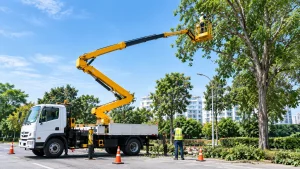
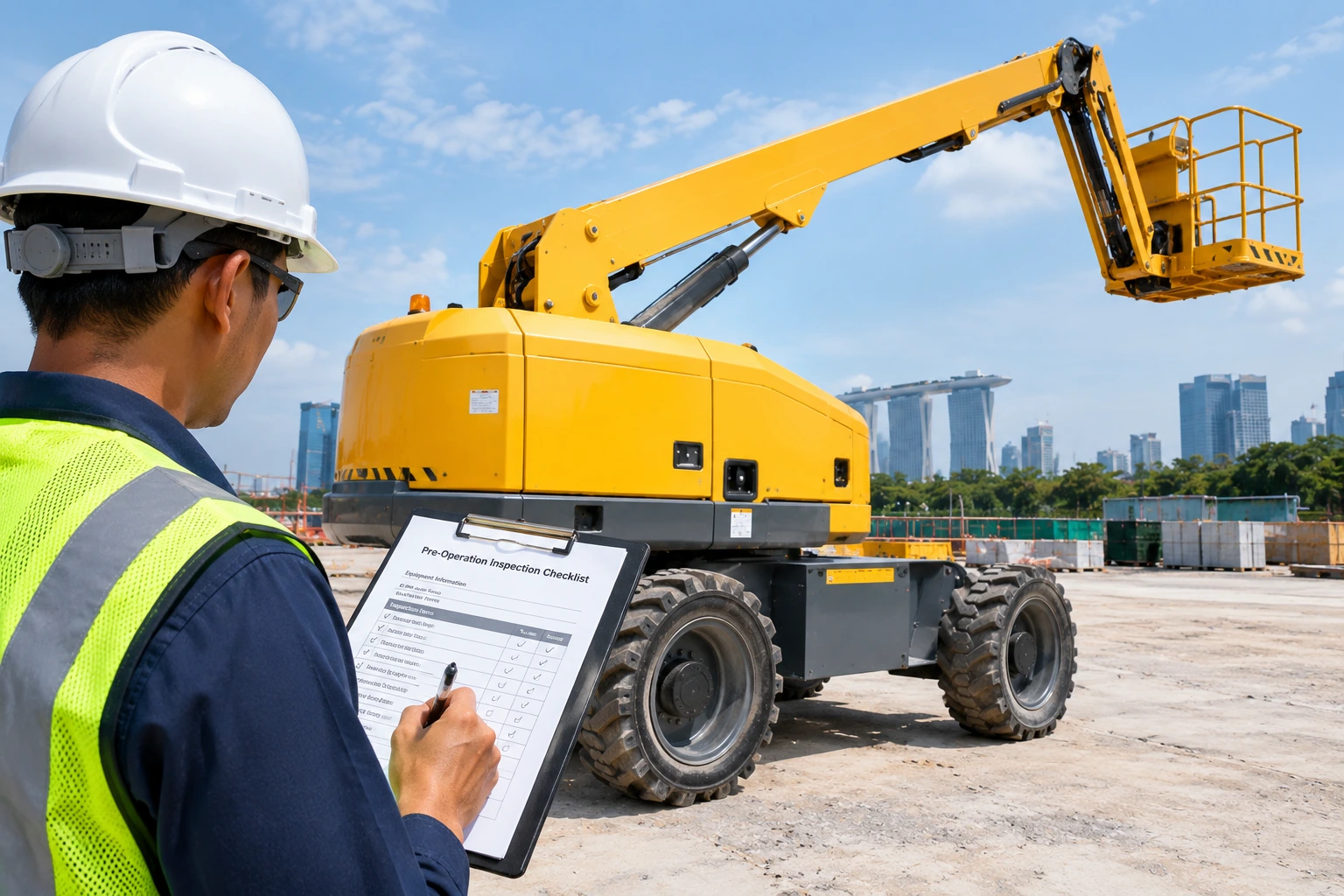
A boom lift is only as safe as the checks completed before it is raised, and skipping even a single item on a pre-use inspection is one of the most common, entirely avoidable ways a routine task turns into a serious incident. This checklist brings together every verification step that should happen before, during, and after boom lift operation, organised so nothing gets missed regardless of how familiar the task feels.
Many of the incidents investigated after the fact trace back to a check that was skipped specifically because the crew felt confident the machine was fine, having used it without issue the day before or the week before. A checklist exists precisely to remove that judgement call from the equation, replacing an assumption with a verified confirmation every single time the machine is used.
This checklist complements, rather than replaces, understanding the full operating procedure explained in detail below, which covers the reasoning behind each control and movement. This guide focuses specifically on what to verify at each stage, a practical reference to run through before, during, and after every job.
Also read: How to Operate a Boom Lift: A Step-by-Step Safety Guide
Why a Checklist Matters Every Time
Treating a pre-use inspection as optional on days when a task feels routine or time is short is one of the most common ways a developing fault goes unnoticed until it causes a real problem during actual operation. A boom lift’s hydraulic, structural, and control systems can develop issues gradually, and a consistent checklist is what catches these issues while they are still minor rather than after they have escalated into a genuine hazard.
Running through the same checklist every time, rather than only when a machine looks obviously worn or unfamiliar, is what actually makes this practice effective across an entire operation rather than just on the days someone remembers to be thorough. This consistency matters most precisely when it feels least necessary, a machine used successfully the previous day carries no guarantee that a hydraulic seal, a structural weld, or a control system has not begun to develop a fault since the last inspection.
Pre-Operation Inspection Checklist
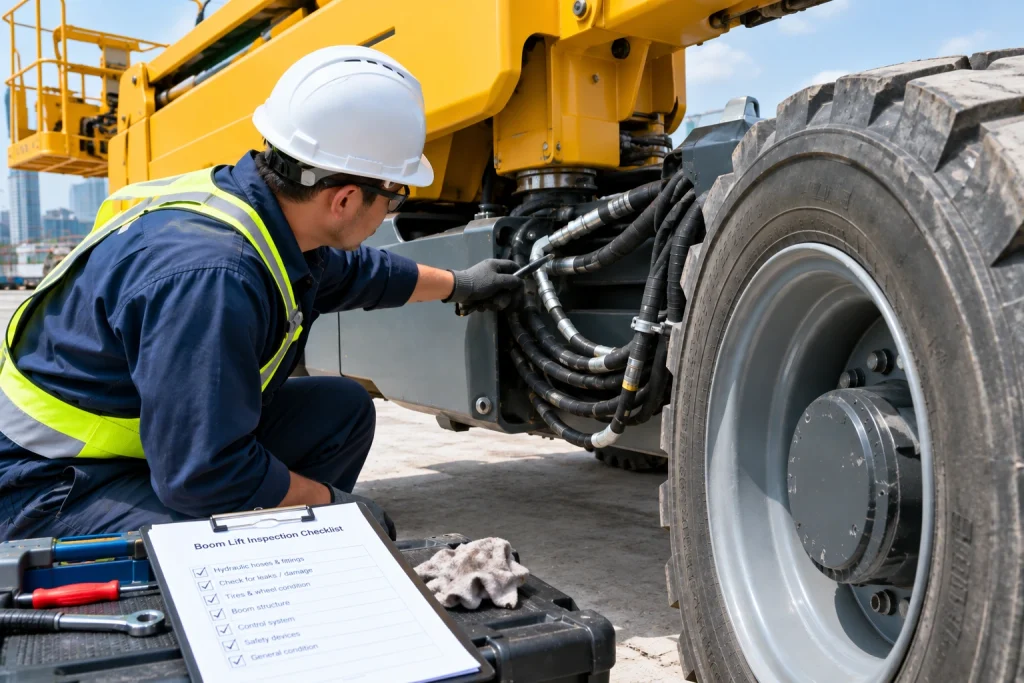
Before the engine starts and before anyone enters the platform, a structured walk-around inspection catches the majority of issues that would otherwise cause a problem partway through a task.
Structural and Mechanical Checks
- Inspect tyres or tracks for damage, wear, or incorrect pressure
- Check hydraulic hoses, cylinders, and fittings for visible leaks or damage
- Inspect the boom structure for cracks, dents, or visible deformation
- Confirm the platform, guardrails, and access gate are secure and undamaged
- Check the fall protection anchor point in the platform for damage or wear
- Verify engine fluid levels, including oil, coolant, and fuel
Safety Systems and Controls Checks
- Test all ground-level and platform controls at idle before raising anyone into the platform
- Confirm the emergency lowering system functions correctly
- Check that the load sensing and tilt alarm systems activate as expected
- Verify horn, warning lights, and any alarm systems are functioning
- Confirm the operator’s manual and capacity chart are present and legible in the machine
A closer look at the mechanical systems behind these checks, including the hydraulic lift system and stability sensors, explains why each check on this list actually matters rather than being an arbitrary requirement.
Site and Ground Condition Checklist
Before positioning the machine, confirming the site itself is suitable for safe operation is just as important as confirming the machine’s own condition:
- Check the ground is firm, level, and rated to support the machine’s weight, including outrigger loads where applicable
- Identify overhead hazards, including power lines, structures, and tree branches, before raising the boom
- Confirm current wind speed is within the manufacturer’s rated limit for the specific machine
- Check for underground hazards, including voids, drains, or unstable fill, particularly on recently disturbed ground
- Establish an exclusion zone around the machine’s working area to keep pedestrians and other equipment clear
Load and Capacity Checklist
Confirming the platform’s load stays within rated capacity at the required reach is essential every time, not only for unusually heavy or awkward tasks:
- Confirm the combined weight of the operator, tools, and materials against the rated platform capacity
- Check the capacity chart for the specific boom angle and extension the task requires, since capacity decreases as reach increases
- Secure all tools and materials in the platform to prevent them shifting or falling during movement
Understanding exactly how a boom lift’s rated capacity changes with reach, and why it is not a single fixed number, is explained in detail below, useful reading before any task involving an extended reach or unusually heavy load.
Also read: Boom Lift Weight Limit: How Load Capacity Actually Works
Personal Protective Equipment Checklist

Every operator and any additional personnel in the platform should confirm the following before work begins:
- Full-body harness fitted correctly and connected to the designated anchor point in the platform
- Hard hat, safety glasses, and high-visibility clothing worn as required for the task and site
- Appropriate footwear with adequate grip and protection for the specific work environment
- Any task-specific PPE required for the work itself, such as respiratory protection for cutting or grinding tasks performed from the platform
A broader breakdown of PPE categories and why each protects against a specific, well-documented risk is covered below.
Also read: Personal Protective Equipment for Construction Workers: What’s Required and Why
During-Operation Checklist
Safety checks do not stop once the machine passes pre-use inspection, a few practices should be maintained consistently throughout the task itself:
- Keep the boom within its rated capacity and stability envelope at every position, not just at the start of the task
- Maintain three points of contact when entering or exiting the platform
- Avoid contact with the boom or platform against structures, equipment, or overhead hazards during movement
- Monitor wind conditions throughout the task, since conditions can change during an extended job
- Maintain clear communication between the platform operator and any ground-based personnel
Shutdown and Post-Use Checklist
How a boom lift is shut down and stored affects both its condition for the next use and the safety of anyone nearby afterward:
- Lower the boom fully and return it to the stowed position before switching off the machine
- Engage the parking brake and any travel or boom locks the machine is fitted with
- Report any faults, damage, or near-misses identified during the task before the machine is used again
- Secure the machine against unauthorised use if it will be left unattended on-site
Singapore’s Ministry of Manpower publishes detailed Workplace Safety and Health guidance covering inspection, training, and operating standards that apply to aerial work platforms on construction sites, a useful reference alongside this checklist for confirming compliance obligations specific to a given project.
Record Keeping and Documentation
A checklist only protects a workforce if there is some record confirming it was actually completed, rather than relying on memory or good intentions after the fact.
Maintaining a simple inspection log, whether paper-based or digital, noting the date, operator, and any issues identified during each check, creates accountability and gives supervisors visibility into which machines have been inspected recently. This record also becomes essential documentation if a fault is later identified, an incident occurs, or a machine’s maintenance history needs to be reviewed, since a paper trail showing consistent, thorough inspection is far more useful after the fact than relying on recollection of what was checked and when.
Make Safety a Consistent Habit
A boom lift safety checklist only works if it is followed consistently, on routine tasks as much as unusual ones, and treated as a standard part of every job rather than an occasional formality. Running through pre-operation, site, load, PPE, in-use, and shutdown checks every time is what actually prevents the small, avoidable oversights that lead to most preventable incidents. Keeping a simple record of completed checks, even a basic signed sheet or digital log, also creates accountability and a useful reference if a fault is later identified or a task needs to be reviewed.
Building this checklist into standard site practice, rather than leaving it to individual operator discretion, is what ultimately determines whether it protects a workforce in daily use rather than existing only as a document referenced after an incident has already occurred.
RR Machinery Pte Ltd offers an extensive range of boom lifts for both articulating and telescopic applications, backed by factory-certified technicians. Contact us today for expert advice on safe operation and the right machine for your project.