Two generators can share the exact same engine, alternator, and power output and still be entirely different to work around, simply because of what surrounds the machine itself. A silent generator wraps its engine and alternator inside a sound-attenuating enclosure, while an open generator leaves every component exposed on a bare frame. This single design choice affects noise level, weather resistance, size, and cost far more than most buyers initially expect.
This guide compares silent and open generators directly, how each achieves its defining characteristic, the practical trade-offs involved, and which one actually suits a given application, from a residential backup unit to a busy construction site.
What’s the Difference Between Silent and Open Generators?
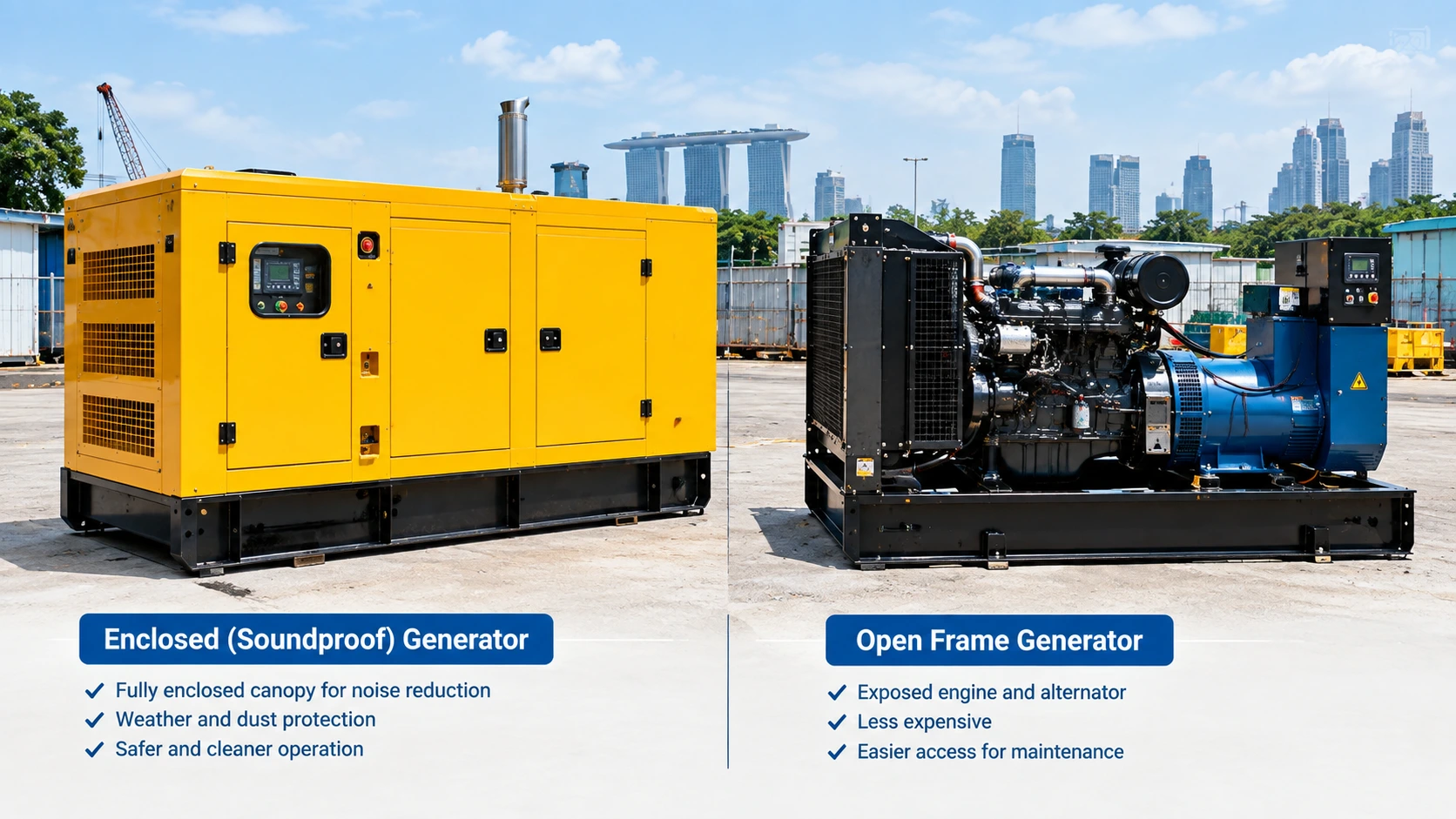
A silent generator, sometimes called a soundproof or canopy generator, houses its engine, alternator, and exhaust system inside an acoustic enclosure specifically designed to absorb and contain operating noise. An open generator, sometimes called a skid or open-frame generator, has no such enclosure, its engine and alternator sit exposed on a bare frame or skid, fully visible and accessible from every side.
This is fundamentally an enclosure choice layered on top of the same underlying generator technology, the engine, alternator, and power output function identically in either configuration regardless of what surrounds them. What differs is everything the enclosure itself adds or removes, noise containment, weather protection, physical size, and cost, none of which have any bearing on the actual electrical output or performance of the generator inside.
Also read: Inside a Generator: The Mechanism That Keeps Power Stable
How Silent Generators Reduce Noise
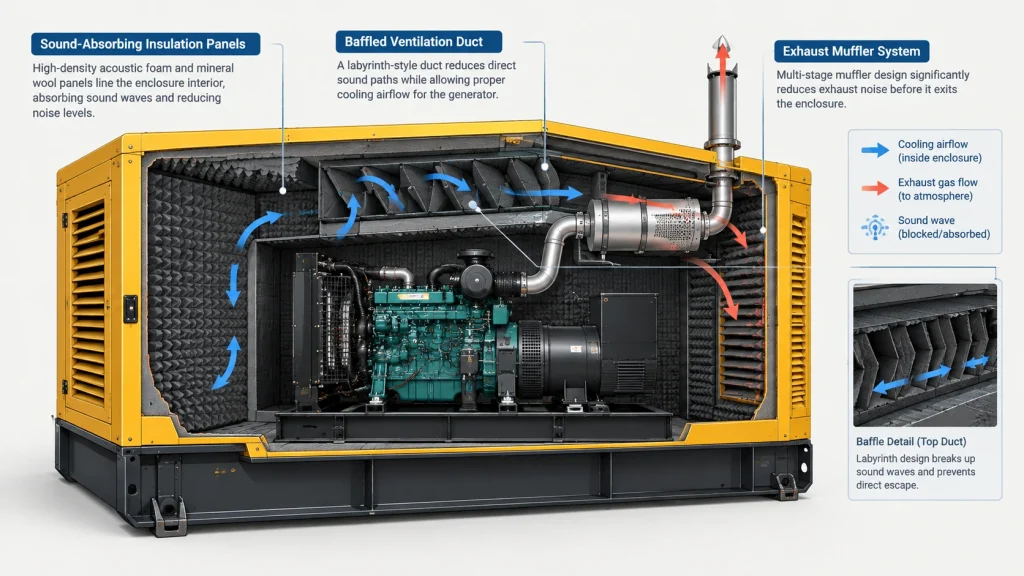
A silent generator’s defining feature comes entirely from its enclosure design, which uses several layered techniques to contain and reduce the noise a running generator naturally produces.
The Acoustic Enclosure and Sound Dampening
Silent generator enclosures typically combine sound-absorbing insulation lining the interior panels, a design that reduces noise escaping through the enclosure walls, with a purpose-built exhaust muffler system that reduces noise at the source rather than only containing it afterward. Ventilation is engineered carefully into this design as well, since the engine needs adequate airflow to avoid overheating, and enclosure designers use baffled vents and internal ducting that allow air to pass while disrupting the direct path sound would otherwise take to escape. This general approach to controlling noise through absorption, muffling, and disrupted sound paths reflects the broader principles of acoustic engineering, covered in more general terms through Wikipedia’s overview of noise control.
This combination typically reduces a generator’s operating noise by a substantial margin compared to the same engine running in an open frame, often bringing sound levels down to a range comparable to normal conversation at a short distance, rather than the considerably louder level an unshielded engine produces. Manufacturers typically publish a rated noise level, measured in decibels at a specified distance, allowing a direct comparison between different silent models before a unit is selected for a specific noise-sensitive application.
Trade-offs of Noise Reduction
Achieving this noise reduction adds weight, size, and cost to the unit, since the enclosure itself, along with its sound-dampening insulation and engineered ventilation, is additional material and engineering the generator would not otherwise need. Servicing a silent generator can also take marginally longer than an open unit, since panels or access points need to be opened to reach components that would otherwise be immediately visible and accessible on an open frame.
Despite this added complexity, the noise reduction a silent generator provides is often the deciding factor for any application where the generator will operate near occupied spaces for extended periods, making the added cost and size a reasonable trade-off for many users.
What Is an Open Generator?
An open generator has no acoustic enclosure at all, its engine, alternator, and control panel are mounted directly on a bare frame or skid, fully exposed and immediately visible from any angle.
This straightforward construction makes open generators lighter, more compact, and generally less expensive than an equivalent silent model, since there is no enclosure material, insulation, or engineered ventilation system to manufacture and fit. Every component also remains immediately accessible for inspection and maintenance without needing to open any panels first, a genuine practical advantage for units serviced frequently on an active site.
Key Differences: Silent vs Open Generators
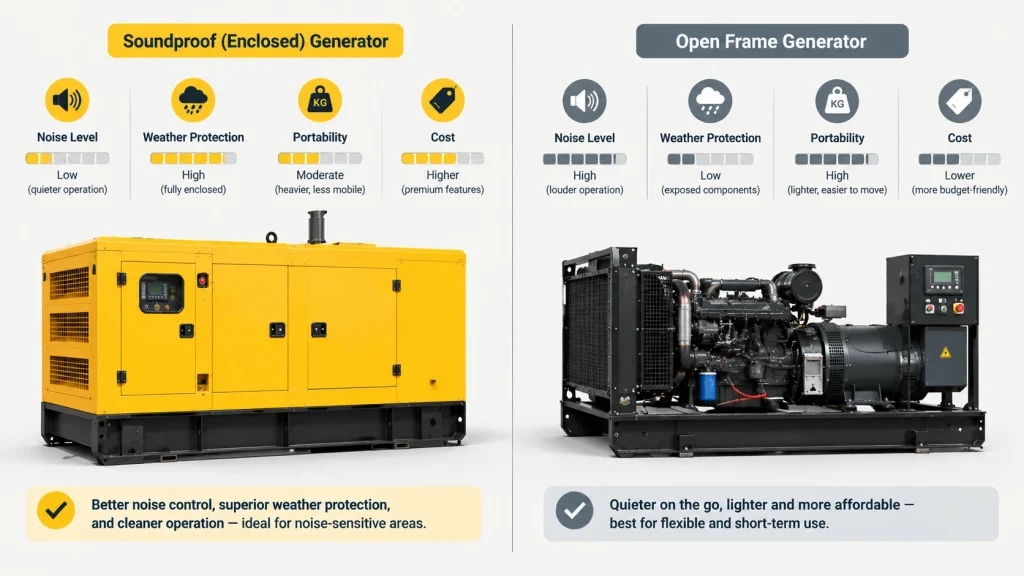
Beyond the basic enclosure distinction, several practical factors matter directly when choosing between the two configurations for a specific application.
Noise Levels
Silent generators operate at meaningfully lower noise levels than an equivalent open generator, a difference immediately noticeable to anyone standing nearby and often the single deciding factor for applications near homes, offices, or other occupied spaces. Open generators, lacking any sound dampening, operate at the full, unshielded noise level the engine itself produces, a level that can be genuinely disruptive in noise-sensitive environments or during extended overnight operation.
Weather and Environmental Protection
A silent generator’s enclosure doubles as weather protection, shielding the engine, alternator, and control panel from rain, dust, and direct sun exposure, allowing many silent models to operate safely outdoors without additional shelter. Open generators generally require a separate canopy or shelter for outdoor use in exposed conditions, since their unshielded components have considerably less inherent protection from weather and airborne debris.
Size, Weight, and Portability
Open generators are lighter and more compact than an equivalent silent model, since they carry no enclosure material, making them easier to transport, reposition, and store, particularly for smaller portable units moved frequently between tasks. Silent generators, while less portable due to their added size and weight, remain transportable for most common sizes, the trade-off is simply a heavier, bulkier unit for the same power output compared to an open equivalent.
Cost Considerations
Open generators carry a lower upfront cost than an equivalent silent model, reflecting the simpler construction and absence of enclosure materials and acoustic engineering. This cost difference needs to be weighed against the practical cost of noise in a specific application, a cheaper open generator operating in a noise-sensitive environment may ultimately cost more in complaints, restricted operating hours, or the need for a separate sound barrier than a silent unit would have cost from the outset.
Which One Should You Choose?
The right choice comes down almost entirely to where and how the generator will actually operate, rather than a general preference for one configuration over the other.
Silent generators are the appropriate choice for residential backup power, events and functions near occupied spaces, indoor or semi-enclosed environments, and any application where extended operation near people makes noise a genuine, ongoing concern. Open generators suit remote or unoccupied construction sites, industrial yards, and any application where noise is not a significant constraint and the lower cost, lighter weight, and easier access to components offer a more practical advantage. A broader framework for working through this and other generator selection decisions together is available below.
Also read: How to Choose a Generator: A Complete Buyer’s Guide
Noise Regulations to Consider
Beyond personal or client preference, noise restrictions can be a genuine compliance requirement rather than simply a courtesy consideration, particularly for construction sites operating near residential areas or during restricted hours.
Confirming permissible noise levels and operating hour restrictions before specifying an open generator for a noise-sensitive site avoids a costly mismatch discovered only after the unit is already deployed. Singapore’s Ministry of Manpower publishes Workplace Safety and Health guidance covering equipment operation standards relevant to generator use on construction and industrial sites, useful reference alongside any project-specific noise restrictions that may apply.
Powering Your Site Quietly or Efficiently
Silent and open generators deliver the same underlying power generation technology, wrapped in fundamentally different packaging that trades noise reduction and weather protection against cost, weight, and ease of access. Matching this choice to where the generator will actually operate, rather than defaulting to whichever configuration is more familiar, is what determines whether it becomes a genuine asset or a recurring source of noise complaints.
RR Machinery Pte Ltd offers a wide selection of power generators, both silent and open configurations, professionally maintained and tested before every delivery. Contact us today to find the right generator for your specific site and noise requirements.