
Machine maintenance is the backbone of reliable industrial performance. From preventive maintenance planning to emergency repair response, organizations that follow proven best practices achieve effective maintenance and long-term operational stability. Without a structured approach to machine maintenance, equipment becomes prone to downtime, inefficiency, and costly breakdowns.
This comprehensive guide explores the importance of machine maintenance, explains different maintenance strategies, and shows how AI-driven solutions are transforming modern maintenance operations. If you want to reduce downtime, improve machine uptime, and build a sustainable maintenance program, this article will give you practical, actionable insights.
What Is Machine Maintenance and Why Is Maintenance Is Important?
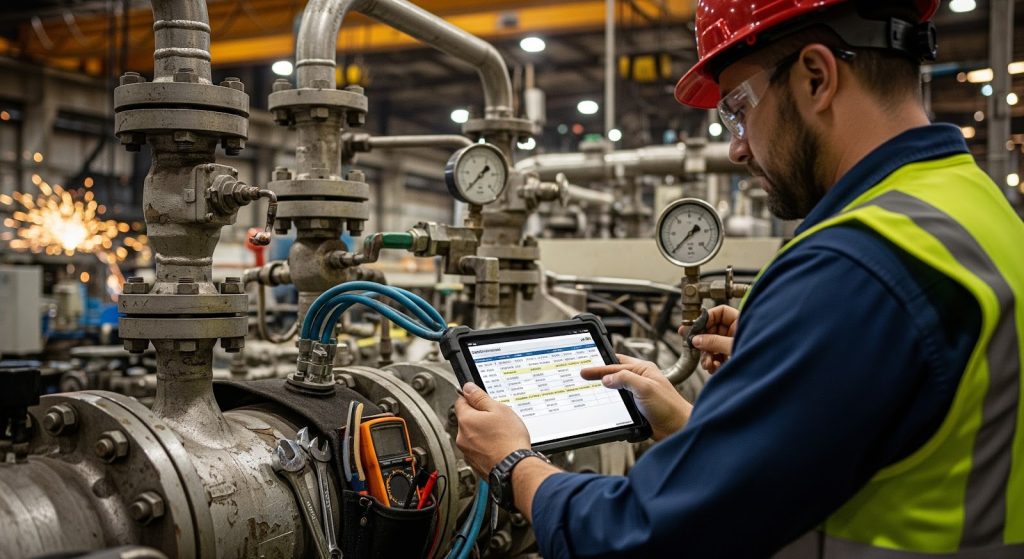
Machine maintenance refers to the systematic process of inspecting, servicing, and repairing equipment to ensure it performs as intended. Machine maintenance involves lubrication, calibration, part replacements, diagnostics, and performance monitoring. Proper machine maintenance is essential because it prevents unexpected breakdowns and ensures machinery remains safe and productive.
The importance of machine maintenance extends beyond simple repair work. When maintenance is important at a strategic level, businesses can reduce downtime, prevent machine failure, and maintain consistent production output. Machine maintenance is critical for safety compliance and asset longevity.
Without proper maintenance, wear and tear accelerate, leading to unplanned downtime and emergency repair. Organizations that prioritize regular maintenance and structured maintenance practices can keep machines running smoothly and extend equipment life cycles.
Also read : Forklift Maintenance: Essential Tips for Safe and Efficient Operations
What Are the Types of Machine Maintenance?
There are different types of maintenance that organizations use to manage machinery performance. The main types of machine maintenance include preventive, predictive, reactive, and corrective maintenance. Each type of maintenance supports different operational goals.
Reactive maintenance is performed when a machine breaks or when a machine fails unexpectedly. Corrective maintenance is performed when a machine shows clear signs of wear or damage. While sometimes necessary, reactive approaches often result in unplanned downtime and expensive repair costs.
Preventive and predictive maintenance offer more structured maintenance strategies. Preventive maintenance helps prevent breakdowns through scheduled maintenance. Predictive maintenance uses data from the machine and advanced monitoring to detect when equipment is likely to fail. Prescriptive maintenance takes this further by using AI to recommend precise actions.
How Do Maintenance Strategies Improve Machinery Performance?
Well-defined strategies directly impact machine uptime and production efficiency. Machine maintenance strategies combine preventive, predictive, and corrective maintenance into a structured maintenance process.
Advanced strategies like predictive maintenance and condition-based maintenance rely on sensor monitoring and AI to identify potential failure early. Maintenance uses real-time analytics to detect performance changes and schedule maintenance tasks proactively.
By implementing effective practices, businesses can minimize downtime and reduce emergency repair incidents. A balanced approach helps create a balanced maintenance program that supports both reliability and cost control.
How Can AI and CMMS Improve Machine Maintenance?

AI is revolutionizing machine maintenance by enabling smarter decision-making and predictive insights. When companies use AI alongside a computerized maintenance management system (CMMS), they gain powerful tools to monitor maintenance activities and plan repair schedules effectively.
A CMMS, also known as maintenance management software, tracks maintenance tasks, spare parts inventory, and work order histories. A computerized maintenance management system improves visibility across maintenance operations and helps streamline maintenance workflows.
AI analyzes data from the machine using machine learning algorithms to predict equipment behavior. By integrating AI with predictive maintenance tools, maintenance technicians can reduce downtime, plan repairs efficiently, and improve accuracy.
Why Is a Maintenance Schedule Essential for Machinery Maintenance?
A structured maintenance schedule ensures that maintenance tasks are performed consistently. Scheduled maintenance reduces unplanned downtime and prevents sudden repair emergencies.
Usage-based maintenance and usage-based preventive maintenance allow maintenance to align with operating hours rather than fixed time intervals. When maintenance is performed based on usage, it reflects how the machine is used in real conditions.
Develop a maintenance framework that includes regular inspections, part replacements, and documented maintenance activities. Having a machine maintenance plan in place ensures that maintenance needs are addressed before issues escalate.
What Are the Best Practices for Machine Maintenance Practices?
Following best practices ensures effective machine maintenance and long-term reliability. Proper machine maintenance includes regular inspections, monitoring signs of wear, and performing basic maintenance tasks before issues grow.
Maintenance practices should include clear documentation, defined responsibilities for the maintenance team, and structured work order systems. Effective practices reduce downtime and improve overall machinery performance.
Preventive maintenance helps prevent machine failure, while predictive maintenance tools identify early warning signals. Maintenance helps businesses avoid expensive repair and achieve cost savings through better planning.
Also read : Earth Moving Equipment: Types, Uses, and Applications
How Does the Maintenance Team Handle Repair and Downtime?
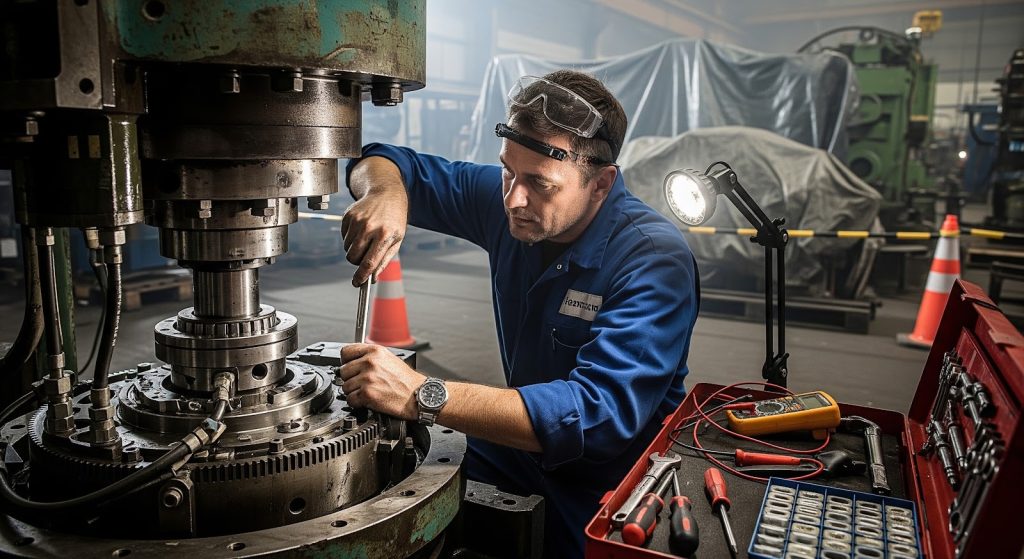
When a machine breaks or becomes likely to fail, the maintenance team must respond quickly. Repair actions are performed when a machine shows performance issues or during corrective maintenance procedures.
Maintenance technicians assess damage, issue a work order, and coordinate spare parts availability to complete repair efficiently. A well-organized maintenance program helps plan repairs rather than relying solely on reactive responses.
By maintaining spare parts inventory and structured operations, organizations can minimize downtime and improve uptime.
What Role Does AI Play in Advanced Maintenance Strategies?
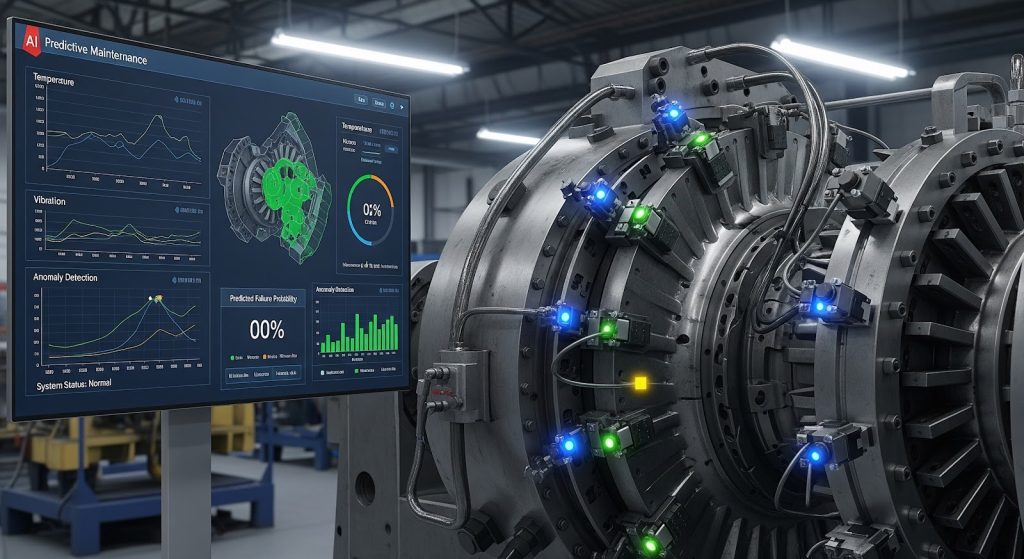
AI plays a crucial role in advanced maintenance strategies. AI-powered predictive maintenance tools analyze sensor data and identify patterns that indicate machine failure risks.
Through machine learning, AI detects subtle anomalies in machinery performance. Condition-based maintenance supported by AI reduces unnecessary maintenance tasks and prevents unexpected downtime.
Companies that use AI can improve uptime, enhance maintenance accuracy, and optimize maintenance operations. AI-driven prescriptive maintenance recommends specific actions, ensuring maintenance is performed efficiently and strategically.
Ways to Improve Machine Maintenance and Uptime
There are many ways to improve effectiveness. Ways to improve include implementing predictive maintenance, enhancing regular routines, and upgrading maintenance management software.
To improve uptime, organizations must assess maintenance needs and adopt strategies like predictive approaches. Maintenance strategies like predictive and preventive maintenance create proactive systems that reduce downtime.
Regular inspections and proper equipment maintenance ensure machinery remains well-maintained and operational. Machine maintenance practices should evolve continuously to meet changing production demands.
How to Choose the Right Maintenance Strategy for Your Machinery?
To choose the right strategy, evaluate equipment criticality, usage patterns, and risk tolerance. Machine maintenance is essential for long-term productivity, and selecting the right type of maintenance supports operational goals.
Preventive and predictive maintenance approaches are often combined to create an effective maintenance program. Usage-based maintenance works well for high-utilization equipment, while predictive maintenance is ideal for complex machinery.
When organizations develop a maintenance plan, they ensure maintenance activities align with operational requirements. Proper machine maintenance reduces machine failure risk and ensures the maintenance process remains structured and efficient.
Also read : Types of Aerial Work Platform and Their Common Uses
The Importance of Machine Maintenance for Long-Term Success
Machine maintenance is critical for operational stability and asset protection. Without proper machine maintenance, downtime increases, repair costs escalate, and equipment reliability declines.
By implementing preventive maintenance, predictive maintenance, and AI-driven prescriptive maintenance, businesses can streamline maintenance operations and reduce unplanned downtime. A structured maintenance schedule, skilled maintenance technicians, and modern CMMS systems help create a resilient maintenance framework.
Ultimately, effective machine maintenance practices protect investments, improve machine uptime, and keep machinery operating at peak performance.