Before a foundation is poured, a road is paved, or a garden is laid, the ground beneath has to be shaped to the right level and slope. That shaping work is called grading, and although it rarely gets attention once a project is finished, it decides how well a building drains, how stable its foundations are, and how long the surfaces around it last.
This guide explains what grading in construction means, why it matters, the main types of grading, how the process works from survey to finished surface, the equipment used, the problems to avoid, and the safety points that apply on every grading job.
What Grading Means on a Construction Site
Grading is the process of reshaping the ground to the levels and slopes shown in the project design. It can involve lowering high areas, raising low ones, moving soil from one part of the site to another, and compacting and smoothing the surface so it can support whatever will be built on it.
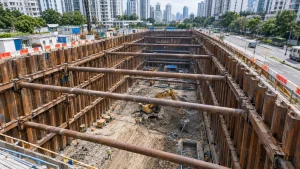
Grading is closely related to excavation but not the same thing. Excavation removes material to create a hole, trench, or basement, while grading shapes the overall surface of the site. On most projects, grading is one stage of the wider groundwork that prepares a site for construction, alongside clearing, surveying, and drainage work. Further general background on the term and its use in civil engineering is available through Wikipedia’s overview of grading in engineering.
How grading fits into the full sequence of groundwork, from the first survey to the point where construction can begin, is covered in the guide below.
Also read: What Is Site Preparation in Construction? Steps and Process
Why Grading Matters
Good grading is easy to overlook because, when it is done well, nothing goes wrong. Its value shows up in the problems it prevents:
- Drainage. Water must flow away from buildings and paved areas rather than pooling against walls or soaking into foundations.
- Foundation support. A level, properly compacted base spreads the load of a structure evenly and reduces the risk of uneven settlement.
- Safe access. Roads, paths, and car parks need even surfaces and suitable gradients for people and vehicles.
- Design accuracy. Finished levels must match the drawings so that floors, drains, kerbs, and connections to existing ground all line up.
- Erosion control. Shaped and stabilised slopes are far less likely to wash away during heavy rain.
In a climate with frequent heavy rainfall, the drainage role of grading is especially important. A surface that looks flat to the eye can still direct water toward a building if its slope is wrong, which is why levels are checked with survey equipment rather than judged by sight.
The Main Types of Grading
Grading is not a single task. Different stages and parts of a project call for different kinds of grading, and understanding the distinction helps when planning the work and choosing equipment.
The types below often follow one another on the same project, starting with large scale shaping and finishing with precise levelling just before construction or paving begins.
Rough Grading
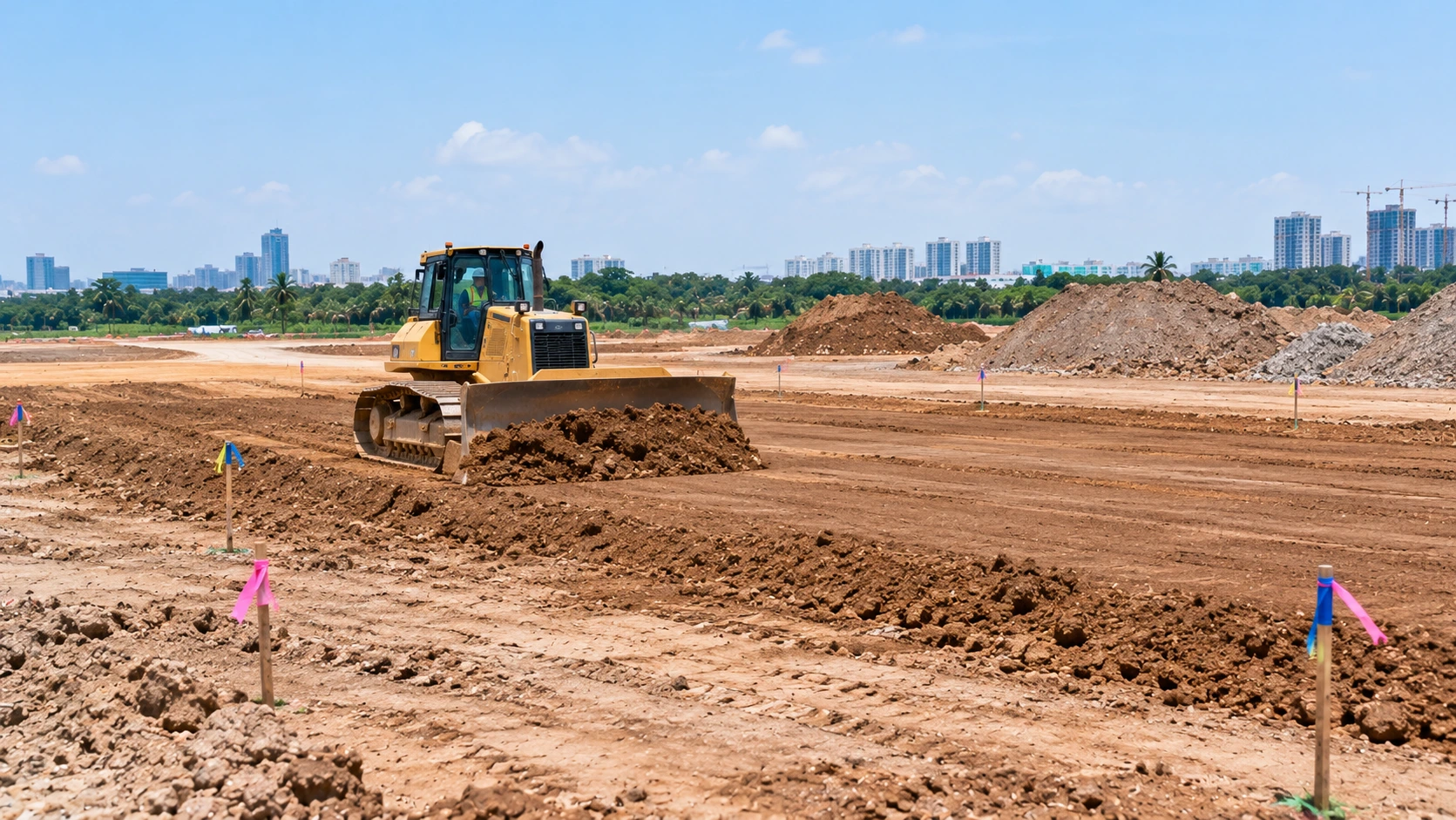
Rough grading is the first major shaping of the site. Heavy machines move large volumes of soil to bring the ground close to its design levels, removing high spots, filling hollows, and forming the general shape of building platforms, roads, and slopes.
Accuracy at this stage is measured in broad terms rather than fine detail, because the surface will be refined later. The aim is to get the bulk of the earthworks done efficiently, with the ground compacted in layers so it stays stable when the finer work begins.
Finish Grading
Finish grading, sometimes called fine grading, brings the surface to its exact final levels and slopes. It is carried out after rough grading and after underground services such as drains and pipes have been installed, so that the final surface is not disturbed by later trenching.
This stage demands precision, because the finished levels decide how water will drain and how well paving, slabs, or landscaping will sit. Machines with fine blade control are used, often guided by survey equipment, and levels are checked repeatedly before the surface is handed over.
Cut and Fill
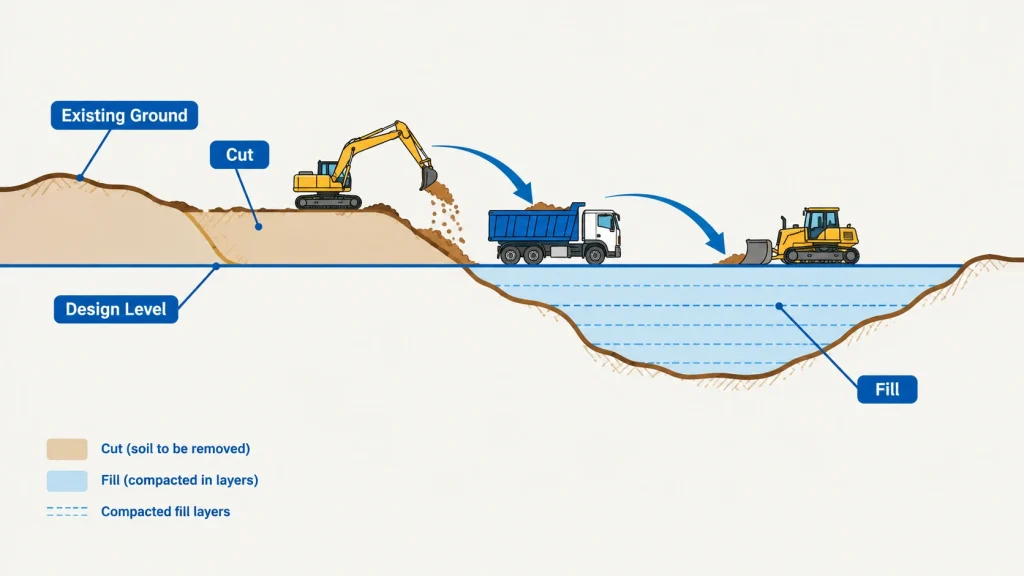
Cut and fill is the practice of removing soil from areas that are too high, known as the cut, and placing it in areas that are too low, known as the fill. When the volumes balance, little or no soil needs to be brought onto or taken away from the site, which saves cost and reduces truck movements.
Fill material must be placed and compacted in layers, because loose fill settles over time and can cause cracks in slabs and paving above it. Not every excavated material is suitable as fill, so soil quality is assessed before it is reused.
Slope Grading
Slope grading shapes embankments, cuttings, and changes in level so they remain stable. The angle of a slope depends on the soil type, the loads above it, and the drainage around it, and steep changes in level often need a retaining structure rather than a slope alone.
Slopes also need protection once they are formed, such as vegetation, erosion control mats, or drainage channels at the top and bottom, so that rainfall does not wear them away before they stabilise.
How the Grading Process Works, Step by Step
Every site is different, but most grading work follows a similar sequence:
- Review the design and survey the site. Compare existing ground levels with the design levels to work out where soil must be cut and where it must be filled.
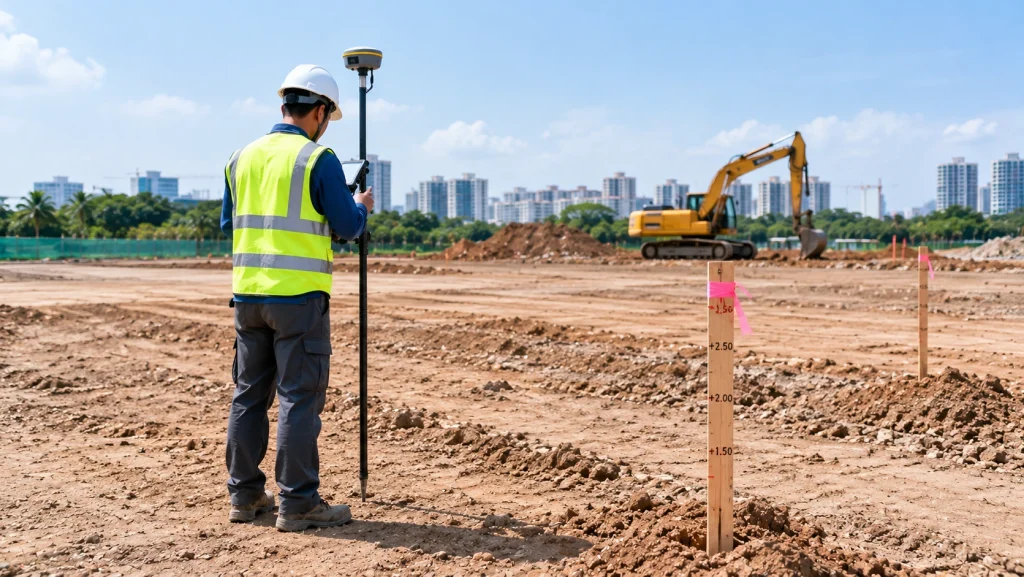
- Set out levels and markers. Surveyors place stakes, pegs, or digital reference points so operators know the target level across the site.
- Clear the site. Remove vegetation, debris, and obstructions from the area to be graded.
- Strip the topsoil. Remove and stockpile the organic topsoil, which is unsuitable as a base for structures but useful later for landscaping.
- Cut and fill. Move soil from high areas to low areas, placing fill in layers.
- Compact each layer. Compact the fill as it is placed so the ground can carry the loads above it.
- Finish grade and check levels. Refine the surface to its final levels and slopes, then verify them against the design before construction or paving begins.
Clearing, the third step, can involve its own set of machines depending on what is on the site, as described in Equipment to Clear Land: A Complete Guide to Every Machine. Compaction, the sixth step, is just as important as the shaping itself, and the machines used for it are covered in Types of Compactors Used in Construction Projects. Planning where stockpiles, haul routes, and machines will sit during these steps is part of the wider work covered in Construction Site Planning: A Complete Guide.
Equipment Used for Grading
The machines used for grading depend on the size of the site, the volume of soil to be moved, and the accuracy required. The most common include:
- Bulldozers for pushing and spreading large volumes of soil during rough grading.
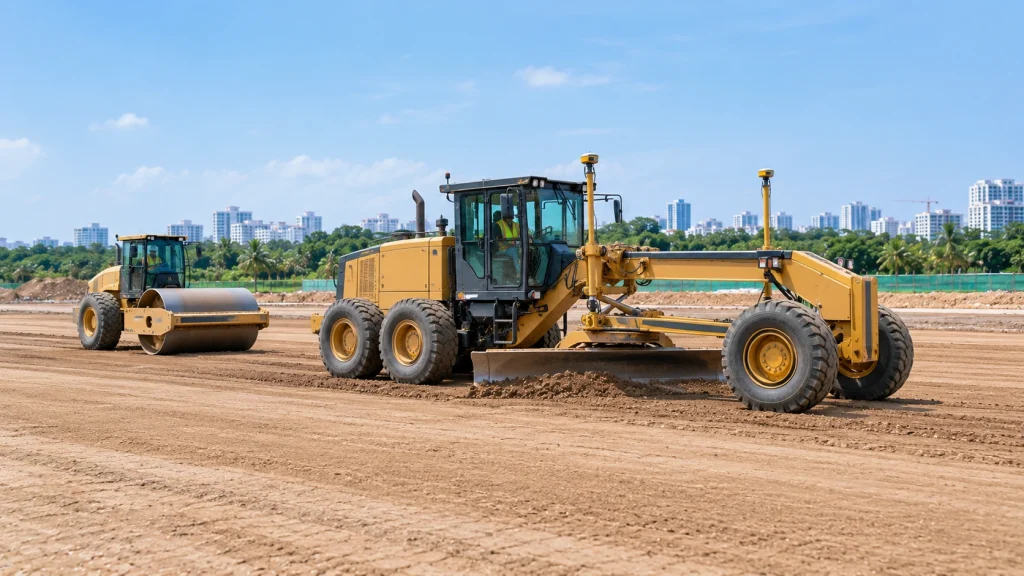
- Motor graders for precise levelling and shaping, especially for roads and large flat areas.
- Excavators for cutting, loading, and shaping banks and slopes.
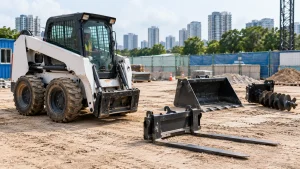
- Loaders for moving and loading loose material around the site.
- Compactors and rollers for compacting each layer of fill and the finished surface.
- Survey and machine control equipment for checking levels and, on many modern sites, guiding machine blades automatically to the design surface.
Bulldozers come in several configurations suited to different ground and project sizes, explained in Types of Bulldozers: A Complete Guide for Every Job, while the rollers used for road and surface compaction are covered in 5 Types of Rollers Used in Construction and Road Compaction. On road projects, grading is one part of a longer chain of machines, which is set out in Road Construction Equipment List: Every Machine Explained. The motor grader, the machine most closely linked to grading, is explained in detail below.
Also read: Types of Graders: How Each Works and When to Use One
Common Grading Problems and How to Avoid Them
Most grading problems trace back to a few avoidable causes:
- Poor drainage and ponding. Caused by incorrect slopes or uneven finish grading. Avoided by checking levels with survey equipment rather than by eye.
- Settlement. Caused by fill placed in thick layers or not compacted properly. Avoided by compacting in layers and testing where the design requires it.
- Overcutting. Removing too much soil and then having to replace it as fill. Avoided by accurate set out and regular level checks.
- Erosion. Caused by exposed slopes and loose soil during rain. Avoided by staging the work, protecting slopes early, and managing runoff.
- Damaged underground services. Caused by grading without knowing what lies below. Avoided by locating and marking services before work begins.
- Weather delays. Wet soil is difficult to compact and easy to damage. Avoided by planning around the weather and protecting prepared surfaces.
Grading Around Slopes and Retaining Structures
Where a site has a significant change in level, grading alone may not be enough. Steep slopes can become unstable, especially in wet conditions, and a retaining structure is often used to hold the higher ground in place while keeping the usable area of the site as large as possible.
The type of structure depends on the height of the change in level, the soil, and the space available, and the main options are compared in Types of Retaining Walls: Structures and When to Use Each. Grading around these structures must also allow water to drain away from behind them, since trapped water is one of the main causes of retaining wall failure.
Safety During Grading Works
Grading involves heavy machines moving continuously across the site, often in reverse, around stockpiles, slopes, and open excavations. Clear traffic routes, exclusion zones around working machines, and banksmen where visibility is limited help keep people and plant apart.
Other key precautions include locating underground services before cutting, keeping machines back from the edges of excavations and slopes, and stopping work when ground or weather conditions become unsafe. Singapore’s Ministry of Manpower publishes detailed Workplace Safety and Health guidance covering earthworks and the safe use of machinery on local sites, and the wider principles for working around heavy equipment are covered below.
Equipment Support for Earthworks and Grading
Choosing the right equipment for grading starts with a clear picture of the site. When you contact the team, it helps to describe the size of the area, the amount of cut and fill expected, the accuracy needed for the finished surface, the ground conditions and access route, and how long the work is likely to take. With these details, the right machines can be recommended from the start rather than adjusted after delivery.
RR Machinery Pte Ltd supports Singapore’s construction and industrial sectors with reliable heavy machinery solutions tailored to your specific site conditions. Browse our complete heavy machinery services or contact our team today for practical advice on the right equipment for your project.