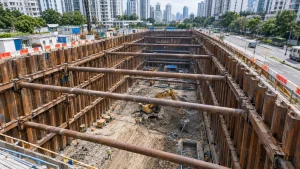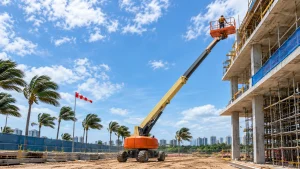
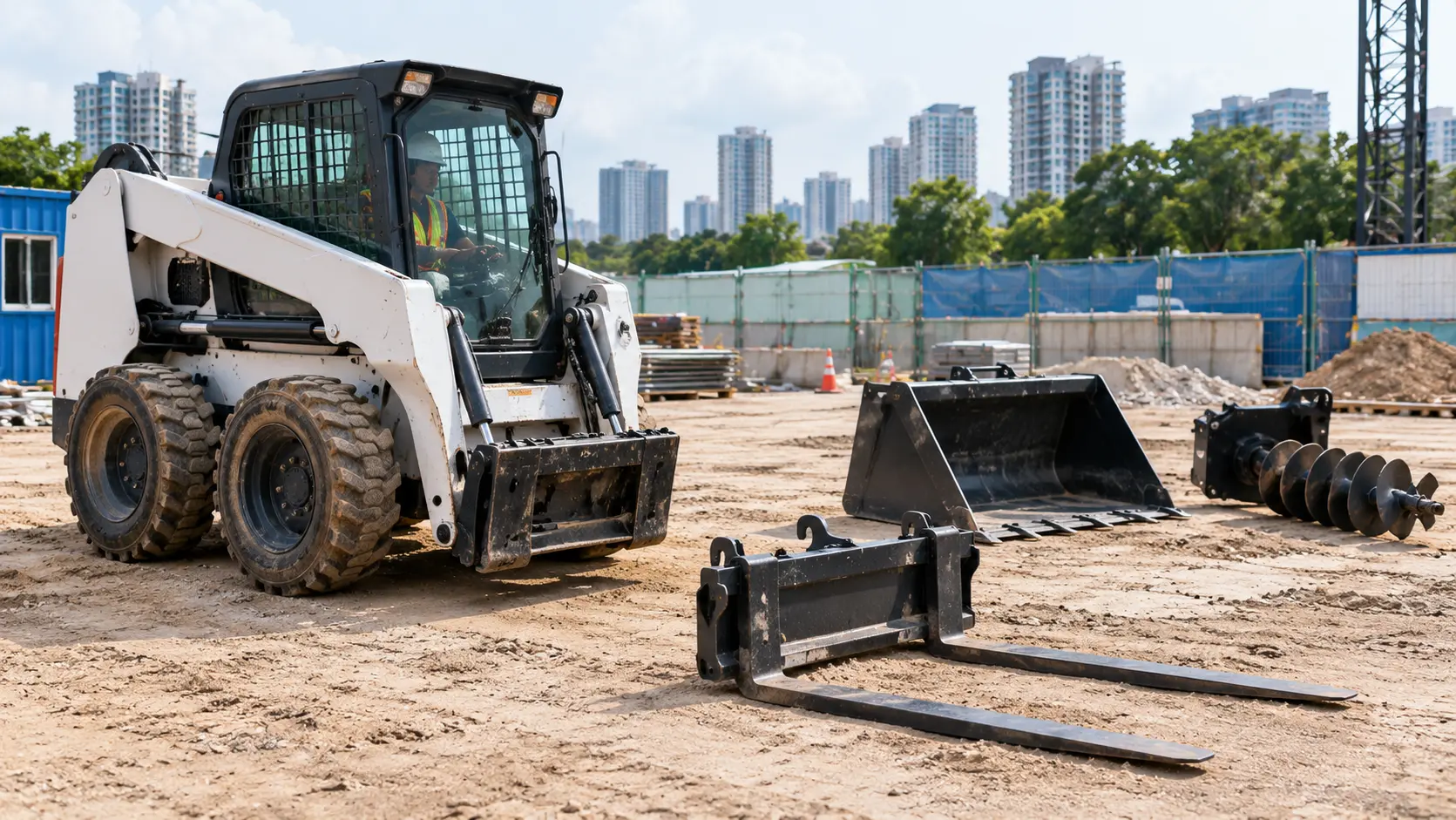
A skid steer loader on its own is a compact, agile machine with a pair of lift arms. What turns it into one of the most useful machines on a construction site is the range of tools that can be fitted to the front of those arms. With the right attachment, the same machine can dig, carry, drill, break concrete, sweep a yard, or clear overgrown land, often switching between tasks in a matter of minutes.
This guide explains how skid steer attachments connect to the machine, how they are powered, the main attachment types and what each is used for, and how to choose and use them safely so the machine stays productive without being pushed beyond its limits.
How Skid Steer Attachments Work
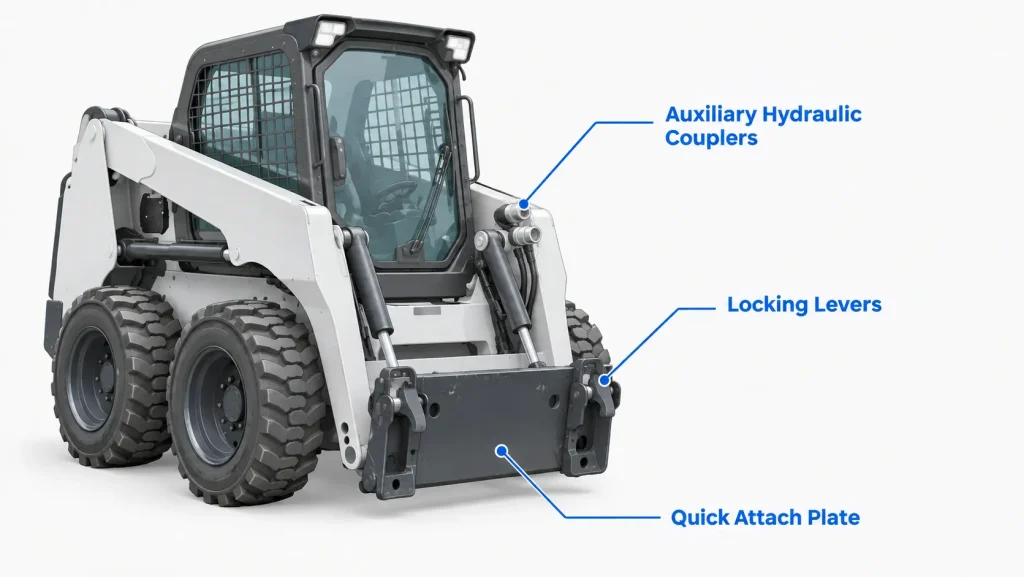
Most skid steer attachments mount to a quick attach plate at the front of the lift arms. Many machines use a widely adopted universal plate design, which allows attachments from different makers to fit the same machine, and the operator can often lock or release an attachment without leaving the cab. This is what makes changing tools so fast compared with other machines that need pins removed by hand.
Attachments fall into two broad groups. Non powered tools, such as buckets and pallet forks, rely only on the lift and tilt of the loader arms. Powered tools, such as augers, breakers, and sweepers, also draw hydraulic oil from the machine’s auxiliary hydraulic circuit to drive a motor or cylinder, and some include electrical connections so their functions can be controlled from the cab. Further general background on the machine itself is available through Wikipedia’s overview of skid steer loaders.
The machine that carries all of these tools, including how its pivot steering and lift arms work, is covered in more detail in the guide below.
Also read: What Is a Skid Steer Loader, and Why Do So Many Sites Rely on One
Standard Flow and High Flow Hydraulics
Powered attachments need a certain amount of hydraulic flow and pressure to work properly, and skid steers differ in how much they can deliver. Machines are usually described as standard flow or high flow, with high flow machines supplying considerably more oil to the auxiliary circuit.
Simpler powered attachments, such as augers and many sweepers, generally run well on standard flow. More demanding tools, such as mulchers, cold planers, and larger trenchers, often need high flow to reach their working speed. Fitting a high flow attachment to a standard flow machine usually means poor performance at best, while running an attachment beyond its rated pressure can damage it. The attachment’s specification and the machine’s auxiliary hydraulic rating should always be checked against each other before the two are paired.
Buckets for Digging, Loading, and Grading
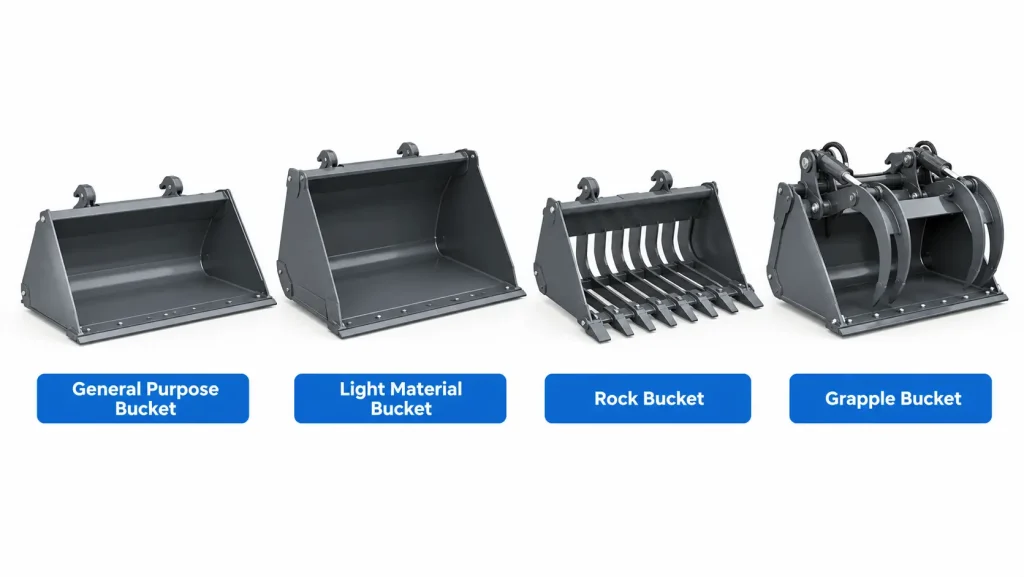
Buckets are the most common skid steer attachment, and there are several types, each shaped for a different material and task.
Choosing the right bucket has a direct effect on productivity. A bucket that is too large for heavy material overloads the machine, while one that is too small for light material wastes trips, so matching bucket type to material is one of the simplest ways to get more out of the machine.
General Purpose and Dirt Buckets
The general purpose bucket is the standard tool for digging, scooping, and moving soil, sand, and gravel. A dirt bucket is similar but usually has a longer floor and stronger cutting edge for digging into firmer ground, and both can be fitted with teeth or a smooth edge depending on whether the job is digging or levelling.
These buckets handle most everyday earthmoving on a small site, from backfilling trenches to spreading material and loading trucks. They are the attachment most skid steers spend the majority of their working hours with.
Light Material and Multipurpose Buckets
Light material buckets have a larger capacity for bulky but lightweight loads, such as mulch, wood chips, or debris, so more can be moved per trip without exceeding the machine’s capacity. Using one for heavy soil or gravel, however, can quickly overload the machine.
Multipurpose buckets have a hinged front jaw that opens and closes hydraulically, allowing the same bucket to dig, doze, grab, level, and clamp irregular items. This flexibility makes them popular on small sites where one attachment needs to cover several tasks.
Rock and Grapple Buckets
Rock buckets use widely spaced tines instead of a solid floor, so soil falls through while rocks, roots, and debris stay in the bucket. They are useful for site clearance and for separating rubble from usable soil.
Grapple buckets add a hydraulic clamp above the bucket to hold awkward, loose, or irregular loads securely, such as brush, scrap, or demolition debris. The clamp keeps material from sliding out while the machine moves across uneven ground.
The bucket designs used on excavators follow similar principles, and the wider range of bucket types and their uses is explained below.
Also read: Types of Excavator Buckets and Their Uses Explained
Material Handling Attachments
Pallet forks are one of the most useful skid steer attachments, turning the machine into a compact material handler that can move palletised goods, bricks, blocks, and pipes around a site. They are particularly useful on construction sites where a dedicated forklift would struggle with rough ground, and the wider range of fork mounted tools used in material handling is described in Types of Forklift Attachments for Material Handling.
Grapples without a bucket, sometimes called root grapples or scrap grapples, are designed to grab and hold irregular items such as logs, branches, and demolition waste. Because the load sits further from the machine and can shift, operators need to keep it low and secure while travelling.
Digging, Drilling, and Trenching Attachments
Some attachments let a skid steer handle tasks normally associated with dedicated digging machines:
- Augers drill round holes for fence posts, signposts, light foundations, and planting. Different bit sizes suit different hole diameters and ground types.
- Trenchers cut narrow, continuous trenches for cables, irrigation, and small pipes, faster and with less disturbance than digging with a bucket.
- Backhoe attachments add a small digging arm to the front of the machine for occasional excavation work where bringing in a separate machine is not practical.
These tools are well suited to smaller, lighter jobs. For deep trenches, large excavations, or heavy digging over long periods, a dedicated excavator or backhoe loader is usually faster and more economical.
Breaking and Demolition Attachments
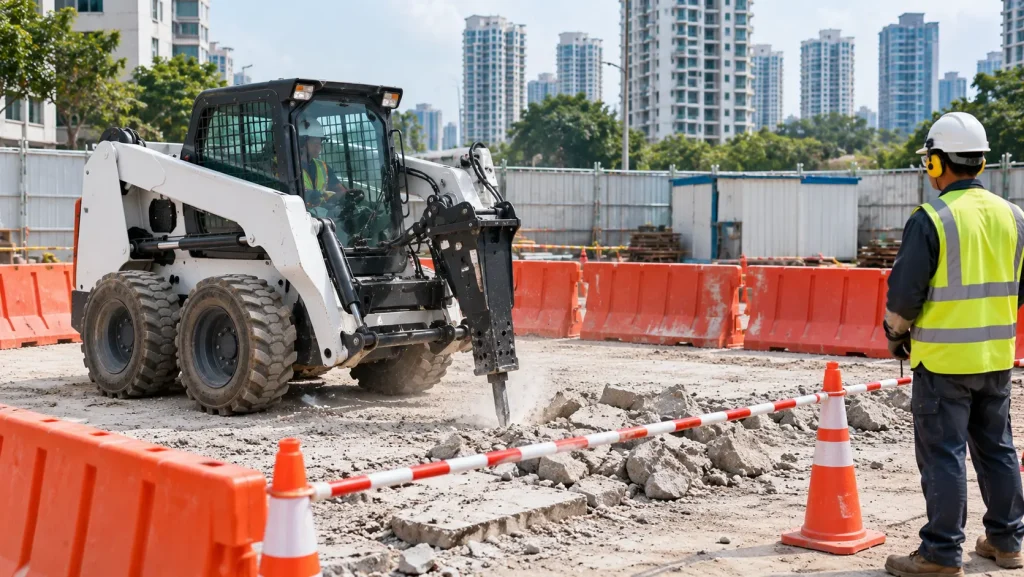
Hydraulic breakers, also called hammers, use repeated impacts to break concrete, asphalt, and rock. On a skid steer they are used for removing slabs, breaking up footings, and light demolition, and they turn the machine into a compact demolition tool that can work in tight spaces.
Breakers create vibration, flying fragments, dust, and noise, so exclusion zones, eye and hearing protection, and dust control are essential. The machine’s cab protection should also be suitable for demolition work, and the manufacturer’s guidance on using breakers with that particular machine should be followed.
Site Preparation and Landscaping Attachments
A large share of skid steer work happens at the start and end of a project, when ground is being prepared or finished. Attachments for this work include:
- Landscape rakes for collecting stones, roots, and debris and leaving a smooth surface.
- Grader and box blades for levelling and shaping ground to the required finish.
- Tillers and soil conditioners for breaking up and loosening soil before planting or turfing.
- Dozer blades for pushing and spreading material across a site.
These tools fit naturally into the groundwork stage of a project, which is covered in What Is Site Preparation in Construction? Steps and Process.
Cleaning and Vegetation Clearing Attachments
Sweepers and angle brooms clean roads, car parks, and paved site areas, collecting dust and loose material either into a hopper or to one side. They are useful for keeping site access routes clear and for tidying surfaces before handover.
For overgrown land, brush cutters and forestry mulchers clear vegetation and small trees, while stump grinders remove stumps below ground level. These attachments make the skid steer a practical clearing tool on smaller plots, and the wider range of machines used for this work is covered in Equipment to Clear Land: A Complete Guide to Every Machine.
How to Choose the Right Attachment
Choosing an attachment is about matching the tool, the machine, and the task. A few checks make the decision straightforward:
- Define the task clearly. Know the material, the volume, and the result needed, whether digging, lifting, levelling, breaking, or clearing.
- Confirm the mounting system. Make sure the attachment fits the machine’s quick attach plate.
- Match the hydraulic requirement. Compare the attachment’s flow and pressure needs with the machine’s auxiliary hydraulic output, including whether high flow is required.
- Check weight and capacity. The attachment’s own weight reduces the load the machine can carry, so the combined weight of the attachment and its load must stay within the rated operating capacity.
- Consider the ground and space. Tracked compact loaders and wheeled skid steers handle ground differently, and some attachments are better suited to one or the other.
- Think about how often it will be used. Attachments needed only occasionally are often better hired for the job than bought.
When a task needs more capacity or reach than a skid steer can offer, a larger machine may be the better choice, and the differences between compact loaders and full size loaders are explained in Front End Loader: How It Works and When to Use One.
Using Attachments Safely
Attachments change how a skid steer behaves. A heavy breaker or a full bucket raised high shifts the machine’s balance, and some tools put the operator or bystanders at risk from moving parts, flying debris, or sudden release of a load.
Before using any attachment, the operator should confirm that it is fully locked onto the quick attach plate, check hydraulic hoses and couplings for damage or leaks, and test its functions at low height in a clear area. Loads should be carried low, bystanders kept clear of the working area, and hydraulic pressure released before connecting or disconnecting hoses. Singapore’s Ministry of Manpower publishes detailed Workplace Safety and Health guidance covering machinery and worksite safety, and the wider principles for working around heavy plant are covered below.
Equipment Support for Compact Earthmoving
Choosing the right machine and attachment starts with a clear picture of the job. When you contact the team, it helps to describe the tasks involved, the materials to be handled, the space available on site, the ground conditions, and how long you expect to need the equipment. With these details, the right equipment can be recommended from the start rather than adjusted after delivery.
RR Machinery Pte Ltd supports Singapore’s construction and industrial sectors with reliable heavy machinery solutions tailored to your specific site conditions. Browse our complete heavy machinery services or contact our team today for practical advice on the right equipment for your project.