Forklifts are among the most versatile machines used in warehouses, construction sites, logistics facilities, and industrial operations. While the standard fork attachment allows forklifts to lift pallets and basic loads, many specialized tasks require additional equipment. This is where types of forklift attachments become essential.
Forklift attachments expand the capabilities of forklifts, allowing them to handle different types of materials safely and efficiently. From lifting drums and pipes to moving large containers and bulky materials, the right attachment can transform a standard forklift into a multi-purpose material handling machine.
Selecting the appropriate forklift attachment helps improve productivity, reduce manual labor, and enhance workplace safety. Many companies integrate forklift attachments into broader material handling equipment strategies used in modern industrial operations to optimize workflow and operational efficiency.
What Are Forklift Attachments?
Forklift attachments are additional components that can be mounted on the forklift carriage to extend the machine’s functionality. These attachments allow forklifts to handle loads that cannot be transported using standard forks.
Forklift attachments are commonly used to:
- Lift irregularly shaped materials
- Handle specialized loads
- Improve material stability during transport
- Increase operational flexibility
By using the correct attachment, operators can perform tasks that would otherwise require different machines.
Understanding the components and structure of forklifts used in industrial operations can help operators install and operate attachments safely.
Also read : Classes of Forklifts and Their Applications in Material Handling
Common Types of Forklift Attachments
Different forklift attachments are designed to handle specific materials and operational requirements. Below are some of the most commonly used attachments in material handling and construction environments.
Fork Positioners
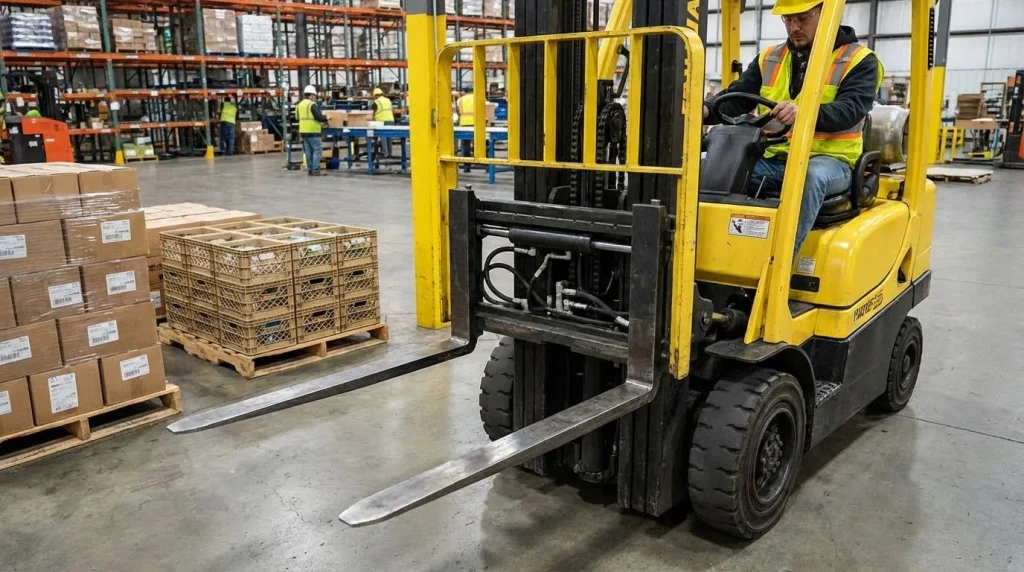
Fork positioners allow operators to adjust the distance between forks without leaving the forklift seat. This feature improves efficiency when handling loads of different sizes.
Common uses:- Handling various pallet sizes
- Adjusting forks quickly during warehouse operations
- Improving productivity in logistics environments
Fork positioners are widely used in distribution centers where pallet sizes vary frequently.
Side Shifters
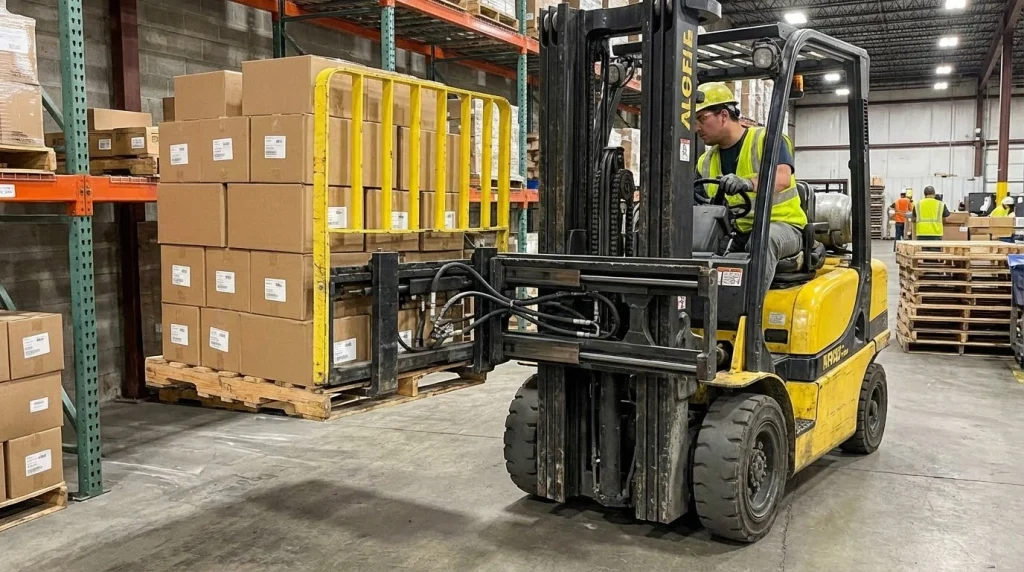
Side shifters allow the forklift forks to move left or right without repositioning the entire machine. This feature improves load alignment and reduces the need for repeated maneuvering.
Advantages include:- Improved load placement accuracy
- Faster pallet handling
- Reduced operator fatigue
Side shifters are among the most common forklift attachments used in warehouse operations.
Fork Extensions
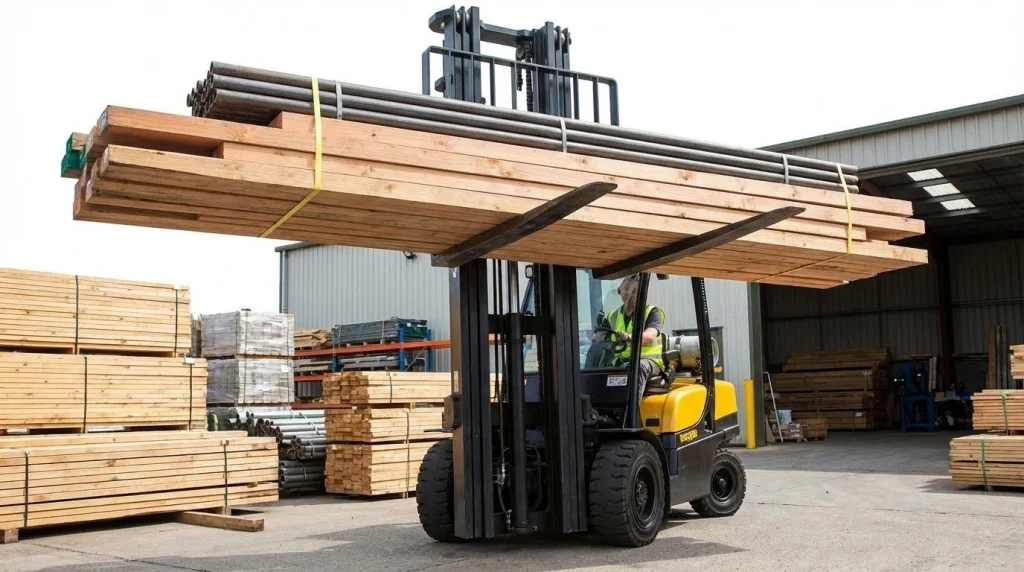
Fork extensions increase the length of standard forklift forks. These attachments allow forklifts to handle longer loads such as timber, pipes, and large construction materials.
Typical applications:- Handling oversized pallets
- Transporting long materials
- Construction and lumber operations
Fork extensions provide a simple yet effective way to increase load handling capacity.
Clamp Attachments
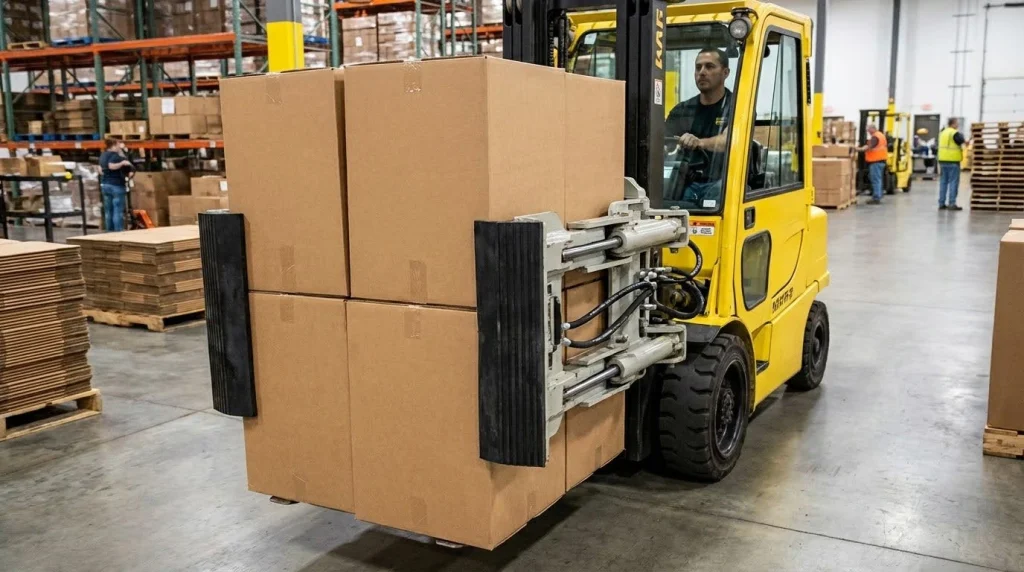
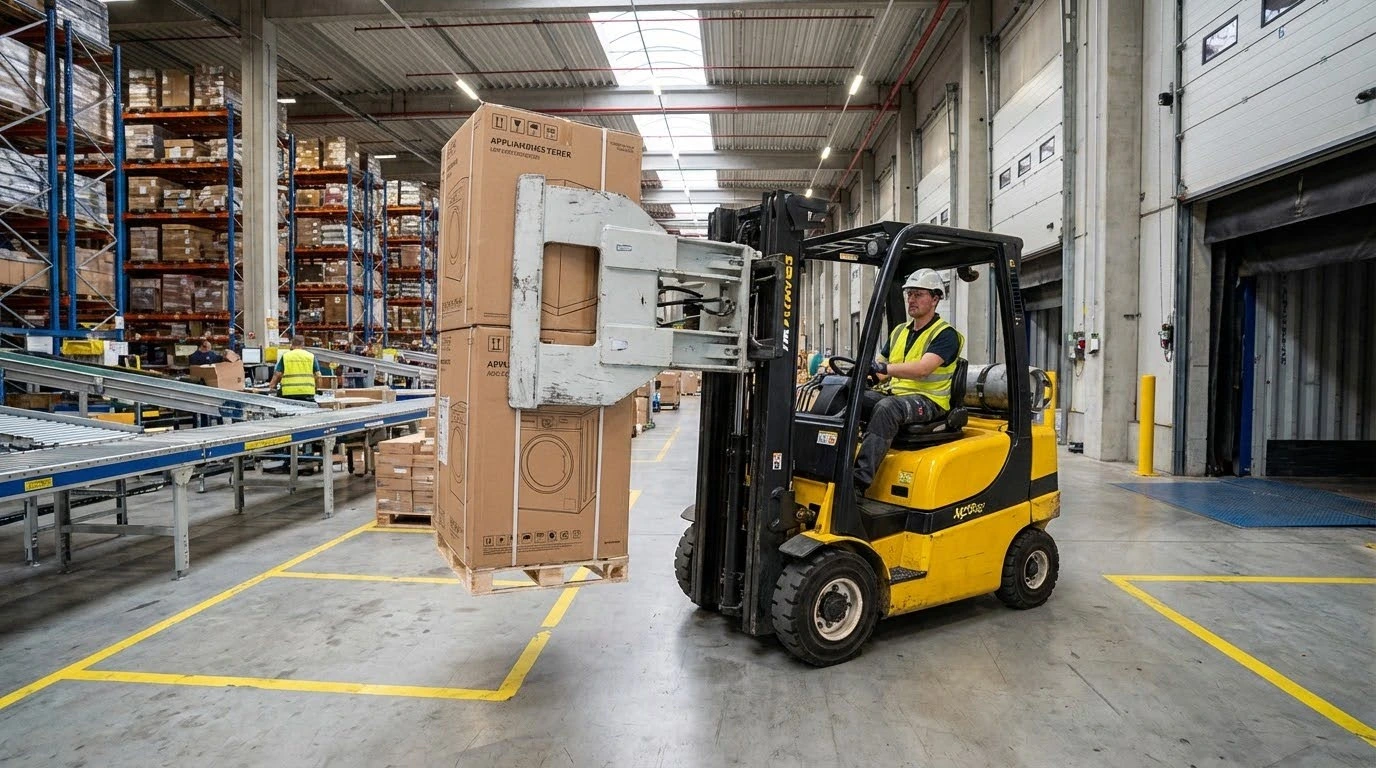
Clamp attachments replace traditional forks and allow forklifts to grip loads securely. These attachments are commonly used for handling materials without pallets.
Examples include:- Carton clamps for boxes
- Bale clamps for textiles or paper
- Appliance clamps for large equipment
Clamp attachments improve stability when transporting delicate or irregularly shaped loads.
Drum Handlers
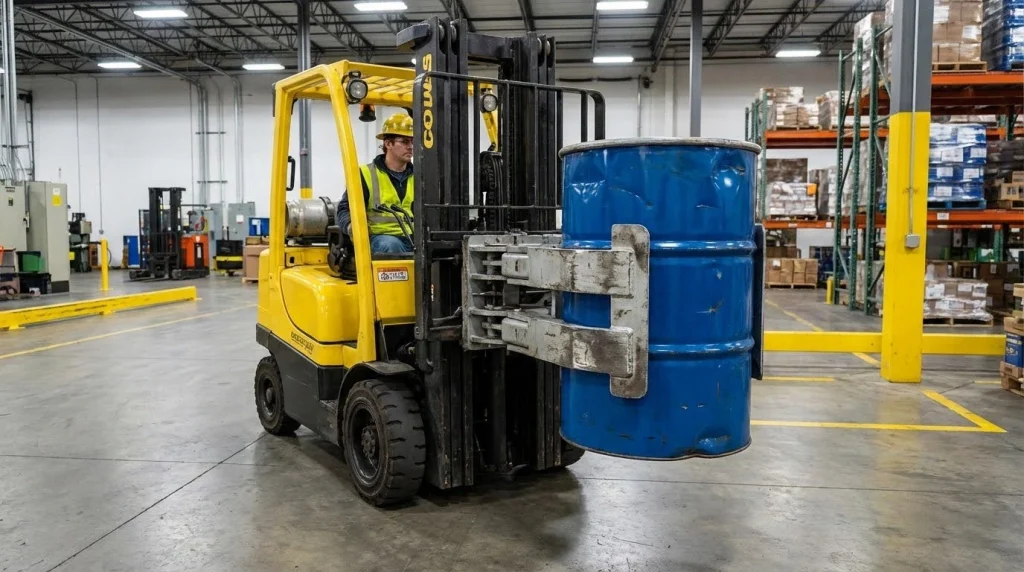
Drum handlers are specialized attachments designed to lift and transport industrial drums safely.
These attachments are commonly used in:- Chemical facilities
- Manufacturing plants
- Oil and gas operations
Drum handlers allow operators to lift, tilt, and position drums without manual handling.
Rotators
Forklift rotators allow operators to rotate loads for dumping or positioning materials. These attachments are especially useful for bulk material handling operations.
Common applications include:- Dumping bins or containers
- Recycling operations
- Agricultural material handling
Rotators improve efficiency in environments where materials need to be emptied or repositioned.
Carpet Poles
Carpet poles are long cylindrical attachments used to lift rolled materials such as carpets, fabric rolls, and cables.
These attachments are commonly used in:- Textile warehouses
- Carpet distribution centers
- Manufacturing facilities
Carpet poles allow forklifts to handle long cylindrical loads safely.
Also read : Workplace Safety Tips for Construction and Industrial Environments
Benefits of Using Forklift Attachments
Forklift attachments provide several operational advantages that improve productivity and safety.
Increased Versatility
Attachments allow forklifts to perform multiple tasks, reducing the need for additional machinery.
Improved Efficiency
Operators can handle different load types quickly without switching equipment.
Reduced Labor Requirements
Attachments reduce manual handling and improve workplace safety.
Cost Savings
Using attachments eliminates the need for specialized equipment in many situations.
Many businesses integrate forklift attachments into broader equipment planning strategies used in construction and warehouse environments to improve operational performance.
Choosing the Right Forklift Attachment
Selecting the appropriate forklift attachment depends on several factors:
- Type of materials being handled
- Load weight and dimensions
- Workplace environment
- Forklift capacity
- Frequency of use
Using the wrong attachment can reduce lifting capacity and compromise safety.
Operators should always ensure that the forklift’s load capacity is sufficient when attachments are installed.
Companies often coordinate forklift attachments with broader material handling systems used in industrial and logistics operations to maximize equipment efficiency.
Safety Considerations for Forklift Attachments
While forklift attachments increase operational flexibility, they also introduce additional safety considerations.
Important safety practices include:
- Verifying attachment compatibility with the forklift
- Inspecting attachments regularly for wear or damage
- Adjusting load capacity calculations
- Training operators on attachment use
Proper training and maintenance are essential for preventing accidents and ensuring safe operations. International workplace safety guidelines also recommend regular equipment inspections and proper operator certification.
Also read : Bulldozer vs Excavator: Key Differences and Applications in Construction
Maintenance of Forklift Attachments
Like forklifts themselves, attachments require regular maintenance to ensure reliable performance.
Maintenance procedures typically include:
- Checking hydraulic connections
- Inspecting attachment locking mechanisms
- Cleaning debris from moving parts
- Replacing worn components
Routine inspections help prevent mechanical failures and extend the lifespan of attachments.
Many organizations combine attachment maintenance with forklift servicing and equipment maintenance programs used in industrial environments to maintain operational reliability.
The Role of Forklift Attachments in Modern Material Handling
Modern warehouses and construction sites rely heavily on efficient material handling systems. Forklift attachments play a critical role in improving equipment flexibility and allowing forklifts to perform specialized tasks.
With the right attachments, a single forklift can handle pallets, drums, containers, pipes, and many other materials. This versatility makes forklifts one of the most valuable machines in logistics and industrial operations.
As businesses continue to optimize workflow and automation, forklift attachments remain an important tool for improving productivity and operational efficiency.
Reliable Forklift Solutions for Your Operations
Understanding the different types of forklift attachments helps businesses improve material handling efficiency and workplace safety. By selecting the right attachment and ensuring proper equipment maintenance, companies can enhance forklift performance while reducing operational costs.
Reliable machinery and professional equipment support play a crucial role in maintaining efficient operations. If your business requires dependable forklift solutions or expert guidance in selecting material handling equipment, contact us today to discuss your operational needs and receive professional assistance tailored to your requirements.