Workplace safety is not a box to tick before work begins it is an ongoing operational discipline that determines whether workers go home safely at the end of every shift. In construction, industrial maintenance, warehousing, and logistics, the consequences of inadequate safety management are direct and severe: falls from height, struck-by incidents, equipment rollovers, crush injuries, and electrocution account for the majority of serious workplace injuries and fatalities across these industries globally.
What makes workplace safety particularly challenging in construction and industrial environments is the constantly changing nature of the hazards. Unlike a fixed office environment, a construction site or industrial facility presents different risks every day as structures rise, equipment moves, materials are delivered, and different trades work in proximity to one another. Managing these dynamic hazards requires more than a static set of rules. It requires a safety culture where every person on site from the site manager to the newest subcontractor understands the risks, knows the controls, and actively participates in maintaining a safe working environment.
This guide covers the most important workplace safety tips across the main risk categories in construction and industrial operations: working at height, equipment operation, material handling, electrical safety, site management, and personal protective equipment. Each section addresses both the nature of the hazard and the practical controls that reduce risk to an acceptable level.
Working at Height
Falls from height are consistently the leading cause of fatal and serious injuries in construction worldwide. The risk exists whenever a worker is at an elevated position from which a fall could cause injury which in practice means any elevation above ground level, not only significant heights.
Use the right access equipment for the task
The choice of access equipment is itself a safety decision. A ladder is appropriate for brief, light-duty tasks where both hands are free and the duration is short. For tasks lasting more than a few minutes, where materials or tools need to be carried, or where both hands must be used, a more stable elevated work platform is required.
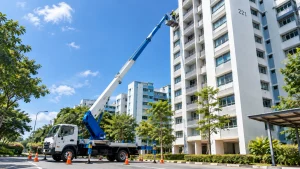
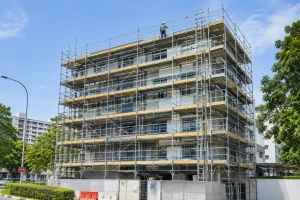
Scissor lifts provide a large, stable platform for work directly above their base on flat, firm surfaces. Boom lifts including articulated and telescopic models provide elevated access to positions that are not directly above the machine, allowing workers to reach over obstacles or into confined areas at height. Mobile scaffolding towers provide a stable platform for extended work periods at moderate heights. Matching the access equipment to the specific task and site conditions is the first and most important step in managing fall risk. Understanding the differences between the main types of aerial work platforms and when each is appropriate is essential knowledge for anyone responsible for planning work at height.
Inspect access equipment before every use
Every piece of access equipment scaffolding, scissor lift, boom lift, or ladder must be inspected before use at the start of each shift. The inspection should confirm that structural components are undamaged, guardrails are in place and secure, wheels or outriggers are locked, controls function correctly, and the rated working load has not been exceeded by the combined weight of workers, tools, and materials on the platform.
Never bypass guardrails or fall protection
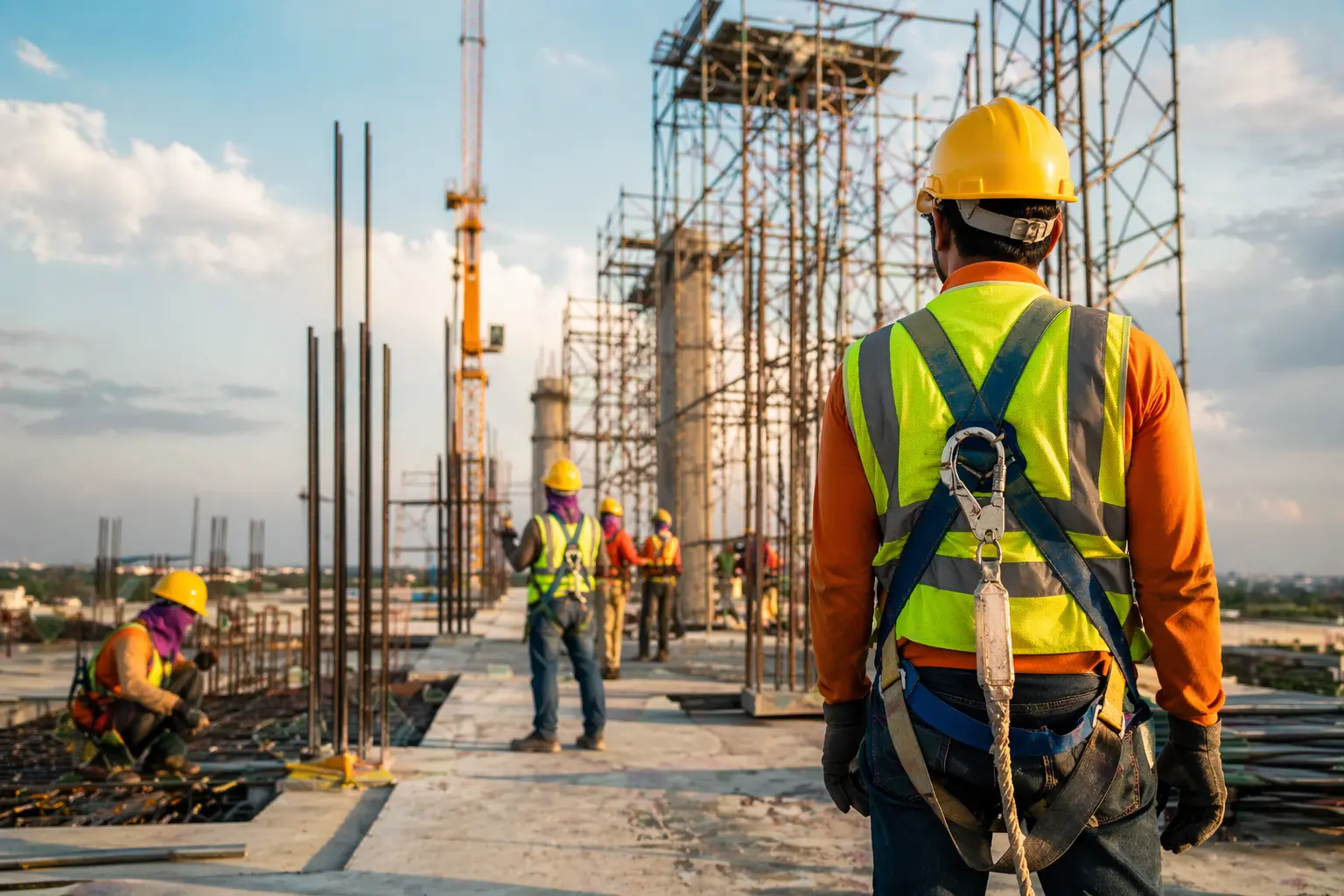
Guardrails, toe boards, and personal fall arrest systems exist for a single purpose: to prevent falls. Removing, bypassing, or failing to use these systems even briefly, and even when it seems inconvenient is one of the most common factors in serious fall incidents. A personal fall arrest system (harness and lanyard) must be worn and correctly attached whenever a worker is in an elevated work platform without adequate edge protection on all sides.
Be aware of overhead hazards
Working at height creates hazards not only for the elevated worker but for those below. Tools, materials, and debris can fall from elevated platforms onto workers at ground level. Toe boards on scaffold platforms, tool lanyards for hand tools, and exclusion zones beneath elevated work areas all reduce the risk of struck-by injuries from falling objects.
Also read : Parts of a Forklift and Their Functions Explained
Equipment Operation Safety
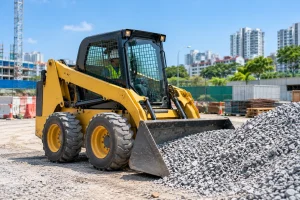
Construction and industrial equipment forklifts, excavators, cranes, boom lifts, and generators are powerful machines that present serious hazards when operated incorrectly, inadequately maintained, or deployed in conditions beyond their design parameters.
Only certified operators may operate licensed equipment
Many types of heavy equipment require operators to hold specific licences or certifications. Forklift operators, crane operators, and mobile elevated work platform (MEWP) operators are subject to licensing requirements in most jurisdictions. Using an unlicensed operator is both a serious safety risk and a legal liability. Employer responsibility includes verifying that operators hold current, valid qualifications for the specific equipment they are assigned to operate.
Conduct pre-operation inspections
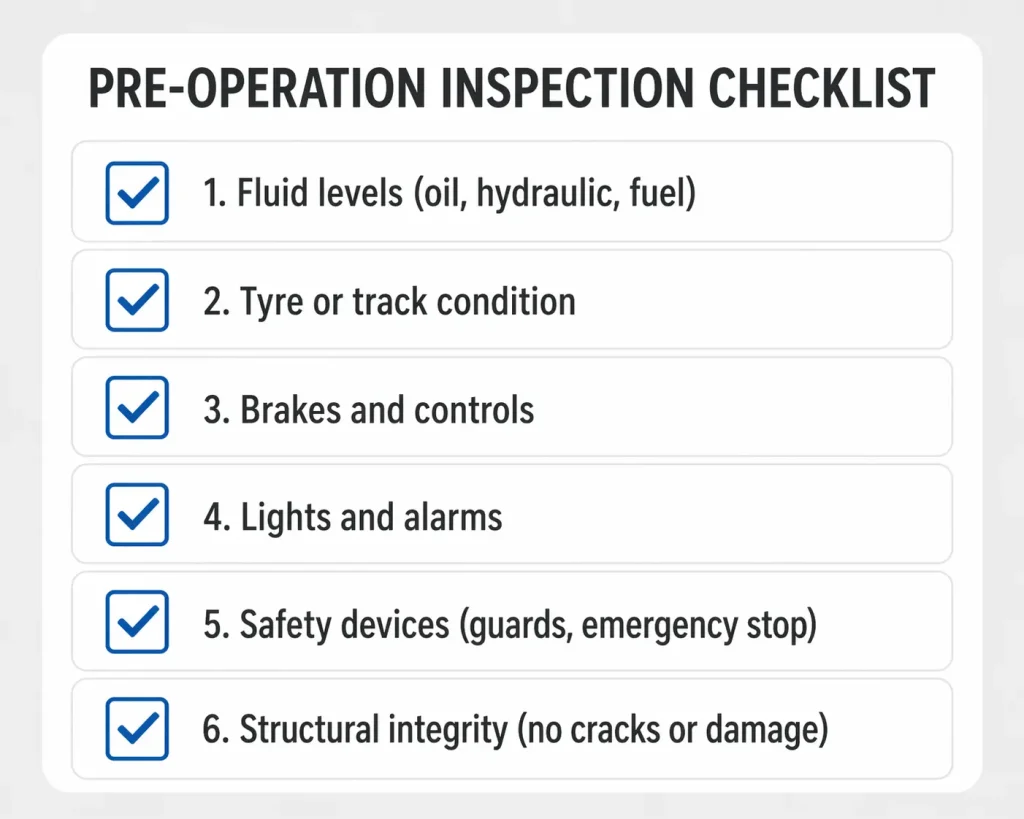
Every piece of equipment should be inspected by the operator before each shift. A pre-operation inspection checking fluid levels, tyre condition, brakes, lights, safety devices, and structural integrity takes only a few minutes and identifies developing problems before they become failures under load. Equipment that fails inspection must be taken out of service and tagged out until repaired by a qualified technician.
Understand rated capacities and never exceed them
Every piece of lifting and material handling equipment forklifts, cranes, boom lifts, scissor lifts carries a rated load capacity that represents the maximum safe working load under specified conditions. Exceeding this capacity does not simply reduce the safety margin by a proportional amount: it fundamentally changes the structural behaviour of the machine, potentially causing sudden, catastrophic failure without warning.
For forklifts, the rated capacity decreases as the load is raised higher and as the load centre moves further from the mast. For cranes, the rated capacity varies with the boom angle and radius. Operators must understand and respect the load charts for their equipment, not simply the headline capacity figure. The principles underlying safe load management including the stability triangle concept for forklifts and load moment considerations for cranes are explained in detail in technical guides on the structural components of lifting equipment.
Maintain exclusion zones around operating equipment
Moving equipment particularly slewing cranes, reversing vehicles, and swinging excavator arms creates dynamic hazard zones that change position continuously. Clearly defined and enforced exclusion zones, combined with spotters where required, prevent the struck-by incidents that occur when pedestrians enter the operating radius of equipment that the operator cannot see.
Reversing incidents are among the most common equipment-related fatalities on construction sites. Reversing alarms, convex mirrors, camera systems, and dedicated traffic management plans are all standard controls for managing vehicle movement on active sites.
Material Handling Safety
Moving materials whether by forklift, crane, manual handling, or conveyor presents hazards at every stage: loading, transit, placement, and unloading.
Never walk or work under a suspended load
A suspended load whether on a crane hook, forklift forks, or any other lifting device must never have people beneath it. Rigging failures, equipment malfunctions, and load shifts can cause a suspended load to fall without warning. Exclusion zones beneath any suspended load are a fundamental safety requirement and must be enforced without exception.
Secure loads before moving
Palletised loads on forklifts must be stable, within the rated capacity, and carried with the forks at the correct height and tilt angle for travel. Crane lifts must use correctly rated and inspected rigging slings, shackles, hooks, and lifting beams in the correct configuration for the load being lifted. Unsecured or improperly rigged loads can shift or fall during movement, with potentially fatal consequences for anyone in the path.
Apply correct manual handling techniques
Not all material handling involves machinery. Manual handling lifting, carrying, pushing, pulling remains a significant source of musculoskeletal injury in construction and industrial workplaces. Training workers in correct manual handling technique, providing mechanical aids (trolleys, pallet jacks, scissor lift tables) for heavy or awkward loads, and designing workflows that minimise manual handling distance and frequency all reduce injury risk.
Understanding the difference between manual material handling equipment and powered alternatives helps operations managers identify where mechanical assistance can reduce both injury risk and physical fatigue over long shifts.
Also read : What Is Scaffolding in Construction? Types, Uses, and Key Components
Electrical Safety
Electrical hazards on construction sites include contact with overhead power lines, energised tools and equipment, temporary electrical installations, and generator connections.
Treat all power lines as live
Overhead power lines on or adjacent to construction sites must be treated as energised at all times, regardless of assurances from utility providers. Contact between plant equipment crane booms, scaffold tubes, elevated platforms and overhead lines is invariably fatal. Safe working distances from overhead lines must be established, marked, and enforced. Where equipment must work near power lines, physical barriers (goal posts) and spotter systems are required.
Use correctly rated temporary power systems
Temporary power on construction sites from generators, distribution boards, and site wiring must be installed and maintained by qualified electricians. Generators must be correctly earthed and connected through properly rated transfer switches or distribution equipment. Overloaded circuits, damaged cables, and improvised connections are among the most common causes of electrical incidents on sites.
Understanding how to correctly size and connect temporary power generation equipment for construction site use is part of ensuring the electrical safety of the site power supply from the point of generation.
Inspect tools and leads before use
Portable electric tools and extension leads must be inspected before each use. Damaged insulation, broken plugs, and exposed conductors present electrocution hazards. All portable tools and leads on construction sites should be subject to regular testing and tagging by a qualified person, and any item that fails inspection must be immediately removed from service.
Site Safety Management
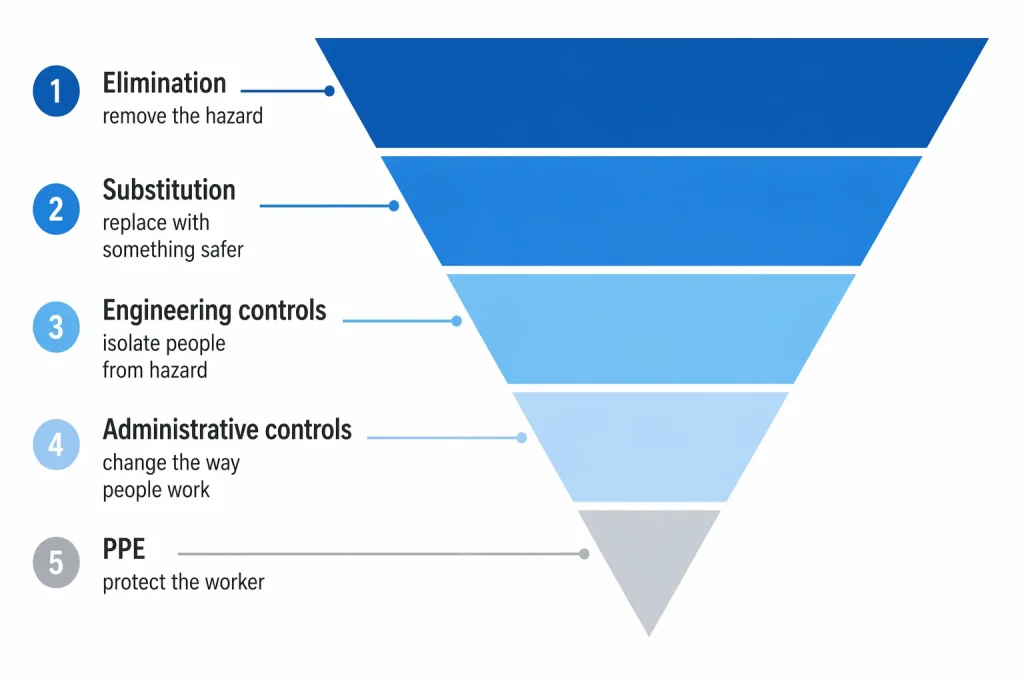
Individual safety controls are only as effective as the management system that implements and maintains them.
Conduct regular toolbox talks
A toolbox talk a brief safety briefing conducted at the start of a shift or before a specific activity begins is one of the most effective tools for maintaining safety awareness on an active site. It takes five to ten minutes, involves all workers in the relevant area, and addresses the specific hazards of the work planned for that shift. Well-conducted toolbox talks are also an opportunity for workers to raise safety concerns before they become incidents.
Maintain a clean and organised site
Slips, trips, and falls on the same level from cluttered walkways, uneven surfaces, wet floors, and debris are among the most frequent causes of workplace injury. A clean, organised site reduces these hazards and also reduces fire risk, improves equipment access, and makes hazardous conditions easier to identify. Housekeeping is not a minor administrative matter it is a direct safety control.
Implement a permit-to-work system for high-risk activities
High-risk activities working at height, confined space entry, hot work, electrical isolation, and working near live services should be subject to a formal permit-to-work (PTW) system. A PTW requires that hazards are formally identified, controls are put in place and verified, and responsible persons sign off on the work before it begins. This structured approach prevents the “normalisation of risk” that occurs when high-risk tasks become routine.
Investigate near-misses, not just incidents
Near-misses events that could have resulted in injury or damage but did not are the most valuable source of safety intelligence on any site. A near-miss is a warning that a hazard is present and the controls are inadequate. Sites that investigate and act on near-misses prevent the incidents that would otherwise follow. Sites that ignore near-misses are accumulating risk that will eventually materialise as a serious injury or fatality.
Personal Protective Equipment
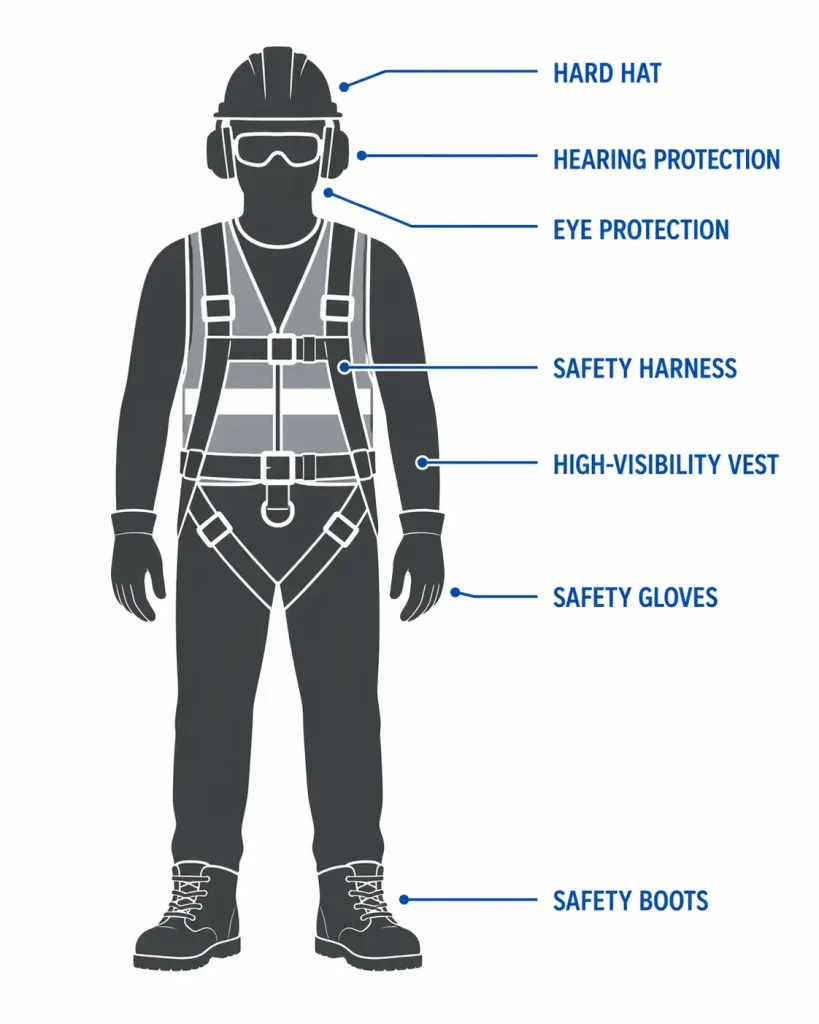
Personal protective equipment (PPE) is the last line of defence in the hierarchy of controls it reduces the severity of injury when other controls fail, but it does not eliminate the hazard. PPE must be correctly selected, fitted, maintained, and used consistently.
- Hard hat
Protects against falling objects and impacts. Must meet the relevant standard for the hazard (falling objects vs electrical), be correctly fitted, and replaced after any significant impact even if undamaged externally.
- Safety footwear
Steel-toe or composite-toe boots protect against crush injuries from falling objects and equipment. Non-slip soles reduce slip risk on wet or uneven surfaces.
- High-visibility vest or clothing
Essential wherever workers are in the path of vehicle movements. Must be worn by all personnel in vehicle operating zones.
- Safety harness and lanyard
Required whenever working at height without adequate edge protection. Must be correctly fitted, inspected before use, and attached to a rated anchor point not to scaffold tubes, guardrails, or other non-engineered attachment points.
- Hearing protection
Required in high-noise environments near generators, compressors, pneumatic tools, and heavy machinery. Long-term noise exposure causes irreversible hearing damage that develops gradually and is often not noticed until significant loss has occurred.
- Eye and face protection
Required for grinding, cutting, sandblasting, chemical handling, and any task generating projectiles or splashes.
For technical reference on occupational safety standards, hierarchy of controls, and international best practice for managing workplace hazards, resources on construction and industrial workplace safety management provide comprehensive background on how safety management systems are structured and implemented.
Also read : Standby vs Prime Generator: Key Differences Explained
Build a Safer Worksite with the Right Equipment and Support
Workplace safety in construction and industrial operations is built on the right combination of properly specified equipment, well-trained people, and a management culture that treats safety as a non-negotiable operational priority. The tips in this guide address the most significant risk categories but they are only effective when applied consistently, reinforced regularly, and backed by equipment that meets safety standards and is properly maintained.
Using equipment that is correctly rated for the task, regularly serviced, and operated by trained personnel is not just a compliance requirement it is the foundation of a safe, productive, and sustainable operation.
RR Machinery offers a comprehensive range of construction and industrial equipment for sale and rental, including boom lifts, scissor lifts, mobile scaffolding, forklifts, and power generators all maintained to operational standard and supported by factory-certified technicians. Explore our full range of safe, well-maintained equipment solutions or contact our team for practical advice and a clear quotation tailored to your project requirements.