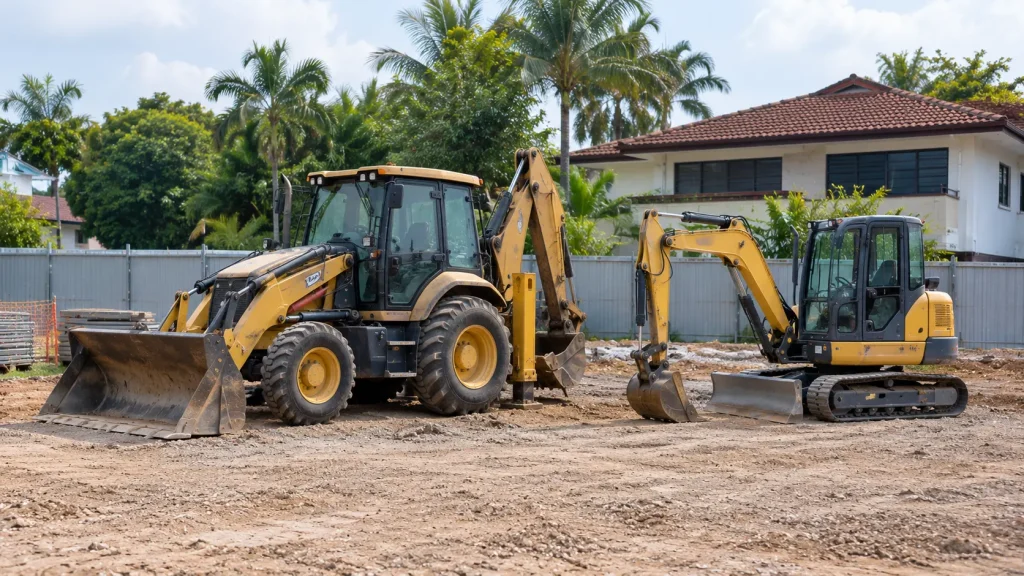
On a small site, the choice of digging machine often comes down to two candidates. One is the backhoe loader, a wheeled machine with a loader bucket at the front and a digging arm at the back. The other is the mini excavator, a compact tracked machine that digs with a jointed arm and turns on its own base. Both can dig a trench, both fit on jobs that are too small for a full size excavator, and both are common on residential, utility, and landscaping work.
They are not interchangeable, though. Each machine is built around a different idea of what small site work involves, and choosing the wrong one can mean slower progress, more damage to the ground, or a second machine hired halfway through the job. This guide compares the two on the points that matter, then walks through common jobs to show which machine usually fits best.
Two Different Machines for Similar Work
A backhoe loader is essentially two machines in one. The loader end scoops, carries, and loads material, while the backhoe end digs below ground level. It travels on rubber tyres, can move quickly between nearby work areas, and is often driven short distances on public roads where permitted. Further general background on its design and history is available through Wikipedia’s overview of backhoe loaders.
A mini excavator is a scaled down crawler excavator. Its upper structure, carrying the cab, engine, and digging arm, rotates fully on the tracked base, so it can dig and dump in any direction without moving. Most have a small dozer blade at the front for backfilling and levelling, and many are designed to work in very tight spaces. Further general background is available through Wikipedia’s overview of compact excavators.
Each end of the machine has its own controls and techniques, and our guide on how a backhoe loader works explains both in more detail.
How the Two Machines Compare
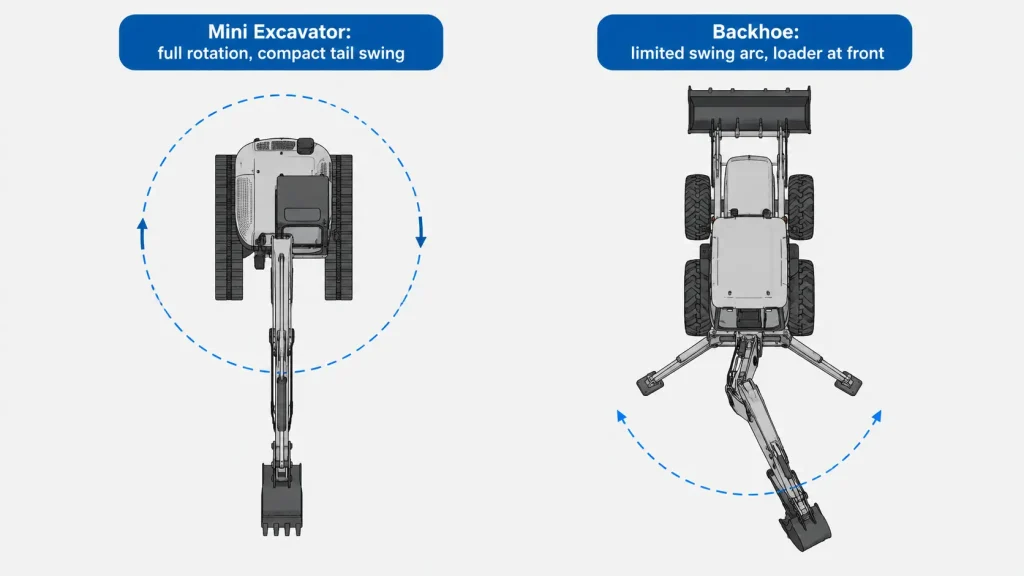
The differences between a backhoe and a mini excavator show up most clearly in a handful of practical areas, each of which can decide the choice on its own for a particular site.
Digging. The mini excavator is the more capable digger for its size. Its arm is designed purely for digging, it can rotate a full circle, and many models can also offset the boom to one side to dig close to walls and fences. A backhoe digs well, but its arm swings through a limited arc, and the machine needs its stabilisers lowered before every dig, which slows work that involves frequent repositioning.
Loading and carrying. This is where the backhoe pulls ahead. Its front loader bucket can scoop, carry, and load loose material straight into a truck or move it across the site, while a mini excavator can only load what is within reach of its arm and has no way to carry material any distance. On jobs that mix digging with moving material around, the backhoe often saves bringing in a second machine.
Size and access. A mini excavator is narrower, shorter, and lighter, so it fits through gates, between buildings, and into gardens and courtyards where a backhoe cannot go. Many mini excavators have a reduced or zero tail swing, meaning the rear of the machine stays within the width of the tracks as it rotates, which makes them safer and easier to use beside walls and traffic.
Mobility between work areas. The backhoe’s tyres let it travel quickly around a large site or between nearby sites, which suits contractors working at several locations in a day. A mini excavator moves slowly on its tracks and is usually brought to site on a trailer or truck, but once there it can climb slopes and cross soft ground more easily.
Ground impact. Rubber tracks spread a mini excavator’s weight over a large area, so it tends to leave less damage on lawns, soft ground, and finished surfaces. A backhoe’s tyres concentrate its weight, and turning on soft ground can leave ruts, although its tyres do less damage than steel tracks on hard paved surfaces.
Stability and lifting. The mini excavator’s full rotation and low centre of gravity make it steady for digging in any direction, while the backhoe relies on its stabilisers and lowered front bucket for a firm base. Neither should be treated as a crane, and any lifting must follow the machine’s load chart and the manufacturer’s instructions.
Also read: Types of Excavators for Construction and Earthmoving
Matching the Machine to Common Jobs
Most decisions become clear once the job itself is described. The examples below show which machine usually suits common small site work, though the final choice always depends on the specific site.
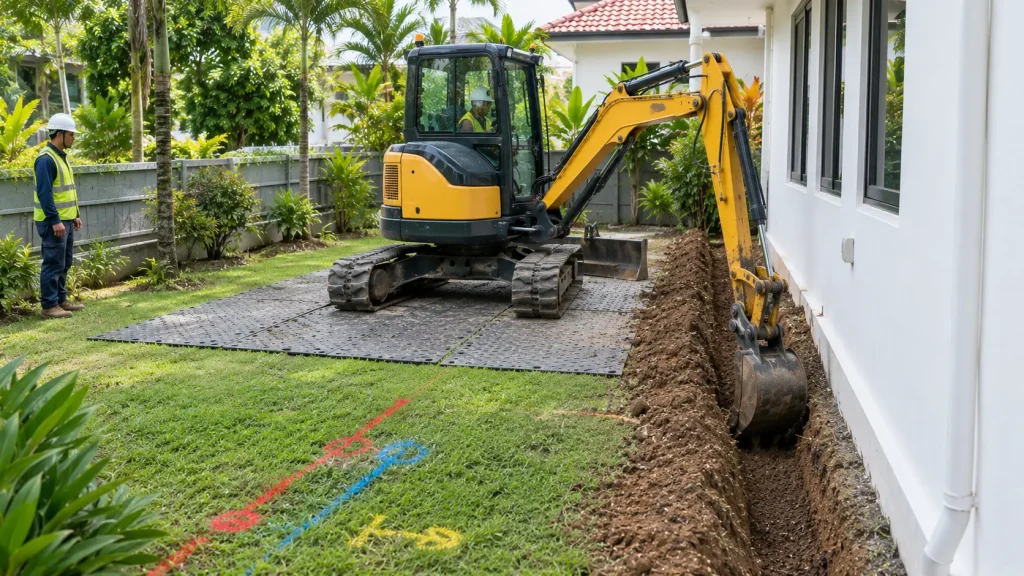
Trenching for water, drainage, or cables. For long trenches on open ground, especially where spoil has to be moved or loaded, a backhoe works well. For trenches beside buildings, in gardens, or between existing services, the mini excavator’s compact size and offset boom usually make it the better tool.
Digging footings for a small structure. Footings in a backyard or tight urban plot favour the mini excavator, which can reach the work without damaging surrounding areas and can be brought in on a trailer. On an open plot where the spoil also needs to be loaded and taken away, a backhoe can do both jobs.
Landscaping and garden works. The mini excavator is often preferred, because its rubber tracks are gentler on lawns and its size suits gardens and courtyards. Its dozer blade also helps with spreading and levelling soil once digging is done.
Site clearance and small earthworks. Where material needs to be gathered, moved, and loaded across a site, the backhoe’s loader end gives it a clear advantage. Larger clearance jobs may call for dedicated land clearing equipment such as dozers or mulchers instead.
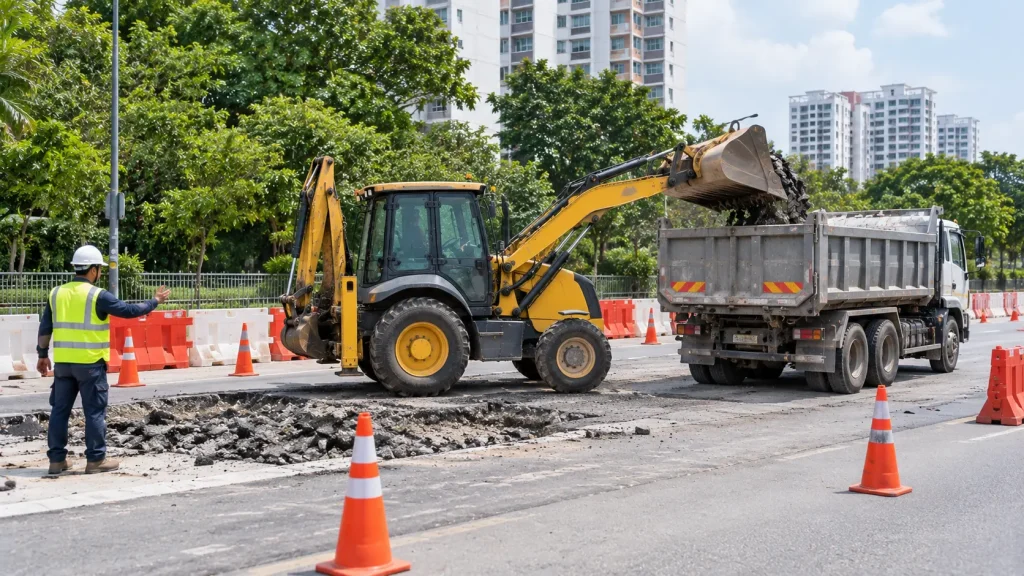
Road and pavement repairs. The backhoe is a common choice for road repairs, since it can travel between locations, break out and dig small sections, and load the waste onto a truck. A mini excavator suits repairs in narrow lanes or pedestrian areas where a larger machine would block access.
Working indoors or under low structures. Some mini excavators are compact enough to work inside buildings, under canopies, or in basements, often fitted with electric or low emission power. A backhoe is rarely suitable for this kind of work.
On many projects, the best answer is to use both, with a mini excavator handling the tight digging and a backhoe moving and loading material in the open areas. Groundwork of this kind is usually one stage of the wider site preparation process that gets a plot ready for building.
Where Each Machine Fits in the Wider Excavator Family
A mini excavator is the smallest member of a wide range of excavators, and some jobs that look like mini excavator work turn out to need something bigger. Deeper trenches, larger foundations, and longer digging programmes are usually faster with a midi or standard excavator, while very tight indoor work may call for the smallest micro machines. The full range of excavator types, from compact to large, is explained below.
The backhoe sits in a different family altogether, alongside loaders rather than excavators, which is why it is often compared with full size excavators as well. That comparison, including when a standard excavator is the better choice over a backhoe, is covered in the guide below.
Also read: Backhoe vs Excavator: Differences, Uses & How to Choose
Attachments That Change the Comparison
Both machines can be fitted with attachments that extend what they can do. Mini excavators commonly use buckets of different widths, ditching buckets, augers, hydraulic breakers, grapples, and tilting buckets that help shape slopes and trenches. Backhoes can use a similar range on the rear arm, along with forks, multipurpose buckets, and other tools on the front loader.
The right attachment can sometimes tip the decision. A mini excavator with a tilting bucket may finish a drainage channel more neatly than a backhoe, while a backhoe with pallet forks can move materials as well as dig. Choosing the right bucket has a large effect on productivity, so it pays to know the different excavator bucket types before the machine arrives on site.
Questions to Ask Before Choosing
A short set of questions usually points clearly to one machine or the other:
- How much of the work is digging, and how much is moving or loading material?
- How tight is the access, including gates, gaps between buildings, and overhead clearance?
- What is the ground like, and how much damage to lawns or finished surfaces is acceptable?
- Will the machine need to move between work areas or nearby sites during the job?
- How deep and how wide are the trenches or excavations?
- Which attachments will the job need, and are they available for that machine?
If the answers point to confined digging with little material handling, a mini excavator is usually the better fit. If they point to a mix of digging, loading, and moving between locations on open ground, a backhoe often wins.
Working Safely With Either Machine
Both machines share the same basic hazards: people struck by the arm or bucket, machines overturning on slopes or near excavation edges, and strikes on underground services. Before digging, services should be located and marked, and machines should be kept back from the edges of trenches and excavations at a distance set by a competent person for the ground conditions.
The area around the machine should be kept clear, especially within the swing of a mini excavator or the working area of a backhoe, and operators should be trained and familiar with the specific machine. Singapore’s Ministry of Manpower publishes detailed Workplace Safety and Health guidance covering excavation work and machinery on local sites, and the wider principles for working around heavy plant are covered below.
Equipment Support for Small Site Earthworks
Choosing between a backhoe and a mini excavator starts with a clear picture of the job. When you contact the team, it helps to describe the type and depth of digging, how much material needs to be moved or loaded, the access to the site, the ground conditions, and how long the work is expected to take. With these details, the right equipment can be recommended from the start rather than adjusted after delivery.
RR Machinery Pte Ltd supports Singapore’s construction and industrial sectors with reliable heavy machinery solutions tailored to your specific site conditions. Browse our complete heavy machinery services or contact our team today for practical advice on the right equipment for your project.