At the end of every working day, a construction site is left holding some of the most valuable and most dangerous assets a project owns. Excavators, loaders, forklifts, boom lifts, generators, and compressors sit in the open overnight, often for weeks, and each one is a target for theft, vandalism, fuel siphoning, or misuse by someone who should not be anywhere near the controls.
Securing heavy equipment is about more than locking a door. It combines a controlled site, sensible parking, measures on the machines themselves, good records, and a routine that the whole team follows. This guide sets out practical steps for each of these, explains how to leave every machine in a safe state when work stops, and covers who is responsible when the equipment is rented.
Why Securing Heavy Equipment Matters
The cost of a stolen or damaged machine goes well beyond its value. A missing excavator or generator can stop work for days while a replacement is found, push back the programme, and trigger penalties, extra hire costs, and insurance claims. Vandalism can disable machines in ways that are not obvious until they are started, and fuel theft drains budgets quietly over time.
Security is also a safety issue. An unattended machine with its keys in the ignition, its bucket raised, or its boom extended can injure trespassers, including children, or roll and cause damage if it is not left in a stable state. A machine that has been tampered with overnight can also fail during use the next morning. Treating security and safety as one routine protects both the equipment and the people around it.
Start With a Secure Site Perimeter
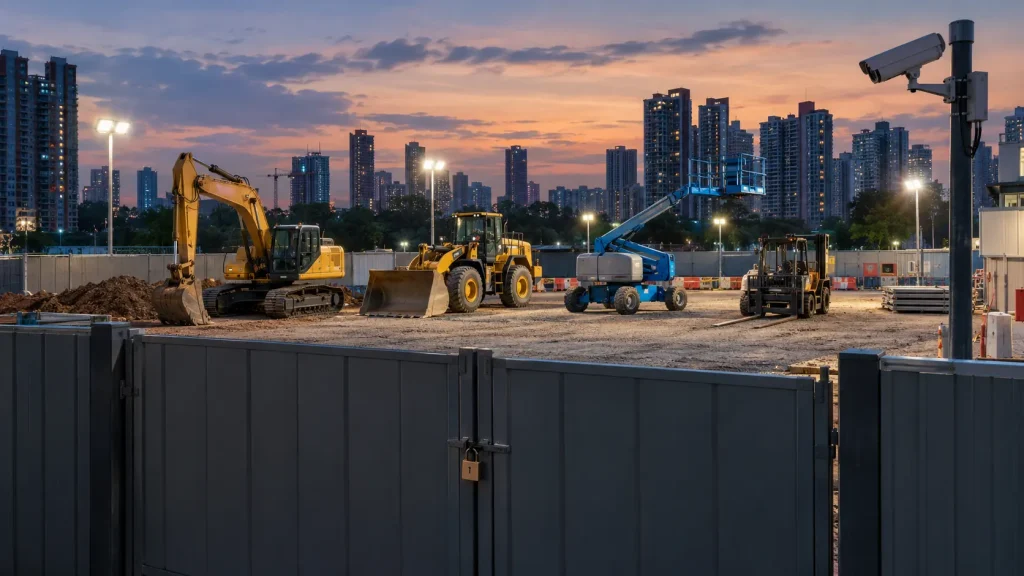
The first line of defence is keeping unauthorised people out of the site altogether. Solid hoarding or fencing around the whole site, with as few entry points as practical, makes it far harder for anyone to drive a machine away or carry off smaller items. Gates should be lockable, kept closed outside working hours, and wide enough for deliveries without being left open for convenience.
Lighting and visibility deter most opportunistic thieves. A well lit site, especially around entrances and the equipment compound, makes it harder to work unseen, while clear signage stating that the site is monitored adds a further deterrent. Larger or higher risk sites often add CCTV, intruder alarms, or security guards, particularly where valuable machines stay on site for long periods. Where the perimeter, access routes, and compounds sit within the overall layout is part of the wider planning covered below.
Also read: Construction Site Planning: A Complete Guide
Create a Dedicated Equipment Compound
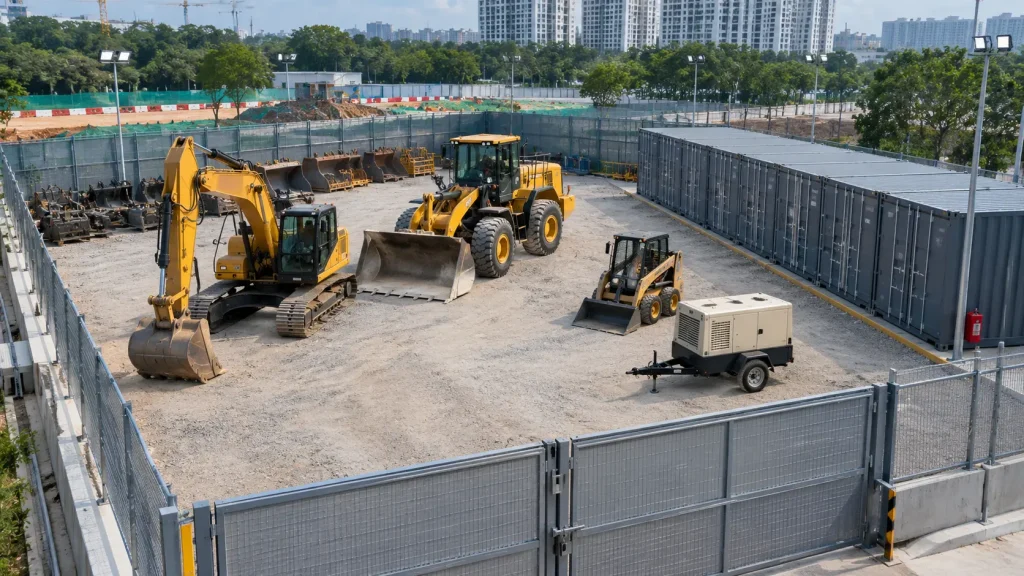
Machines scattered across a site at the end of the day are hard to watch and easy to reach. A dedicated parking area, set back from the boundary and away from public roads, keeps equipment in one place where lighting, cameras, and patrols can cover it effectively.
How machines are parked inside the compound also matters. Placing larger machines so they block the paths of smaller, easier to move equipment makes a quick theft much harder. Small, portable, and high value items, such as generators, compressors, attachments, power tools, and spare batteries, should be locked inside steel containers or secure stores rather than left in the open, since they are the items most often taken.
Lock Down the Machines Themselves
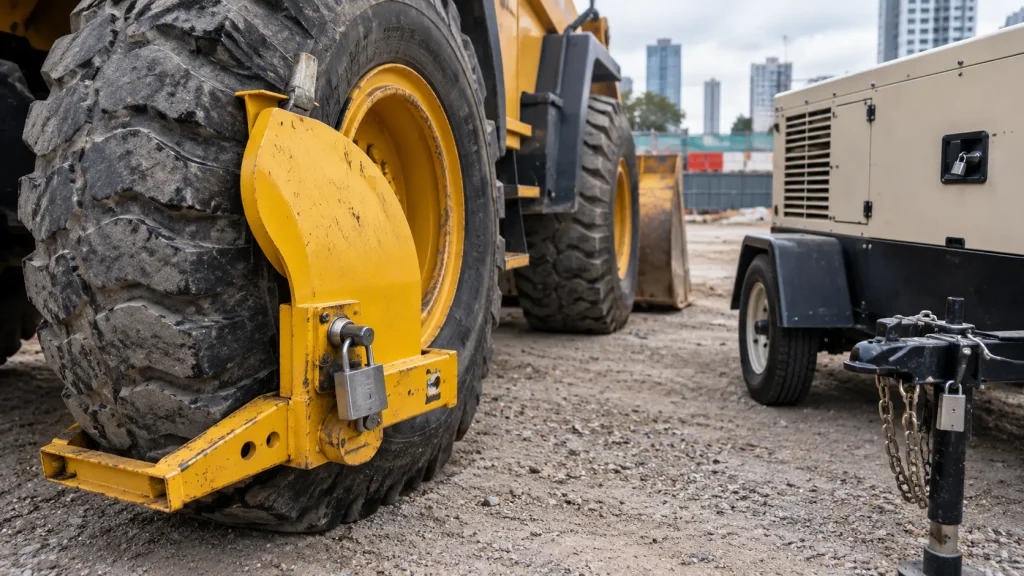
Even with a strong perimeter, each machine should be difficult to start, move, or strip. Several layers of protection work better than any single measure, because a determined thief who defeats one barrier still faces the next.
Key Control
Keys left in machines, on dashboards, or in unlocked site offices make theft effortless. Keys should be removed at the end of every shift and stored in a locked key cabinet or safe, with a simple log of who holds which key during the day.
Many machines from the same manufacturer can share common keys, which means one key may start several machines on different sites. Where that risk exists, keyless start systems that require a code, card, or fob for each operator add valuable protection, and they also help ensure that only trained and authorised people can operate each machine.
Immobilisers and Isolation Switches
Immobilisers prevent a machine from starting without a valid code or device, and are one of the most effective deterrents against theft of the whole machine. Battery isolation switches, which disconnect the electrical system, add another layer and also reduce the risk of electrical faults or fires when the machine is left unattended.
Some hydraulic and fuel systems can also be isolated so that the machine cannot be moved or operated even if the engine is started. The machine’s manual and the supplier can advise which options are available or already fitted.
Physical Locks
Visible physical locks deter casual thieves and slow down determined ones. Cab doors, windows, engine compartments, and control panels should be locked. Wheel clamps and track locks stop machines being driven away, hitch locks protect towable equipment such as generators and compressors, and lockable fuel caps help prevent siphoning.
Locking the cab and covering the controls also protects against vandalism, which often targets glass, seats, and displays. Where machines have removable control panels or keypads, these should be taken off and stored securely.
Tracking and Telematics
GPS trackers and telematics systems record where each machine is and when it is running. Geofencing can send an alert the moment a machine is started outside working hours or moves beyond the site boundary, giving a chance to respond before it disappears completely.
Telematics data is also useful beyond security. Engine hours, fuel use, and location records support maintenance planning and utilisation reviews, so the same system often pays for itself in more than one way.
Leave Every Machine in a Safe State
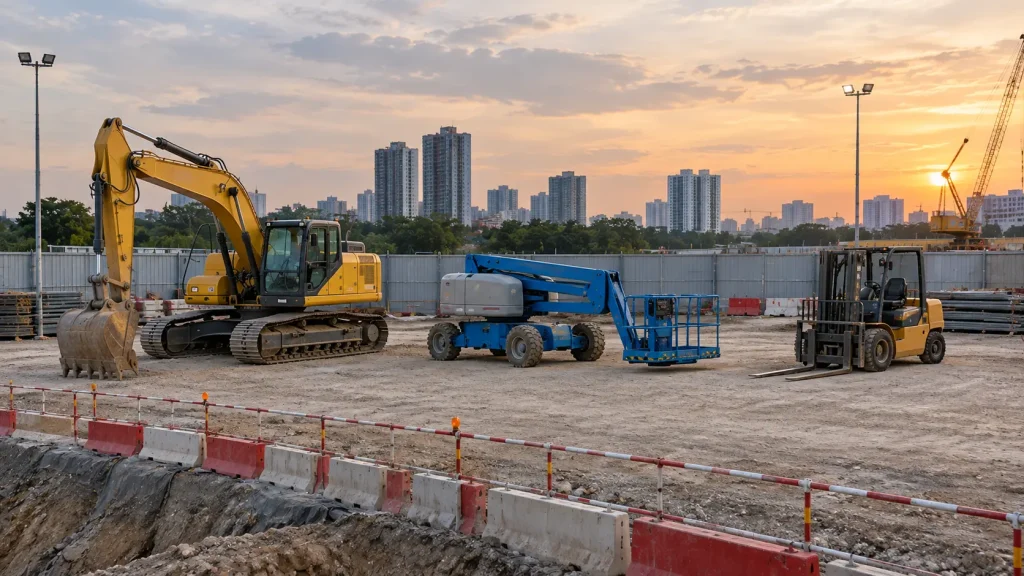
A secure machine should also be a safe one. At the end of each shift, park on firm, level ground away from excavation edges, slopes, and traffic routes, and well clear of anything that could fall onto it. Lower buckets, blades, forks, and attachments fully to the ground, engage the parking brake, and use chocks where there is any chance of movement. Switch off the engine, remove the key, and close and lock the cab.
Access equipment needs particular care. Boom lifts and scissor lifts should be fully lowered and stowed, never left with a platform raised, and the correct shutdown sequence for a boom lift is covered in How to Operate a Boom Lift Safely: A Step-by-Step Guide. Forklifts should be parked with the forks flat on the floor, as explained in Forklift Safety Tips for Safe and Efficient Operations. Singapore’s Ministry of Manpower publishes detailed Workplace Safety and Health guidance covering machinery and site safety, and the wider principles for working with heavy plant are covered below.
Protect Fuel, Batteries, and Smaller Equipment
Fuel theft is common because it is quick and leaves no obvious sign until a machine runs dry. Lockable fuel caps, secure fuel storage tanks, and controlled refuelling all help, as does tracking fuel use against machine hours so that unexplained losses stand out. Good fuel management also lowers operating costs, a topic covered in Fuel Saving Tips for Heavy Equipment Operations.
Batteries, attachments, and portable equipment are attractive because they are easy to carry. Remove portable batteries where practical, lock attachments to fixed points or store them in containers, and keep generators and compressors in locked enclosures or chained to secure anchors when they cannot be moved inside.
Keep Records That Help Recovery
Good records make stolen equipment easier to trace and claims easier to settle. Keep an up to date list of every machine and major attachment on site, with serial numbers, identification numbers, photographs, and any distinctive marks. Adding visible and hidden identification marks makes machines harder to sell and easier to prove ownership of.
If equipment is stolen, report it immediately to the Singapore Police Force, the equipment owner or rental company, and the insurer, and share the serial numbers, photographs, and any tracking data available. Acting quickly gives the best chance of recovery.
An End of Day Security Routine
Security works best as a routine rather than a one off effort. A short checklist, completed by a named person at the end of every shift, keeps standards consistent:
- Return every machine to the equipment compound or its designated parking position.
- Lower all attachments, engage brakes, and leave each machine in a stable, safe state.
- Remove all keys and store them in the locked key cabinet, updating the key log.
- Lock cabs, engine covers, and fuel caps, and fit wheel or track locks where used.
- Switch on immobilisers and battery isolation switches.
- Lock away portable equipment, attachments, and tools.
- Check that gates are locked, lighting is on, and cameras or alarms are working.
Building these steps into the wider daily site checks makes them easier to remember, and a full set of site level checks is covered below.
Also read: Construction Site Safety Checklist: A Complete Guide
Securing Equipment Over Long Breaks
Sites are most vulnerable during long breaks, such as public holidays and extended shutdowns, when they may be unattended for days. Before a long break, consider moving small and portable equipment off site or into the most secure storage, emptying or locking fuel tanks where practical, and parking larger machines so they block each other in.
Arrange extra patrols or remote monitoring for the period, confirm that tracking alerts reach someone who can act on them, and check the site as soon as work resumes. Every machine should be inspected before it is used again, since tampering or vandalism may not be obvious at first glance.
Who Is Responsible for Rented Equipment?
When equipment is rented, the hirer is usually responsible for keeping it secure while it is on site, and the rental agreement normally sets out what is expected, including how machines should be stored and what happens if they are lost or damaged. It is worth reading these terms before the equipment arrives and agreeing on any security measures the supplier provides, such as tracking or immobilisers.
If anything goes wrong, contact the rental company straight away. Prompt reporting helps with recovery, insurance, and arranging replacement equipment so the project can keep moving.
Reliable Equipment Rental With Support
Choosing equipment that suits your site, and knowing how it should be secured, starts with a conversation about the work. When you contact the team, it helps to describe the machines you need, how long they will stay on site, whether the site is staffed outside working hours, and any security arrangements already in place. With these details, the right equipment and security advice can be provided from the start.
RR Machinery Pte Ltd offers heavy machinery rental for construction and industrial sites across Singapore, including boom lifts, scissor lifts, forklifts, mobile scaffolding, and power generators, backed by servicing support. Contact us today to discuss your requirements or request a quotation.