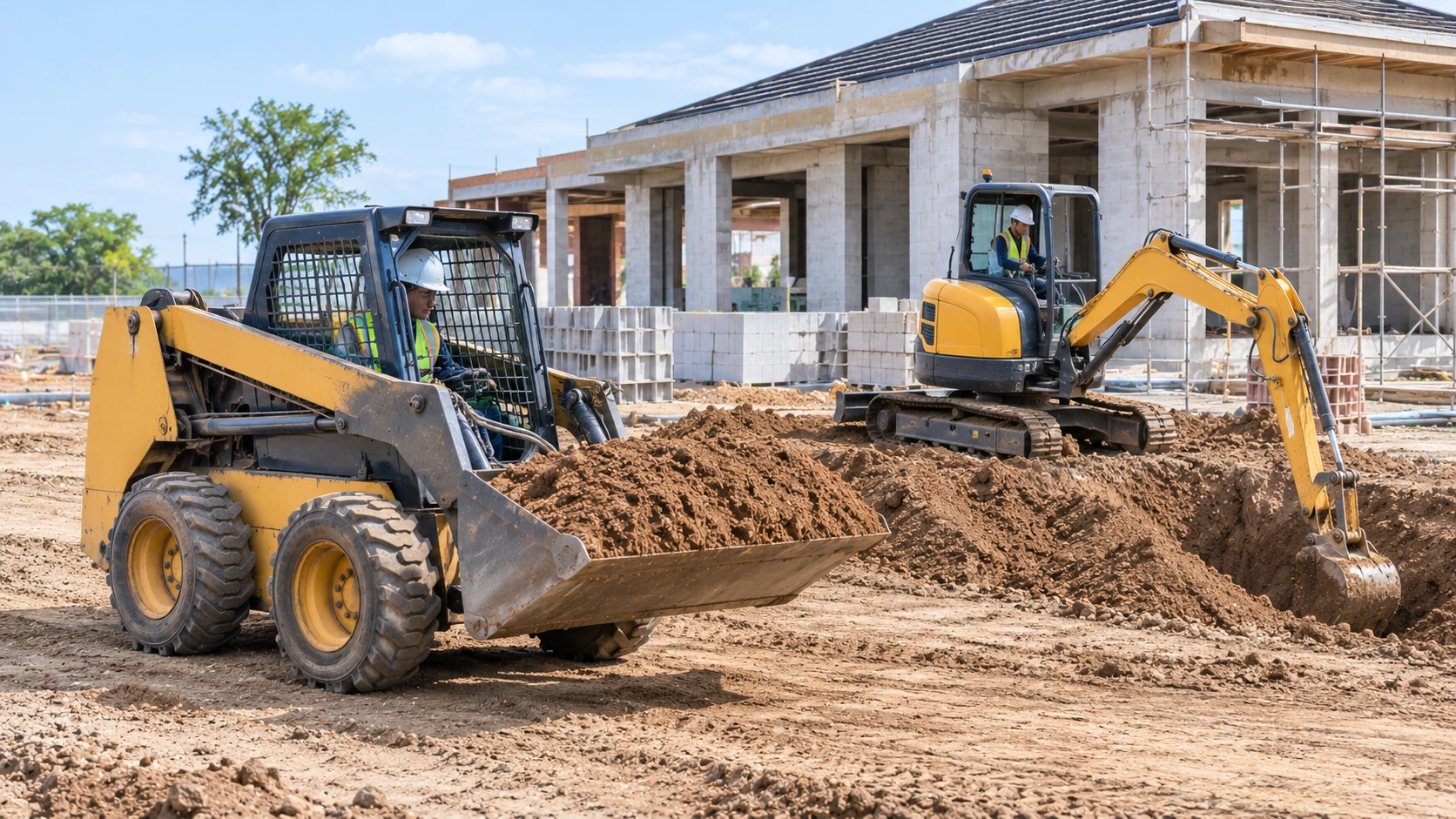
A skid steer and a mini excavator are both compact, both common on small sites, and both able to handle a surprising range of work. The difference comes down to direction. A skid steer works mostly in front of itself and at ground level, scooping, carrying, pushing, and grading. A mini excavator works mostly below and around itself, digging trenches and holes from a fixed position while its upper body swings to dump the spoil.
That simple difference decides most choices between the two. If the job is mainly about moving material across the site, the skid steer usually wins. If it is mainly about digging, the mini excavator usually does. This guide explains how each machine works, where each one has the clear advantage, the jobs where either could do the work, and how to choose for your site.
What Each Machine Was Built to Do
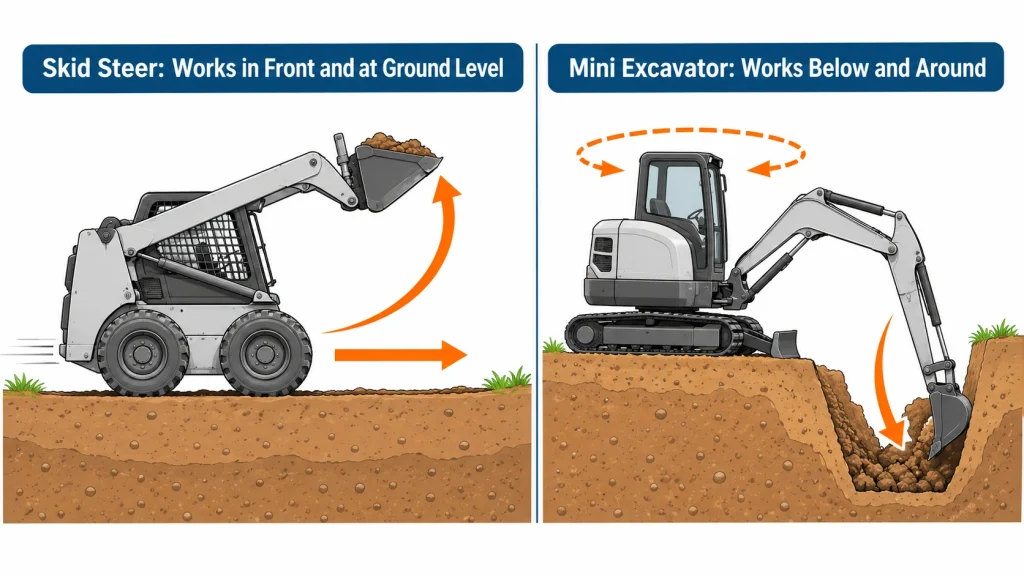
A skid steer loader is a small, rigid frame machine with two lift arms at the front that carry a bucket or other attachment. It steers by driving the wheels or tracks on one side faster than the other, so the machine skids around in its own footprint. That design makes it very agile on open ground and quick at short, repetitive moves. Machines on rubber tracks instead of wheels are often called compact track loaders. Further general background is available through Wikipedia’s overview of skid steer loaders, and our guide to the skid steer loader explains its parts and uses in more detail.
A mini excavator is a compact version of a crawler excavator. It sits on tracks, and its upper structure, carrying the cab and digging arm, rotates fully on the base. It digs with a bucket on a jointed boom and arm, and most models have a small blade at the front for backfilling and stabilising the machine. Further general background is available through Wikipedia’s overview of compact excavators.
Where the Skid Steer Has the Advantage
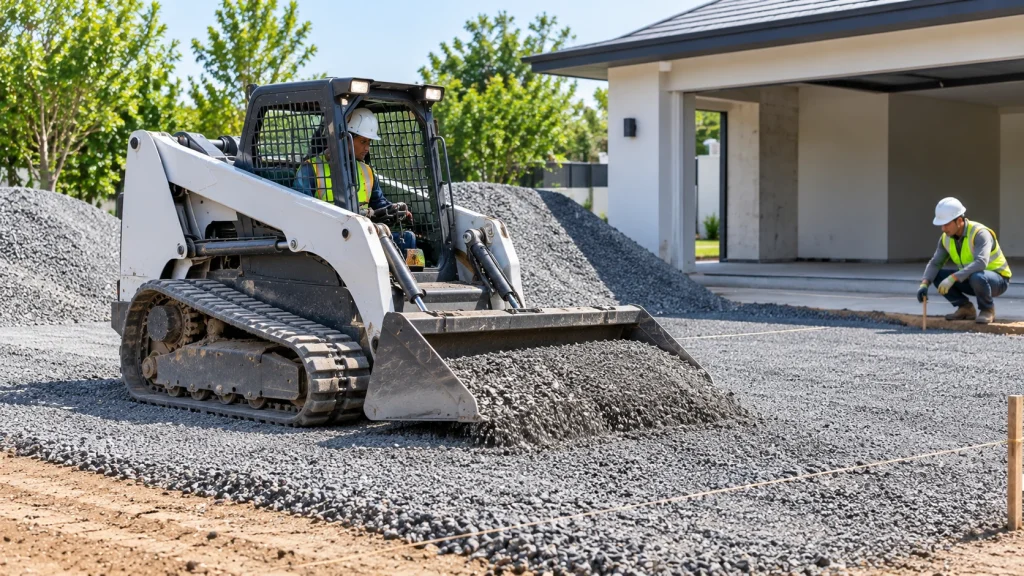
The skid steer is built for work at and above ground level, where material needs to be scooped up, moved, and placed somewhere else. Its strengths include:
Moving material around a site. A skid steer can fill its bucket, drive across the site, and dump the load in one smooth cycle. For shifting gravel, soil, mulch, or debris over short distances, it is far quicker than a mini excavator, which can only move material as far as its arm can reach.
Grading and levelling. With a bucket, a grading blade, or a landscape rake, a skid steer can spread and level material across an area, preparing ground for paving, slabs, or turf. Its ability to work forwards and backwards over the surface makes it efficient at this kind of finishing.
Loading trucks and skips. The lift arms can raise a full bucket high enough to tip into a truck or skip, which makes the skid steer useful for clearing material off site.
Versatility through attachments. A skid steer can switch between buckets, pallet forks, augers, sweepers, breakers, and many other tools, often in minutes. On a small site, that means one machine can cover several jobs that would otherwise need different equipment.
Speed between work areas. Wheeled skid steers travel quickly on firm ground, so they can move between different parts of a site with little lost time.
Where the Mini Excavator Has the Advantage
The mini excavator is built for digging, and its design gives it clear advantages wherever the work goes below ground level:
Digging trenches and holes. The boom and arm can dig much deeper than a skid steer bucket can reach, with far better control over depth and width. For trenches for pipes, cables, and drainage, or holes for footings and posts, the mini excavator is the natural choice.
Working from one position. Because the upper body rotates, a mini excavator can dig, swing, and dump spoil to the side without moving its tracks. This keeps the ground around the work area undisturbed and makes it efficient in confined spaces.
Reaching around obstacles. Many mini excavators can offset the boom to one side, letting them dig right next to walls, fences, and foundations. Models with reduced or zero tail swing keep the rear of the machine within the width of the tracks as it rotates, which helps in tight spaces.
Gentler on the ground. Rubber tracks spread the machine’s weight and, because the machine rarely needs to turn sharply while working, it does less damage to lawns and soft ground than a wheeled skid steer, which scuffs the surface every time it turns.
Precise shaping. With the right bucket, a mini excavator can shape slopes, ditches, and drainage channels accurately. Choosing the right bucket for the material has a large effect on the result, as explained in our guide to excavator bucket types.
How the mini excavator fits within the wider excavator family, and when a larger machine is needed instead, is covered below.
Also read: Types of Excavators for Construction and Earthmoving
Jobs Where Either Machine Could Work
Some jobs sit in the middle ground, and the right choice depends on the details:
Backfilling. A mini excavator can backfill with its blade or bucket from the edge of a trench, while a skid steer can push and carry fill from a stockpile. If the stockpile is far from the trench, the skid steer is often quicker. If space is tight, the mini excavator usually wins.
Site clearance. A skid steer with a grapple or brush cutter handles light vegetation and debris well, while a mini excavator is better at pulling out roots and stumps. For larger plots, a mix of machines is often used, as described in our guide to land clearing equipment.
Shallow excavation. Stripping topsoil or digging a shallow area for a slab can be done by either machine. The skid steer is faster over a large open area, while the mini excavator gives more control near buildings and services.
Breaking concrete. Both machines can carry a hydraulic breaker. The mini excavator can position the breaker more precisely and reach below ground level, while the skid steer can break and then clear the rubble with a bucket.
Using Both Machines Together
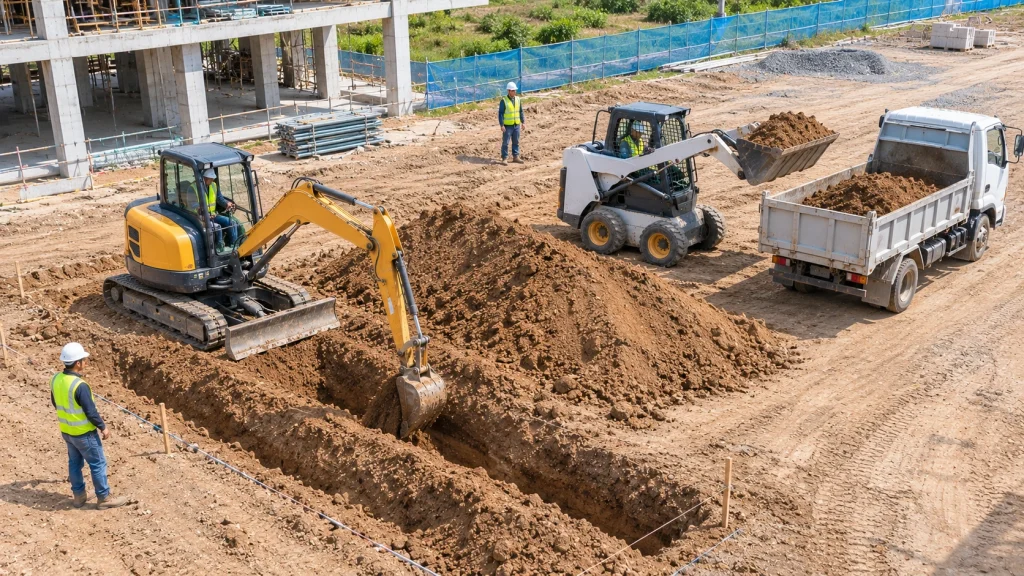
On many small projects, the most efficient answer is to use both. The mini excavator digs the trenches, footings, or foundations, while the skid steer moves spoil to a stockpile or truck, brings in materials, and backfills and grades the site once the digging is done. Each machine spends its time on the work it does best, and neither waits for the other.
This pairing is common during the groundwork stage of building projects, which is part of the wider site preparation process that gets a plot ready for construction. When the volume of material grows beyond what compact machines can handle efficiently, a full size loader may be the better choice.
Also read: Front End Loader: How It Works and When to Use One
How to Choose for Your Site
A few practical questions usually point clearly to one machine or the other:
- Is most of the work digging below ground level, or moving material at ground level?
- How far does material need to travel across the site?
- How tight is the access, and how close to walls, fences, or services is the work?
- What is the ground like, and how much damage to lawns or finished surfaces is acceptable?
- Which attachments will the job need?
- How experienced are the operators with each type of machine?
The controls of the two machines are quite different, so operators should be trained on the specific type they will use. The basics of operating a mini excavator safely, from start up to shutdown, are covered in our guide on operating a mini excavator.
Working Safely With Compact Machines
Compact machines are small, but they carry many of the same risks as larger equipment. Skid steers have limited visibility to the sides and rear and move quickly, so pedestrians must be kept clear of their working area. Lift arms should never be used to raise people, and operators should keep loads low when travelling, especially on slopes. Mini excavators can strike people within their swing radius and can overturn if they work too close to trench edges or on steep ground.
Underground services should be located before any digging, and machines kept back from excavation edges at a distance set for the ground conditions. Singapore’s Ministry of Manpower publishes detailed Workplace Safety and Health guidance covering machinery and excavation work, and the wider principles for working around heavy plant are covered below.
Equipment Support for Small Site Earthworks
Choosing between a skid steer and a mini excavator starts with a clear picture of the work. When you contact the team, it helps to describe the mix of digging and material handling involved, the access to the site, the ground conditions, the attachments you expect to need, and how long the work is likely to take. With these details, the right equipment can be recommended from the start.
RR Machinery Pte Ltd supports Singapore’s construction and industrial sectors with reliable heavy machinery solutions tailored to your specific site conditions. Browse our complete heavy machinery services or contact our team today for practical advice on the right equipment for your project.