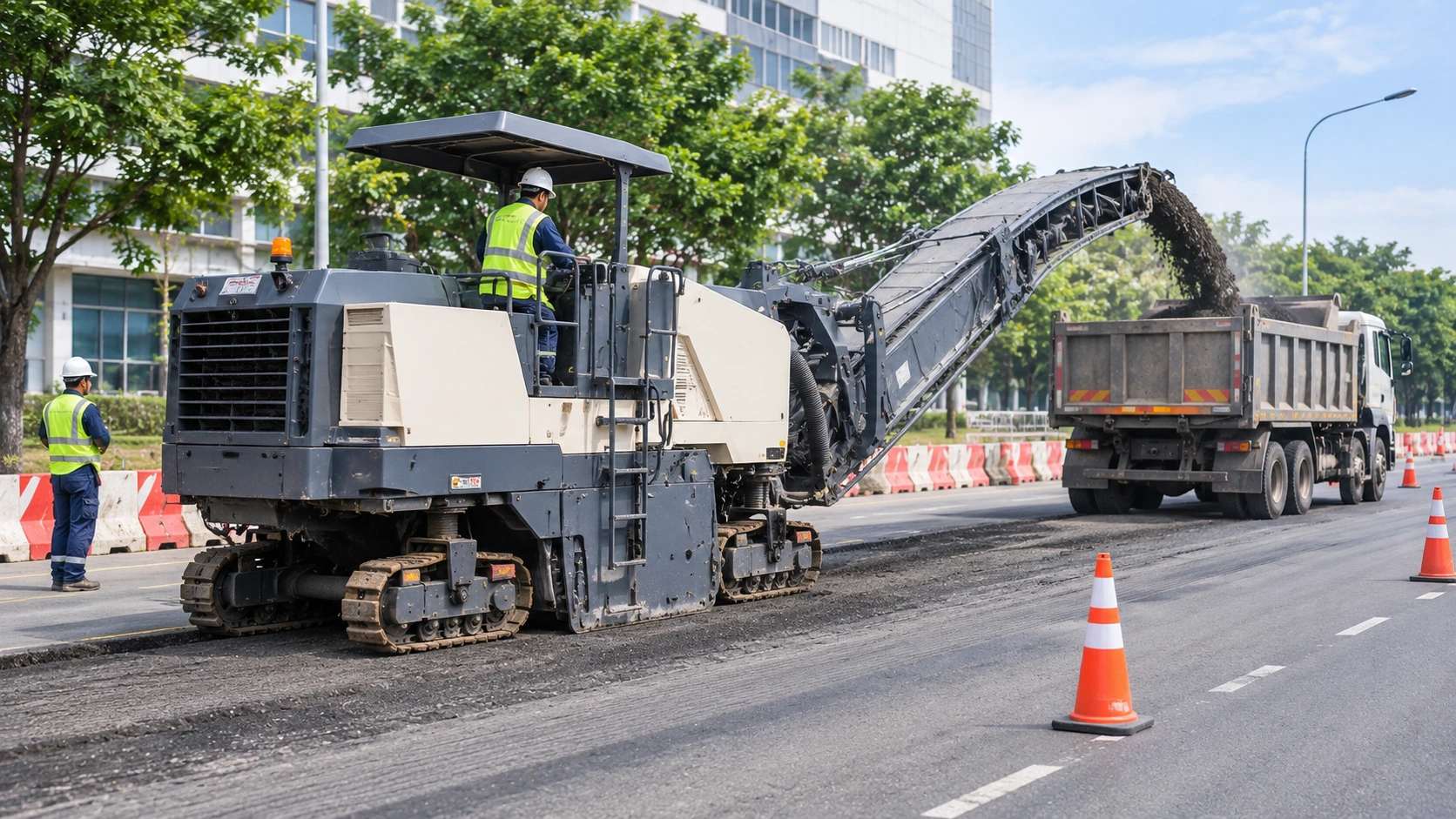
Asphalt milling is the process of grinding away a controlled depth of an existing asphalt surface using a machine fitted with a rotating drum of hardened cutting teeth. The removed material is carried up a conveyor into a truck, and what is left behind is a clean, textured surface ready for a new layer of asphalt. It is also known as cold planing, because the asphalt is cut without being heated first.
Almost every road resurfacing project starts here. Milling removes worn, cracked, or rutted material, restores the correct levels and drainage, and keeps the road from getting higher every time it is resurfaced. This guide explains how milling machines work, the main types of milling, the step by step process on site, what happens to the material that is removed, and the safety and equipment considerations that come with the work.
How a Milling Machine Works
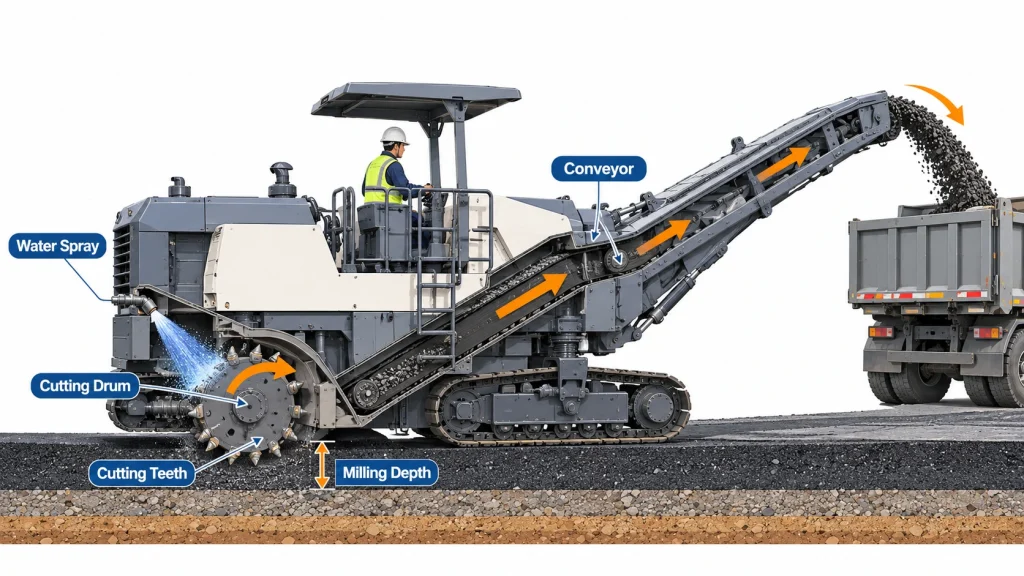
A milling machine, often called a cold planer or road milling machine, is built around a large steel cutting drum fitted with replaceable conical teeth. The drum spins at high speed in the opposite direction to the machine’s travel, so the teeth bite into the asphalt and break it into small pieces.
As the material is cut, it is lifted by the drum into a chamber and transferred onto a conveyor, which carries it up and forward into a truck driving ahead of the machine. The depth of cut is set by raising or lowering the machine on its tracks, and modern machines use laser or sonic levelling systems that follow a reference line or the existing surface to keep the cut depth and slope accurate.
Water is sprayed onto the drum during cutting to cool the teeth, reduce wear, and suppress the dust created by grinding. The teeth themselves are wear parts and are replaced regularly, since worn teeth cut slowly and leave a rougher surface. Further general background on these machines is available through Wikipedia’s overview of milling machines used in road construction.
Why Asphalt Is Milled Rather Than Simply Resurfaced
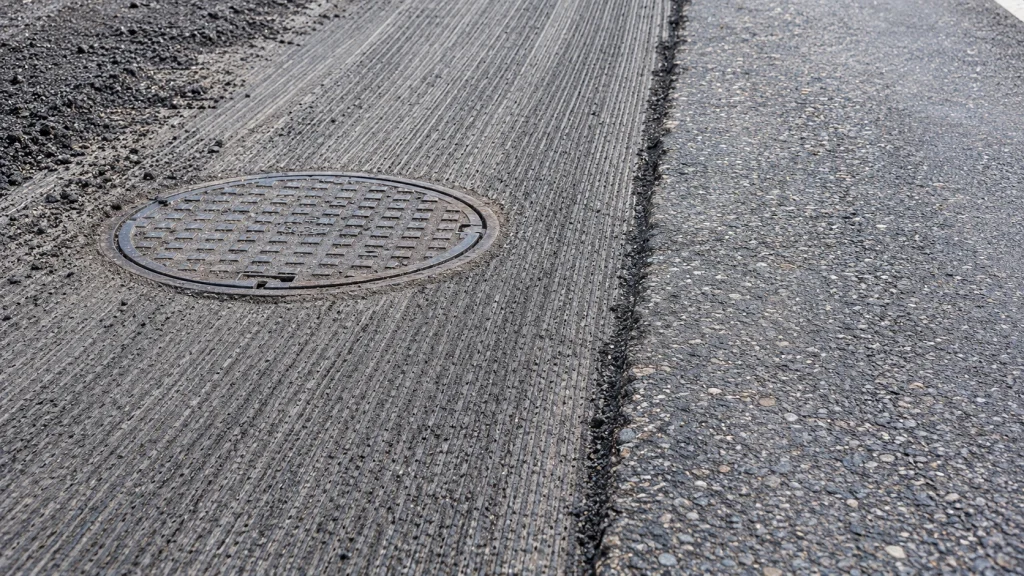
Laying new asphalt straight over an old surface seems simpler, but it causes problems that milling avoids.
It controls the road level. Every new layer adds thickness. Without milling, kerbs, drainage gullies, manhole covers, and the edges of driveways would gradually be buried, and the road would rise above the surrounding ground.
It removes damaged material. Cracks, ruts, and deteriorated asphalt are cut away rather than covered, so defects in the old surface do not quickly reappear through the new one.
It restores shape and drainage. Milling to a controlled depth and slope corrects rutting and low spots so that water drains off the road instead of ponding.
It creates a good bonding surface. The textured surface left by the drum gives the new asphalt layer something to grip, which helps prevent the new layer from slipping or separating.
It recovers valuable material. The milled material is a resource rather than waste, as explained later in this guide.
Main Types of Asphalt Milling
Not every job removes the same amount of material, and the depth of the cut defines the type of milling.
Surface or micro milling removes only the top few millimetres, using a drum with closely spaced teeth to leave a fine, even texture. It is used to restore skid resistance, remove surface irregularities, and prepare a surface for a thin overlay.
Partial depth milling removes the surface course and sometimes part of the layer beneath it. This is the most common form of milling on resurfacing projects, taking away the worn material while leaving the structural layers in place.
Full depth milling removes the entire asphalt structure down to the base or subgrade. It is used where the pavement has failed structurally and needs rebuilding rather than resurfacing, and it often forms part of a wider reconstruction project.
Profile or corrective milling targets specific defects, such as ruts in wheel paths or high spots, rather than removing a uniform layer across the whole width.
The choice depends on the condition of the pavement, the design of the new surface, and the budget, and it is usually set out in the project specification after the road has been surveyed and tested.
The Asphalt Milling Process, Step by Step
Milling is a fast operation when it is well organised, and the sequence is broadly the same on most projects:
- Survey and plan the work. Assess the pavement condition, set the milling depth and extent, locate manholes, gullies, and services that could be damaged, and plan traffic management and working hours.
- Set up the work zone. Install signs, cones, and barriers, close lanes as planned, and brief the crew on the layout, the traffic arrangements, and the exclusion zones around the machines.
- Protect fixed features. Mark and, where necessary, lower or protect manhole covers, valve chambers, and drainage gullies so the drum does not strike them.
- Set the depth and reference. Position the machine, set the cutting depth, and set up the levelling system against a reference such as a string line, the adjacent lane, or an averaging ski.
- Mill the surface. The machine moves forward at a steady pace while trucks take the milled material away. Passes are planned so that the whole area is covered with consistent depth and clean joints between passes.
- Clean the surface. Sweep away loose material and dust so that the tack coat and new asphalt bond properly to the milled surface.
- Inspect before resurfacing. Check depth, levels, texture, and the condition of the exposed layer, and repair any soft or failed areas before the new asphalt is laid.
Once the milled surface is approved, paving follows, usually with a tack coat, then an asphalt paver laying the new material and rollers compacting it. The rollers used for this stage are compared in our guide to road compaction rollers, and the full chain of machines involved in building a road is set out below.
Also read: Road Construction Equipment List: Every Machine Explained
Where Asphalt Milling Is Used
Milling is used wherever an asphalt surface needs to be removed or reshaped:
- Road resurfacing, the most common use, removing the worn surface course before a new one is laid
- Rut and defect correction in wheel paths and settled areas
- Utility and trench reinstatement, milling back the edges so a patch ties neatly into the surrounding surface
- Car parks and industrial yards, where surfaces wear under heavy vehicles and stored loads
- Airports and ports, where surface regularity and skid resistance matter
- Removing markings and surface treatments before a new layer is applied
Milling also prepares the ground for other work. On projects where the road is being rebuilt rather than resurfaced, milling is often followed by excavation and reshaping of the layers beneath, which belongs to the wider groundwork covered in our guide to site preparation in construction.
What Happens to Milled Asphalt
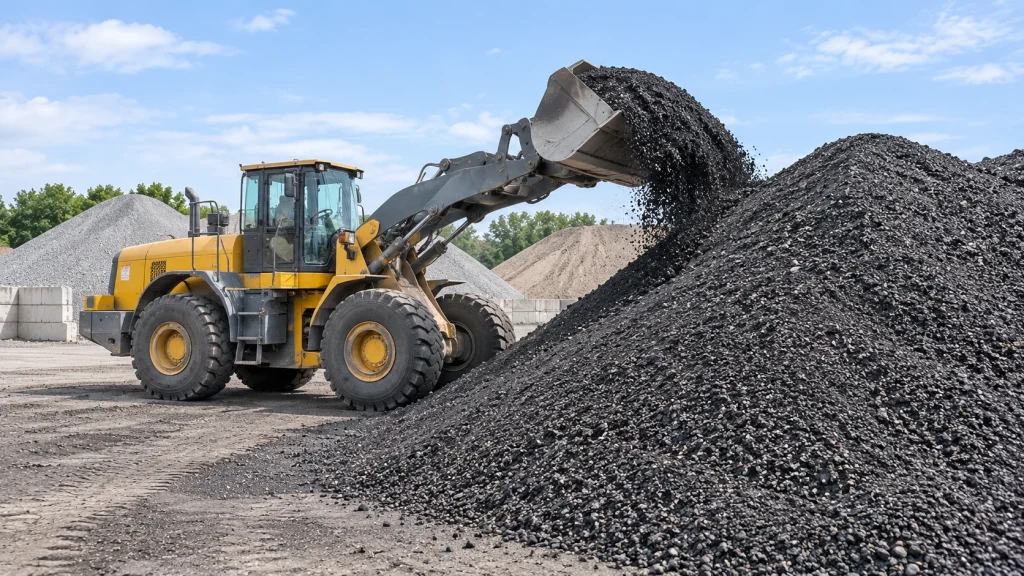
The material removed by milling is called reclaimed asphalt pavement, often shortened to RAP. It is not waste. Because it still contains both aggregate and bitumen, it is one of the most widely recycled construction materials.
RAP is usually hauled to an asphalt plant, where it is crushed, screened, and blended into new asphalt mixes, reducing the amount of new aggregate and bitumen needed. Lower grade material is also used as a granular base or sub base layer, or as a surface for temporary roads, car parks, and haul routes. Recycling in this way lowers both the cost and the environmental impact of road work, since the materials are reused close to where they were removed.
Equipment and Power on a Milling Job
A milling operation involves more than the milling machine. Trucks haul away the milled material, a sweeper cleans the surface, and water bowsers supply the machine’s spray system. Once milling is complete, pavers and rollers move in to lay and compact the new surface, and graders may be used where the underlying layers need reshaping, as described in our guide to types of graders.
Night and weekend working is common on busy roads, so lighting towers and generators are often needed to keep the work zone lit and to power site equipment. Sizing that power supply correctly avoids tripped equipment and lost time, and the method is explained in our guide on calculating generator load. Choosing a suitable generator for this kind of work is covered below.
Also read: Generator for Construction Site: A Complete Guide
Safety During Milling Operations
Milling work combines heavy machinery, moving trucks, and, in most cases, live traffic alongside the work zone. Clear traffic management, correct signing, and physical separation between the work area and passing vehicles are the foundation of a safe operation, and workers on foot should stay out of the paths used by reversing trucks.
Around the machine itself, the main hazards are the rotating drum, the conveyor, and material being discharged into trucks. Nobody should approach the drum or conveyor while the machine is running, and the drum must be stopped and the machine isolated before any tooth changes or inspections. Milling is also noisy and creates dust, so hearing protection, eye protection, high visibility clothing, and the machine’s water spray system all matter. Singapore’s Ministry of Manpower publishes detailed Workplace Safety and Health guidance covering machinery and worksite safety, and the wider principles for working around heavy plant are covered below.
Equipment Support for Road and Resurfacing Projects
Milling and resurfacing projects run to tight schedules, often at night, so having the right support equipment available matters as much as the main machines. When you contact the team, it helps to describe the scope and timing of the work, whether it runs outside normal hours, the power and lighting needed on site, and how long each phase is expected to last. With these details, suitable equipment can be recommended from the start.
RR Machinery Pte Ltd supports Singapore’s construction and industrial sectors with reliable heavy machinery solutions tailored to your specific site conditions. Browse our complete heavy machinery services or contact our team today for practical advice on the right equipment for your project.