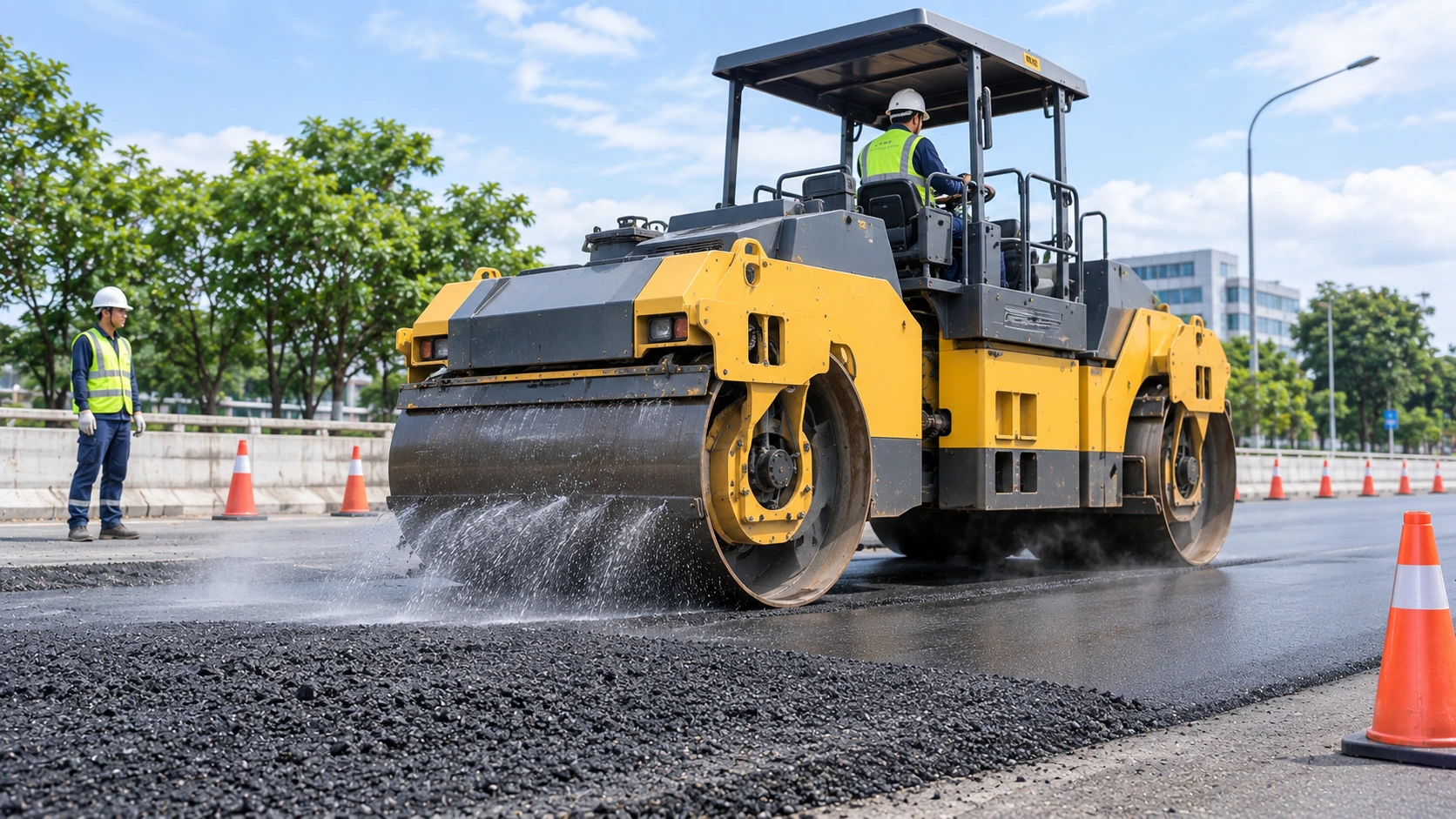
A road roller is a heavy machine that compacts soil, gravel, and asphalt by rolling over them with one or more large steel drums or rubber tyres. Compacting squeezes the air out of the material and presses the particles tightly together, turning a loose layer into a dense, stable surface that can carry traffic for years without rutting or settling.
Almost every road, car park, and paved yard passes under a roller before it is finished, and so does the ground beneath many buildings. This guide explains how compaction actually works, the main parts of a road roller, the difference between static and vibratory rolling, how rolling is carried out on site, the basics of operating one, and the maintenance and safety that keep the machine working properly.
What a Road Roller Does
The purpose of a road roller is simple to state and easy to underestimate. Freshly placed soil, aggregate, or asphalt is full of air voids, and a layer in that state will keep settling under traffic, letting water in and failing far sooner than it should.
Rolling applies weight, and often vibration, to force the particles closer together. A well compacted layer carries load better, resists water, and holds its shape, which is why compaction is specified and tested on almost every road and foundation project rather than left to judgement. Further general background on the machine itself is available through Wikipedia’s overview of road rollers.
How Compaction Works
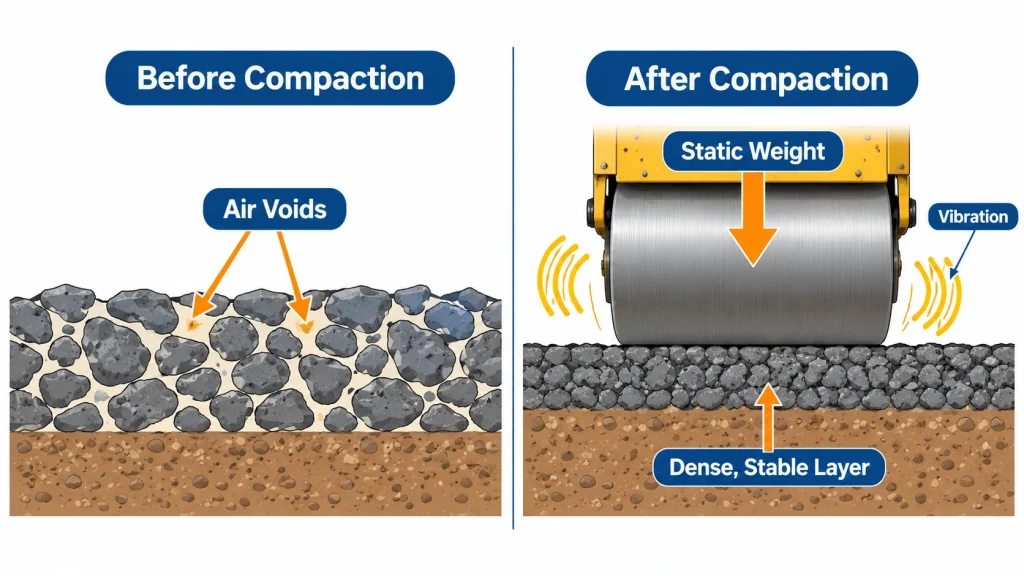
Three things do the work during rolling, and different machines use them in different proportions.
Static weight. The sheer mass of the machine presses down on the surface. Static pressure alone compacts the upper part of a layer well but has limited effect deeper down.
Vibration. A rotating eccentric weight inside the drum makes it vibrate rapidly. The vibration briefly reduces friction between particles so they can slide past each other and settle into a denser arrangement. Vibration is what allows a roller to compact thicker layers and granular materials effectively.
Kneading and manipulation. Rubber tyred rollers flex and knead the surface as they pass, working the material together and sealing the surface. Padfoot drums push knobs into the layer and compact it from within, which suits cohesive soils such as clay.
The material being compacted decides which of these matters most. Granular materials such as sand and crushed stone respond best to vibration, cohesive soils respond better to kneading and manipulation, and hot asphalt needs careful compaction while it is still within its working temperature range.
The same principles apply to the smaller machines used in trenches and confined areas, which are covered in our guide to compaction equipment used on site. The main roller designs and the jobs each one suits are compared below.
Also read: 5 Types of Rollers Used in Construction and Road Compaction
The Main Parts of a Road Roller
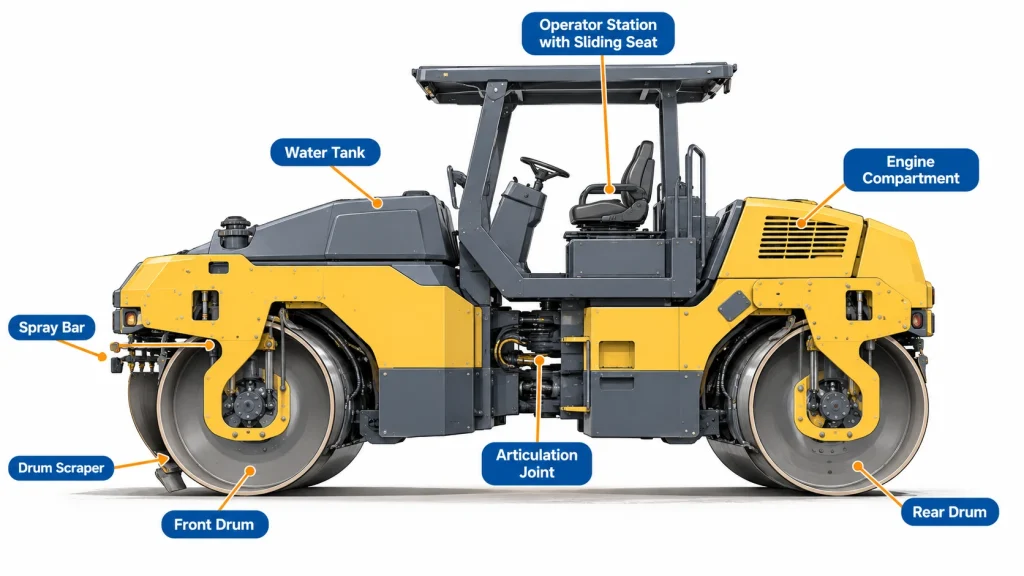
Although designs vary, most self propelled rollers share the same building blocks.
Drums. The large cylinders that contact the ground. They may be smooth for asphalt and granular materials, or fitted with pads for cohesive soils. A machine may have one drum and a driven rear axle, or two drums, one at each end.
Vibration system. Eccentric weights inside the drum, driven hydraulically, that generate the vibration. Operators can usually switch vibration on and off and often select different settings for different materials and layer thicknesses.
Articulated frame. Most tandem and single drum rollers are articulated, pivoting in the middle so the machine can steer while keeping the drums tracking in line.
Engine and hydraulic system. The diesel engine drives hydraulic pumps that power travel, steering, and vibration.
Water system. A tank, pump, and spray bars keep the drums wet when rolling asphalt, because hot asphalt sticks to dry steel. Scrapers at the drum edges clear material that does stick.
Operator station. A seat, controls, and usually a sliding or rotating platform that lets the operator see the drum edges clearly, since rolling accurately depends on knowing exactly where the drum is.
Ballast. Many rollers can be made heavier by adding water, sand, or steel ballast, which lets one machine suit several jobs.
Static and Vibratory Rolling
Most modern rollers can work either way, and knowing when to use each is part of rolling well.
Static rolling uses weight alone, with vibration switched off. It is used for the final passes on asphalt to remove drum marks and leave a smooth surface, for thin layers where vibration would be too aggressive, and near buildings or services where vibration could cause damage or complaints.
Vibratory rolling adds vibration to the static weight and does most of the compaction work on granular layers and the main passes on asphalt. Because vibration transmits through the ground, it is used with care near existing structures, and some sites restrict it entirely.
Getting this wrong has real consequences. Too little compaction leaves a weak layer that settles under traffic, while over rolling, particularly with vibration on thin asphalt or on material that is already dense, can crush aggregate, crack the surface, or loosen what has already been compacted.
How Rolling Is Carried Out on Site
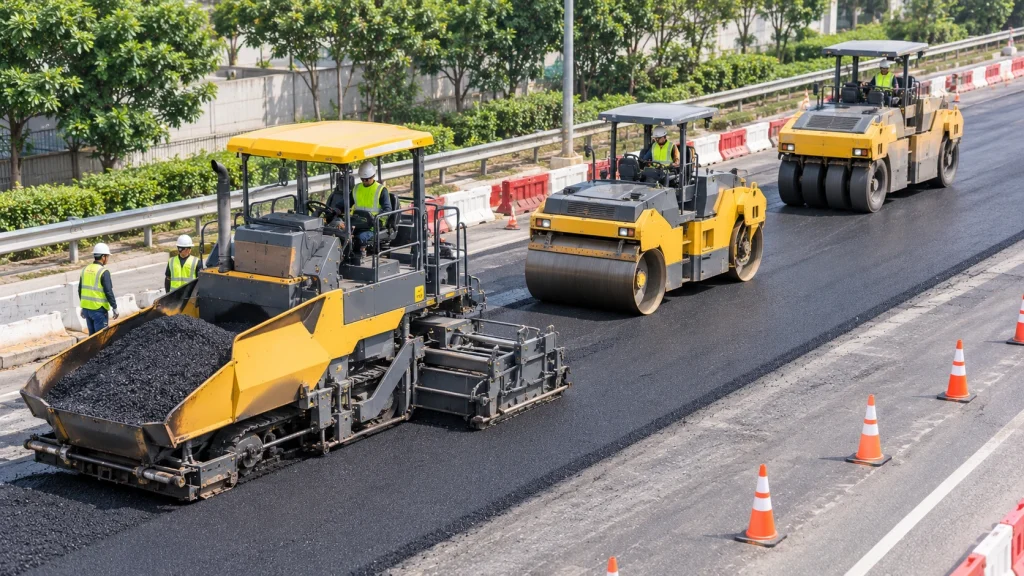
Good compaction is as much about method as machinery. A typical rolling operation follows a consistent pattern.
- Prepare and check the layer. Confirm that the material has been spread to the specified thickness and, for soils, that the moisture content is suitable, since material that is too dry or too wet will not compact properly.
- Plan the rolling pattern. Decide the number of passes, the sequence across the width, and where the machine will turn, keeping turns off freshly laid asphalt wherever possible.
- Start from the low side. On a sloped or cambered surface, rolling usually begins at the lower edge and works toward the high side so the material is held in place rather than pushed outward.
- Overlap each pass. Successive passes overlap the previous one so that no strip is left under compacted along the joint between passes.
- Keep the speed steady and slow. Rolling too fast reduces the number of vibration impacts per metre and leaves ripples in the surface.
- Work with the temperature on asphalt. Hot mix asphalt must be compacted while it is still hot enough to move under the roller, so the rolling train follows closely behind the paver and the sequence is planned before the mix arrives.
- Check the result. Compaction is verified by testing, such as density testing, rather than by appearance alone, and areas that fall short are rolled again or reworked.
Rolling is one link in a chain of machines. The surface is usually shaped first by a grader, as described in our guide to grader types and their uses, and on resurfacing projects the old layer is removed before anything new is laid. The full sequence of machines involved in building a road is set out below.
Also read: Road Construction Equipment List: Every Machine Explained
Where Road Rollers Are Used
Rollers are not only for roads. They are used wherever a layer of material needs to be compacted over a reasonable area, including:
- Road and highway construction and resurfacing
- Car parks, industrial yards, and hardstandings
- Embankments, subgrades, and fill layers in earthworks
- Working platforms for cranes and piling rigs
- Sports surfaces, airfields, and large landscaped areas
Compaction of fill and subgrade belongs to the groundwork stage of a project, which is covered in our guide to site preparation in construction. Where the area is small, confined, or close to structures, a plate compactor or trench roller is usually the better tool than a full size road roller.
Operating a Road Roller
Operating a roller looks straightforward, but doing it well takes practice. Before starting, the operator walks around the machine to check for leaks, damage to the drums and scrapers, tyre condition where fitted, and the water level in the tank. Controls, lights, horn, and the reversing alarm are checked from the seat.
In use, the operator keeps the machine moving at a steady speed, avoids stopping on hot asphalt where the drum can leave a depression, and makes turns gently and only where the surface allows. Vibration should be switched off before stopping and before reversing direction, and the drum should be kept wet when rolling asphalt. Because rollers have large blind areas close to the machine and often work alongside pavers, trucks, and people on foot, the operator must know exactly who is around before every move.
Operators should be trained and familiar with the specific machine, and briefed on the rolling pattern and the sequence agreed for the job.
Maintenance That Keeps a Roller Working
Rollers lead a hard life, working in heat, dust, and water. A few checks keep them reliable:
- Inspect drums for dents, cracks, and worn scrapers, since a damaged drum leaves marks on the finished surface
- Keep the water tank, pump, filters, and spray bars clean so that the drums stay wet and spray evenly
- Check hydraulic hoses, fittings, and fluid levels for leaks and wear, especially around the articulation joint
- Service the engine, filters, and cooling system at the intervals set by the manufacturer
- Grease the articulation joint, drum bearings, and other lubrication points
- Keep the machine clean, particularly around the drums and scrapers, so that asphalt build up does not harden overnight
Recording these checks builds a history that helps technicians spot recurring faults and plan servicing before a breakdown stops the paving train.
Safety Around Road Rollers
Rollers are among the heaviest machines working close to people on a paving site, and they move slowly enough that the risk is easy to underestimate. The main hazards are people being struck or crushed by the machine, especially during reversing, and rollers overturning on slopes or near unsupported edges such as embankments and excavations.
Exclusion zones, clear traffic routes, high visibility clothing, and a banksman where visibility is limited all help keep people and machines apart. Operators should wear the seat restraint where one is fitted, keep clear of soft edges, and travel up and down slopes rather than across them. Singapore’s Ministry of Manpower publishes detailed Workplace Safety and Health guidance covering machinery and worksite safety, and the wider principles for working around heavy plant are covered below.
Equipment Support for Compaction and Road Works
Choosing the right compaction equipment starts with a clear picture of the job. When you contact the team, it helps to describe the material being compacted, the area and layer thickness involved, how close the work is to buildings or services, the access to the site, and how long the work is expected to take. With these details, the right equipment can be recommended from the start rather than adjusted after delivery.
RR Machinery Pte Ltd supports Singapore’s construction and industrial sectors with reliable heavy machinery solutions tailored to your specific site conditions. Browse our complete heavy machinery services or contact our team today for practical advice on the right equipment for your project.