
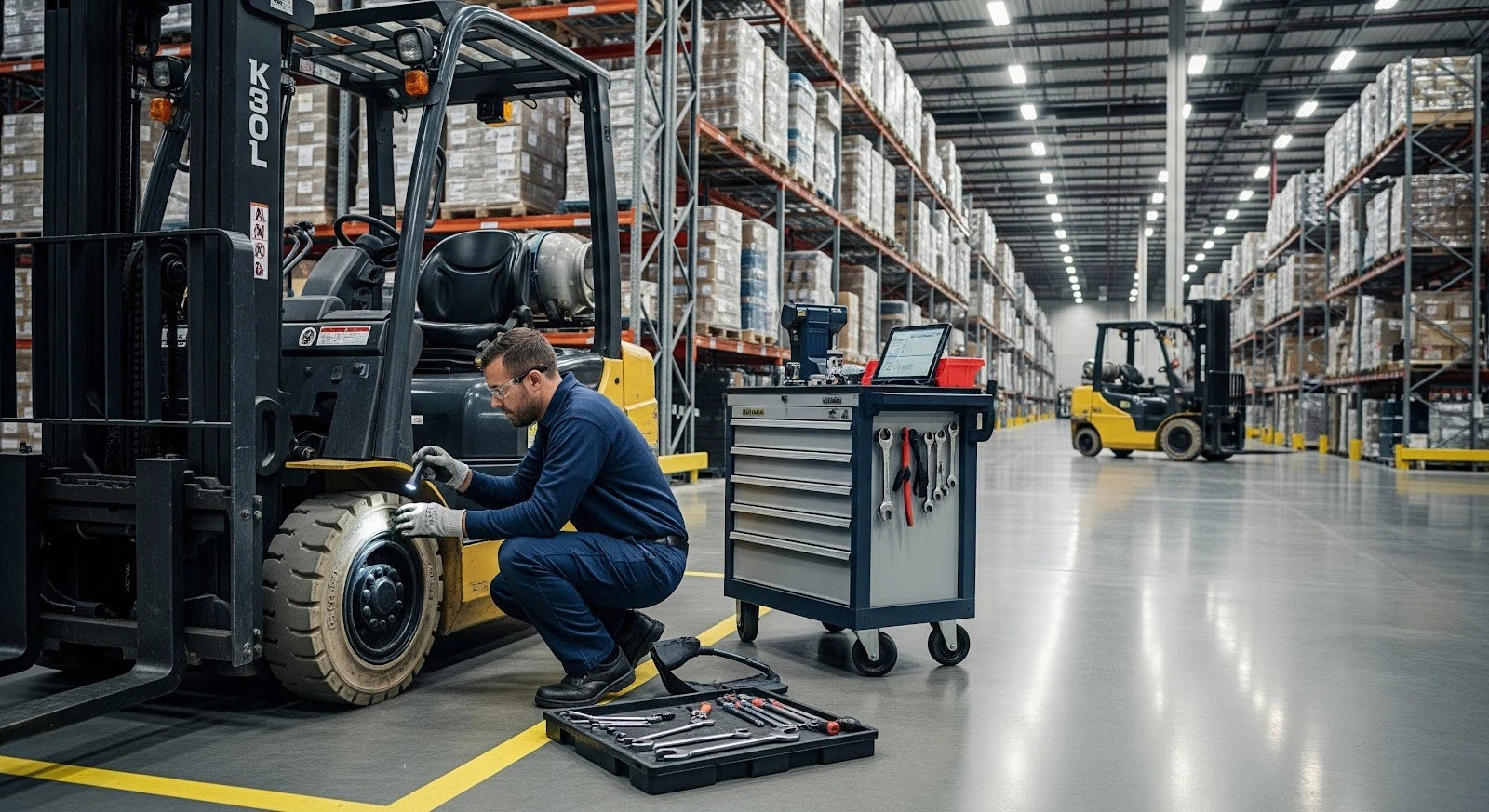
Proper forklift maintenance is essential for ensuring safe operations, reducing equipment downtime, and extending the lifespan of industrial machinery. Forklifts play a critical role in warehouses, construction sites, manufacturing plants, and logistics facilities. Because they operate daily under heavy loads and demanding conditions, routine maintenance is necessary to keep them performing efficiently.
Neglecting regular maintenance can lead to equipment breakdowns, costly repairs, and workplace accidents. Preventive maintenance not only protects workers but also improves productivity by ensuring forklifts remain reliable and ready for operation.
In modern industrial environments, maintenance planning is often integrated with broader equipment management strategies to ensure smooth material handling operations and reduce operational disruptions.
Why Forklift Maintenance Is Important
Routine forklift maintenance helps businesses maintain safe working conditions and prevent unexpected equipment failure. Well-maintained forklifts operate more efficiently and require fewer costly repairs over time.
Key benefits of proper forklift maintenance include:
- Improved workplace safety
- Reduced equipment downtime
- Lower long-term repair costs
- Increased equipment lifespan
- Better operational efficiency
For companies relying heavily on material handling equipment, consistent maintenance plays a vital role in maintaining productivity.
Also read : Workplace Safety Tips for Construction and Industrial Environments
Daily Forklift Inspection Checklist
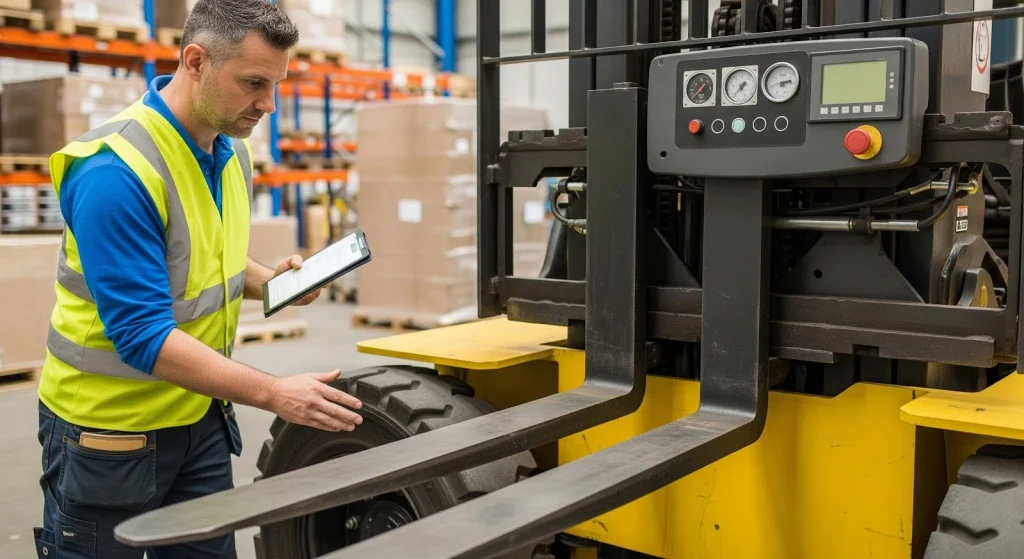
Daily inspections are one of the most important aspects of forklift maintenance. Operators should perform routine checks before operating the machine to identify potential issues early.
Typical inspection steps include:
- Checking hydraulic systems for leaks
- Inspecting tires and wheels
- Examining forks for cracks or damage
- Testing brakes and steering
- Verifying warning lights and alarms
- Ensuring fluid levels are adequate
These quick inspections help detect problems before they escalate into major mechanical failures.
Understanding the main components of a forklift and their functions can help operators identify maintenance issues more easily during routine inspections.
Battery Maintenance for Electric Forklifts
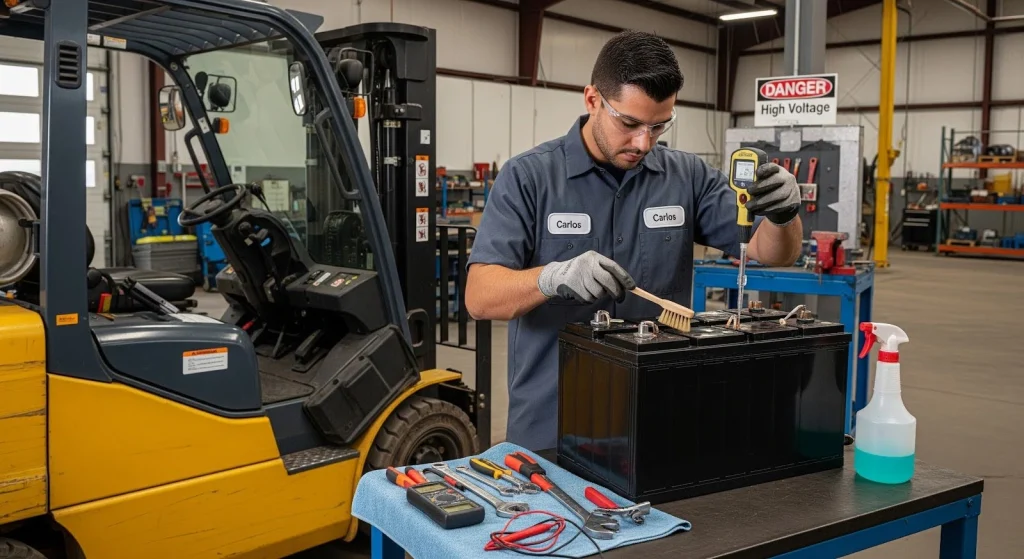
Electric forklifts require regular battery maintenance to maintain optimal performance. Batteries must be properly charged, cleaned, and monitored to ensure efficient operation.
Important battery maintenance practices include:
- Charging batteries according to manufacturer guidelines
- Keeping battery terminals clean
- Checking water levels regularly
- Avoiding overcharging or deep discharging
Proper battery care extends battery lifespan and improves overall equipment efficiency.
Electric forklifts are widely used in warehouses and indoor facilities due to their low emissions and quiet operation.
Engine Maintenance for Internal Combustion Forklifts
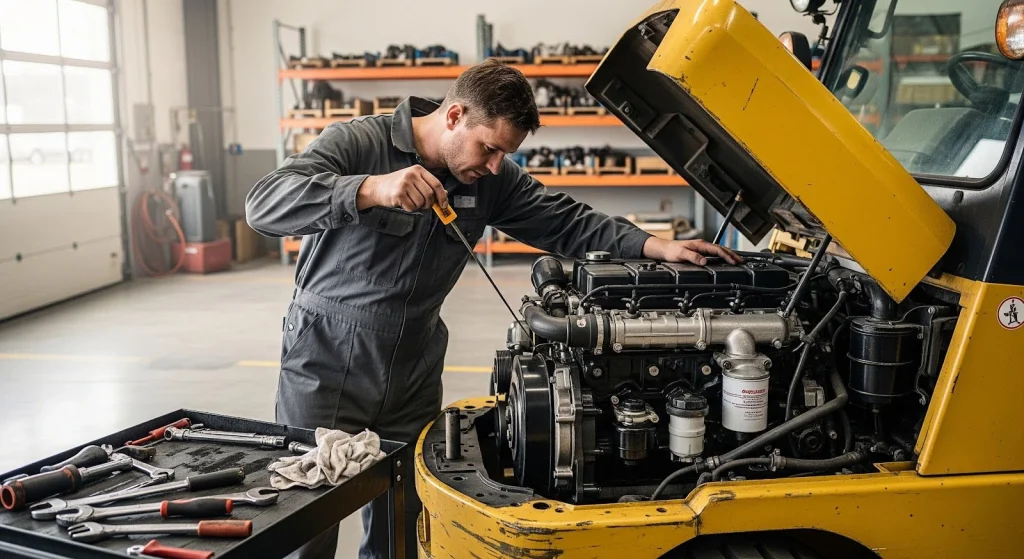
Forklifts powered by diesel, gasoline, or LPG engines require routine engine maintenance to ensure reliable performance.
Common engine maintenance tasks include:
- Changing engine oil and filters
- Inspecting fuel systems
- Checking coolant levels
- Monitoring exhaust emissions
- Replacing worn components when necessary
Regular servicing helps prevent overheating, engine damage, and fuel inefficiency.
Facilities that use multiple forklift types often integrate engine maintenance schedules with broader equipment servicing strategies used in industrial operations.
Also read : Bulldozer vs Excavator: Key Differences and Applications in Construction
Hydraulic System Maintenance
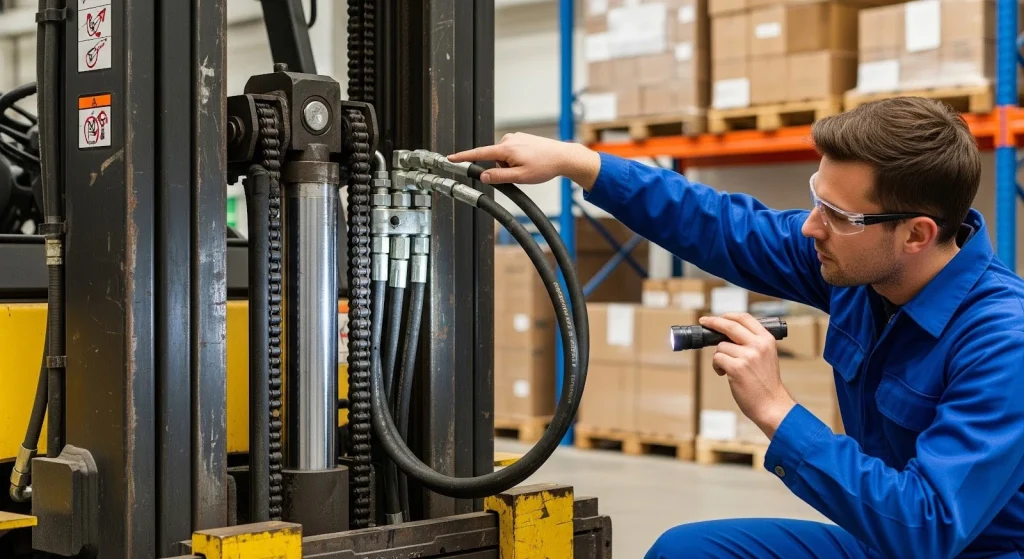
The hydraulic system controls the lifting and lowering functions of a forklift. Because these systems operate under high pressure, regular inspection is essential.
Key hydraulic maintenance steps include:
- Checking hydraulic fluid levels
- Inspecting hoses and seals
- Monitoring lift cylinder performance
- Detecting leaks or pressure loss
Maintaining hydraulic systems ensures smooth lifting operations and prevents dangerous equipment malfunctions.
Tire and Brake Maintenance
Forklift tires and braking systems are critical for safe operation. Worn tires reduce traction and increase the risk of accidents.
Routine tire and brake maintenance should include:
- Checking tire wear and pressure
- Replacing damaged tires
- Inspecting brake systems
- Testing stopping performance
Different forklifts use cushion or pneumatic tires depending on their operating environment. Proper tire maintenance helps maintain stability during lifting operations.
Understanding different forklift classes and their applications can also help determine the appropriate tire types and maintenance procedures
Scheduled Preventive Maintenance
In addition to daily inspections, forklifts require scheduled preventive maintenance based on operating hours.
Typical maintenance intervals may include:
- Oil changes
- Filter replacements
- Hydraulic system servicing
- Brake inspections
- Electrical system checks
Preventive maintenance schedules help identify potential issues before they cause major breakdowns.
Many organizations combine preventive maintenance with broader material handling equipment management strategies to ensure operational efficiency across warehouses and construction sites.
Training Operators for Better Equipment Care
Forklift operators play an important role in maintaining equipment condition. Proper training helps operators recognize early warning signs of mechanical issues and follow correct operating procedures.
Training programs often include:
- Safe operating techniques
- Equipment inspection procedures
- Load handling guidelines
- Emergency response procedures
Educated operators help reduce wear and tear while maintaining safe working conditions.
Also read : Types of Scissor Lifts and Their Applications in Construction and Industry
Common Forklift Maintenance Mistakes to Avoid
Some common maintenance mistakes can shorten equipment lifespan and increase operational risks.
Examples include:
- Skipping routine inspections
- Ignoring minor mechanical problems
- Using incorrect replacement parts
- Overloading the forklift
- Delaying scheduled servicing
Avoiding these mistakes helps ensure forklifts operate safely and efficiently.
The Role of Professional Maintenance Services
While daily inspections can be performed by operators, professional maintenance services are often required for more complex repairs and inspections.
Experienced technicians can perform:
- Advanced diagnostics
- Component replacements
- Hydraulic system servicing
- Electrical repairs
Working with professional equipment service providers helps ensure forklifts remain compliant with safety standards and operate reliably.
Professional Support for Forklift Maintenance
Effective forklift maintenance is essential for maintaining workplace safety, minimizing downtime, and improving operational efficiency. From daily inspections to scheduled preventive servicing, proper maintenance practices help ensure forklifts remain reliable and safe to operate.
Reliable machinery support and professional servicing can further improve equipment performance and extend operational lifespan. If your business requires dependable machinery solutions, expert maintenance guidance, or equipment support for industrial operations, contact us today to discuss your requirements and receive professional assistance tailored to your needs.

Very helpful and practical read! I like how this article highlights the importance of regular forklift maintenance to ensure smooth operations and reduce downtime. The focus on planned servicing, skilled technicians, and access to the right parts really shows how proactive care can keep equipment reliable and efficient. Very practical insights for anyone managing machinery or warehouse operations!