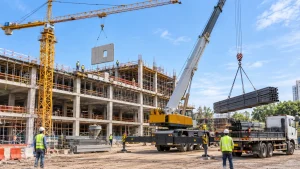
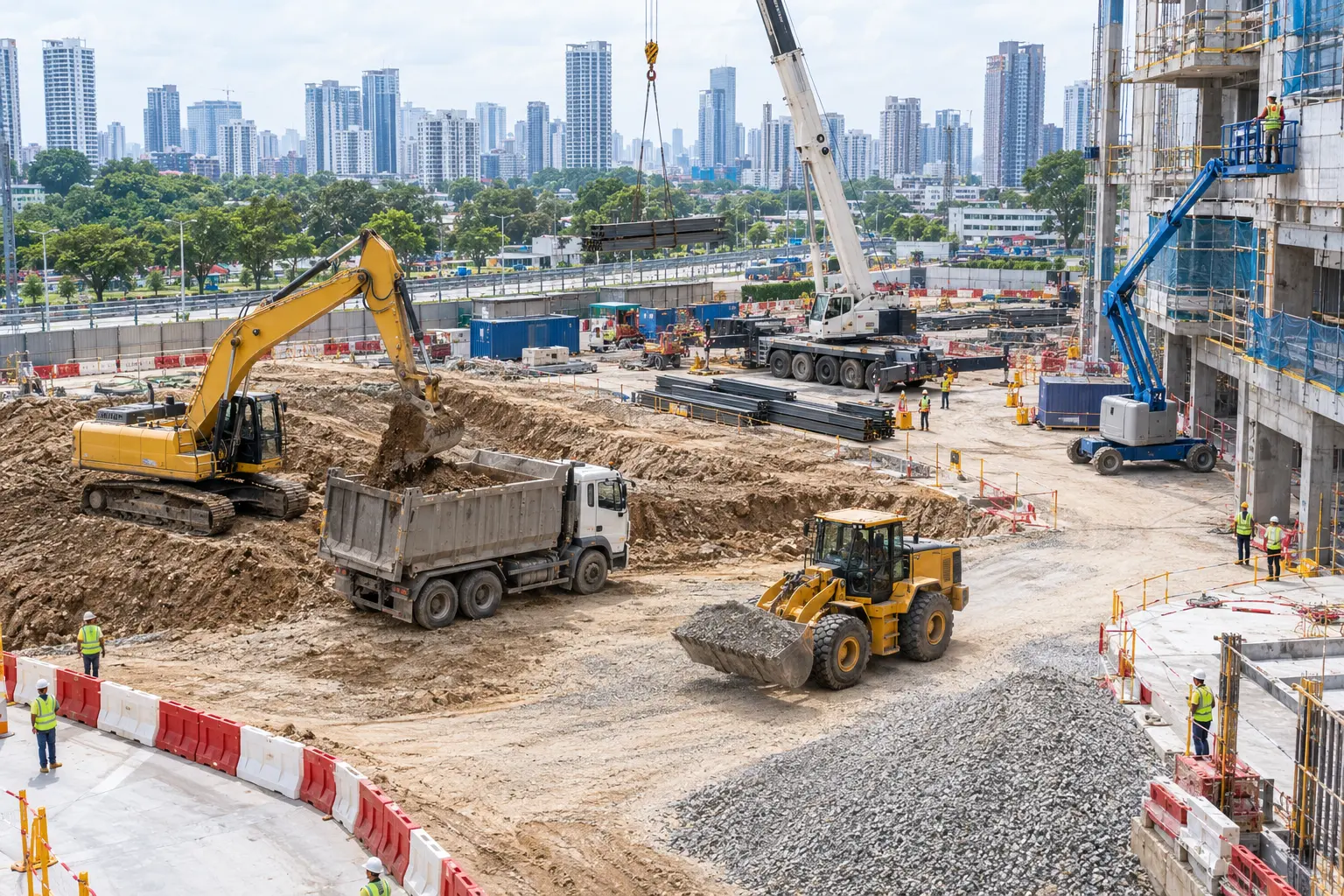
A construction site runs on vehicles. Before the first wall goes up, machines have already cleared the ground, dug the foundations, and hauled away the spoil, and long after the structure is finished, others are still lifting materials, reaching high work areas, and finishing the roads around it. Each type of construction vehicle exists because it does one kind of job better than anything else.
This guide groups the main types of construction vehicles by the work they do, from earthmoving and hauling to lifting, material handling, access at height, and road building, and explains how to choose the right vehicle for a task and how to keep vehicle operations safe on site.
What Is a Construction Vehicle?
A construction vehicle is a heavy, self propelled machine built to carry out construction work such as digging, pushing, loading, hauling, lifting, or compacting. Unlike ordinary road vehicles, construction vehicles are designed to work on rough and uneven ground, move very heavy loads, and operate working equipment such as buckets, blades, booms, and forks.
The term overlaps with heavy equipment and construction machinery, and in everyday use they are often treated as the same thing. Some construction vehicles, such as dump trucks and concrete mixer trucks, travel on public roads between sites, while others, such as crawler excavators and bulldozers, are carried between sites on low loaders and work only within the site. Further general background on these machines is available through Wikipedia’s overview of heavy equipment.
Earthmoving Vehicles
Earthmoving vehicles shape the ground. They are usually the first machines on site and handle the bulk of the digging, pushing, and loading during site preparation, foundation work, and large earthworks.
Excavators dig trenches, foundations, and basements with a bucket on a jointed arm, and their upper structure rotates so the machine can dig and dump without moving its tracks. Bulldozers push soil, rubble, and debris with a heavy front blade and are used for clearing land, spreading fill, and rough grading. Wheel loaders scoop loose material and load it into trucks, while backhoe loaders combine a front loader with a rear digging arm for smaller, mixed jobs. On large earthworks, scrapers cut, carry, and spread soil over longer distances in one continuous operation.
How these machines work together on larger projects, and which one suits each stage of the earthworks, is explained in Earth Moving Equipment: Types, Uses, and Applications. A quick reference to the names and roles of the most common machines is available below.
Also read: Heavy Construction Equipment Names and What Each Machine Does
Construction Trucks and Hauling Vehicles
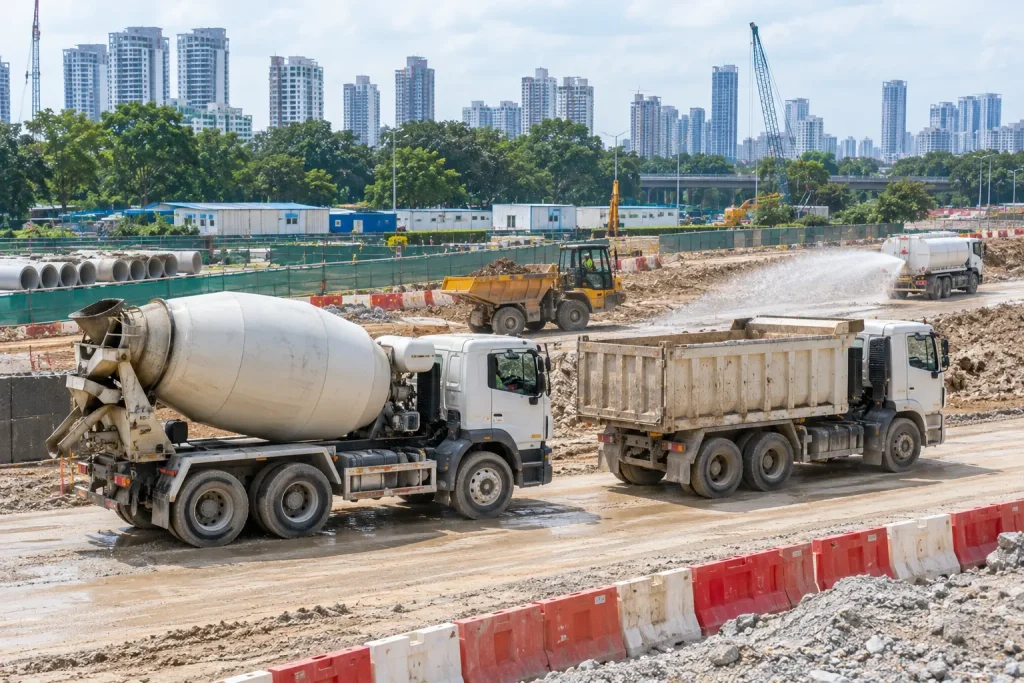
Trucks keep materials moving between different parts of a site and between the site and the outside world. The right truck depends on what is being carried, how far it travels, and the ground it has to cross.
Rigid dump trucks carry soil, aggregate, and demolition waste and tip their load by raising the body, making them the most common hauling vehicle on and off site. Articulated dump trucks have a pivoting joint between the cab and the body, which helps them keep traction on soft, muddy, or uneven ground where rigid trucks struggle. Site dumpers are compact carriers that tip from the front, used for moving material short distances around smaller sites.
Concrete mixer trucks deliver ready mixed concrete, turning the drum on the way so the concrete arrives in workable condition. Flatbed trucks and lorries carry steel, formwork, pipes, and palletised materials, often with a truck mounted crane for loading and unloading. Water trucks suppress dust on haul roads and supply water for compaction and other site needs.
Lifting Vehicles
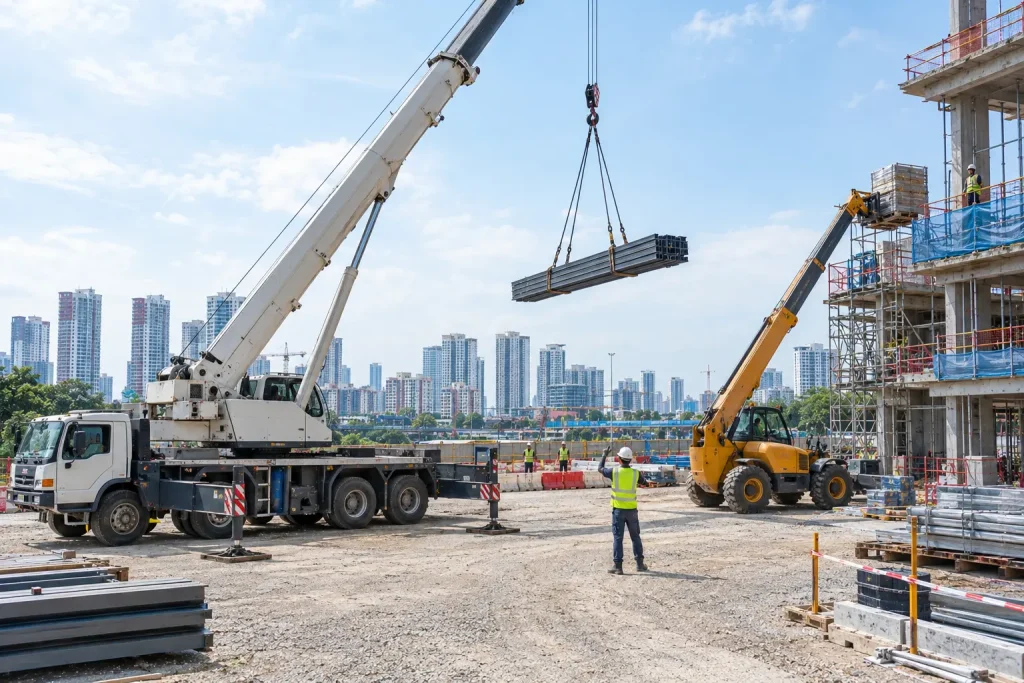
When loads are too heavy or too high to move by hand or with a loader, lifting vehicles take over. Mobile cranes include truck mounted cranes that travel quickly between sites, rough terrain cranes built for uneven ground, and crawler cranes that move on tracks and handle very heavy lifts. The differences between these designs, and the jobs each one suits, are explained in Types of Cranes: A Comprehensive Guide.
Telehandlers combine features of a forklift and a crane, using a telescopic boom to lift loads to height and place them forward over obstacles. They are common on building sites for lifting materials onto upper floors and scaffolding, and the main types are covered in What Is a Telehandler? Types, Uses and How It Works.
Material Handling Vehicles
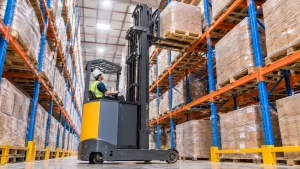
Material handling vehicles move materials around storage areas, laydown yards, and work fronts. The most widely used is the forklift, which lifts and carries palletised loads over short distances and comes in versions for smooth warehouse floors and rough outdoor ground. On many worksites, teams rely on forklifts for lifting and moving materials between storage and work areas, and in broad terms forklifts are classed as industrial vehicles built for material handling in construction and logistics.
Telehandlers, skid steer loaders fitted with pallet forks, and small site dumpers also handle materials on many sites. The best choice depends on the weight of the loads, the ground conditions, the distance to be covered, and how high the materials need to go.
Access Vehicles for Work at Height
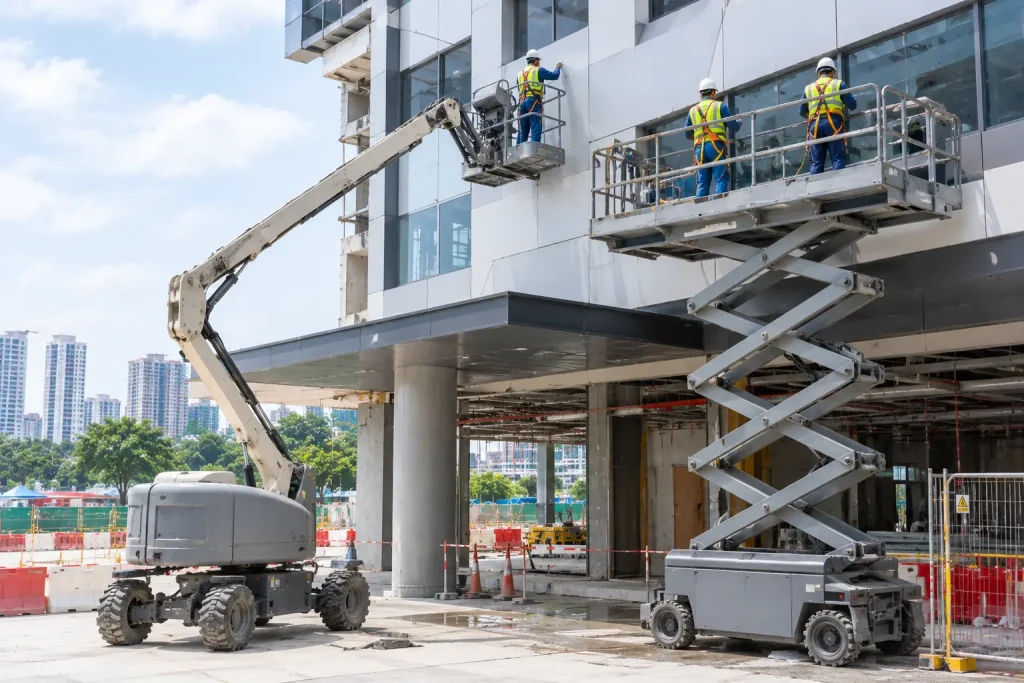
Access vehicles carry workers and their tools to elevated work areas safely, replacing ladders and, for many tasks, scaffolding. They are used for installation, maintenance, facade work, and inspection on almost every type of project.
Boom lifts reach both upward and outward, so the platform can be placed over obstacles or away from the base, and many teams choose boom lifts used for work at height for facade work and outdoor tasks. Scissor lifts rise straight up with a larger, stable platform, and scissor lifts commonly used on construction sites suit ceiling, installation, and maintenance work. Vehicle mounted cherry pickers put a boom on a truck chassis for quick work along roads and streets. All of these belong to the wider category covered in Mobile Elevating Work Platforms (MEWP) Guide for Safer Work.
Also read: Boom Lift vs Scissor Lift: Which One Should You Choose?
Road Construction and Compaction Vehicles
Road building and the finishing of large paved areas rely on a dedicated group of vehicles. Motor graders shape and level the ground to precise grades, compactors and rollers compact soil, aggregate, and asphalt in layers, asphalt pavers lay hot mix in an even mat, and cold milling machines remove worn surfaces before resurfacing.
Compaction is critical to the life of any road, slab, or foundation, so the choice of roller matters. The main types are compared in 5 Types of Rollers Used in Construction and Road Compaction, while smaller compaction machines for trenches and confined areas are covered in Types of Compactors Used in Construction Projects. The full sequence of machines used to build a road is set out below.
Also read: Road Construction Equipment List: Every Machine Explained
Specialist Construction Vehicles
Some vehicles are built for a single stage of work. Piling rigs drive or bore piles for deep foundations, concrete pump trucks place concrete through a boom where mixer trucks cannot reach, and drilling rigs bore holes for ground investigation, anchors, and foundations. Trenchers cut long, narrow trenches for cables and pipes much faster than a bucket can.
These machines usually arrive for a defined phase, work alongside the general fleet, and leave once their task is complete, so coordinating their arrival with the rest of the programme helps avoid idle time and crowded work areas.
How to Choose the Right Construction Vehicle
Choosing the right vehicle starts with the task. Define what needs to be dug, moved, lifted, or reached, how much of it there is, and how far it needs to go. Then consider the conditions the vehicle will face, including the ground, the space available for manoeuvring, access routes, overhead obstructions, and any limits on noise or emissions.
Duration and cost matter too. Vehicles needed for a short phase of work are usually better rented than bought, while long term, continuous needs may justify ownership. Transport to site, operator availability and training, and maintenance support all affect the real cost. For longer projects, working with providers that offer equipment servicing and technical support helps reduce downtime and keeps vehicles operating safely throughout the project.
Construction Vehicle Safety
Moving vehicles are among the most serious hazards on a construction site, because large machines have blind spots, carry heavy loads, and share space with people on foot. A site traffic management plan separates pedestrians from vehicles wherever possible, sets out one way routes and turning areas, and controls where vehicles are allowed to reverse.
Banksmen or spotters guide vehicles where visibility is limited, especially when reversing, and every operator should be trained and authorised for the specific vehicle. Daily inspections of brakes, lights, alarms, tyres or tracks, and safety devices catch faults before they cause incidents. Singapore’s Ministry of Manpower publishes detailed Workplace Safety and Health guidance covering vehicle and machinery safety on worksites, and the wider principles are covered in Heavy Equipment Safety: A Complete Site Guide.
Get the Right Construction Vehicles with RR Machinery
Choosing the right mix of vehicles starts with a clear picture of the project. When you contact the team, it helps to describe the work involved, the materials and loads, the heights to be reached, the ground and access conditions, and how long each phase is expected to last. With these details, the right equipment can be recommended from the start rather than adjusted after delivery.
RR Machinery Pte Ltd offers heavy machinery rental for construction and industrial sites across Singapore, including boom lifts, scissor lifts, forklifts, mobile scaffolding, and power generators, backed by servicing support. Get in touch with the RR Machinery team today to discuss your requirements or request a quotation.