Few questions come up more often when planning work at height than how high a cherry picker can actually go. The honest answer is that there is no single figure, because the term covers a wide family of machines, from compact units that fit through a doorway to large truck mounted booms that tower over multistorey buildings.
This guide gives realistic height ranges for the main types, explains the difference between platform height and working height, and looks at the factors that decide how high a particular machine can safely work on a particular day.
The Short Answer on Cherry Picker Height
As a general guide, smaller cherry pickers, including compact articulating booms and van or truck mounted units, commonly reach working heights somewhere around ten to twenty metres. Mid size machines commonly reach roughly twenty to thirty five metres. The largest booms go beyond that, with some specialised units reaching considerably higher still. These are broad bands, and the exact figure for any machine is the one on its manufacturer’s specification sheet.
A useful rule of thumb is roughly three metres per storey, so a machine with a working height in the low twenties of metres can serve the upper floors of a building of about seven storeys, while the largest machines can serve far taller structures. Whether a given machine can actually do that depends on the factors covered later in this guide, not on the headline figure alone.
The name cherry picker is used loosely for boom lifts of several designs, and how it relates to other boom lifts is compared in Boom Lift vs Cherry Picker: Key Differences Explained. The origin of the term, and the main machine types it covers, are explained below.
Also read: What Is a Cherry Picker? Types, Uses & How It Works
Platform Height and Working Height
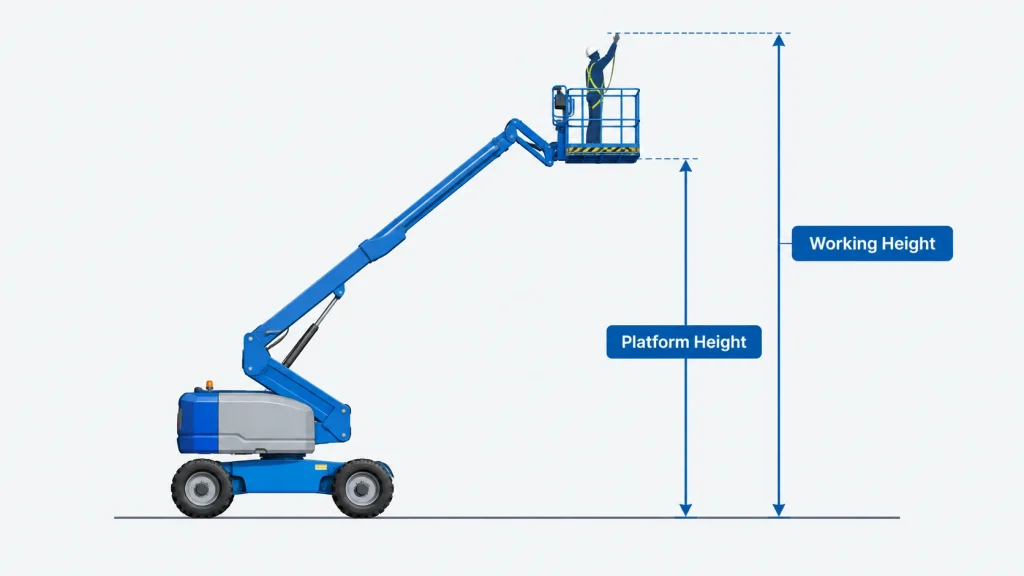
Specification sheets usually list two different figures. Platform height is the distance from the ground to the floor of the platform. Working height is a larger figure that adds an allowance for a person standing on the platform and reaching upward, commonly about two metres, although the exact allowance is set by each manufacturer.
The difference matters in practice. A task at an eave or ceiling twelve metres up may be within reach of a platform a little lower than that, provided the worker stays inside the platform and reaches upward, never climbing on or leaning over the guardrails. Jobs that need both hands and tools at the work face are better done with the platform at or very close to the height of the work.
When comparing machines or quotes, check that the same figure is being compared. A quote that lists working height for one machine and platform height for another will make the second machine look shorter than it really is.
How High Different Types Can Go
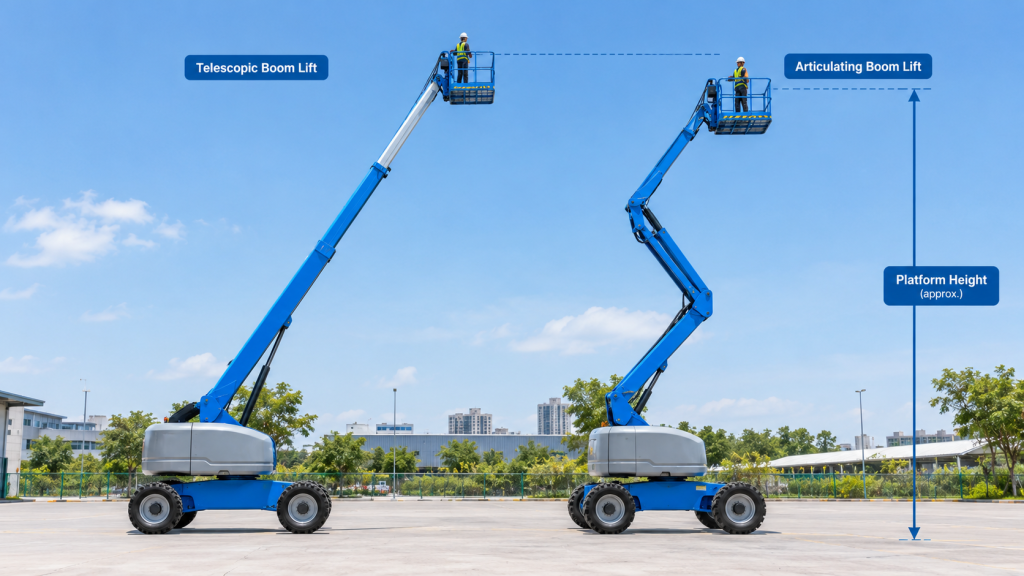
Reach depends heavily on design. A telescopic boom extends in a straight line, an articulating boom bends at one or more joints, and truck and trailer mounted machines trade off height, weight, and portability in different ways.
The bands below are typical, not guarantees. Two machines of the same type can differ considerably in reach, so the specification sheet for the specific model always takes priority.
Articulating Cherry Pickers
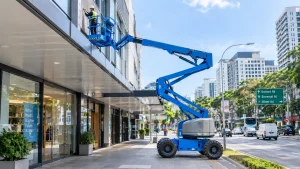
Articulating machines have jointed booms that can rise, bend, and reach over obstacles. For a machine of similar size, their maximum height is often a little lower than the tallest telescopic equivalent, because part of the boom structure is devoted to the joints that give them flexibility.
What they give up in outright height they make up in positioning. For work where the direct path to the target is blocked, an articulating machine can often place the platform in a position that a taller straight boom cannot reach at all. The design is covered in depth in Articulating Boom Lift: Uses, Benefits, and How It Works.
Telescopic Cherry Pickers
Telescopic machines extend in a straight line, which usually gives them the greatest height and horizontal reach for a given machine size. They are the usual choice when a job needs maximum height or outreach and the path to the work is clear.
The straight boom also means less flexibility. A telescopic machine cannot rise past an obstacle and then fold over it, so sites with canopies, trees, or equipment in the way may call for a different design even when the height figure looks ideal on paper.
Truck and Trailer Mounted Units
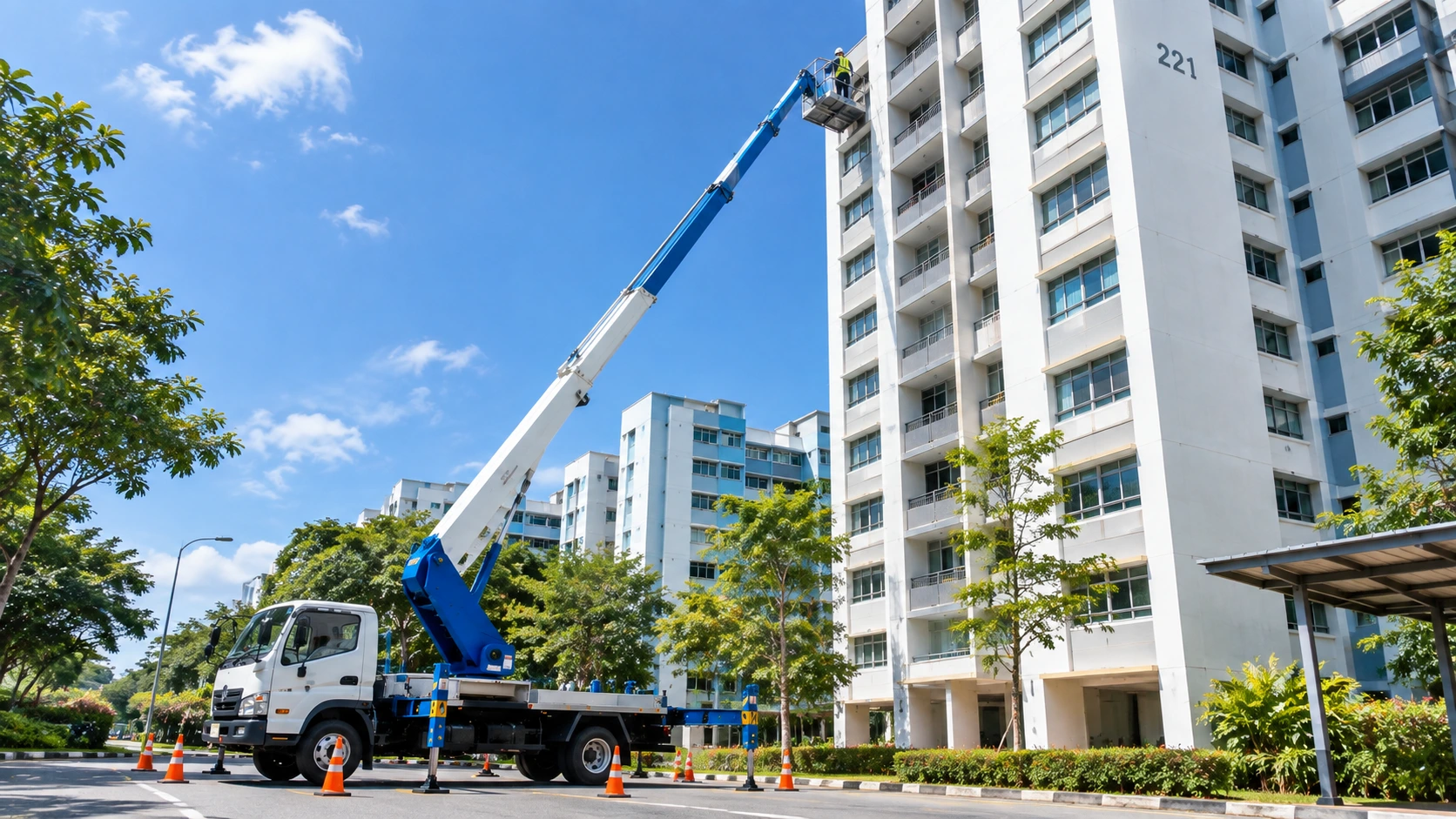
Truck mounted cherry pickers are built on a road going chassis, set up on outriggers, and can offer substantial reach, which makes them popular for utility work, street lighting, and tree work along roads. Because the carrier vehicle provides the stability, they can achieve heights that would require a much larger self propelled machine.
Trailer mounted units are lighter and towed to site, generally reaching lower heights than truck mounted machines. They suit occasional work and places where a larger machine cannot go, and they are often easier to transport and position when access is limited.
A side by side look at the full range of designs is available in Types of Boom Lifts: Which One Does Your Job Need?, and further general background on how aerial work platforms are classified is available through Wikipedia’s overview of aerial work platforms. The practical decision between jointed and straight booms is covered below.
Also read: Choosing Between Articulating and Telescopic Boom Lifts
What Limits How High a Cherry Picker Can Go
The maximum height printed on a specification sheet is a design figure. Reaching it in real conditions depends on several things working in your favour at once:
- Boom length and structure. The boom’s design sets the upper limit, and no amount of skilled operation can extend it.
- Ground and stability. Outriggers or the machine’s base must sit on firm, level ground that can carry the load, because reach concentrates weight on one side of the machine.
- Outreach and load. The further the platform extends outward, and the more weight it carries, the less height and capacity remain available.
- Wind. Every machine has a rated maximum wind speed, and conditions at the platform are stronger than conditions at ground level.
- Overhead hazards. Power lines, structures, and trees limit how far the boom can safely go, whatever its design height.
- Site layout. Access routes, slopes, and the space to position the machine decide whether it can get close enough to use its full reach.
Cherry pickers are also designed to carry people and light tools to a work position, not to hoist heavy materials. When the job is about placing loads at height rather than positioning workers, a different machine is usually the better choice, a decision explained in Boom Lift vs Crane: How to Choose for Your Project.
Height, Outreach, and the Working Envelope
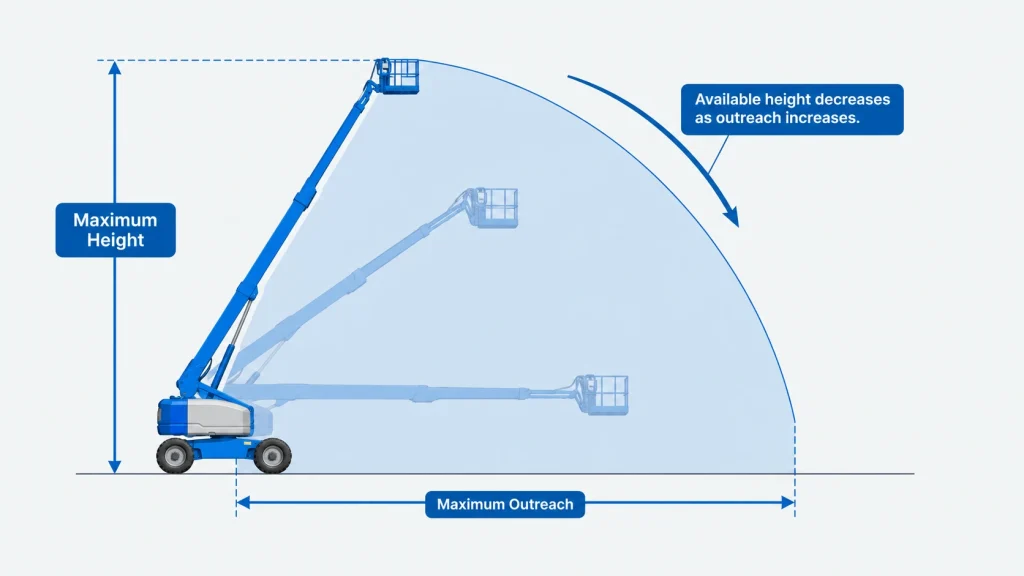
Height is only one dimension of what a cherry picker can do. Manufacturers publish a working envelope chart for each model, showing the combinations of height and horizontal outreach the machine can reach, and the shape of that chart matters as much as the single height figure.
In most machines the highest point is available only close to the base. As the boom extends outward, the maximum height it can offer at that distance falls, so a machine rated to a certain height cannot necessarily reach that high on the far side of a building or over a wide obstacle.
Reading the chart before hiring means confirming that the exact point where the work will happen sits inside the envelope with some margin to spare, rather than assuming the headline height applies everywhere. Capacity changes across the envelope too, and a platform loaded with several workers and heavy tools may have less reach available than an empty one.
Wind and Weather at Higher Platforms
Wind is the weather factor that most directly limits how high a cherry picker can work. Every machine has a rated maximum wind speed, and the higher the platform goes, the stronger the wind becomes compared with conditions on the ground, so a day that feels calm at street level can be outside limits at the top of the boom.
Rain, poor visibility, and lightning are also reasons to stop. Wind speed should be checked before work starts and monitored throughout, with the platform lowered as soon as conditions approach the rated limit, rather than finishing the task and hoping conditions hold.
How Do You Work Out the Height You Need?
Getting the height right before a machine is booked avoids both a machine that cannot reach and one that is larger than the job needs. A simple process works for most tasks:
- Measure or estimate the height of the work point above the ground where the machine will actually stand, which may differ from street level if the site is sloped or stepped.
- Decide where the platform needs to be in relation to that point, and rely on working height rather than platform height only where reaching upward is genuinely safe.
- Check how far out from the machine the work point sits, since both height and outreach need to be available together.
- Add a sensible margin so the machine is not working at the very edge of its limits.
- Confirm the ground conditions, the access route, and the clearance from overhead hazards.
With these details, a supplier can recommend the right machine and confirm that its envelope covers the work point, rather than leaving the decision to a single height figure in a brochure.
Safe Operation at Height
Greater height raises the consequences of every mistake. Everyone on the platform should wear a harness connected to the designated anchor point, the machine should be inspected before each use, and only trained operators should control it. The broader principles that apply to any task above ground are explained in Working at Height: Safety Tips and Guidelines.
Singapore’s Ministry of Manpower publishes detailed Workplace Safety and Health guidance covering training, inspection, and operating standards that apply to aerial work platforms on local worksites. A practical walkthrough of safe operating technique, from pre use checks through to shutdown, is available below.
Also read: How to Operate a Boom Lift Safely: A Step-by-Step Guide
Hiring a Cherry Picker in Singapore
Choosing the right machine starts with a clear description of the job. When you contact the team, it helps to share the height of the work point, how far from the machine’s position it sits, what the ground and access route are like, whether the work is indoors or outdoors, and how long you expect to need the machine. With these details, the right height class and configuration can be recommended from the start rather than adjusted after delivery.
RR Machinery Pte Ltd offers an extensive range of boom lifts, including cherry picker configurations for a wide range of working heights, backed by factory certified technicians and full servicing support. Contact us today for expert advice on the right machine and a quote tailored to your project.platform