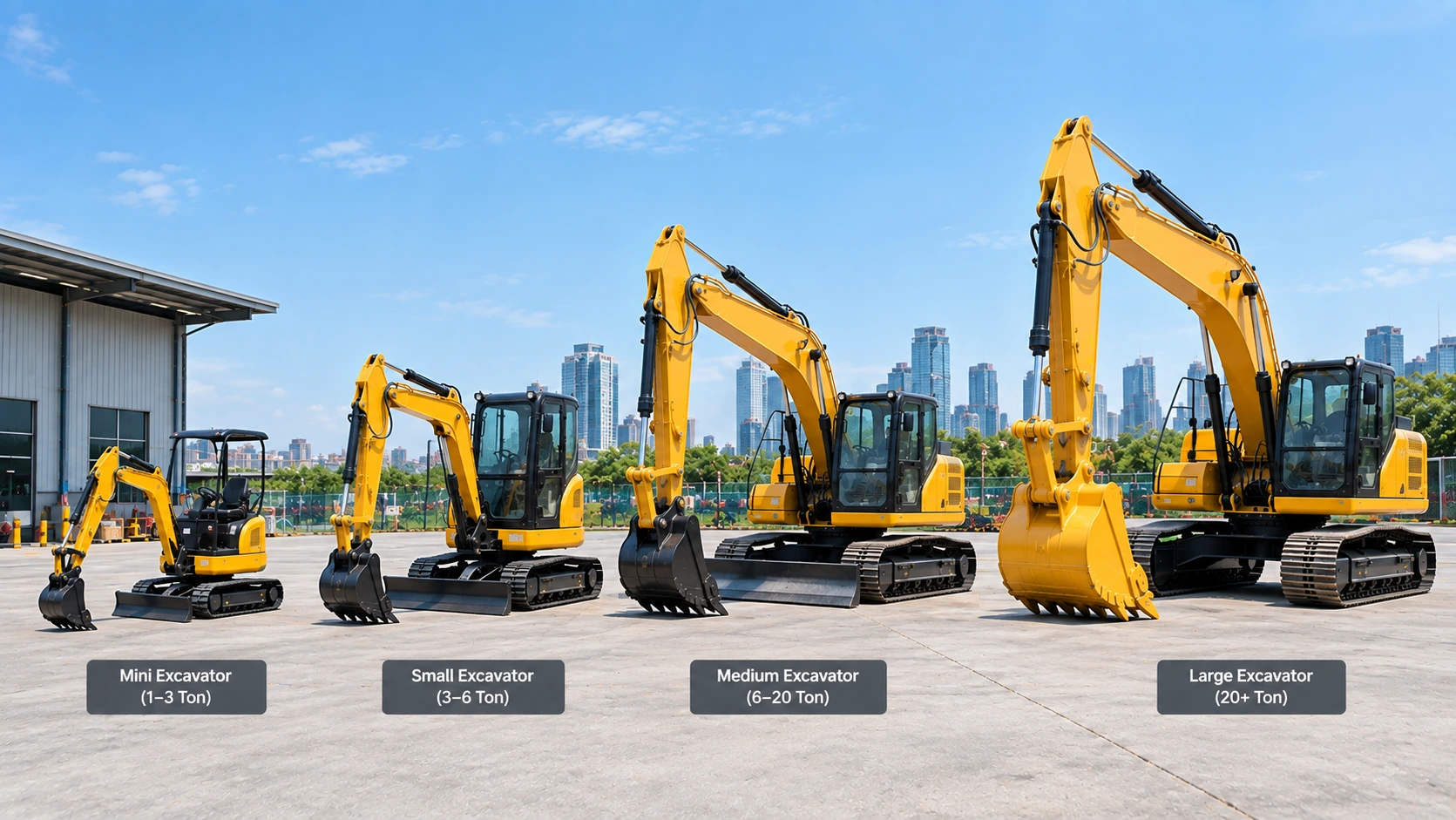
Excavators range from machines light enough to fit through a standard garden gate to mining-class giants weighing several hundred tonnes, and the single figure that best captures this range is operating weight, the industry’s primary way of classifying excavator size. Unlike some equipment categories sized primarily by reach or height, an excavator’s weight class drives nearly everything else about it, dig depth, breakout force, transport requirements, and the range of attachments it can realistically power.
This guide breaks excavator sizing down into four practical weight classes, mini, compact, standard, and large, covering typical specifications and the tasks each class is genuinely built for, helping match the right size to a project rather than defaulting to whatever happens to be available.
What Determines Excavator Size?
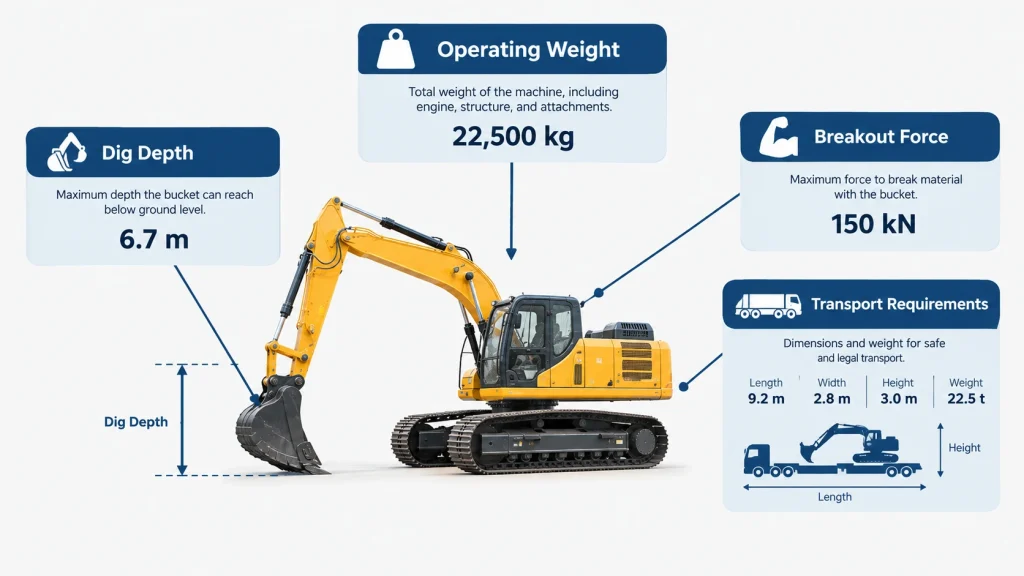
Operating weight, the fully equipped weight of the machine including a standard bucket and a full tank of fuel, is the primary figure used to classify excavator size, typically measured in tonnes. This single figure correlates closely with several other specifications that matter for a given task, dig depth and reach generally increase with weight class, as does breakout force, the digging power the bucket can exert against dense or compacted material.
Weight class also determines transport requirements directly, since machines above certain thresholds require different trailer configurations, permits, and in some cases road transport restrictions that lighter machines never encounter. Understanding these weight-driven relationships is more useful for equipment selection than focusing on dig depth or reach figures in isolation, since a heavier machine capable of a given dig depth will generally also handle denser material and support a wider range of attachments than a lighter machine with a similar reach figure. Manufacturers typically group their model ranges around these same weight bands, making operating weight the fastest way to narrow down a shortlist of suitable machines before comparing individual specifications in detail.
Mini Excavators
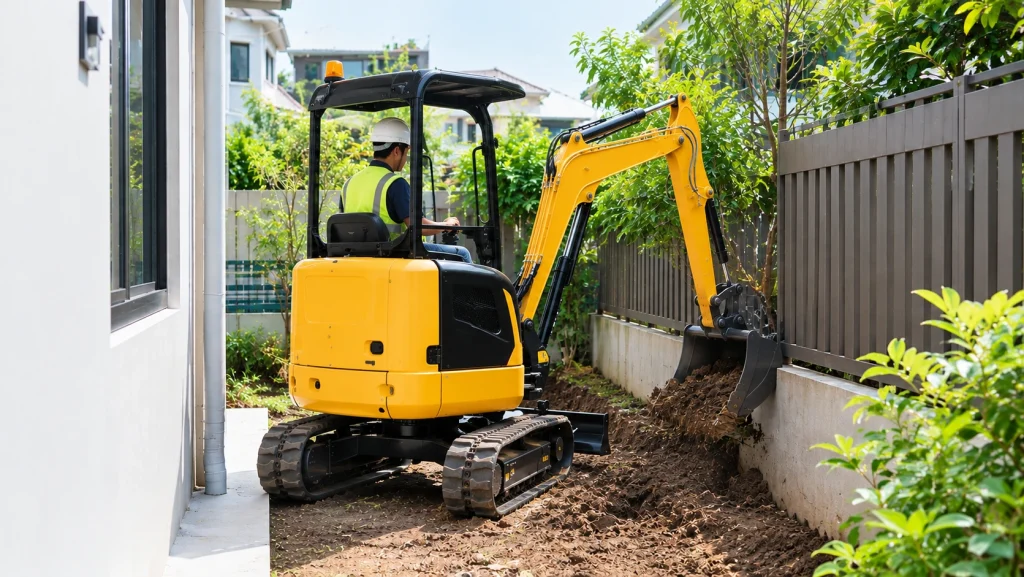
Mini excavators, generally classified as machines under six tonnes, sit at the smallest end of the excavator range, prioritising manoeuvrability and reduced footprint over maximum digging power.
Typical Specifications
Mini excavators typically offer dig depths from around 2 to 3.5 metres, with breakout force considerably lower than larger classes but still substantial enough for general trenching, landscaping, and utility work. Many mini excavator models are also built with a zero or minimal tail swing design, allowing the machine to rotate without the rear of the upper structure overhanging beyond the width of the tracks, a genuine advantage for confined residential and urban sites where working close to walls and fences is routine rather than exceptional.
Best Applications
Mini excavators suit residential landscaping, small trenching jobs, utility installation, and any task in a confined space a larger machine simply could not access. Their compact size also allows transport on a standard trailer towed by a pickup truck or light vehicle, a genuine logistical advantage for smaller contractors without dedicated heavy transport. A detailed, beginner-friendly walkthrough of operating a machine in this size class is available below.
Also read: Operating a Mini Excavator Safely: A Step-by-Step Guide for First-Time Users
Compact and Midi Excavators
Compact and midi excavators, generally spanning roughly six to ten tonnes, bridge the gap between mini excavators and full-size standard machines, offering meaningfully more digging power while still remaining manageable on moderately sized sites. This size class is often the first genuine step up for a contractor who has outgrown a mini excavator’s capacity but does not yet need the scale, and the associated transport and site access demands, of a full standard machine.
Typical Specifications
This class typically delivers dig depths from around 3.5 to 5 metres, with breakout force and bucket capacity noticeably higher than mini excavators, allowing them to handle denser material and larger volumes per digging cycle. Many midi excavators retain a reduced tail swing design, though generally with a slightly larger footprint than the smallest mini models.
Best Applications
Compact and midi excavators suit general construction trenching, foundation work, and site preparation on small to medium commercial and residential projects, where a mini excavator’s capacity would be insufficient but a full standard machine would be unnecessarily large for the site. This size class is frequently the practical middle ground specified for general contracting work that does not fall clearly into either the smallest or largest categories.
Standard Excavators
Standard excavators, typically ranging from around ten to 45 tonnes, represent the workhorse category most commonly associated with general construction and earthworks. This class covers the widest span of any single weight category, meaning two standard excavators at opposite ends of the range can differ substantially in capability, making it worth confirming a specific model’s figures rather than assuming all machines labelled “standard” perform similarly.
Typical Specifications
Standard excavators typically achieve dig depths from around 5 to 7 metres or more, with breakout force and bucket capacity suited to serious earthmoving, foundation excavation, and material handling at a genuinely commercial scale. This class also supports a far wider range of attachments, breakers, grapples, and specialised buckets among them, than smaller machines can practically power.
Best Applications
Standard excavators are the default choice for general construction, road works, utility infrastructure, and commercial building foundations, where the combination of dig depth, breakout force, and attachment versatility fits the widest range of everyday earthmoving tasks. A broader look at how excavator design, rather than size alone, affects suitability for different tasks is covered below, useful complementary reading alongside the size classification covered here.
Also read: Types of Excavators for Construction and Earthmoving
Large and Mining-Class Excavators
Large excavators, generally exceeding 45 tonnes and extending up to several hundred tonnes for the largest mining-class machines, represent a genuinely different category of equipment specification rather than simply a scaled-up standard excavator.
Machines at this scale are built almost exclusively for large-scale mining, quarrying, and major infrastructure projects, where the economics of moving enormous volumes of material justify their substantial transport, assembly, and operating costs. A detailed look at the most extreme end of this category, including specific record-scale machines used in global mining operations, is covered below.
Also read: Biggest Excavator in the World: Size and Specs Guide
Matching Excavator Size to the Task
Selecting the right excavator size starts with the actual task requirements, confirmed dig depth, material density, and site access, rather than defaulting to whichever size feels safely oversized or happens to already be available. Oversizing adds unnecessary transport cost, site footprint, and ground bearing demands without a corresponding productivity benefit for a task that never required that scale in the first place, while undersizing risks a machine that cannot complete the dig safely or efficiently at all.
Site access deserves particular attention alongside the digging specifications themselves, gate widths, overhead clearance, and ground bearing capacity all need to be checked against a specific machine’s footprint and weight, not just its dig depth and reach figures, before a size is finalised for a project. Comparing an excavator against alternative earthmoving equipment for a specific task, rather than assuming an excavator is automatically the right category of machine, is also worth confirming before finalising a decision. Further general technical background on excavator classification and design is available through Wikipedia’s overview of excavators.
Finding the Right Size for Your Project
Excavator size comes down to matching operating weight, dig depth, and breakout force to the actual demands of a task, across mini, compact, standard, and large categories that each suit a distinct range of applications. Getting this decision right from the outset avoids the cost of an oversized machine or the productivity loss of one that cannot genuinely handle the material and depth a project requires, a decision worth revisiting for each new project rather than defaulting permanently to a single size regardless of scope.
RR Machinery Pte Ltd supports Singapore’s construction and industrial sectors with reliable heavy machinery solutions tailored to your specific site conditions. Browse our complete heavy machinery services or contact our team today for practical advice on the right excavator size for your project.