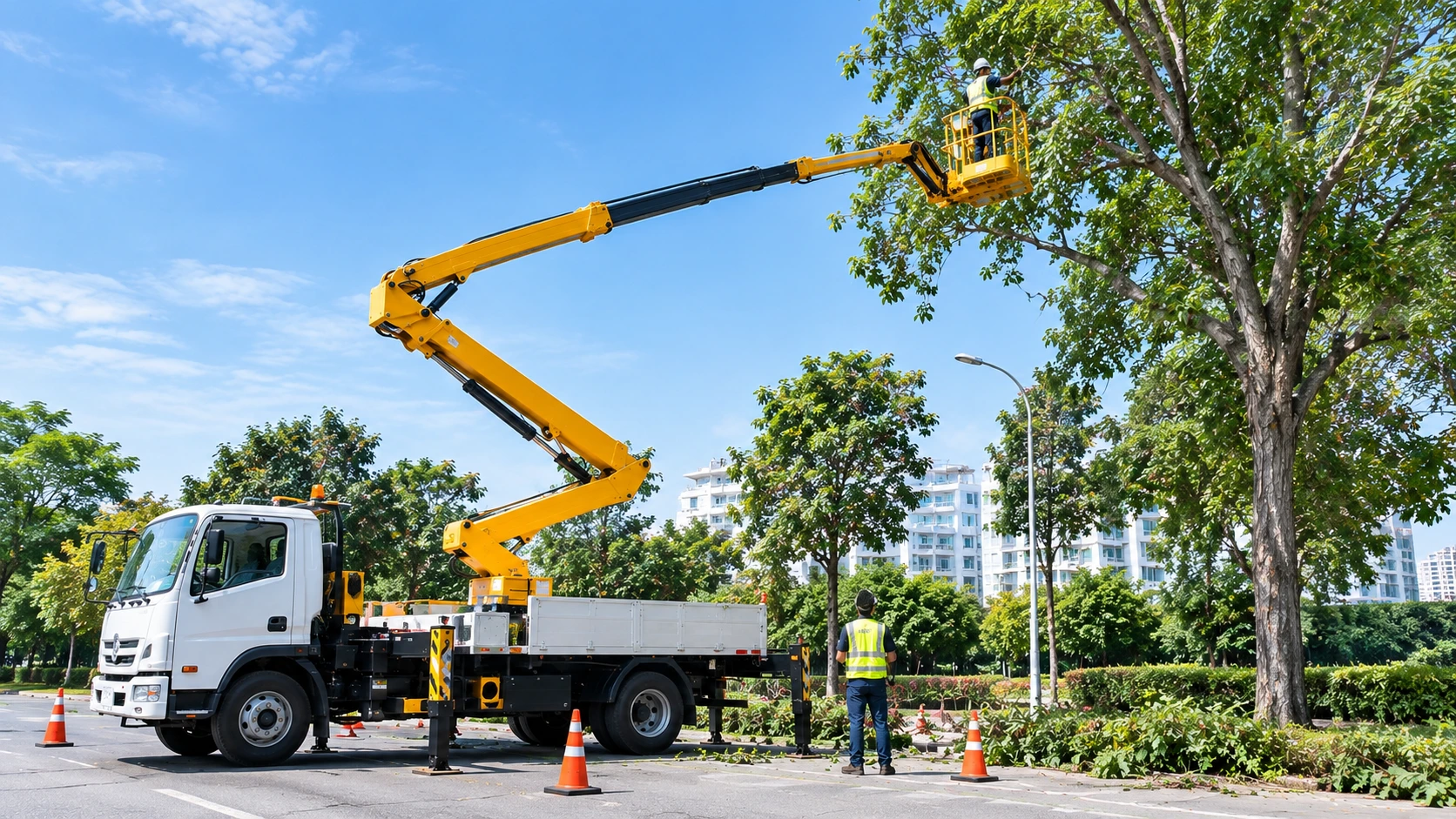
A cherry picker, technically a truck or vehicle-mounted boom lift, gives workers access to elevated tasks that a ladder or scaffold would make slower and considerably less stable, tree trimming, sign installation, utility work, and building maintenance among them. Its jointed boom arm and rotating platform make it genuinely versatile, but that same flexibility means learning to operate one correctly takes more than simply raising the platform and hoping for the best. Because the machine is mounted on a road-going vehicle, operators also need to think through positioning and site access in a way that a purely site-based aerial platform would not require.
This guide walks through the practical steps involved in using a cherry picker safely, from the checks that should happen before the engine ever starts, through learning the controls, to the operating sequence and shutdown routine every operator should follow consistently. The same fundamentals apply whether the task is a quick, ten-minute job or an extended maintenance project spanning a full shift.
Before You Start: Pre-Use Checks
A few checks before starting take only a couple of minutes but catch the majority of issues that would otherwise cause a problem partway through a task:
- Inspect hydraulic hoses, cylinders, and fittings for visible leaks, cracks, or damage
- Confirm the platform, guardrails, and access gate are structurally intact with no bent or cracked components
- Check that the harness anchor point inside the platform is present, undamaged, and securely fixed
- Test all controls at idle in a clear area before beginning actual work
- Confirm the emergency lowering system and backup controls at the base of the machine are functional
- Check tyre condition and, where fitted, outrigger operation before positioning the vehicle
Skipping this check because a task feels routine is one of the most common ways a developing fault goes unnoticed until it causes a problem during actual use. A broader, structured checklist covering every stage of boom lift operation, since a cherry picker is a specific type of boom lift, is available below.
Also read: Boom Lift Safety Checklist: Essential Pre-Use Steps
Understanding the Controls
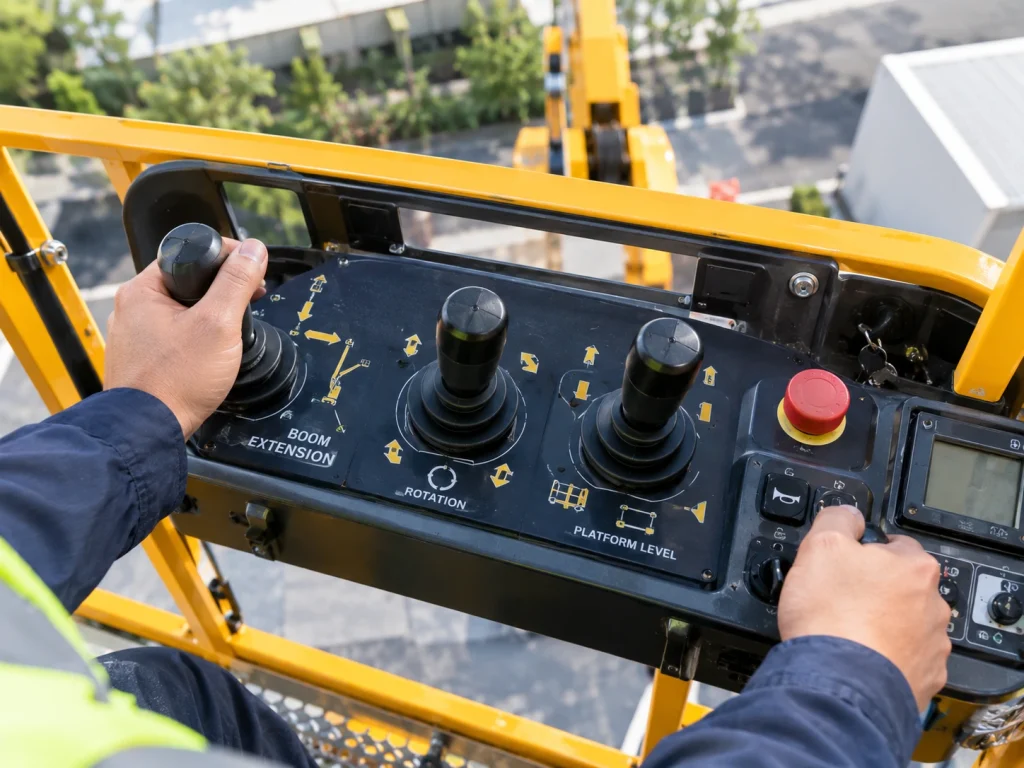
Every cherry picker includes both platform-level controls for the operator working at height and separate ground-level controls for emergencies or a second operator to take over if needed.
Basic Platform Controls
From the platform, the operator typically controls boom extension, rotation, and platform levelling through a joystick or set of levers, each function usually clearly labelled given how much a mistaken input at height can matter. Most machines also include a speed or sensitivity control, allowing finer, slower movements for precision work close to a structure and faster movements for general repositioning.
New operators should practise each function individually in an open, obstacle-free area before attempting any real task, since combining boom extension, rotation, and platform levelling smoothly takes practice that is much safer to build before working near a structure or other obstacles.
Ground-Level and Emergency Controls
A duplicate set of controls at the base of the machine allows a ground-based operator to lower the platform in an emergency, such as if the platform operator becomes incapacitated or the platform controls fail. Every task should begin with confirming a ground-based person knows the location and operation of these controls, rather than assuming they will figure it out only if an emergency actually occurs.
Understanding the broader hydraulic and mechanical system behind these controls, including how the boom actually lifts and positions the platform, gives useful background for operators wanting to understand the reasoning behind specific operating limits, rather than simply memorising rules without the underlying context.
Step-by-Step Operating Sequence
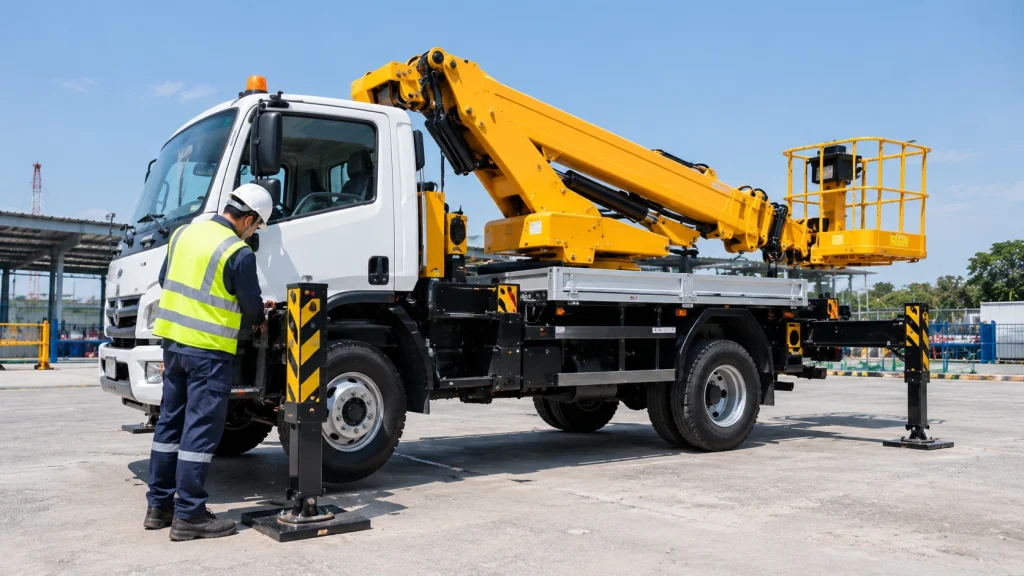
With the controls understood, using a cherry picker for an actual task follows a consistent sequence from positioning through to completing the work itself.
Positioning and Raising the Platform
Position the vehicle on firm, level ground, engage the parking brake, and deploy outriggers where fitted, confirming they are fully extended and properly supporting the vehicle before raising the platform at all. Once positioned, raise the boom slowly, keeping the platform’s swing path clear of overhead obstructions, power lines, and structures for the entire range of motion the task will require, not just the final position.
Checking the surrounding area for obstacles before beginning, rather than only as the boom approaches them, gives far more time to stop and reassess if something unexpected is in the way.
Working in the Platform
Once positioned, the harness lanyard should be clipped to the platform’s designated anchor point before work begins, and tools or materials should be secured rather than left loose on the platform floor where they could fall. Movements within the platform should stay deliberate and controlled, avoiding sudden shifts in weight distribution that could affect the machine’s stability, particularly when the boom is extended near its maximum reach.
Communication with ground personnel should remain clear throughout the task, particularly before repositioning the boom or vehicle, since a sudden movement without warning is one of the more common causes of dropped tools or materials striking someone below.
Safety Considerations While Operating
Beyond the operating sequence itself, a few specific hazards deserve particular attention given how directly they affect cherry picker safety.
Fall Protection
A full-body harness with the lanyard connected to the platform’s designated anchor point is essential every time the platform is raised, not just for tasks that feel objectively risky. This single habit, connecting before raising rather than after, is one of the simplest and most effective safety practices available, and it should never be treated as optional regardless of how short or routine a task appears. Fall protection requirements and how they apply across different elevated work equipment are covered in more depth below.
Also read: Working at Height: Safety Guidelines, Risks, and Best Practices
Ground Awareness and Communication
Ground personnel should maintain a clear exclusion zone around the vehicle while the platform is raised, and wind speed should be monitored continuously, since cherry pickers, like other boom lifts, have a rated maximum wind speed beyond which operation becomes unsafe. Confirming this rated limit for the specific machine in use, rather than assuming a generic figure applies, is a simple check that meaningfully reduces risk on exposed or elevated tasks.
Shutting Down Correctly
Ending a task properly matters as much as starting it correctly, and rushing this step is a common way an otherwise uneventful job ends with unnecessary wear or a safety oversight. Lower the boom fully and return it to its stowed, travel-ready position before retracting outriggers, and confirm the platform is completely empty of tools and materials before the vehicle is moved. Switch off the engine or power source, secure the controls, and park on stable, level ground away from traffic routes wherever the site allows, leaving the machine in a safe, predictable state for whoever uses it next.
Common Mistakes to Avoid
A handful of recurring mistakes account for a disproportionate share of cherry picker incidents:
- Skipping the pre-use inspection because the machine was used without issue the previous day
- Connecting the harness lanyard after the platform has already been raised, rather than before
- Exceeding rated platform capacity by underestimating the combined weight of workers, tools, and materials
- Repositioning the boom or vehicle without warning ground personnel first
- Continuing work as wind conditions deteriorate rather than lowering the platform once conditions approach the rated limit
Understanding what actually distinguishes a cherry picker from other boom lift configurations, and confirming the specific machine and its rated limits before use, is covered below, useful background for anyone unfamiliar with how this specific category fits within the broader boom lift family.
Also read: What Is a Cherry Picker? Definition, Types, Uses & Safety Guide
Singapore’s Ministry of Manpower publishes detailed Workplace Safety and Health guidance covering training and operating standards that apply to aerial work platforms, including cherry pickers, on construction and industrial sites.
Operating with Confidence
Using a cherry picker safely comes down to a consistent routine, checking the machine before starting, understanding both platform and ground-level controls, following a deliberate positioning and working sequence, and taking fall protection and wind conditions seriously on every task regardless of how routine it feels. None of these steps are complicated individually, but skipping or rushing any one of them is where most avoidable incidents actually originate.
RR Machinery Pte Ltd offers an extensive range of boom lifts backed by factory-certified technicians and full servicing support. Contact us today for expert advice on the right equipment for your elevated work needs.