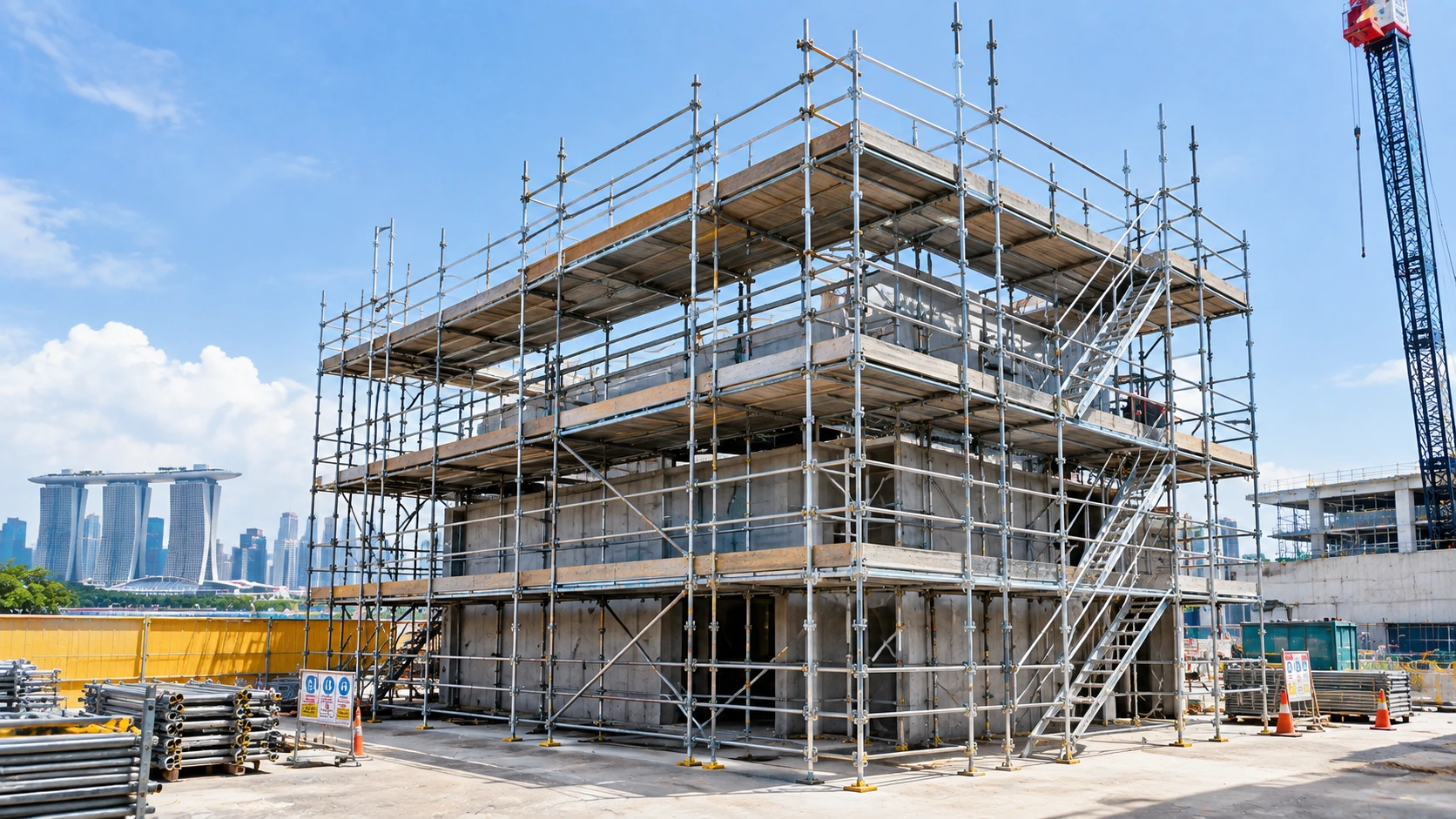
A completed scaffold looks like a single, unified structure, but it is actually an assembly of dozens of individual components, each with a specific structural or safety function, connected together in a system engineered to bear significant load safely at height. Understanding what each part does, not just how to recognise it, is genuinely useful for anyone specifying, inspecting, or working on a scaffold, since a missing or incorrectly fitted component in even one location can compromise the structure’s safety well beyond that single point.
This guide breaks down every major scaffolding component, from the structural framework that carries the load through to the guardrails and boards that keep workers safe on the platform, explaining what each part does and why it matters to the structure as a whole.
Why Understanding Scaffolding Parts Matters
Scaffolding is a genuinely engineered structure, not a simple stack of poles and boards, and every component within it is rated for a specific load and connection function within the overall system. A scaffold that looks complete from a distance can still be missing a critical brace, an undersized base plate, or a guardrail at the wrong height, defects that are only obvious to someone who understands what each individual part is actually meant to do.
This component-level understanding also matters directly for inspection and handover procedures, since confirming a scaffold is safe to use means checking that every part is present, correctly fitted, and undamaged, not simply confirming the structure looks stable at a glance.
Structural Components
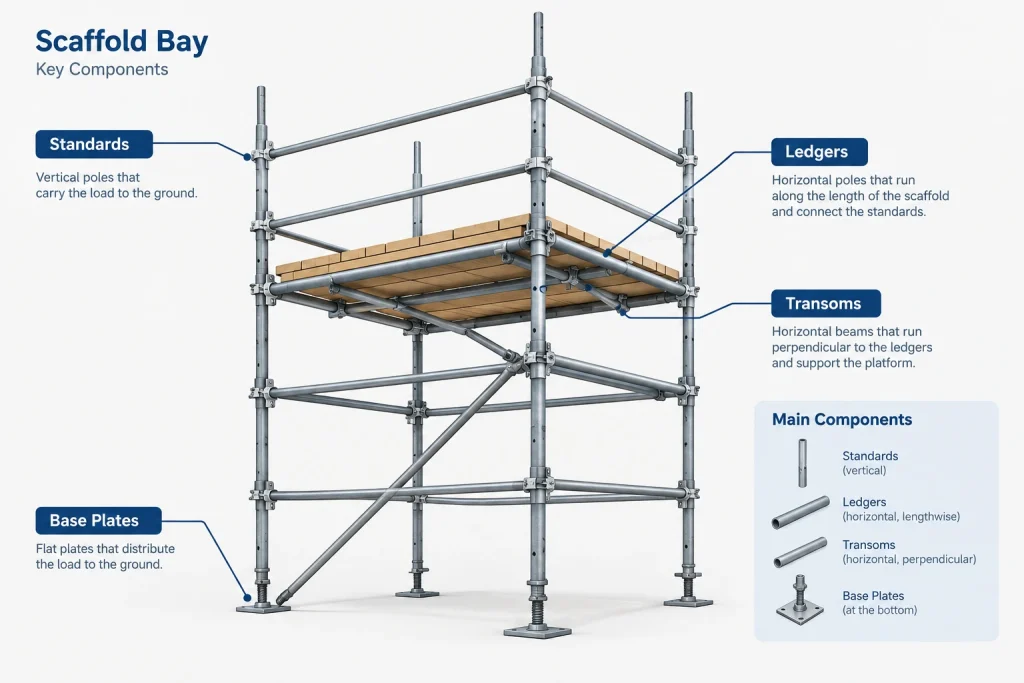
The structural components form the load-bearing skeleton of a scaffold, transferring the weight of workers, materials, and the structure itself down to the ground.
Understanding how these components relate to each other, standards running vertically, ledgers and transoms running horizontally, is the foundation for understanding everything else about how a scaffold actually holds together.
Standards (Uprights)
Standards, also called uprights or vertical tubes, are the vertical poles that run from the base of the scaffold to its full height, carrying the primary structural load down to the foundation. Every other horizontal component in the scaffold connects back to the standards, making their correct spacing, verticality, and connection quality fundamental to the entire structure’s stability.
Standards need to be genuinely vertical rather than only approximately so, since even a small lean introduces a lateral force the rest of the structure was not designed to carry, a deviation that compounds significantly as scaffold height increases.
Also read: What Is Scaffolding in Construction? A Complete Guide
Ledgers
Ledgers are horizontal tubes that run along the length of the scaffold, connecting adjacent standards together and providing the horizontal support that scaffold boards rest on. Ledgers also play a critical role in maintaining the correct spacing between standards, effectively locking the vertical structure into a stable, consistent grid rather than allowing individual standards to shift independently.
Transoms
Transoms are horizontal tubes running perpendicular to ledgers, spanning across the width of the scaffold bay and providing the direct support that scaffold boards sit on. Main transoms connect directly to the standards and carry the primary load, while intermediate transoms, positioned between the main transoms, provide additional support for the boards without connecting directly to the standards themselves.
Base Plates and Sole Boards
Base plates sit beneath each standard, distributing the concentrated point load of the vertical tube across a wider footprint to prevent the standard from sinking into the ground beneath it. On soft or uneven ground, sole boards, flat timber or composite boards placed beneath the base plates, spread this load even further, a detail that matters considerably on unpaved construction sites where ground bearing capacity varies significantly across a single site.
Working Platform Components
The working platform is where workers and materials actually sit during use, and its components are specifically engineered around both load capacity and fall prevention.
Scaffold Boards and Platforms
Scaffold boards, traditionally timber but increasingly aluminium or composite on modern systems, rest across the transoms to form the actual working surface workers stand on. Boards need to be correctly rated for the loads they will carry, properly secured to prevent movement, and free of damage such as splitting or excessive wear that would compromise their load-bearing capacity.
Gaps between boards, or boards that do not fully span between supports, create a genuine trip and fall hazard, which is why board layout and condition form a standard part of any scaffold inspection before use.
Guardrails and Toe Boards
Guardrails run along the open edges of a scaffold platform at a specified height, providing the primary fall prevention barrier for anyone working on the platform. Toe boards, a lower barrier running along the base of the platform edge, serve a different but equally important function, preventing tools and materials from being kicked or rolled off the edge and falling onto anyone below.
Both components are considered essential safety features rather than optional additions, and a scaffold platform without correctly fitted guardrails and toe boards should not be used until they are installed correctly.
Also read: How to Build Scaffolding: A Step-by-Step Site Guide
Bracing and Stability Components
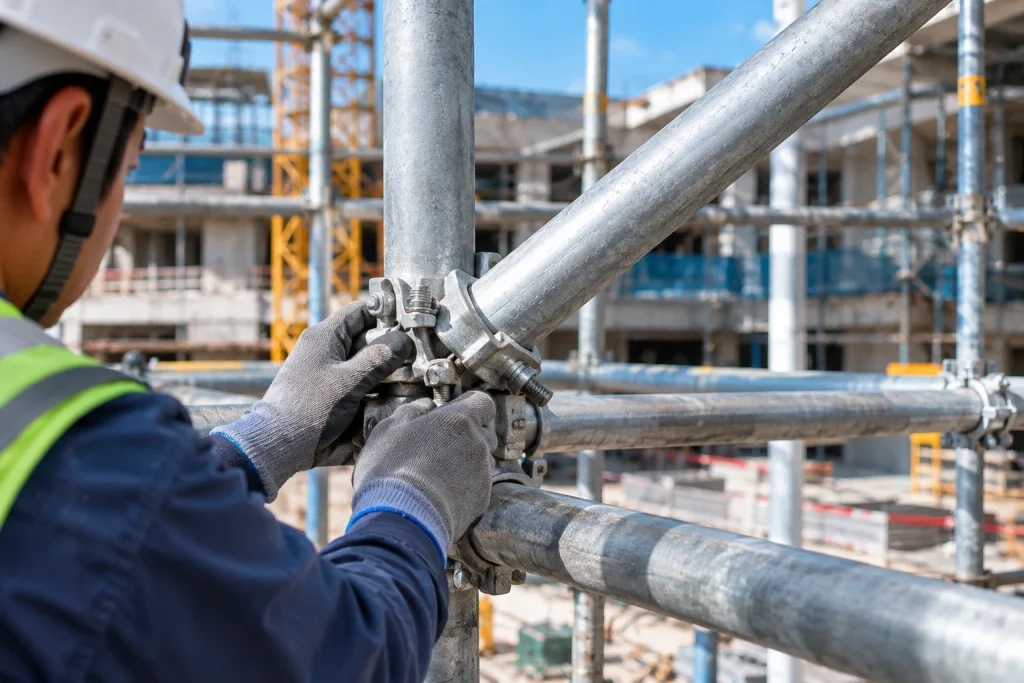
Beyond the basic structural frame, additional components provide the rigidity and ground connection that keep a scaffold stable under real-world conditions, including wind load and the dynamic forces of workers and equipment moving on the platform.
Diagonal Bracing
Diagonal braces run at an angle across the scaffold structure, preventing the rectangular grid formed by standards, ledgers, and transoms from racking, or distorting into a parallelogram shape, under lateral force. Without adequate bracing, a scaffold that appears stable when stationary can shift and become dangerously unstable once subjected to wind load or the movement of workers and materials.
Ties and Anchors
Ties connect the scaffold structure back to the building or structure it is erected against, providing lateral stability that bracing alone cannot achieve on taller scaffolds. The number and spacing of ties required increases with scaffold height, since taller structures are more susceptible to wind load and lateral movement, and a scaffold’s tie pattern is typically one of the first elements checked during a formal inspection.
Access Components
Ladders or dedicated stair towers provide safe vertical movement between different levels of a scaffold, positioned and secured to avoid workers needing to climb the structural framework itself to move between platforms. Purpose-built access components are considered essential on any scaffold of meaningful height, since climbing standards or ledgers directly introduces a fall risk the designed access route is specifically intended to eliminate.
How These Parts Work Together
Every component covered in this guide depends on the others being correctly fitted and rated for the structure to function as a genuinely safe system, a missing brace undermines the standards’ stability just as a missing guardrail undermines the platform’s safety, regardless of how sound every other component might be. Understanding this interdependence is why scaffold assembly follows a specific, engineered sequence rather than an arbitrary order, covered in detail below.
A broader look at the different scaffolding systems these components are assembled into, frame, tube-and-clamp, and system scaffolding among them, is available below, while mobile and tower scaffold configurations, which use a related but distinct set of components, are covered in What Is Mobile Scaffolding? Types, Uses and Safety. Further general technical background on scaffolding systems and terminology is available through Wikipedia’s overview of scaffolding.
Singapore’s Ministry of Manpower publishes detailed Workplace Safety and Health guidance covering scaffold inspection, erection standards, and the competency requirements for anyone erecting or working on scaffolding in Singapore.
Also read: 7 Types of Scaffolding Used in Construction
Building a Safer Structure, Piece by Piece
Every part of a scaffold, from the standards carrying the primary structural load to the guardrails protecting workers on the platform, plays a specific role that the overall structure depends on. Understanding these components individually is what allows an accurate inspection, a correctly specified structure, and a genuinely safe working platform, rather than simply trusting that a completed scaffold looks stable.
RR Machinery Pte Ltd offers reliable mobile scaffolding solutions backed by expert guidance for Singapore’s construction and industrial sectors. Contact us today for practical advice on the right scaffolding solution for your project.