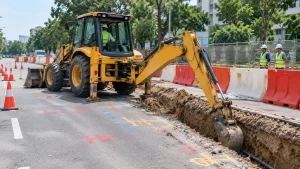
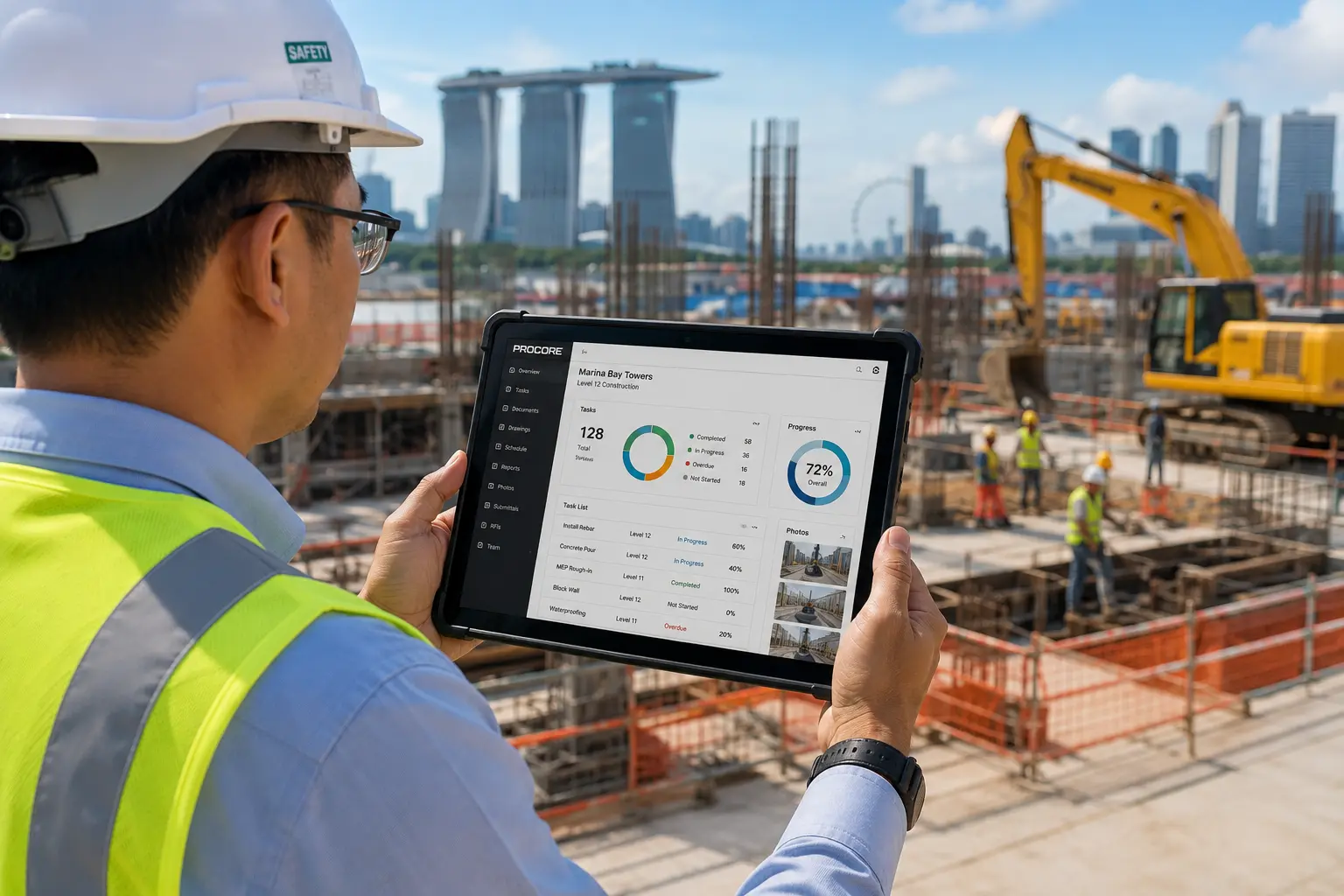
A construction site today looks physically similar to one from twenty years ago, the same excavators, the same scaffolding, the same hard hats, but the information flowing around that site has changed dramatically. Where a site supervisor once carried a clipboard, a paper daily log, and a stack of drawings, much of that same work now happens on a smartphone or tablet, updated in real time and visible to the office the moment it is entered.
This shift toward mobile apps is one of the more practical, quietly transformative parts of the broader move toward digital construction, and unlike some digital construction technologies that require significant capital investment, mobile apps are often accessible to even small contractors using devices they already own. This guide breaks down the main categories of construction mobile apps in use today, how they connect office and field work, and the practical considerations involved in adopting them.
Categories of Construction Mobile Apps
Rather than a single type of tool, construction mobile apps span several distinct functional categories, each addressing a specific task that was traditionally handled on paper or through disconnected phone calls and emails between office and site.
Understanding these categories separately matters because most construction businesses do not adopt a single all-in-one solution, they typically combine tools from several categories based on their specific operational needs and existing workflows.
Project Management and Scheduling Apps
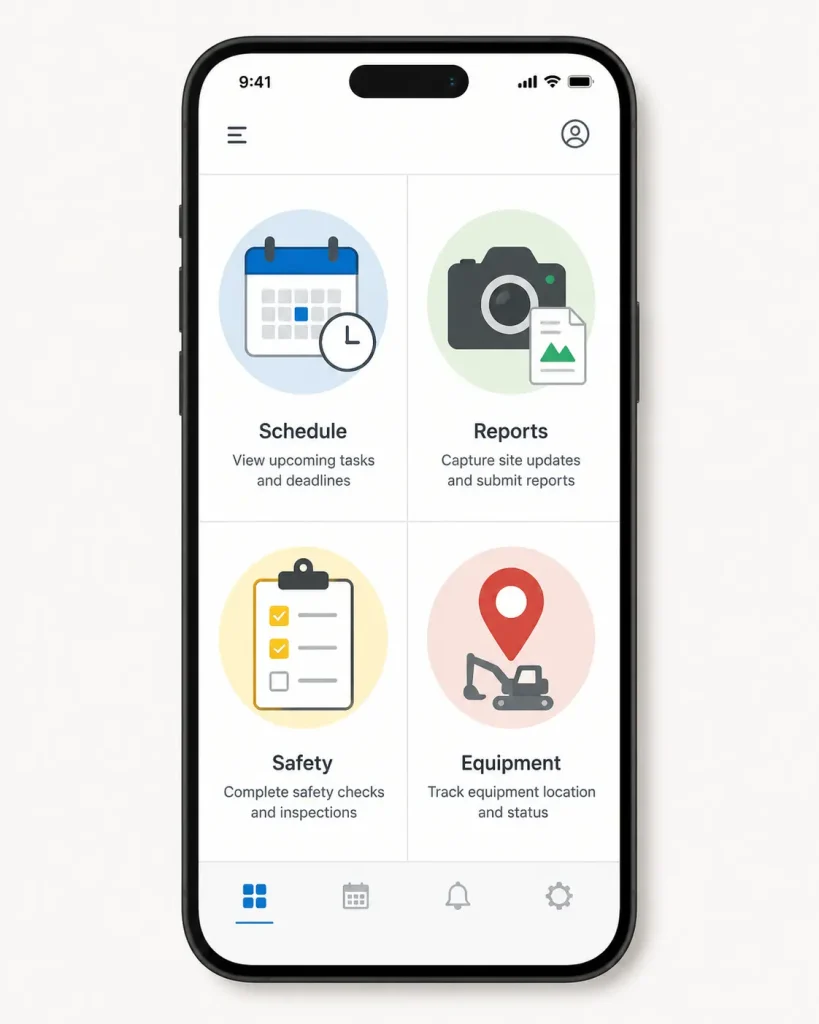
Project management apps give field teams mobile access to the project schedule, task assignments, and milestone tracking that would previously have existed only as a printed Gantt chart pinned to a site office wall, updated only when someone remembered to walk over and revise it. Mobile access means a schedule change made in the office is visible to every relevant field team member within moments, rather than being communicated secondhand or discovered only once work has already proceeded based on outdated information.
This real-time visibility is particularly valuable for coordinating between trades on a busy site, where one crew’s delayed task can cascade into schedule conflicts for several others if the change is not communicated quickly and clearly to everyone affected.
Field Reporting and Daily Logs
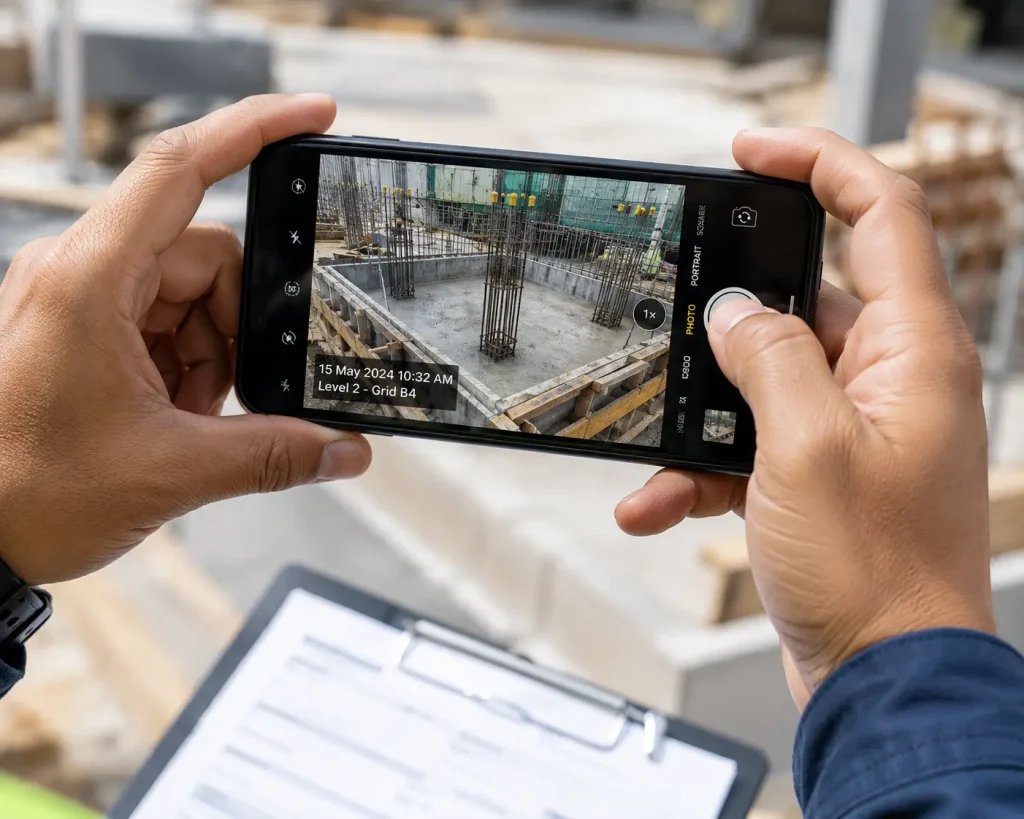
Field reporting apps replace the paper daily log, allowing supervisors to record site conditions, work completed, labour and equipment on-site, and any incidents or delays directly from a mobile device, often including photo and video attachments that a written paper log never could. This digital record is also considerably more useful later, since a searchable, timestamped digital log is far easier to reference during a dispute or delay claim than a stack of handwritten pages filed away in a site office.
Photo documentation in particular has become a standard feature of field reporting apps, since a dated, geotagged photograph provides far stronger evidence of site conditions or completed work at a specific point in time than a written description alone could offer.
Safety and Compliance Apps
Safety-focused apps digitise toolbox talks, pre-use equipment inspections, and incident reporting, replacing paper checklists that were easy to lose, forget, or fill out carelessly with structured digital forms that can flag missing or incomplete responses before a task begins. This structured approach connects directly to the broader site safety rules covered below, since a digital inspection app is only as effective as the underlying safety culture and rules it is being used to reinforce.
Digital incident and near-miss reporting also tends to produce better data over time than paper-based systems, since the friction of filing a report is lower and the resulting data is automatically aggregated rather than requiring manual collation from scattered paper forms across multiple sites.
Also read: 10 Construction Site Safety Rules Every Worker Should Know
Equipment and Fleet Tracking Apps
Equipment tracking apps give site managers visibility into where machinery is located, how it is being utilised, and when it is due for scheduled maintenance, information that previously required physically walking a site or calling around to confirm. This visibility becomes particularly valuable across multiple active sites, where equipment tracking can reveal an underused machine at one location that could be redeployed to another site rather than renting or purchasing an additional unit.
Maintenance scheduling features within these apps connect directly to the structured maintenance routines covered in Forklift Maintenance Tips for Safe and Efficient Operation and similar generator maintenance guidance, giving fleet managers automated reminders rather than relying on memory or a paper schedule to track when each piece of equipment is next due for service.
How Mobile Apps Connect Office and Field
Beyond any individual app’s specific function, the broader value of construction mobile apps lies in how they close the information gap that has traditionally existed between what is happening on-site and what the office knows about it.
Real-Time Data Synchronisation
Traditional paper-based site records created an inherent lag, information recorded on-site might not reach the office for days, by which point the data was already outdated or a decision had already been made without it. Mobile apps synchronise data as it is entered, meaning office staff, project managers, and even clients can see current site conditions, progress, and issues essentially in real time rather than through a delayed, secondhand summary.
Reducing Paper-Based Delays and Errors
Paper-based processes are also prone to transcription errors, information copied from a field notebook into an office spreadsheet introduces an opportunity for mistakes at every transfer point, whereas data entered once into a mobile app flows directly into reporting and analysis without needing to be re-entered manually. This reduction in manual re-entry connects directly to the productivity pressures facing the industry more broadly, where labour shortages make eliminating this kind of duplicated, low-value administrative work increasingly valuable.
Also read: Top Challenges in the Construction Industry and How to Overcome Them
Choosing the Right Apps for Your Team
Selecting mobile apps for a construction business works best when driven by a specific operational pain point rather than adopting a broad platform simply because it offers the most features on paper.
A few practical factors matter more than feature count when evaluating options:
- Offline functionality. Construction sites frequently have poor or no mobile signal, and an app that cannot function offline and sync later becomes unusable exactly when field teams need it most.
- Ease of use for field staff. An app that is intuitive enough for a busy site supervisor to use one-handed while wearing gloves will see far higher genuine adoption than one requiring extensive training to operate.
- Integration with existing tools. Apps that connect with accounting, scheduling, or equipment systems a business already uses avoid creating yet another disconnected data silo.
- Device durability requirements. Rugged, drop-resistant devices are often a necessary companion investment alongside the software itself, since a cracked screen or water-damaged phone quickly negates any efficiency gained from digital record-keeping.
Challenges and Limitations of Mobile Apps On-Site
Despite genuine benefits, mobile app adoption on construction sites is not without practical friction, and being realistic about these limitations helps set appropriate expectations before rolling out new tools.
Connectivity remains a genuine constraint on many sites, particularly remote or basement-level work areas where mobile signal is weak or absent, requiring apps with reliable offline modes rather than assuming constant connectivity. Workforce adoption is an equally real barrier, since experienced field staff accustomed to paper processes for decades may resist a digital transition unless the new tool is demonstrably easier to use, not just different, and unless management genuinely commits to the new process rather than allowing paper workarounds to persist alongside it indefinitely. Further general background on how digital tools fit within the broader construction management discipline is available through Wikipedia’s overview of construction management.
Also read: Digital Construction Explained: Technology Reshaping How Projects Are Built
Bringing Site Work Into the Digital Era
Construction mobile apps have moved from a novelty to a practical operational necessity for many businesses, closing the information gap between office and field across project management, reporting, safety, and equipment tracking. Success depends less on choosing the most feature-rich option available and more on selecting tools that field teams will actually use consistently under real site conditions.
RR Machinery Pte Ltd supports Singapore’s construction and industrial sectors with reliable heavy machinery solutions built for the demands of modern, technology-enabled projects. Browse our complete heavy machinery services or contact our team today for practical advice on equipping your next project.