Construction remains one of the highest-risk industries for workplace injury, and the vast majority of incidents on-site can be traced back to a small, well-known set of safety rules being ignored, forgotten, or never properly understood in the first place. Unlike a daily checklist that tells a crew what to verify before starting work, safety rules represent the underlying principles that hold true on every site, every day, regardless of the specific task at hand.
This guide walks through ten core safety rules every construction worker should know, along with the reasoning behind each one. Understanding why a rule exists, not just that it exists, is what makes a worker far more likely to follow it under time pressure or when a supervisor is not directly watching.
Why Construction Site Safety Rules Matter
Safety rules on a construction site are not arbitrary restrictions, they exist because specific patterns of injury and fatality have occurred repeatedly across the industry, and each rule targets one of those recurring failure points directly.
Understanding the reasoning behind a rule, rather than treating it as an external requirement imposed by management, is what turns compliance from a box-ticking exercise into a genuine safety habit. This distinction matters considerably more on a fast-moving, high-pressure construction site than it does in lower-risk workplaces.
The Cost of Ignoring Safety Rules
Falls from height, being struck by moving equipment, and improper lifting remain among the leading causes of serious construction injuries worldwide, and in almost every documented case, an established safety rule addressing that exact risk already existed but was not followed at the time of the incident. The cost of a serious incident extends well beyond the immediate injury, covering lost project time, regulatory investigation, and, in the most serious cases, criminal liability for site management.
This is why safety rules are treated as non-negotiable on a well-run site rather than as guidance to be applied at an individual worker’s discretion. A single overlooked rule, repeated across enough workers and enough shifts, is statistically almost certain to eventually result in an incident, which is the entire reason these rules exist as fixed requirements rather than optional best practice.
How Rules Differ From a Safety Checklist
Safety rules and a safety checklist serve related but distinct purposes on a construction site. Rules represent the constant, underlying principles that apply across every task and every day, such as always wearing a hard hat in an active work zone, while a checklist is a task-specific or shift-specific tool used to verify that a particular set of conditions has been met before work begins on a given day.
A comprehensive, practical checklist covering the day-to-day verification steps a site should follow is available in Construction Site Safety Checklist: A Complete Guide, which complements the rules covered here by translating them into a concrete, repeatable verification process rather than a set of general principles.
Also read: Construction Site Safety Checklist: A Complete Guide
Core PPE and Personal Safety Rules
Personal protective equipment forms the most visible layer of construction site safety, and the rules governing its use exist because PPE is often the last line of defence against an injury that other site controls have failed to prevent.
Treating PPE requirements as fixed rather than situational is essential, since the moment a worker starts deciding case by case whether a hazard is serious enough to justify wearing protective equipment, the entire purpose of having a fixed rule breaks down.
Mandatory PPE on Every Site
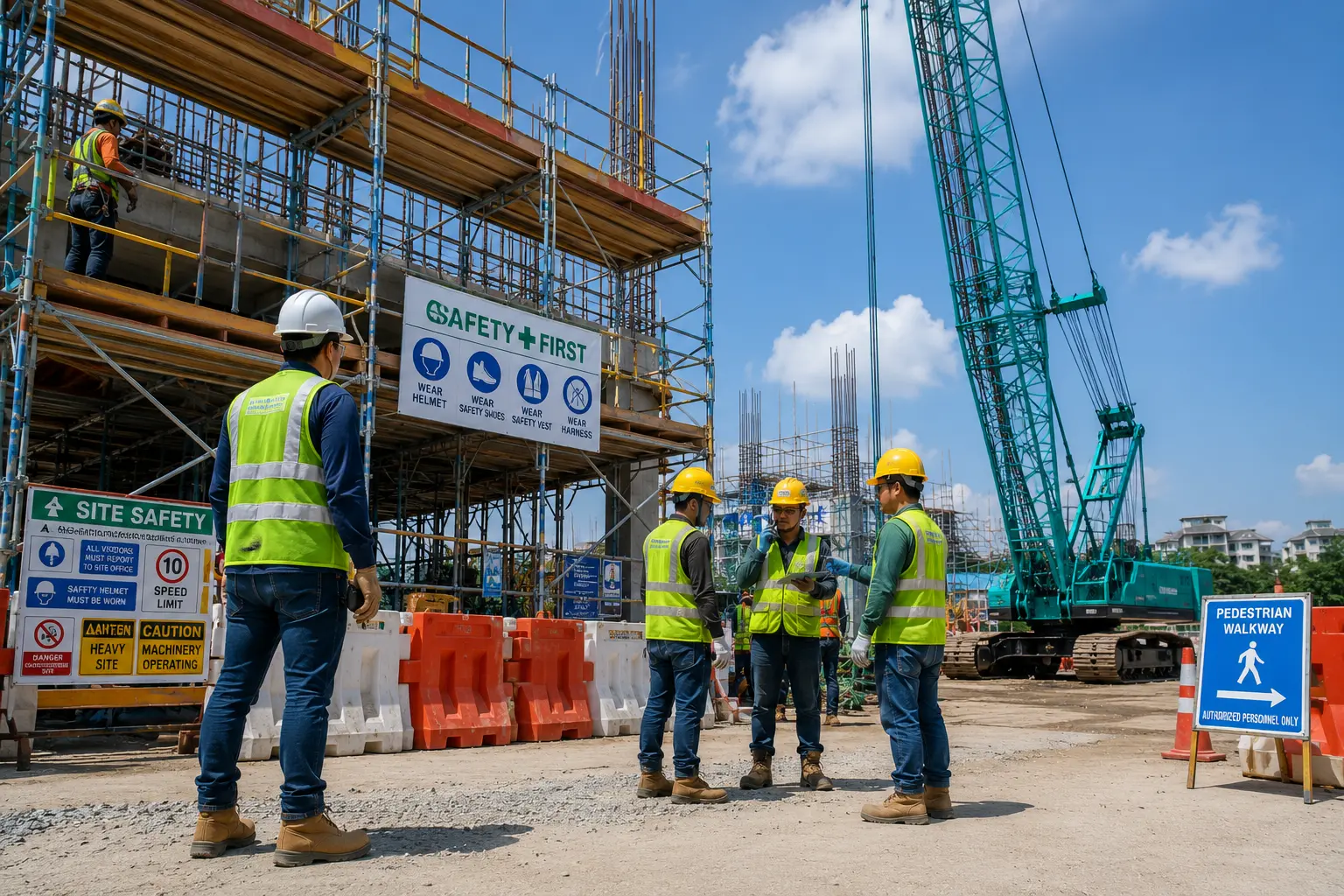
Hard hats, high-visibility clothing, safety boots, and eye protection are standard requirements across virtually every active construction site, addressing the risk of falling objects, vehicle visibility, foot injuries, and debris respectively. Additional PPE, such as hearing protection near loud machinery or respiratory protection in dusty or fume-heavy environments, applies in specific zones or tasks and should be clearly signposted where required.
The rule here is straightforward but frequently broken in practice: PPE should be worn correctly and consistently in any zone where it is required, not just when a supervisor is nearby or when a worker personally judges the risk to be significant at that moment. Consistency, not judgement calls, is what makes PPE requirements actually effective at scale across an entire site.
Personal Conduct and Hazard Awareness
Beyond equipment, personal conduct rules cover behaviours such as never removing safety guards from tools or machinery, never working under the influence of alcohol or drugs, and always reporting hazards or near-misses rather than assuming someone else will notice and report them. These rules exist because individual behaviour, not just equipment and engineering controls, remains one of the most significant factors in whether a hazard actually results in an injury.
Workers should also be trained to recognise site-specific hazards relevant to their particular trade or task, rather than relying solely on generic safety awareness, since the specific risks facing a crane rigger differ meaningfully from those facing a general labourer. A broader overview of the personal conduct and awareness principles that apply across construction and industrial work is covered in Workplace Safety Tips for Construction and Industrial Work.
Rules for Working at Height
Falls from height remain one of the single largest causes of fatal construction injuries worldwide, which is why the rules governing work at height are among the most strictly enforced on any site.
These rules apply not just to obviously elevated tasks such as roofing or steelwork, but to any task performed above ground level where a fall could result in serious injury, including work from ladders, scaffolding, and aerial platforms.
Fall Protection Requirements
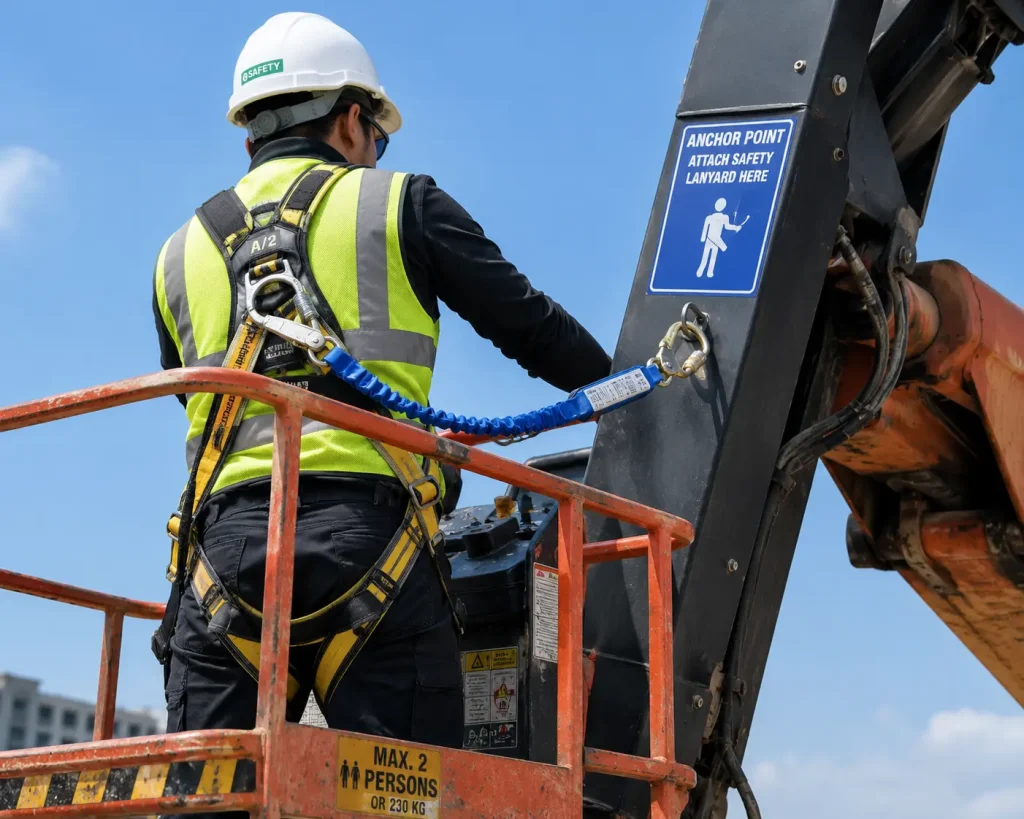
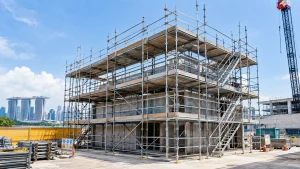
Any work performed at a height where a fall could cause injury requires appropriate fall protection, typically a full-body harness connected to a suitably rated anchor point, guardrails, or, at minimum, a properly erected and inspected scaffold or platform edge protection system. The specific fall protection method required depends on the task and equipment involved, but the underlying rule remains constant: no worker should be exposed to an unprotected fall risk at height under any circumstances.
Anchor points, harnesses, and lanyards should be inspected before each use, since damaged or incorrectly rated fall protection equipment provides a false sense of security while offering little to no actual protection in the event of a fall. This inspection step is a rule in its own right, not an optional precaution reserved for equipment that looks visibly worn.
Safe Use of Aerial Platforms and Ladders
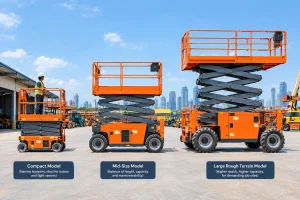
Aerial work platforms, including boom lifts and scissor lifts, must only be operated by trained and authorised personnel, following manufacturer-specified load limits, stabilisation procedures, and wind speed restrictions at all times. Ladders, while seemingly simple equipment, are subject to their own strict rules covering correct angle, secure footing, and never using a ladder as a substitute for a properly rated elevated platform on tasks that exceed a ladder’s safe working scope.
A detailed breakdown of the safety rules and best practices specific to working at height across different equipment types is available in Working at Height: Safety Tips and Guidelines, essential reading for any site involving elevated work of any kind.
Rules for Operating Heavy Equipment and Machinery
Heavy equipment introduces risks that differ significantly from general site hazards, since the scale and force involved mean even a brief lapse in a rule can result in serious injury or fatality far more readily than most other site tasks.
The rules governing heavy equipment exist to protect not just the operator but every other worker moving around that equipment throughout a shift, which is why they extend well beyond the machine’s cab into the surrounding work zone.
Operator Certification and Authorisation
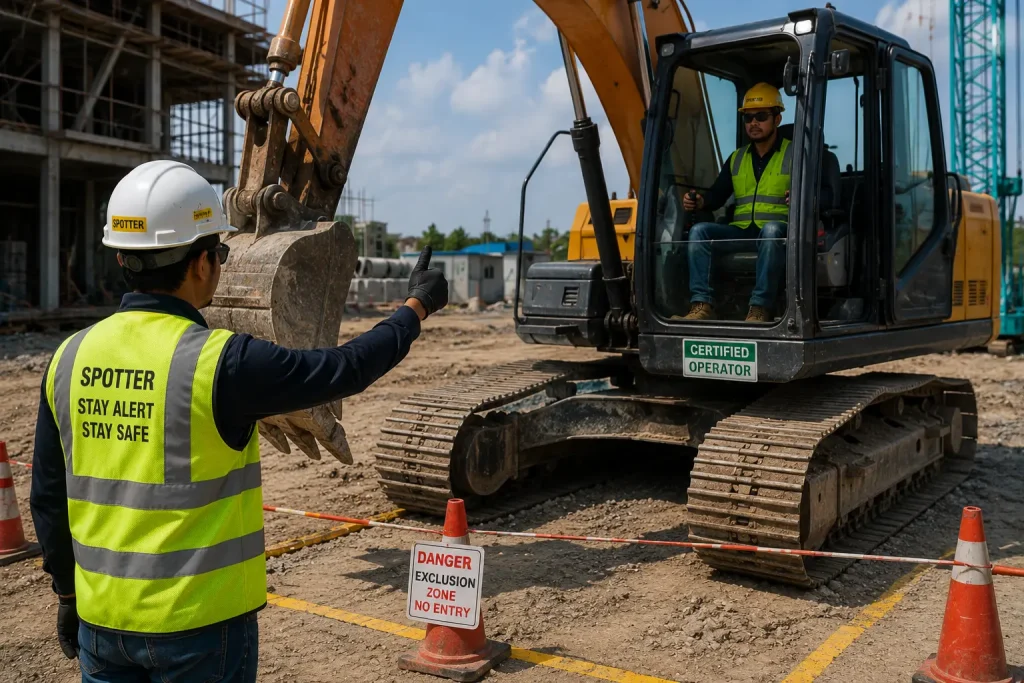
Only workers holding valid certification for a specific class of equipment should operate it, and this certification requirement applies regardless of how experienced a worker may be with a similar or related machine. Certification exists because different equipment classes carry distinct operating characteristics, control layouts, and stability considerations that general experience alone does not guarantee familiarity with.
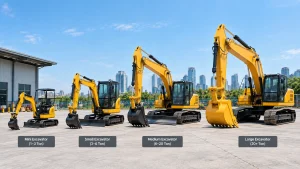
Equipment should also undergo a documented pre-use inspection before every shift, checking hydraulic systems, safety interlocks, and structural condition, since operating equipment with an undetected fault significantly increases the likelihood of an incident regardless of operator skill. A comprehensive overview of the safety principles that apply across different categories of heavy equipment is available in Heavy Equipment Safety: A Complete Site Guide.
Safe Zones Around Moving Equipment
Workers on foot must maintain a safe distance from operating heavy equipment at all times, respecting exclusion zones and never approaching moving machinery without clear communication with the operator first. Blind spots around excavators, forklifts, and mobile cranes are a leading cause of struck-by incidents, which is why many sites enforce strict rules requiring eye contact or radio confirmation with an operator before entering their immediate work area.
Spotters and banksmen play a critical role in enforcing these safe zones in practice, particularly during reversing manoeuvres or complex lifts, and their directions should be treated with the same authority as a direct safety rule rather than as optional guidance.
Rules for Lifting and Material Handling
Lifting and material handling injuries, whether from manual lifting or mechanical equipment, remain a significant and largely preventable category of construction injury, governed by rules that apply regardless of whether a load is being moved by hand or by machine.
The underlying principle across both categories is the same: every lift should be planned before it begins, accounting for the load’s weight, the equipment or technique being used, and the path the load will travel.
Manual Handling Rules
Manual lifting rules require workers to assess a load’s weight before attempting to lift it, use proper lifting technique, bending at the knees rather than the back, and seek assistance or mechanical aid for loads exceeding safe manual handling limits rather than attempting to lift them alone. Repetitive manual handling tasks should also be rotated among workers where possible, since cumulative strain injuries are just as serious a safety concern as a single acute lifting injury.
Workers should never assume a load’s weight based on its size alone, since materials such as dense construction components can be considerably heavier than they visually appear, a common cause of manual handling injuries on-site.
Rules for Mechanical Lifting Equipment
Mechanical lifting equipment, including forklifts, cranes, and hoists, must never be loaded beyond its rated capacity, and loads should always be properly secured and balanced before being lifted or transported. Riggers and signal persons should follow standardised hand signals or radio protocols, and no lift should proceed if any part of the load path is unclear or if personnel remain within the fall zone of a suspended load.
Specific safety rules relevant to forklift operation, one of the most common pieces of lifting equipment on any site, are covered in Forklift Safety Tips for Safe and Efficient Operations, while the broader principles that apply across all categories of lifting equipment are detailed in Lifting Equipment Safety Tips for Safer Worksites.
Site-Wide Rules That Apply to Everyone
Beyond task-specific rules, every construction site operates under a set of general rules that apply to all personnel regardless of trade, role, or seniority, since these rules address risks that affect the entire site rather than a single activity.
These site-wide rules are often the ones most easily overlooked precisely because they seem less directly tied to any specific hazardous task, even though poor adherence to them significantly increases risk across every other activity happening on-site.
Housekeeping and Site Organisation
Keeping walkways clear, storing materials properly, and promptly cleaning up spills or debris are basic housekeeping rules that directly reduce trip, slip, and fire hazards across a site. Poor housekeeping is a contributing factor in a significant proportion of construction incidents, not because any single piece of clutter is dangerous on its own, but because it compounds the risk of every other activity happening nearby.
Site organisation also extends to clearly marking hazardous areas, restricted zones, and equipment exclusion zones with proper signage, ensuring that even workers unfamiliar with a specific area of the site can quickly identify where additional caution is required.
Emergency Procedures and Reporting
Every worker should know the site’s emergency procedures, including evacuation routes, assembly points, and how to raise an alarm, before their first shift begins, rather than learning this information only once an emergency has already occurred. Near-misses and hazards should be reported immediately through the site’s established reporting process, since a near-miss that goes unreported represents a missed opportunity to prevent a future incident before it happens.
Singapore’s Ministry of Manpower publishes detailed Workplace Safety and Health guidance covering the legal obligations that apply to construction site safety, including incident reporting, risk assessment, and the specific duties of employers and workers under Singapore’s WSH framework.
Also read: Workplace Safety Tips for Construction and Industrial Work
Build a Safer Site From the Ground Up
These ten rules represent the recurring principles behind the vast majority of preventable construction injuries, and understanding the reasoning behind each one is what turns compliance into genuine habit rather than a box-ticking exercise performed only when supervision is present. Combined with a task-specific safety checklist and properly maintained equipment, these rules form the foundation of a genuinely safe construction site.
RR Machinery Pte Ltd supports Singapore’s construction and industrial sectors with well-maintained, safety-compliant heavy machinery and full technical support across every project. Browse our complete heavy machinery services or contact our team today for equipment solutions built around safe, reliable site operations.