Search for “genset” and you will find it used constantly across construction, marine, industrial, and data centre contexts, often without any explanation of what the term actually means, as though everyone reading is already expected to know. For anyone encountering it for the first time, the confusion is understandable, and the short answer is straightforward: a genset is simply the industry term for what most people call a generator.
This guide explains exactly what a genset is, why the term exists alongside “generator” in everyday use, the core components that make one up, and the main types available, giving a clear entry point before diving into the more specific mechanics, selection criteria, and safety considerations covered elsewhere.
What Does “Genset” Actually Mean?
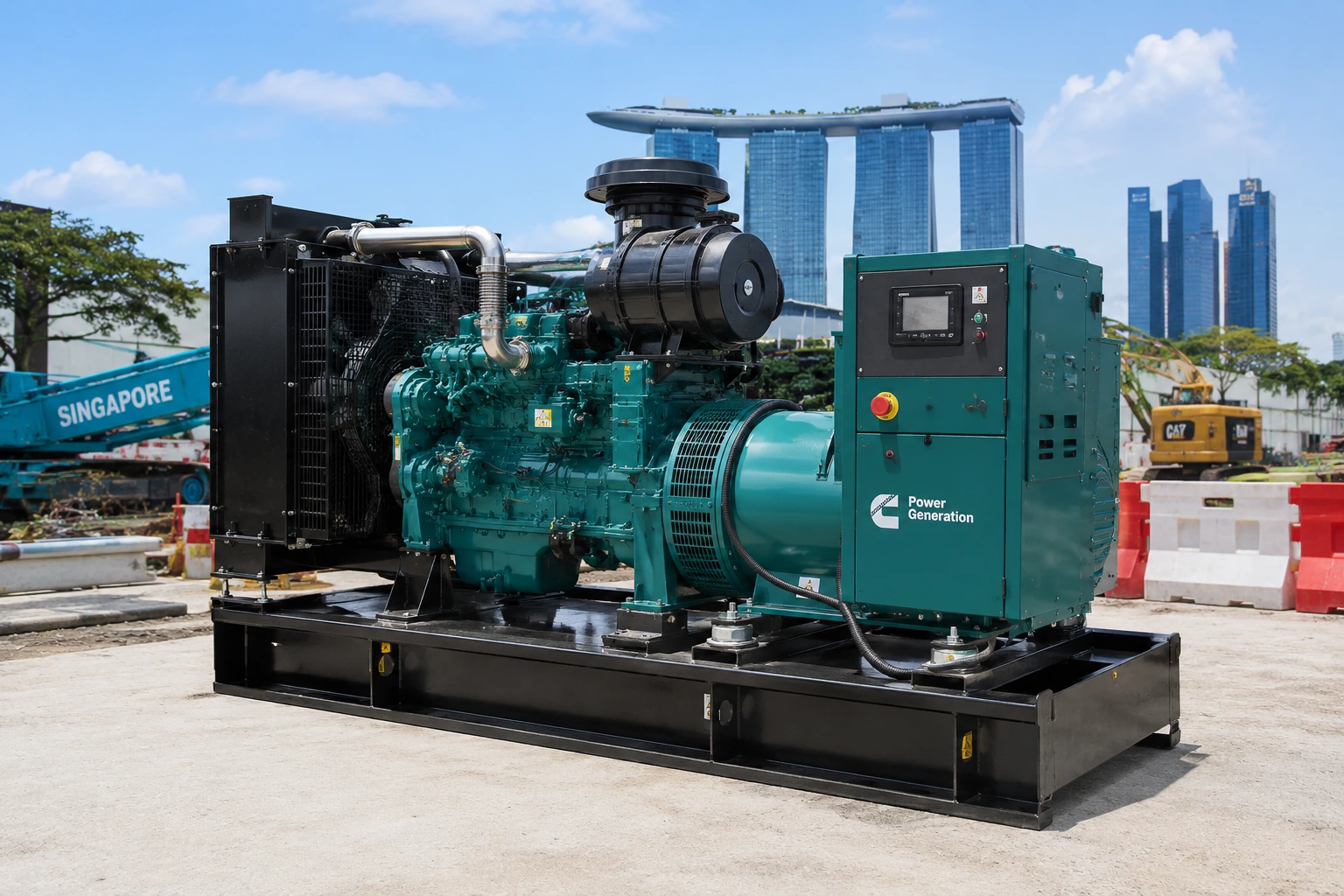
Genset is short for generator set, a term describing the complete, self-contained assembly of an engine and an alternator mounted together on a single base frame, packaged as one unit ready to produce electrical power. While “generator” technically refers only to the alternator, the component that actually generates electrical current, “genset” more precisely describes the whole package, engine, alternator, fuel system, and control panel combined.
In practice, the two terms are used interchangeably in everyday conversation, and this article uses them the same way, but “genset” tends to dominate in industrial, marine, and technical specification contexts, while “generator” remains the more common term in general and consumer use. Neither usage is incorrect, and understanding both simply helps when reading equipment specifications, rental listings, or technical documentation that may default to one term over the other depending on the industry.
This naming pattern is not unique to power generation equipment either, many categories of machinery accumulate both a precise technical name and a more casual everyday term over time, and both end up used side by side depending on the audience and context. What matters practically is recognising that a rental listing, spec sheet, or supplier catalogue using “genset” is describing exactly the same category of equipment as one using “generator”, not a different product entirely.
The Core Components of a Genset
A genset is built from several distinct components working together, and understanding what each one does clarifies why the complete package is referred to as a single “set” rather than a loose collection of separate parts.
Power-Generating Components
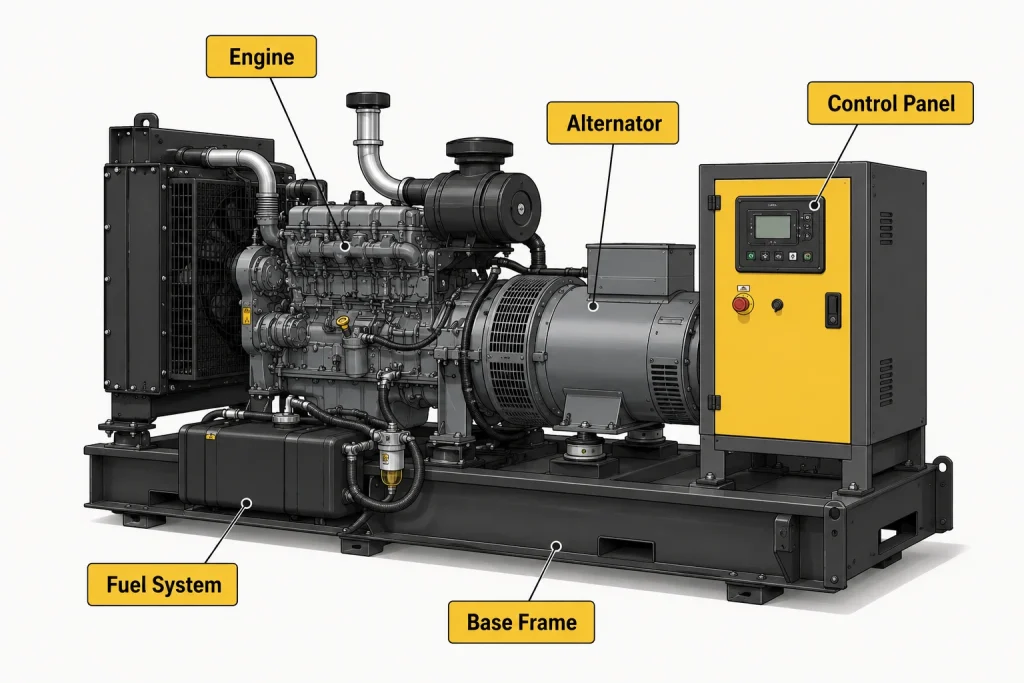
The engine, typically diesel in industrial and construction applications, burns fuel to produce the rotational motion that drives the entire system, while the alternator, mechanically coupled to the engine, converts that rotational motion into electrical current through electromagnetic induction. These two components form the core of the genset, and the detailed engineering behind how they interact, including the governor and voltage regulation systems that keep output stable, is covered in full below.
Also read: Inside a Generator: The Mechanism That Keeps Power Stable
Supporting Components
Beyond the engine and alternator, a genset includes a fuel system, tank, filters, and lines, that supplies the engine consistently, a control panel displaying voltage, frequency, and operating status while providing start and stop controls, and a base frame or enclosure that holds every component together as a single transportable unit. Many gensets, particularly larger industrial and standby models, also include a cooling system and, for standby applications, an automatic transfer switch that starts the unit and connects it to a building’s electrical circuits the moment mains power fails.
This complete package is what allows a genset to be delivered, installed, and connected as a single piece of equipment rather than requiring separate engine and electrical components to be assembled on-site.
How a Genset Works
At its core, a genset converts the chemical energy stored in fuel into usable electrical energy through a straightforward sequence: the engine burns fuel to generate rotational motion, that motion drives the alternator, and the alternator produces electrical current through electromagnetic induction.
This basic conversion chain is explained in much greater technical depth below, covering the physics of electromagnetic induction specifically. Further general technical background on generator and genset design is also available through Wikipedia’s overview of electric generators.
Types of Gensets
Gensets vary considerably depending on the power source driving them and the specific duty application they are designed for, and matching the right type to a given need starts with understanding these two dimensions separately.
Gensets by Power Source
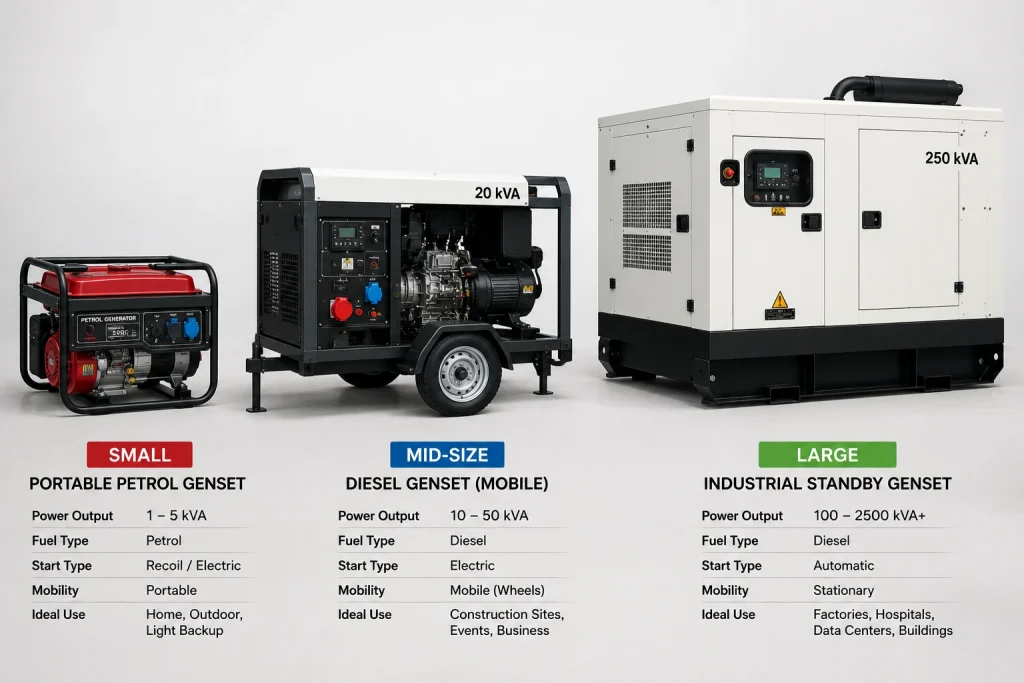
Diesel remains the dominant power source for construction, industrial, and standby genset applications, chosen for its fuel efficiency, torque under sustained load, and widespread fuel availability, while petrol gensets are more common in smaller, portable units prioritising lower weight and upfront cost over runtime and sustained power. Natural gas and, increasingly, hybrid or dual-fuel gensets round out the available options, generally favoured where a stable fuel supply already exists on-site or where lower emissions are a specific priority for the application. A detailed comparison of how diesel and petrol perform against each other across cost, runtime, and site suitability is available below, useful reading before specifying a genset for a specific application.
Also read: Diesel vs Petrol Generator: Which One Should You Choose?
Gensets by Duty Application
Beyond power source, gensets are also classified by how they are intended to be used, prime-rated gensets built for continuous, variable-load operation as a site’s primary power source, and standby-rated gensets built to activate only when mains power fails, typically for shorter, less frequent runtime. Prime-rated units are engineered around a sustained duty cycle from the outset, using components designed for continuous operation rather than occasional short bursts, while standby units prioritise rapid, automated startup over sustained continuous running capability. Understanding this distinction matters considerably when specifying a unit, since using a standby-rated genset for prime duty, or vice versa, can lead to premature wear or an inefficient, oversized setup, a comparison covered in detail below.
Also read: Standby vs Prime Generator: Key Differences Explained
Common Genset Applications
Gensets are used across a wide range of settings, each drawing on the same core technology but with different priorities around runtime, portability, and power capacity:
- Construction sites, where a genset often serves as the primary power source before permanent grid connection is established, covered in more detail in Generator for Construction Site: A Complete Guide
- Standby power for commercial and residential buildings, activating automatically during a mains power outage to keep critical systems running
- Events and temporary installations, providing portable power where a permanent electrical connection is impractical
- Industrial and data centre backup, where continuous, reliable power is essential and even brief outages carry significant cost
- Marine and remote applications, where a genset may serve as the sole power source rather than a backup to an existing grid connection
Choosing the Right Genset
Selecting the correct genset comes down to matching power capacity, duty rating, and fuel type to the actual demands of the application, rather than defaulting to whatever unit happens to be most familiar or readily available.
Calculating the actual power requirement, accounting for the combined load of everything the genset needs to run along with the higher starting current many motors require, is the essential first step before comparing specific models. A structured framework for working through this decision, covering sizing, fuel type, and duty rating together as a single decision process, is available in our complete buyer’s guide.
Powering Your Project with the Right Genset
A genset is, at its core, simply a complete generator package, engine, alternator, and supporting systems combined into a single unit ready to produce reliable electrical power. Whether referred to as a genset or a generator, understanding the components, mechanism, and types covered in this guide provides the foundation for specifying the right unit for any application, from a small portable site tool to a large industrial standby installation. Getting this specification right from the outset avoids the cost and disruption of discovering a unit is undersized, wrongly rated for its duty cycle, or unsuited to its power source only after it has already been deployed to a project.
RR Machinery Pte Ltd offers a wide selection of power generators, from compact 30 kVA units to heavy-duty 1000+ kVA industrial systems, professionally maintained and tested before every delivery. Contact us today to find the right genset for your power needs.