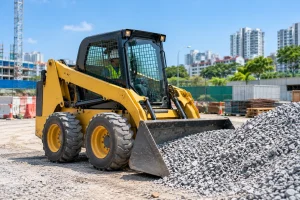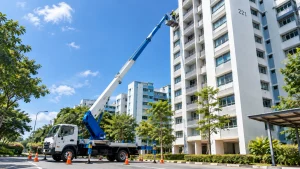

When it comes to lifting and moving heavy materials on construction sites, warehouses, or industrial facilities, two machines are commonly used: the telehandler and the forklift. Although both machines perform lifting functions, they are designed for different working environments and operational requirements.
Understanding the differences between telehandler vs forklift is essential for project managers, construction professionals, and warehouse operators who need the right equipment for safe and efficient operations.
While forklifts are widely used in warehouses and logistics centers for moving pallets and goods, telehandlers are more versatile machines often used on construction sites where extended reach and lifting height are required. Selecting the appropriate equipment not only improves productivity but also enhances safety and reduces operational risks.
What Is a Telehandler?
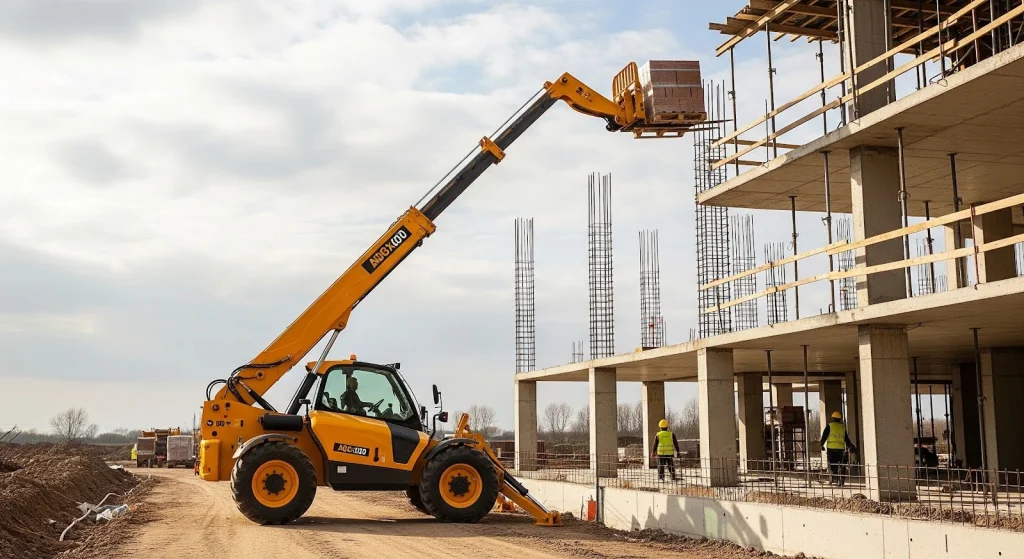
A telehandler, short for telescopic handler, is a lifting machine commonly used in construction, agriculture, and industrial environments. It combines the functionality of a forklift with the reach capability of a crane. Telehandlers are equipped with a telescopic boom that can extend forward and upward, allowing operators to place loads at greater heights or distances.
Common features of telehandlers include:
- Extendable telescopic boom
- Large off-road tires
- High lifting reach
- Ability to attach multiple tools
- Suitable for rough terrain environments
Because of these features, telehandlers are frequently used on construction sites where materials must be lifted to elevated areas or placed over obstacles.
Many construction projects integrate telehandlers with other heavy equipment commonly used on construction sites to streamline material handling and site operations.
What Is a Forklift?
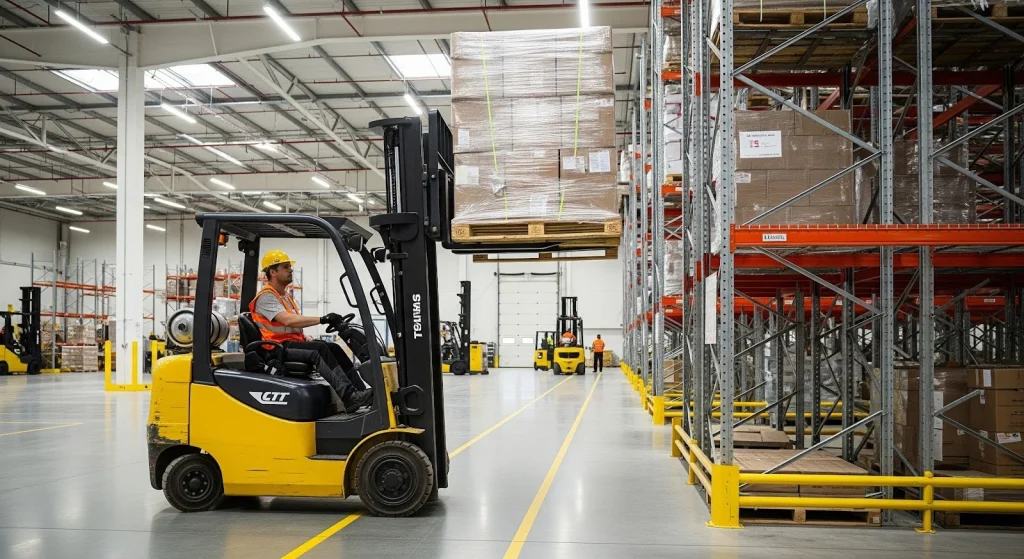
A forklift is a compact industrial vehicle designed primarily for lifting and transporting pallets and materials over short distances. Forklifts are widely used in warehouses, factories, shipping yards, and logistics centers where goods need to be moved efficiently within confined indoor spaces.
Typical characteristics of forklifts include:
- Two front forks used to lift pallets
- Compact design for maneuverability
- Rear-wheel steering for tight spaces
- Electric, diesel, or LPG power options
Unlike telehandlers, forklifts typically operate on flat surfaces such as warehouse floors or paved industrial areas. Because forklifts play an essential role in logistics operations, many businesses also study different types of material handling equipment used in industrial environments to optimize warehouse productivity.
Also read : Boom Lift vs Scissor Lift: What’s the Difference?
Key Differences Between Telehandler and Forklift
Although telehandlers and forklifts share some similarities, they serve different purposes depending on the working environment and lifting requirements.
Lifting Reach
One of the most significant differences between telehandlers and forklifts is their lifting reach.
- Telehandler: Equipped with an extendable boom that can reach higher and further.
- Forklift: Designed mainly for vertical lifting within limited height ranges.
Telehandlers can lift loads to higher floors of buildings or across obstacles, making them suitable for construction projects.
Terrain Capability
Another important difference is terrain capability.
- Telehandler: Built with large tires and strong suspension systems to operate on rough construction sites.
- Forklift: Designed for smooth indoor surfaces like warehouses or factories.
This difference is why telehandlers are commonly used in outdoor construction environments.
Versatility
Telehandlers are more versatile machines because they can use different attachments.
Examples include:
- Fork attachments
- Buckets
- Lifting hooks
- Work platforms
These attachments allow telehandlers to perform various tasks beyond simple material lifting. Forklifts, in comparison, are primarily designed for pallet handling.
Size and Maneuverability
Forklifts are generally smaller and easier to maneuver in tight indoor spaces. Telehandlers are larger machines designed for outdoor environments where space is less restricted. Warehouse operations often prioritize compact equipment, while construction projects prioritize reach and lifting capacity.
Common Applications of Telehandlers
Telehandlers are widely used in industries that require lifting materials to elevated or difficult-to-access locations.
Construction Projects
Telehandlers are frequently used to lift building materials such as bricks, steel beams, and concrete blocks to higher levels of structures.
Agriculture
Farmers often use telehandlers to move hay bales, feed, and other agricultural materials.
Infrastructure Development
Large infrastructure projects require lifting heavy equipment and materials across uneven terrain, making telehandlers highly practical.
These machines often operate alongside earthmoving equipment used in large construction projects to maintain efficient workflow.
Common Applications of Forklifts
Forklifts are essential machines in logistics and warehouse operations.
Warehousing
Forklifts are primarily used for moving palletized goods inside warehouses and distribution centers.
Manufacturing Facilities
Factories rely on forklifts to transport raw materials and finished products between production areas.
Shipping and Logistics
Forklifts are commonly used in shipping yards to load and unload cargo from trucks or containers.
Understanding how forklifts fit into broader warehouse material handling systems helps businesses improve operational efficiency.
Also read : Crane and Type of Crane Guide: 5 Types of Cranes Used in Construction Projects
Advantages of Telehandlers
Telehandlers provide several advantages in construction and outdoor environments.
Extended Reach
The telescopic boom allows operators to reach elevated or distant locations.
Multi-Function Capability
Attachments allow telehandlers to perform multiple tasks.
Off-Road Mobility
Large tires enable telehandlers to travel across rough construction sites.
High Lifting Height
Telehandlers can lift materials to upper floors of buildings or across obstacles.
Advantages of Forklifts
Forklifts also provide several benefits, particularly for indoor logistics operations.
High Efficiency in Warehouses
Forklifts allow workers to move goods quickly across warehouse floors.
Compact Design
Their compact structure makes them ideal for narrow aisles and tight spaces.
Cost-Effective Operation
Forklifts are generally more economical for indoor material handling tasks.
Precise Load Handling
Forklifts provide precise control when stacking or organizing pallets.
Safety Considerations When Using Telehandlers and Forklifts
Operating heavy lifting equipment requires strict safety procedures.
Important safety practices include:
- Conducting routine equipment inspections
- Following load capacity limits
- Ensuring operator certification
- Maintaining clear communication between workers
- Keeping lifting zones free of obstacles
Organizations such as OSHA provide workplace safety guidelines for powered industrial trucks and lifting equipment to help reduce accidents in industrial environments.
Implementing proper safety standards ensures that both telehandlers and forklifts operate safely in demanding work environments.
Also read : Articulating Boom Lift vs Telescopic Boom Lift: What’s the Difference?
Choosing Between a Telehandler and a Forklift
Selecting the right machine depends on several operational factors.
Key considerations include:
- Type of working environment
- Required lifting height
- Terrain conditions
- Load weight and dimensions
- Available working space
For indoor warehouse operations, forklifts are usually the preferred option. For outdoor construction sites that require extended reach, telehandlers provide better functionality.
Equipment selection is often coordinated with other construction machinery planning strategies used on modern job sites to ensure efficient project execution.
The Role of Material Handling Equipment in Modern Industries
As industries continue to evolve, efficient material handling equipment becomes increasingly important. Machines like telehandlers and forklifts help businesses improve productivity, reduce manual labor, and maintain safe working environments.
Advancements in equipment design and technology have also improved the efficiency and safety of lifting operations across construction, logistics, and industrial sectors. Understanding the strengths and limitations of different machines helps organizations make better equipment investment decisions.
Professional Equipment Solutions for Your Projects
Understanding the differences between telehandler vs forklift helps businesses choose the right equipment for specific tasks. Each machine plays an important role in material handling, whether lifting materials on construction sites or transporting goods within warehouses.
Reliable machinery and expert support are essential for ensuring smooth operations. If you require dependable equipment solutions or guidance in selecting the right machines for your project, contact our team today to explore professional machinery services designed to support your operational needs.