

Renting or buying a generator is the easy part, using it correctly is where most avoidable problems actually happen. A generator that is positioned incorrectly, started out of sequence, or loaded improperly can trip breakers, damage connected equipment, or create a genuine safety hazard, even though the machine itself is functioning exactly as designed.
This guide walks through the complete process of using a generator correctly, from the checks that should happen before the engine ever starts, through setup, starting, connecting a load, and finally shutting down properly at the end of use. It focuses specifically on the operating sequence itself, complementing the broader hazard awareness covered below, worth reading alongside this step-by-step process.
Before You Start: Pre-Use Checks
A few checks before starting the engine catch most of the problems that would otherwise cause a generator to underperform or fail partway through use:
- Check engine oil and fuel levels, and top up as needed before starting
- Inspect the air filter and confirm it is clean and properly seated
- Check for any visible fuel or oil leaks around the engine and fuel lines
- Confirm the battery is charged if the model uses an electric starter
- Review the connected load and confirm it falls within the generator’s rated capacity
Skipping this check because the generator was used recently and “should be fine” is one of the most common reasons a developing issue goes unnoticed until it causes a failure during actual use.
Also read: How to Calculate Generator Load: A Step-by-Step Guide
Positioning and Setup
Where a generator is placed before it is started affects nearly everything that follows, from basic safety to how well it actually performs once running.
Choosing a Safe Location
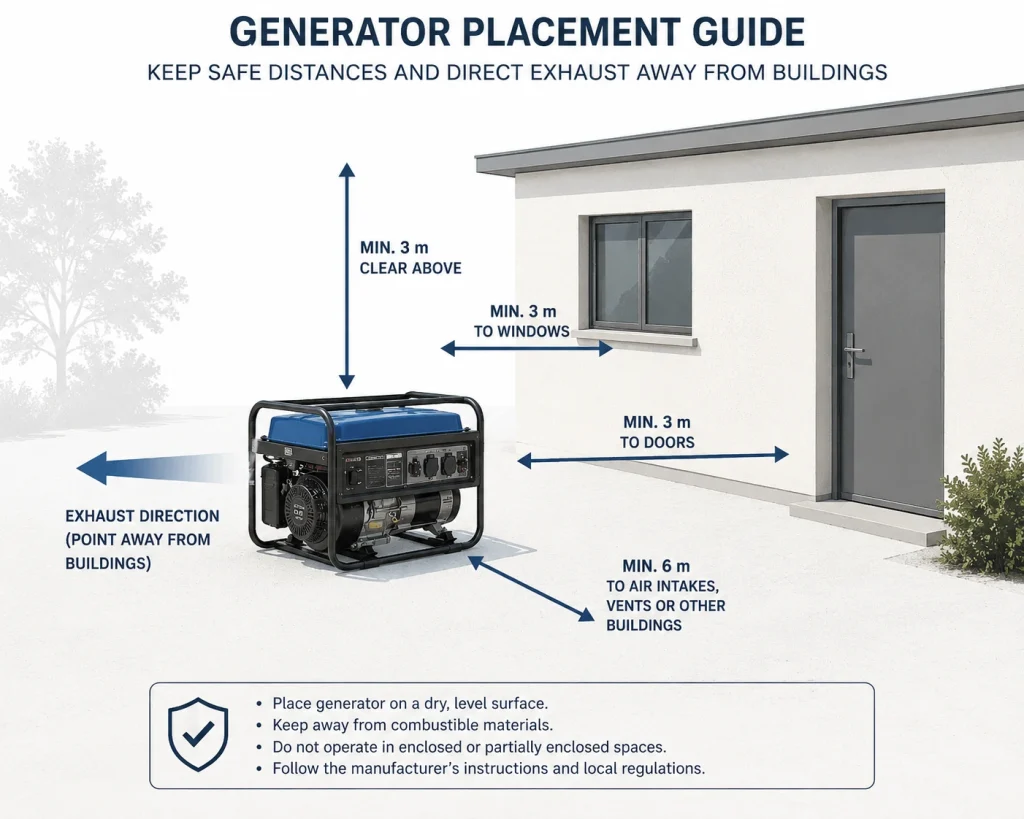
A generator should always be positioned outdoors, on a flat, stable surface, well away from doors, windows, and vents, since running a generator indoors or too close to an occupied space creates a serious carbon monoxide risk regardless of ventilation. The exhaust should be directed away from the work area and any nearby structures, and the generator should be positioned upwind of the work area where practical, so exhaust fumes disperse away from anyone working nearby.
Firm, level ground matters as much as distance from structures, since an unstable or sloped surface increases the risk of fuel spillage or the unit tipping, particularly for larger models with a raised fuel tank positioned above the engine.
Grounding and Stability
Many generators, particularly larger or standby models, require proper electrical grounding before use, connecting the generator’s frame to an earth ground to prevent a dangerous voltage difference from developing between the generator casing and other equipment. The manufacturer’s manual specifies the exact grounding requirement for a given model, and this step should never be skipped simply because the generator appears to be working fine without it.
Once positioned, confirming the generator sits level and stable, with any wheels or feet making solid contact with the ground, completes the setup phase before moving on to starting the engine.
Starting the Generator
With setup complete, starting sequence varies slightly depending on whether a generator uses a manual pull-start or an electric start, but the underlying logic is the same in both cases.
Manual Start Sequence
For a manual pull-start generator, the typical sequence is: turn the fuel valve on, set the choke as specified for a cold or warm engine, switch the engine to the “on” or “run” position, and then pull the starter cord with a firm, steady motion rather than a short, sharp yank that risks a strained pull or an incomplete ignition attempt. Once the engine starts, the choke is typically returned to the running position after a short warm-up period, allowing the engine to reach normal operating temperature before any load is connected.
Automatic and Electric Start Models
Electric start generators, and automatic standby units triggered by a mains power failure, follow a similar underlying sequence but automate most of it, engaging the starter motor electronically rather than requiring a manual pull, and in standby applications, starting automatically within seconds of detecting a power outage without any operator action required at all. Even with automatic starting, the same warm-up period before connecting a full load still applies, since the engine benefits from reaching stable operating temperature before being asked to handle its full rated output.
Connecting Your Load
Once the generator has started and warmed up, connecting the load correctly is the step most likely to go wrong for someone unfamiliar with the process, and the correct method depends heavily on what is actually being powered.
Connecting Individual Appliances or Tools
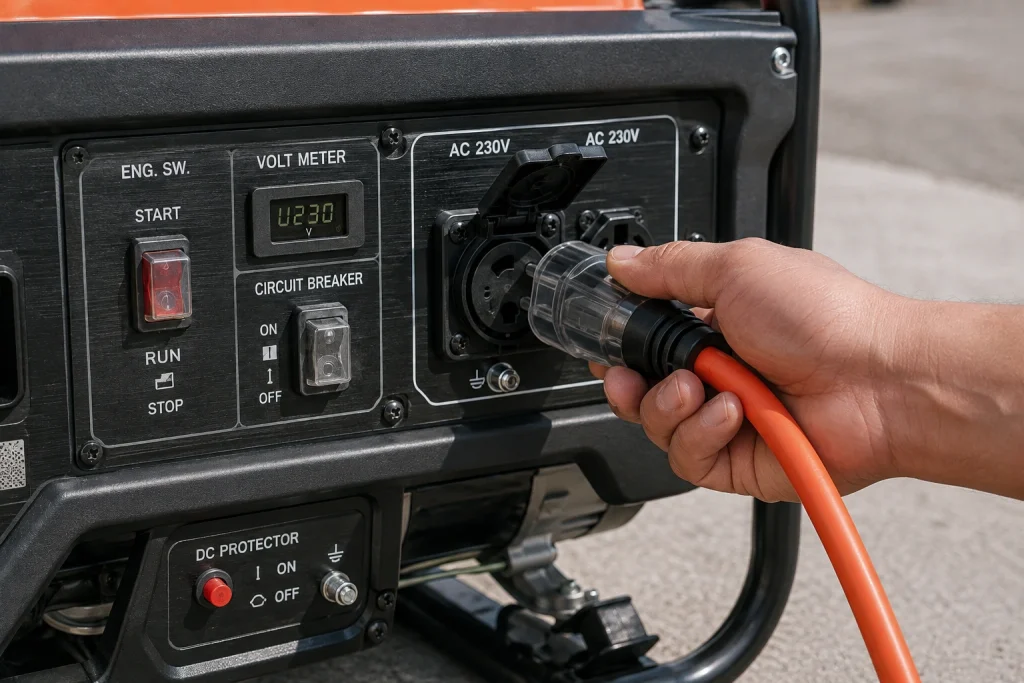
For portable generators powering individual tools or appliances directly, equipment should be plugged in one at a time rather than all at once, allowing the generator to handle each item’s starting current individually rather than facing the combined surge of multiple devices starting simultaneously. Extension cords should be rated for outdoor use and appropriately sized for the load, and cables should be inspected for damage before connecting anything.
Connecting to a Building’s Electrical System
Powering a building’s circuits during an outage requires a properly installed transfer switch, connected by a licensed electrician, rather than connecting a generator directly into a panel or outlet, since an improper connection risks dangerous backfeed into the utility grid. This specific electrical safety requirement, including backfeed risk and correct connection practice, is addressed directly in our generator safety guide.
Running and Monitoring
Once a load is connected, periodically checking the generator while it runs, fuel level, unusual noise, and overall load against rated capacity, catches most operational problems before they escalate into a bigger issue. A sudden change in engine sound, a noticeable drop in power to connected equipment, or an unexpected increase in exhaust smoke are all early warning signs worth investigating immediately rather than waiting to see if the issue resolves on its own.
Standby generators running unattended for extended periods, such as overnight during an outage, benefit particularly from carbon monoxide detectors in nearby occupied spaces, since an unattended generator cannot be visually monitored the way a portable unit running nearby typically would be. Checking in on an unattended generator at reasonable intervals, rather than assuming it will continue running trouble-free for the full duration of an outage, remains good practice even with automated monitoring systems in place.
Refuelling Safely During Operation
If a generator needs refuelling during extended use, the engine should always be switched off and allowed to cool before adding fuel, since spilling fuel onto a hot engine or exhaust component can ignite immediately and without warning. Fuel should be added slowly to avoid overflow, and any spillage should be cleaned up completely before the generator is restarted, rather than assumed to evaporate safely on its own.
Shutting Down Correctly
Switching a generator off correctly matters as much as starting it correctly, and rushing this step is a common way an otherwise uneventful use ends with unnecessary wear or a safety oversight:
- Disconnect or switch off all connected loads before stopping the engine, rather than stopping the engine while equipment is still drawing power
- Allow the engine to run briefly without load to cool down evenly before switching it off completely
- Turn the fuel valve off if the generator will not be used again shortly, reducing the risk of fuel-related issues during storage
- Allow the generator to cool fully before covering it or moving it to storage
Following a consistent maintenance routine after use keeps the generator ready and reliable the next time it is needed, rather than discovering a developing issue only once it is needed urgently.
Also read: Generator Maintenance Checklist: A Complete Site Guide
Using Your Generator with Confidence
Using a generator correctly comes down to a consistent sequence, checking the machine before starting, positioning it safely, starting and warming it up properly, connecting loads carefully, and shutting down in a way that protects both the equipment and anyone nearby. None of these steps are complicated individually, but skipping or rushing any one of them is where most avoidable problems actually originate. Singapore’s Ministry of Manpower publishes detailed Workplace Safety and Health guidance relevant to generator operation on construction sites and other workplaces, useful additional reference alongside this operating guide.
RR Machinery Pte Ltd offers a wide selection of power generators, professionally maintained and tested before every delivery. Contact us today to find the right generator for your needs and get practical guidance on using it safely.