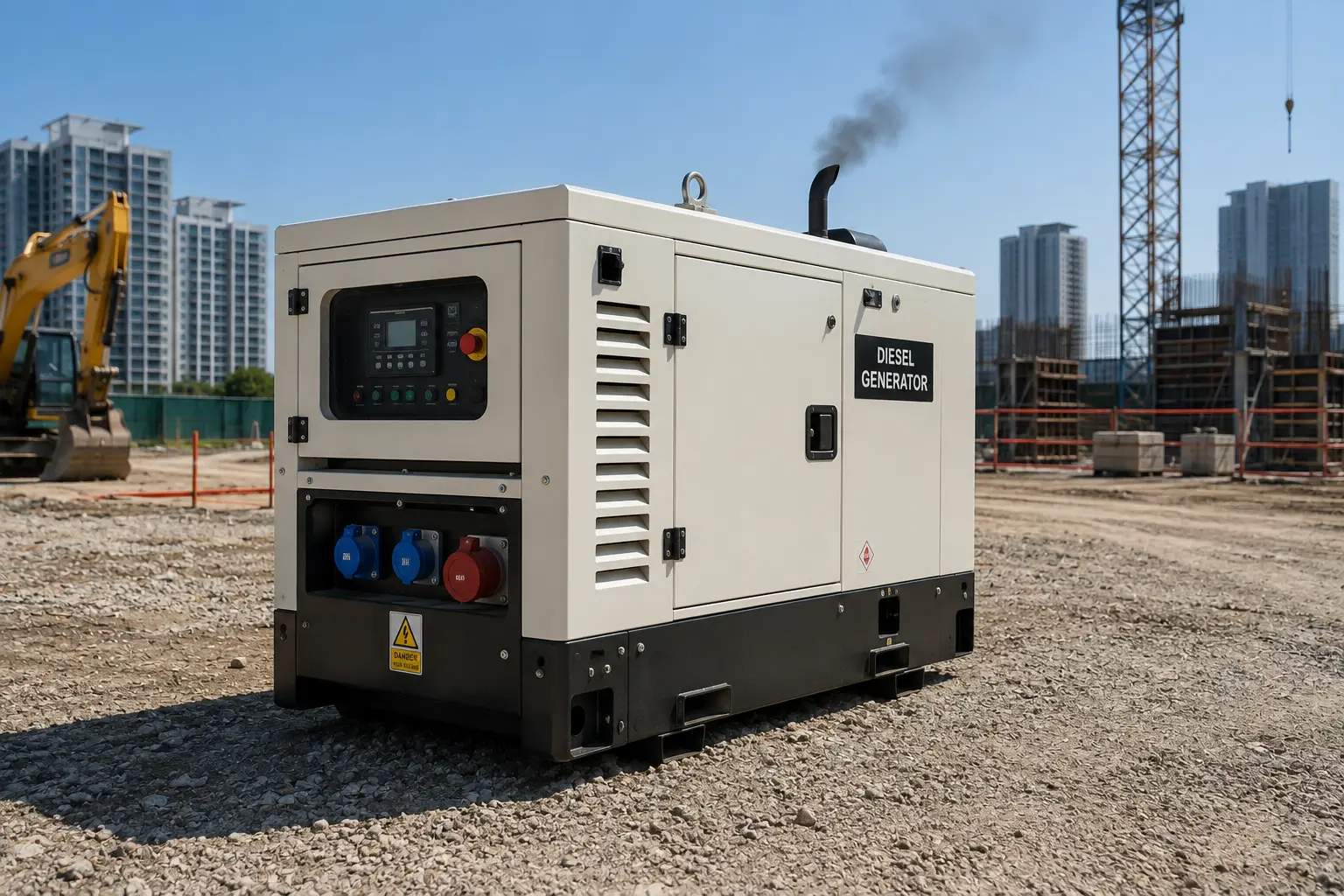
A generator is one of the most straightforward pieces of equipment to operate on the surface, connect fuel, start the engine, and power flows to whatever is plugged in. That apparent simplicity is exactly why generator-related incidents remain disturbingly common, since the real risks, carbon monoxide poisoning, electrical backfeed, and fire, are largely invisible until something has already gone wrong.
This guide covers the safety practices every generator operator needs to understand, from the ventilation and placement decisions that prevent carbon monoxide buildup, through electrical and fuel handling safety, to the load management and maintenance habits that keep a generator running reliably without becoming a hazard itself.
Why Generator Safety Matters
Generators combine several genuine hazards in a single piece of equipment: a combustion engine producing toxic exhaust, live electrical output capable of causing serious shock or fire, and, in most cases, a flammable fuel supply stored and handled on-site. Very few other pieces of construction or backup power equipment concentrate this particular combination of risks so closely together.
Most generator-related incidents are entirely preventable, and they tend to follow the same recurring patterns, running a unit indoors or too close to an occupied space, improper electrical connections, or careless fuel handling, rather than being the result of unpredictable equipment failure. Understanding these patterns is the first step toward avoiding them.
Carbon Monoxide Poisoning Risk
Carbon monoxide poisoning remains the single most dangerous hazard associated with portable and standby generators, responsible for a significant number of preventable deaths worldwide every year, many of them during power outages when a generator is brought indoors or into a partially enclosed space out of convenience or necessity.
Carbon monoxide is colourless and odourless, meaning a person can be exposed to a dangerous concentration without any sensory warning until symptoms, headache, dizziness, confusion, already indicate significant exposure has occurred. Further technical background on how carbon monoxide affects the body is available through Wikipedia’s overview of carbon monoxide poisoning, useful context for understanding why this specific hazard is treated so seriously across generator safety guidance.
How Carbon Monoxide Builds Up Around a Generator
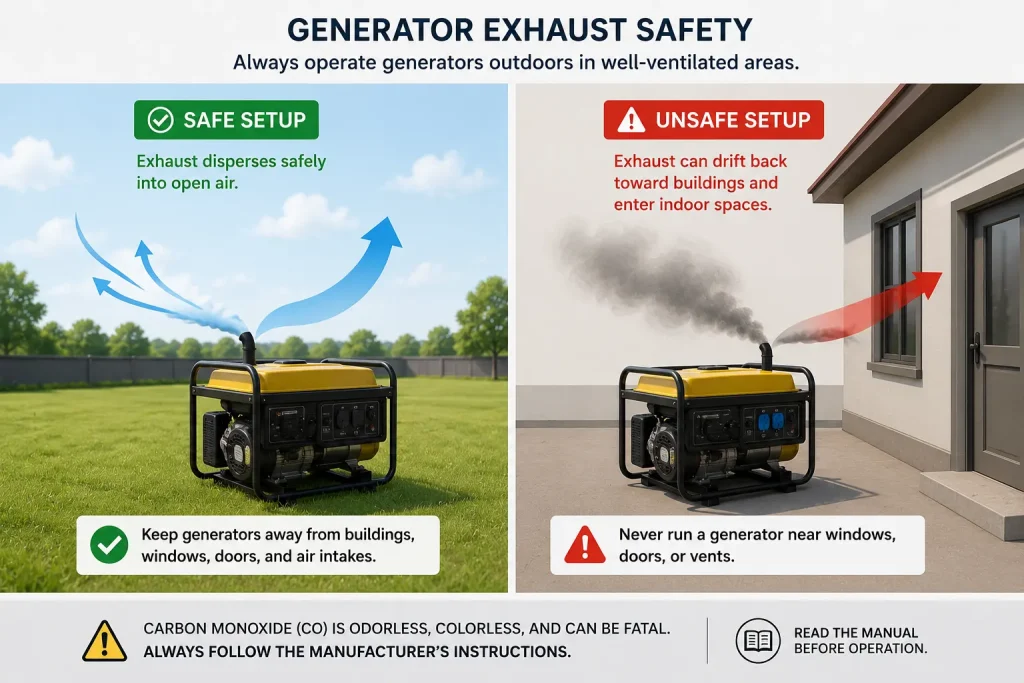
A generator’s engine produces carbon monoxide as a normal by-product of combustion, and in an open, well-ventilated outdoor space this exhaust disperses harmlessly. The danger arises specifically when a generator operates in an enclosed or partially enclosed area, a garage, basement, tent, or even close to windows and doors, since carbon monoxide can accumulate rapidly in these conditions and drift into occupied spaces even when the generator itself is not physically inside the building.
This is why generator safety guidance consistently emphasises a minimum safe distance from any structure, doors, or windows, rather than simply advising against running a unit indoors, since carbon monoxide can travel back into a building from a generator running just outside an open door or window.
Preventing Carbon Monoxide Exposure
Generators should always be operated outdoors, positioned well away from windows, doors, and vents, and never inside a garage, shed, or any partially enclosed structure even with doors or windows open. Battery-powered carbon monoxide detectors installed in occupied spaces provide an additional layer of protection, particularly during extended standby power use when a generator may run for many hours unattended.
Singapore’s Ministry of Manpower publishes detailed Workplace Safety and Health guidance covering combustion equipment safety and exposure limits relevant to generator operation on construction sites and other workplaces, guidance that exists precisely because of how serious and preventable carbon monoxide incidents are.
Electrical Safety When Using a Generator
Beyond the exhaust hazard, a generator’s electrical output introduces its own set of risks, particularly around how it is connected to equipment, tools, or, in standby applications, a building’s existing electrical system.
Understanding the basic mechanism behind how a generator actually produces electrical current helps explain why certain electrical safety practices matter as much as they do, covered in more depth in How Does a Generator Get Power? The Science Explained.
Avoiding Backfeed and Overload
Connecting a generator directly to a building’s electrical wiring without a properly installed transfer switch can cause backfeed, where electricity flows backward into the utility grid, creating a serious electrocution risk for utility workers and neighbouring properties, in addition to being illegal in most jurisdictions. A licensed electrician should install any connection intended to power a building’s circuits during an outage, rather than improvising a connection directly at a panel or outlet.
Overloading a generator by connecting more equipment than its rated capacity can supply is a separate but equally common risk, causing overheating, tripped breakers, or damage to both the generator and whatever is connected to it. Matching connected load to a generator’s actual rated output, covered in How to Calculate Generator Load: A Step-by-Step Guide, avoids this risk entirely.
Also read: How to Calculate Generator Load: A Step-by-Step Guide
Safe Cabling and Connections
Extension cords and cabling used with a generator should be rated for outdoor use, appropriately sized for the load being carried, and inspected for damage before every use, since a damaged or undersized cable can overheat or create a shock hazard under load. Cables should also be routed to avoid standing water, vehicle traffic, and pinch points wherever a generator is used on an active site.
Connections should always be made with dry hands and in dry conditions where possible, and a generator should never be operated in the rain without appropriate weather protection rated specifically for that purpose, since water and live electrical connections are a serious and entirely avoidable combination.
Fire and Fuel Handling Safety
Generators, particularly petrol and diesel models, store and burn flammable fuel, introducing a fire risk that requires the same careful handling discipline applied to any other fuel storage and use on-site.
Refuelling should always be carried out with the engine switched off and allowed to cool, since spilling fuel onto a hot engine or exhaust component can ignite instantly and without warning. Fuel should be stored in approved, clearly labelled containers away from the generator itself and any ignition sources, and spilled fuel should be cleaned up immediately rather than left to evaporate on its own. A fire extinguisher rated for fuel fires should be kept within easy reach of any generator in regular use, and operators should know how to use it before an emergency makes that knowledge necessary.
Placement and Ventilation
Where a generator is physically positioned affects nearly every other safety consideration covered in this guide, from carbon monoxide dispersal to fire risk to basic stability during operation.
Getting placement right from the outset avoids having to reposition a running generator later, which introduces its own risks around moving live electrical equipment and hot engine components.
Safe Distance from Structures and Occupied Spaces
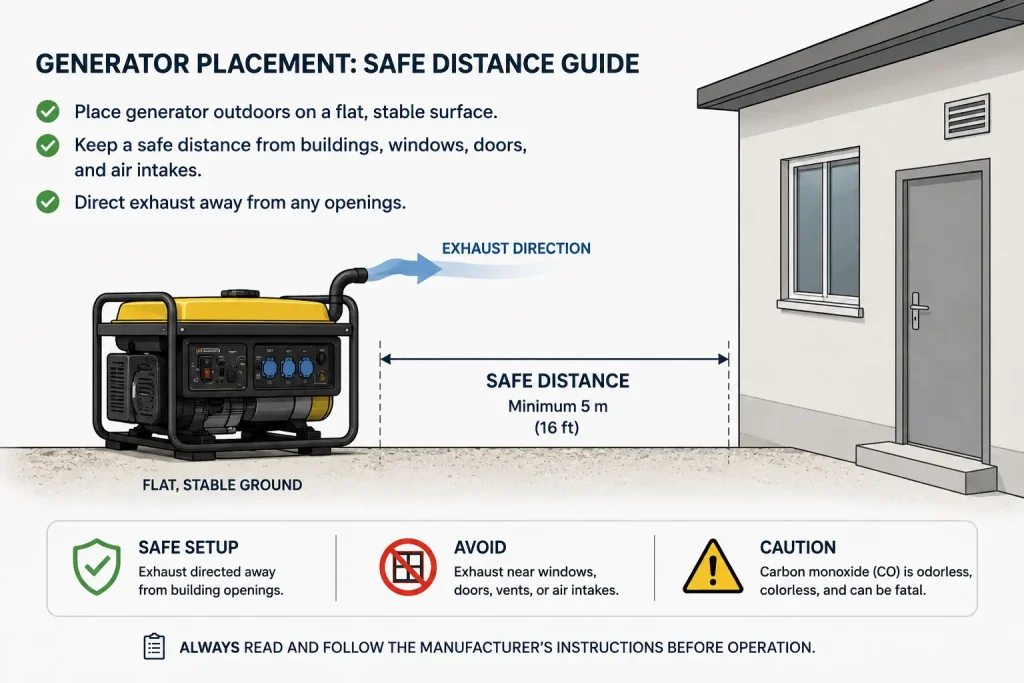
Generators should be positioned at least several metres from any building, tent, or occupied structure, with the exhaust directed away from windows, doors, and air intakes wherever possible. This distance requirement exists specifically to manage carbon monoxide risk, and it should be treated as a minimum rather than a target, greater distance and better airflow further reduce risk with no meaningful downside.
Weather Protection and Ground Stability
A generator should be operated on a flat, stable, and dry surface wherever possible, since an unstable or uneven surface increases the risk of the unit tipping, particularly for larger models with a raised fuel tank. Weather protection, such as a purpose-built generator tent or canopy rated for ventilated outdoor use, protects the unit from rain without creating the enclosed-space carbon monoxide risk that a fully sealed shelter would introduce.
Generators should never be operated on a wet surface or during heavy rain without this kind of purpose-built protection, since water pooling around the base of a running generator combines electrical and slip hazards in one location.
Load Management to Prevent Overheating and Damage
Running a generator at or near its rated capacity for extended periods, or repeatedly overloading it even briefly, accelerates wear on the engine and alternator and increases the risk of a safety-related failure rather than simply a performance issue.
Matching Generator Capacity to Actual Load
Confirming a generator’s rated capacity against the combined load of everything connected to it, including the higher starting current many motors and compressors require, is the most reliable way to avoid overload-related incidents. Businesses uncertain about correct sizing for a specific application can find detailed guidance in What Size Generator Do I Need? A Practical Sizing Guide, useful before committing to a specific unit for a task or project.
Routine Safety Checks and Maintenance
A well-maintained generator is inherently safer than one running with deferred maintenance, since many of the hazards covered in this guide, fuel leaks, damaged wiring, unstable mounting, are exactly the kind of issues a consistent maintenance routine catches before they become dangerous.
Before every use, a few checks take only a few minutes but meaningfully reduce risk:
- Inspect fuel lines, connections, and the fuel cap for leaks or damage before starting
- Check that the exhaust system is intact and free of obstructions
- Confirm the generator is positioned on stable, level ground with adequate clearance from any structure
- Test that any carbon monoxide detectors in nearby occupied spaces are functioning
- Inspect cables and connections for wear, exposed wiring, or damage before connecting any load
A complete, structured maintenance routine covering these checks and the broader upkeep a generator needs over its working life is set out in Generator Maintenance Checklist: A Complete Site Guide, a valuable reference for any business or site running generators regularly.
Also read: Generator Maintenance Checklist: A Complete Site Guide
Operate Your Generator with Confidence
Generator safety comes down to a handful of consistently applied practices, correct placement and ventilation to prevent carbon monoxide buildup, careful electrical connections to avoid backfeed and overload, disciplined fuel handling, and a maintenance routine that catches problems before they become hazards. None of these practices are complicated, but they need to be followed every time a generator is used, not just when a risk feels obvious.
RR Machinery Pte Ltd offers a wide selection of power generators, professionally maintained and tested before every delivery, backed by expert guidance on safe operation. Contact us today to find the right generator for your needs and get practical safety advice for your specific application.