
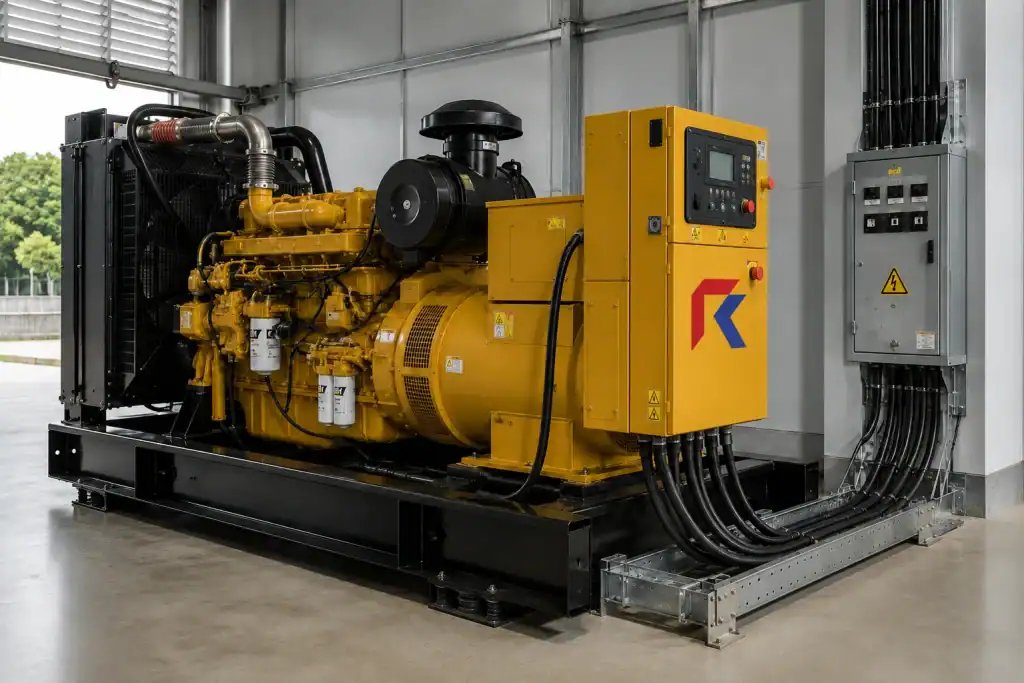
It is easy to assume a generator “creates” electricity out of nothing, but that is not quite what happens. A generator does not produce energy from thin air, it converts one form of energy that already exists, usually the chemical energy stored in fuel, into the electrical energy that powers lights, tools, and equipment. Understanding this conversion chain, and the physics that makes the final step possible, explains not just how a generator gets its power but why it is built the way it is.
This article traces that chain from start to finish: where the initial energy comes from, how it is converted into motion, and how that motion is turned into usable electrical current through a scientific principle that has powered generators for well over a century.
Where Does a Generator’s Power Actually Come From?
A generator’s power ultimately comes from an external energy source, most often fuel, that is converted step by step into electricity rather than generated spontaneously by the machine itself.
Converting Fuel Into Mechanical Energy
The first step in the chain happens inside the generator’s engine, where diesel, petrol, or natural gas is burned in a combustion process that releases the chemical energy stored in the fuel. This combustion drives pistons connected to a crankshaft, converting the rapid expansion of burning fuel into continuous rotational motion, the same basic principle used in a car engine.
This rotational motion is mechanical energy, and at this stage in the process, no electricity has been produced yet at all. The engine’s only job is to spin a shaft at a steady, controlled speed, since the speed of this rotation directly determines the frequency of the electrical current that will eventually be produced. A closer look at how this entire process comes together across the whole machine is covered in How Does a Generator Work? A Clear Explanation, which walks through the complete operating cycle in more detail.
From Mechanical Energy to Electrical Energy
The rotating shaft produced by the engine connects directly to a separate component called an alternator, and it is only at this point that mechanical energy is converted into electrical energy. The engine and the alternator are mechanically coupled but function on entirely different principles, one burns fuel to create motion, the other uses that motion to generate current through electromagnetic induction.
This handoff between engine and alternator is the exact point where “power” changes form, from the energy stored in fuel, to the mechanical energy of a spinning shaft, to the electrical energy that eventually reaches a plug socket or distribution panel. Every generator, regardless of size or fuel type, follows this same fundamental sequence.
The Science Behind Power Generation: Electromagnetic Induction
The alternator’s ability to turn spinning motion into electrical current relies on a single scientific principle discovered in the 1830s, and it remains the foundation of virtually all electricity generation today.
How Electromagnetic Induction Creates Current
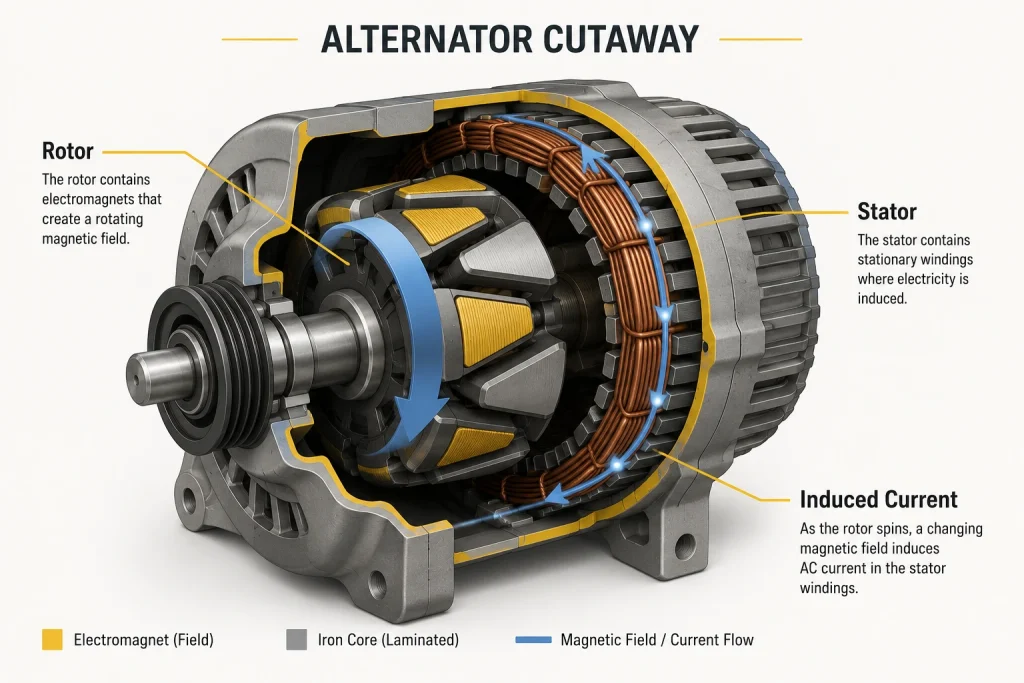
Electromagnetic induction, first described through Faraday’s law, states that moving a conductor through a magnetic field, or changing the magnetic field around a conductor, induces an electrical current in that conductor. Inside an alternator, a magnetic field is generated and rotated past a set of stationary copper wire windings, and this constantly changing magnetic field induces a flow of electrons in the windings, which is the electrical current itself.
No fuel is burned and no chemical reaction takes place at this stage, the current is produced purely through this interaction between motion and magnetism. A detailed explanation of this underlying physical principle is available on Wikipedia’s overview of electromagnetic induction, which covers the scientific basis in more technical depth.
The Role of the Rotor and Stator
Inside the alternator, this process is carried out by two main parts, the rotor and the stator. The rotor is the rotating component, typically containing electromagnets, that spins inside the alternator, driven directly by the engine’s rotating shaft. The stator is the stationary set of copper windings surrounding the rotor, and it is within these windings that current is actually induced as the rotor’s magnetic field sweeps past them.
The speed at which the rotor spins directly determines the frequency of the resulting electrical current, which is why engine speed is so tightly controlled, typically maintained at a constant 1,500 or 3,000 revolutions per minute depending on the region’s standard frequency. Any significant deviation in rotor speed would produce power at the wrong frequency, which is unsafe for most electrical equipment to run on.
Key Components That Get Power to the Generator’s Output
Beyond the engine and alternator, several supporting components ensure that the electrical current generated inside the alternator is delivered safely and consistently to whatever is being powered.
The Engine and Fuel System
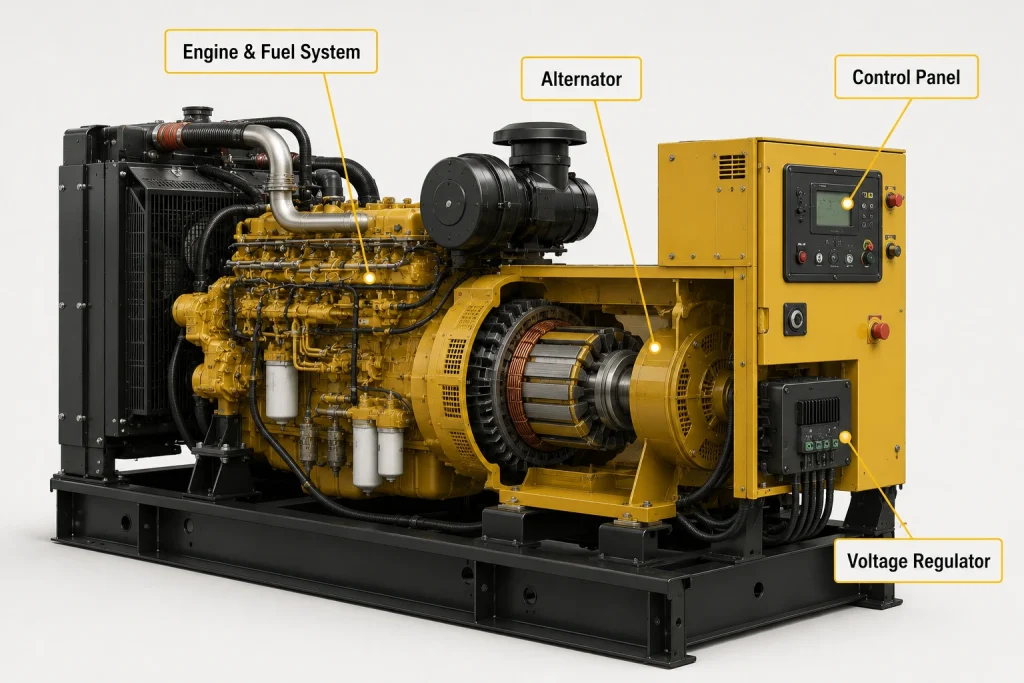
The engine’s fuel system, including the fuel tank, filters, and injectors, ensures a steady, uninterrupted supply of fuel is delivered for combustion, since even a brief interruption in fuel supply causes the engine to slow or stall, immediately affecting the frequency and stability of the power being produced. Fuel quality and filtration matter for this reason, contaminated fuel can cause uneven combustion, which shows up downstream as fluctuating power output.
Understanding how much fuel a given engine consumes relative to its power output is essential for planning extended operation, and a closer breakdown of this relationship is covered in Fuel Saving Tips for Heavy Equipment Operations, which applies directly to generator engines as well as other heavy equipment.
The Alternator
The alternator itself, beyond producing raw current through electromagnetic induction, also determines the voltage and current characteristics of the power being generated based on its winding configuration and rotor design. Larger alternators with more windings and stronger magnetic fields can sustain higher power output, which is why alternator size is one of the primary factors behind a generator’s overall power rating.
Different generator models are built around alternators sized for very different applications, from small portable units to large industrial standby systems, and the full range of configurations available is covered in Types of Generators and What They’re Best For, useful reading when matching alternator capacity to an actual power requirement.
The Voltage Regulator and Control Panel
Raw current straight out of the alternator is not yet stable enough for most equipment, so a voltage regulator continuously monitors and adjusts the alternator’s output to maintain a consistent voltage regardless of how the load connected to the generator changes moment to moment. Without this regulation, connected equipment would be exposed to voltage spikes and drops that could damage sensitive electronics.
The control panel ties all of this together, displaying voltage, frequency, and load in real time, and in many industrial units, managing automatic start-up, shutdown, and transfer switching in the event of a mains power failure. This is the interface an operator actually interacts with, even though the real work of generating power happens entirely inside the engine and alternator beneath it.
Where the Fuel Itself Comes From: Power Source Types
The specific fuel or energy source feeding the engine has a direct effect on how much power is available, how long it can be sustained, and where the generator can practically be used.
Diesel and Petrol Generators
Diesel generators remain the standard choice for industrial, construction, and standby power applications due to diesel fuel’s higher energy density and the engine’s ability to sustain heavy loads for extended periods without excessive wear. Petrol generators are more common in smaller, portable units, offering a lighter engine at the cost of shorter runtime per tank and generally lower sustained power output.
The practical differences between these two fuel types extend well beyond runtime, affecting maintenance needs, noise levels, and total cost of ownership over the machine’s working life. A full comparison of how these two fuel types perform against each other is available in Diesel vs Petrol Generator: Which One Should You Choose?, useful reading before specifying either type for a project.
Natural Gas and Alternative Fuel Generators
Natural gas generators burn a cleaner-burning fuel delivered either from a pressurised tank or a direct pipeline connection, producing lower emissions and quieter operation compared to diesel, though typically at a lower power density per unit of fuel. These units are increasingly common in facilities with an existing gas supply, where continuous, low-emission power is prioritised over the portability that diesel and petrol units offer.
Regardless of fuel type, the fundamental conversion chain, fuel to mechanical energy to electrical energy through electromagnetic induction, remains identical, only the combustion characteristics and fuel logistics differ between fuel types.
How Much Power a Generator Can Actually Deliver
The total electrical power a generator can produce is governed by the size of its alternator and the engine’s ability to sustain the rotational speed needed to drive it under load, which is why generators are rated in kVA rather than simply described by engine size. A generator’s rated output represents the maximum power it can sustain continuously without overheating the alternator windings or overloading the engine, and running a generator close to or beyond this rating for extended periods accelerates wear on both components.
Matching a generator’s power output to actual equipment needs requires calculating the combined load of everything that will draw power from it, accounting for the higher starting current many motors and compressors require compared to their steady running current. A step-by-step approach to this calculation is covered in How to Calculate Generator Load: A Step-by-Step Guide, while a broader sizing framework for choosing a unit in the first place is available in What Size Generator Do I Need? A Practical Sizing Guide.
Keeping the Power Flowing: Maintenance and Reliability
Every component in the power generation chain, from fuel system to alternator windings, depends on regular maintenance to keep delivering stable, reliable power over the generator’s working life.
Routine Maintenance That Protects Power Output
Fuel and oil filters, air intake systems, and cooling components all need regular inspection, since a fault in any one of them can reduce the engine’s ability to maintain the steady rotational speed the alternator depends on for stable frequency. Alternator windings and connections also require periodic inspection, as insulation breakdown or loose connections can reduce output efficiency or, in more serious cases, cause a complete failure of the unit.
A structured maintenance routine, followed consistently rather than reactively after a fault occurs, is the most reliable way to protect the entire power generation chain from unexpected failure. A complete, practical schedule for this is set out in Generator Maintenance Checklist: A Complete Site Guide, covering the specific checks each component in the chain requires.
How Long a Generator Can Sustain Power
A generator’s ability to sustain power indefinitely depends primarily on fuel supply and the engine’s cooling system, since as long as fuel is continuously supplied and the engine is kept within its safe operating temperature, the mechanical-to-electrical conversion process can continue without theoretical limit. In practice, however, manufacturers specify maximum continuous run times and recommend scheduled cooldown periods to protect engine components from excessive wear.
Understanding these practical limits matters significantly for standby and continuous-duty applications where power needs to be sustained for extended periods during an outage or remote operation. A detailed answer to exactly how long different generator types can run without stopping is covered in How Long Can a Generator Run Without Stopping, alongside the related question of Standby vs Prime Generator: Key Differences Explained for applications needing continuous power rather than occasional backup.
Also read: Generator Maintenance Checklist: A Complete Site Guide
Power You Can Rely On
A generator’s power ultimately comes from converting stored fuel energy into mechanical motion, and then into electrical current through the well-established physics of electromagnetic induction, a chain that has remained fundamentally unchanged since the 19th century even as the engineering around it has advanced considerably. For further technical background on how this conversion process works at a broader scale, Wikipedia’s overview of electric generators provides useful additional context on the different generator designs used across industries today.
RR Machinery Pte Ltd offers a wide selection of power generators, from compact 30 kVA units to heavy-duty 1000+ kVA industrial systems, professionally maintained and tested before every delivery. Contact us today to find the right generator for your power needs.




This is an excellent explanation of how generators actually produce electricity by converting energy rather than creating it. I especially liked the clear breakdown of the process from fuel combustion to mechanical motion and finally to electrical energy through electromagnetic induction. The sections on the alternator, voltage regulator, and generator sizing also make complex concepts easy to understand for readers with little technical background. A very informative guide for anyone wanting to understand the science behind generator power.