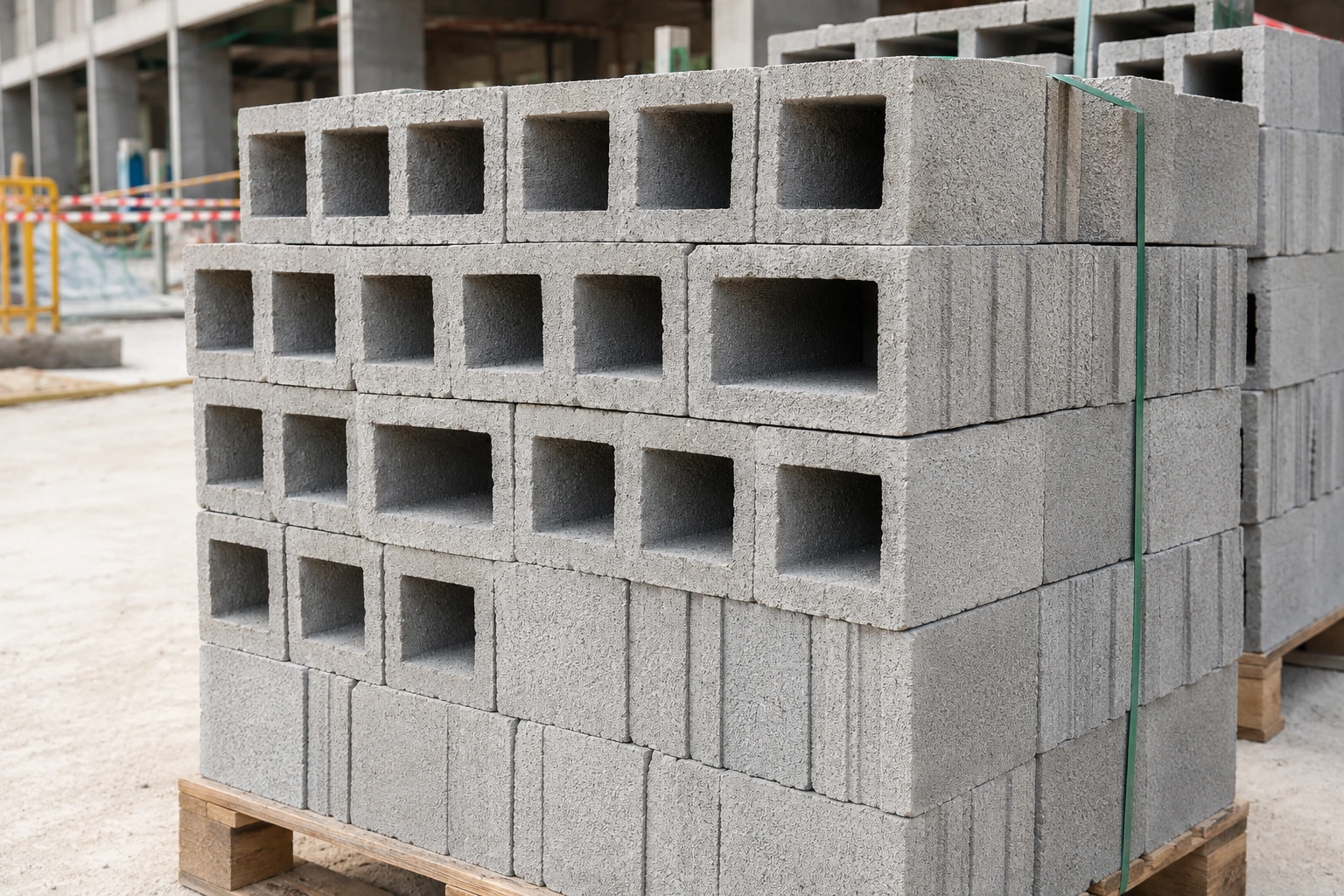
Walk onto almost any residential renovation site and someone will refer to the grey rectangular blocks being used for a wall as “cinder blocks”, even though the material actually being used is, in the overwhelming majority of cases today, something else entirely, a standard concrete block. This mix-up is so common that the two terms are frequently treated as interchangeable in everyday conversation, even though the materials themselves are genuinely different in composition, strength, and appropriate use.
Understanding the real distinction matters for more than just getting the terminology right. Cinder blocks and modern concrete blocks have different structural properties, and specifying the wrong one, or assuming an older structure is built from one when it is actually the other, can lead to real problems in a renovation, retrofit, or load-bearing assessment. This guide clarifies exactly what each material is, why the confusion exists, and which one is actually relevant to a construction project today.
Clearing Up the Terminology Confusion
The confusion between concrete and cinder blocks exists largely because cinder blocks came first, and the name stuck as a generic term long after the material itself was mostly phased out of everyday construction.
For most of the twentieth century, cinder blocks were the dominant type of hollow masonry unit used in residential and light commercial construction, and the name became so embedded in everyday vocabulary that people continued calling any similar-looking hollow masonry block a “cinder block” long after manufacturers had largely stopped using cinders as the aggregate material. This is a similar pattern to how certain product names become generic terms for an entire category, the material referred to casually today as a cinder block is, in the vast majority of modern cases, actually a standard concrete block.
What Is a Cinder Block?
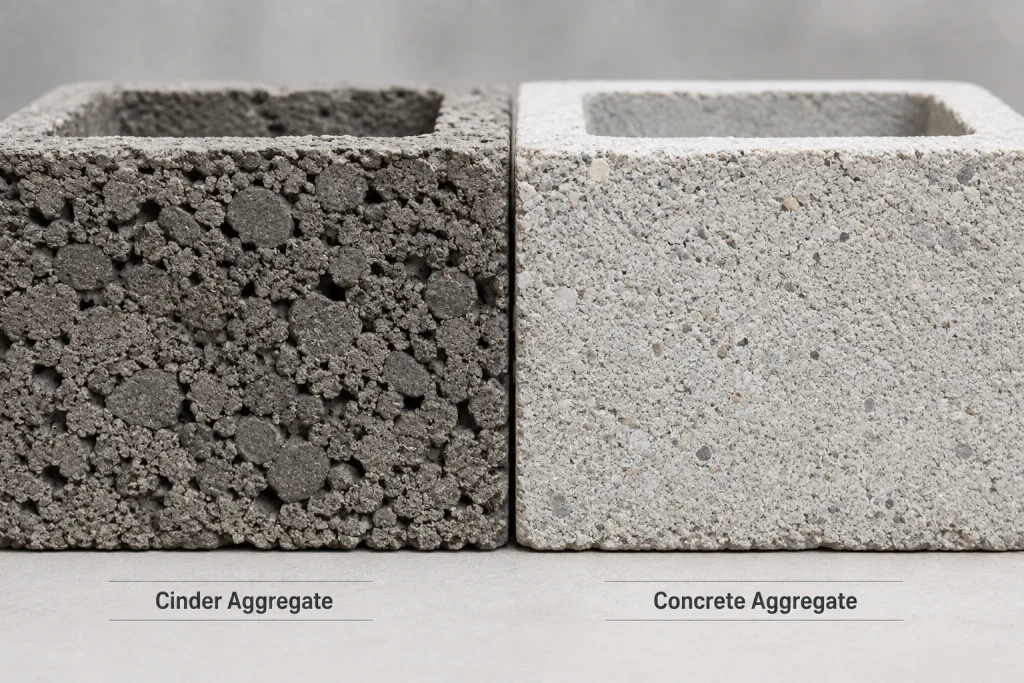
A true cinder block is a hollow masonry unit made using cinders, the ash and residue left over from burning coal, as the primary aggregate material mixed with cement and water.
This aggregate gave cinder blocks a notably lighter weight than blocks made with denser aggregate, but it also made them considerably weaker structurally, with lower compressive strength and a greater tendency to absorb moisture, since the porous cinder aggregate does not compact and bond as densely as sand or crushed stone. As coal-fired industrial processes producing cinder ash declined and building codes tightened around structural performance, cinder blocks were largely phased out of mainstream construction in most developed markets by the latter half of the twentieth century, replaced by the stronger, more consistent concrete block described below.
What Is a Concrete Block?
A concrete block, more formally known as a concrete masonry unit, is made using cement combined with sand, gravel, or crushed stone as the aggregate, rather than the cinder ash used in a true cinder block.
This aggregate produces a considerably denser, stronger block, with compressive strength typically several times higher than an equivalent cinder block, along with better resistance to moisture absorption and more consistent quality control during manufacturing. Concrete blocks are now the standard hollow masonry unit specified for virtually all modern construction, and a closer look at the different concrete block configurations available for different structural and non-structural applications is covered below.
Also read: Concrete Block Types and Their Uses in Construction
Key Differences: Concrete vs Cinder Blocks
Beyond the aggregate material itself, the practical differences between the two block types show up clearly across several dimensions that matter directly for construction decisions.
Understanding these differences individually clarifies why concrete blocks have almost entirely replaced cinder blocks in new construction, while also explaining the specific risks involved in working with or assessing an older structure that may still contain genuine cinder block masonry.
Strength and Load-Bearing Capacity
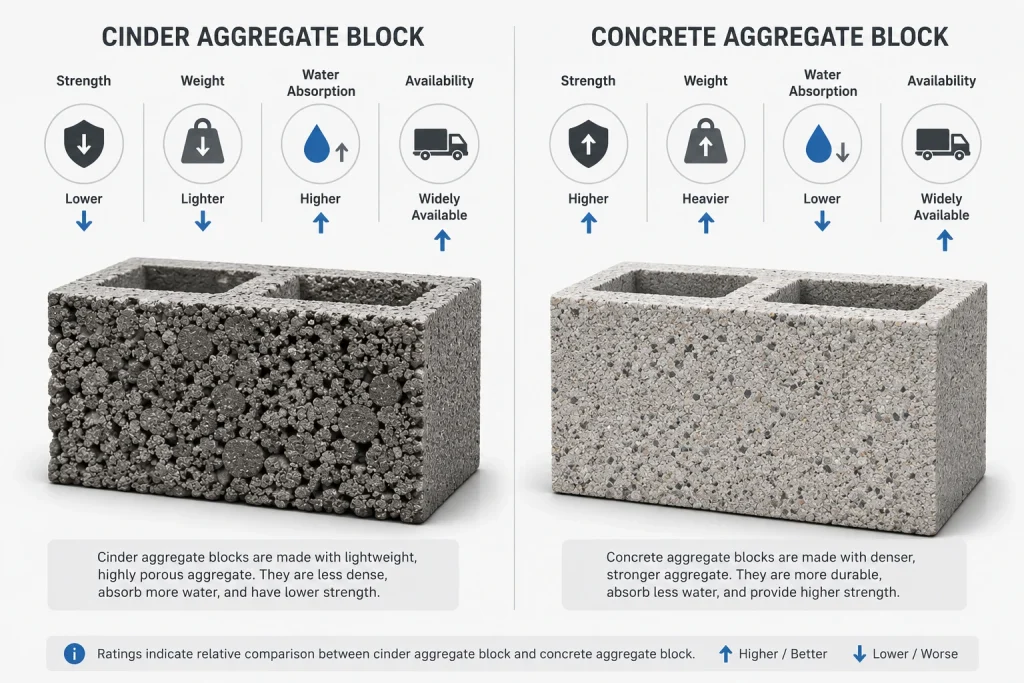
Concrete blocks offer significantly higher compressive strength than cinder blocks, a difference substantial enough that concrete blocks are routinely specified for load-bearing walls and structural applications that a cinder block would not be considered suitable for under modern building codes. This strength gap is the single most important practical reason concrete blocks displaced cinder blocks in mainstream construction, since a stronger, more predictable material allows for more reliable structural design.
Older buildings still standing on genuine cinder block foundations or load-bearing walls should generally be assessed by a structural engineer before any renovation involving significant added load, since the block’s reduced strength compared to modern concrete masonry may limit what modifications can safely be made.
Weight and Density
Cinder blocks are noticeably lighter than concrete blocks of the same dimensions, a direct result of the porous cinder aggregate compared to the denser sand or crushed stone used in a concrete block. While this lighter weight made cinder blocks easier to handle manually, it came directly at the cost of the reduced strength and durability described above, illustrating the fundamental trade-off between the two materials.
Modern concrete block manufacturing does offer lighter-weight variants using expanded aggregates for specific applications, but these are engineered concrete products with controlled, tested properties, distinct from the simple cinder-based aggregate used in a true cinder block.
Water Absorption and Durability
Cinder blocks absorb moisture more readily than concrete blocks, due to the more porous nature of cinder aggregate, making them considerably more prone to deterioration, cracking, and reduced lifespan when exposed to moisture over time, a particularly relevant concern in Singapore’s humid, high-rainfall climate. Concrete blocks, with their denser composition, resist water penetration considerably better, contributing directly to their longer service life and greater suitability for exterior and below-grade applications such as retaining walls, covered in more detail below.
This durability difference is a major reason concrete blocks are considered the appropriate modern choice for foundation walls, retaining structures, and any application where the masonry will face sustained moisture exposure.
Also read: Types of Retaining Walls: Structures and When to Use Each
Cost and Availability
Concrete blocks are now the far more widely available option, manufactured at scale by masonry suppliers everywhere, while genuine cinder blocks using coal cinder aggregate are largely unavailable as a modern product in most markets, including Singapore. Any cost comparison between the two is therefore mostly theoretical today, since specifying a project in concrete blocks is not just the stronger choice but essentially the only practical one available through standard supply channels.
Which One Should You Actually Use Today?
For any new construction or major renovation project, the answer is straightforward: concrete blocks are the appropriate and, in practice, the only readily available choice, regardless of whether the material is casually referred to as a “cinder block” on-site.
The only scenario where the distinction genuinely matters in a practical sense is when working with an existing older structure that may have been originally built using true cinder block masonry, where understanding the material’s reduced strength and durability compared to modern concrete block is essential for any structural assessment, renovation planning, or load calculation involving that section of the building. Further general technical background on concrete masonry unit composition and manufacturing is available through Wikipedia’s overview of concrete masonry units.
Working with Concrete Blocks on Site
Once concrete block is confirmed as the material in use, whether for a new wall or in an existing structure being modified, cutting and working with it correctly matters for both structural integrity and worker safety.
Concrete blocks are dense enough that cutting them generates the same respirable silica dust hazard associated with cutting solid concrete, requiring the same wet cutting or dust extraction precautions covered in our concrete cutting safety guide below. Selecting the correct blade and cutting method matters just as much for concrete block work as it does for solid concrete slabs, since the hollow core structure of a typical block can be prone to chipping or cracking if cut with an inappropriate tool or technique.
Also read: How to Cut Concrete: Methods, Tools & Safety Guide
Building with the Right Material
While “cinder block” remains common everyday language, the material actually specified and used in modern construction is almost always a concrete block, a stronger, denser, and more moisture-resistant material than the coal-cinder-based product the name originally referred to. Understanding this distinction matters most when assessing older structures, but for any current project, concrete block is both the practical default and the structurally appropriate choice.
RR Machinery Pte Ltd supports Singapore’s construction and industrial sectors with reliable heavy machinery solutions for every stage of a masonry or construction project. Browse our complete heavy machinery services or contact our team today for practical advice on equipping your next project.