
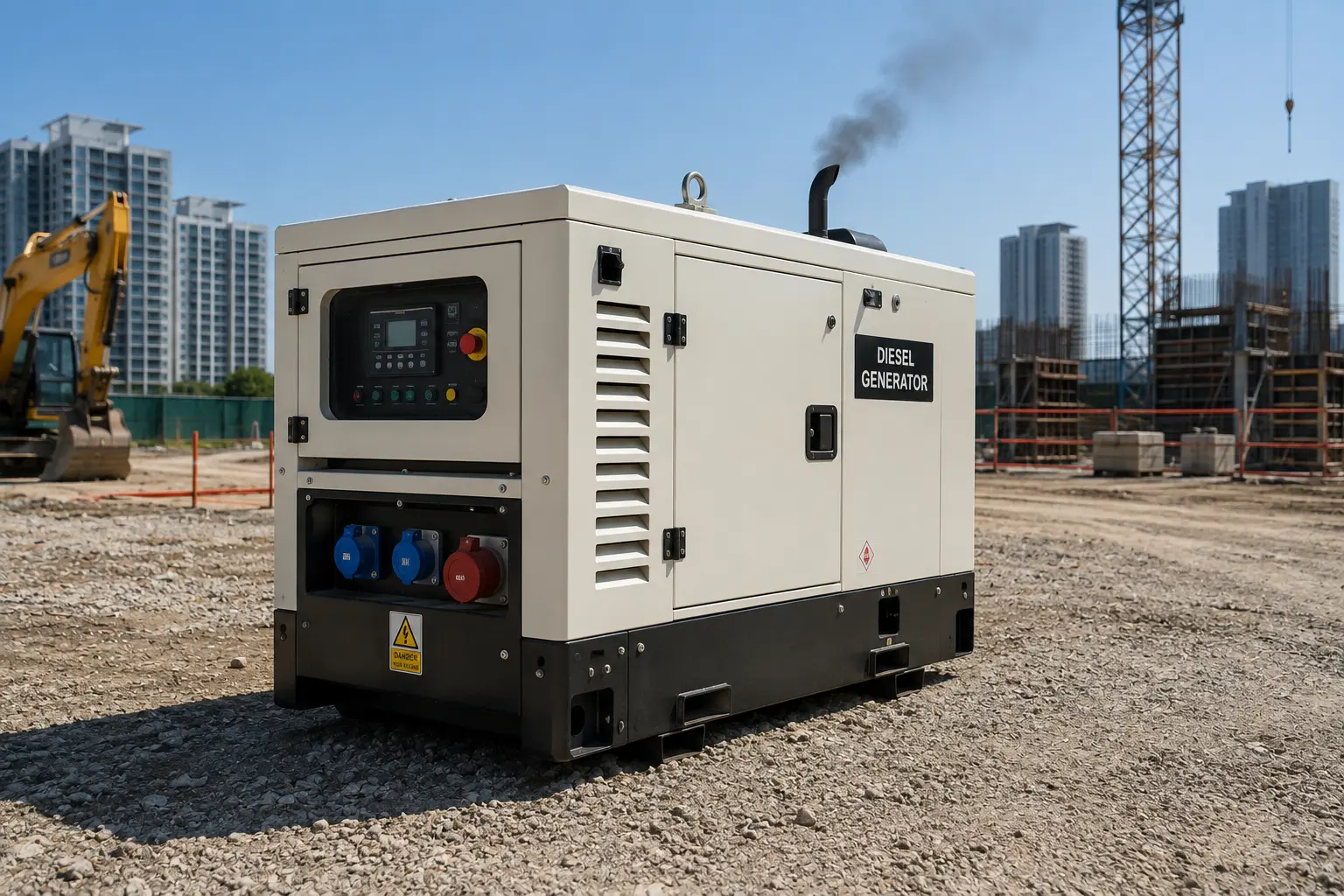
A generator looks like one of the simplest machines on site. Connect the fuel, start the engine, and power flows to whatever is plugged in. That simplicity is exactly why incidents keep happening, because the real dangers are invisible until something has already gone wrong: exhaust fumes that cannot be seen or smelled, electricity flowing where nobody expects it, and fuel vapour near a hot engine.
This guide covers the safety practices every generator operator needs, from placement and ventilation that prevent carbon monoxide building up, through electrical and fuel handling, to the load management, routine checks, and everyday hazards that keep a generator running without becoming a danger in itself.
Why Generator Safety Matters
Generators combine several genuine hazards in a single piece of equipment: a combustion engine producing toxic exhaust, live electrical output capable of causing serious shock or fire, and, in most cases, a flammable fuel supply stored and handled on site. Very few other pieces of construction or backup power equipment concentrate this particular combination of risks so closely together.
Most generator incidents are entirely preventable, and they follow the same few patterns: running a unit indoors or too close to an occupied space, making improper electrical connections, or handling fuel carelessly. Very few are caused by unpredictable equipment failure, which means understanding the patterns is most of the work.
Carbon Monoxide Poisoning Risk
Carbon monoxide poisoning is the most dangerous hazard associated with portable and standby generators. It is a recognised cause of preventable deaths, and many incidents happen during power outages, when a generator is brought indoors or into a partly enclosed space out of convenience or necessity.
Carbon monoxide is colourless and odourless, meaning a person can be exposed to a dangerous concentration without any sensory warning until symptoms, headache, dizziness, confusion, already indicate significant exposure has occurred. Further technical background on how carbon monoxide affects the body is available through Wikipedia’s overview of carbon monoxide poisoning, useful context for understanding why this specific hazard is treated so seriously across generator safety guidance.
How Carbon Monoxide Builds Up Around a Generator
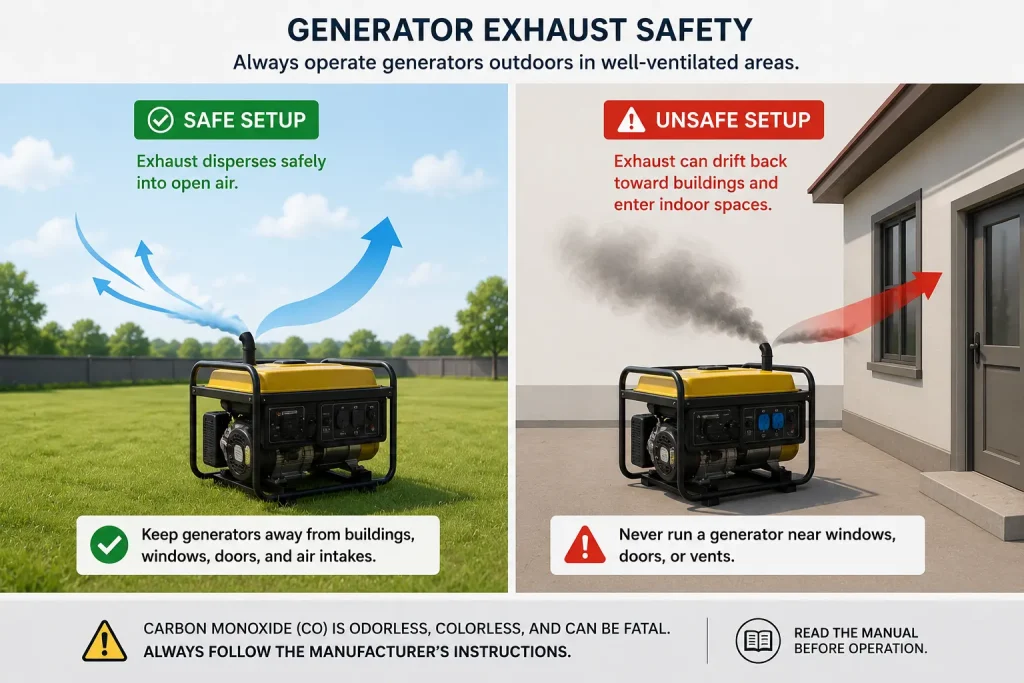
A generator’s engine produces carbon monoxide as a normal product of combustion. In an open, well ventilated outdoor space, that exhaust disperses harmlessly. The danger arises when a generator runs in an enclosed or partly enclosed area such as a garage, basement, or tent, or close to windows and doors, because the gas can build up quickly and drift into occupied spaces even when the generator is not physically inside the building.
This is why generator safety guidance consistently emphasises a minimum safe distance from any structure, doors, or windows, rather than simply advising against running a unit indoors, since carbon monoxide can travel back into a building from a generator running just outside an open door or window.
Preventing Carbon Monoxide Exposure
Generators should always be operated outdoors, positioned well away from windows, doors, and air vents, and never inside a garage, shed, or any partly enclosed structure, even with the doors or windows open. Battery powered carbon monoxide detectors in occupied spaces add a further layer of protection, particularly during long standby runs when a generator may operate for hours unattended.
Everyone working near a generator should also know the early symptoms of exposure, which include headache, dizziness, nausea, and confusion. If anyone shows these symptoms, move them into fresh air immediately, shut the generator down if it is safe to do so, and seek medical help rather than waiting to see whether they improve.
Singapore’s Ministry of Manpower publishes detailed Workplace Safety and Health guidance covering combustion equipment safety and exposure limits relevant to generator operation on construction sites and other workplaces, guidance that exists precisely because of how serious and preventable carbon monoxide incidents are.
Electrical Safety When Using a Generator
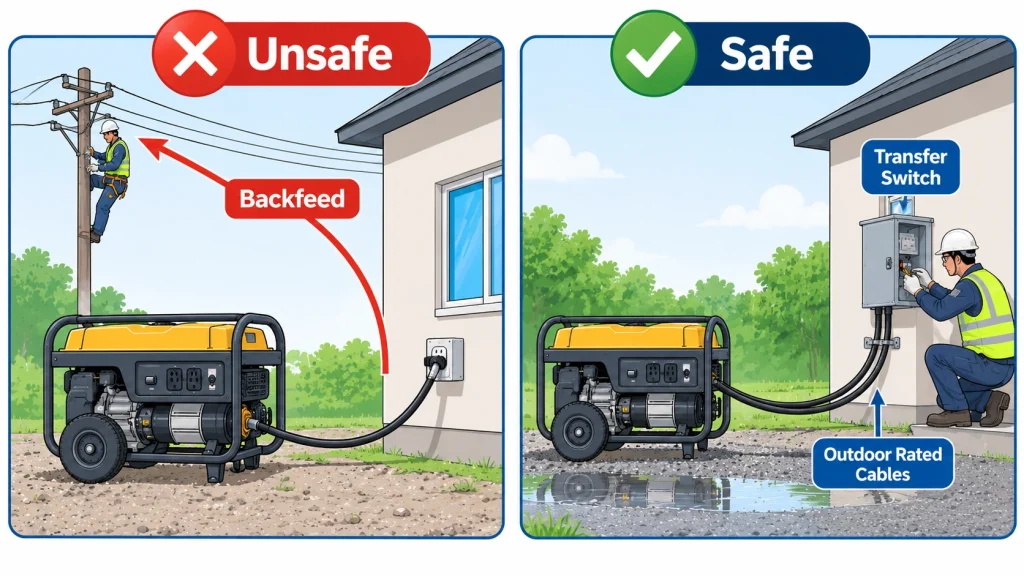
Beyond the exhaust hazard, a generator’s electrical output introduces its own set of risks, particularly around how it is connected to equipment, tools, or, in standby applications, a building’s existing electrical system.
Understanding how a generator actually produces electrical current helps explain why some of these precautions matter so much, and our guide on how a generator produces power sets out the basics.
Avoiding Backfeed and Overload
Connecting a generator directly to a building’s wiring without a properly installed transfer switch can cause backfeed, where electricity flows back into the utility grid. This creates a serious electrocution risk for utility workers and neighbouring properties, and it is prohibited under the electrical regulations in many places. Any connection intended to power a building’s circuits during an outage should be installed by a licensed electrician rather than improvised at a panel or socket.
Overloading is a separate but equally common risk. Connecting more equipment than the generator is rated to supply causes overheating, tripped breakers, and damage to both the generator and whatever is plugged into it. Working out the combined load before anything is connected removes the risk entirely, and the method is explained below.
Also read: How to Calculate Generator Load: A Step-by-Step Guide
Safe Cabling and Connections
Generators also need to be earthed correctly. How that is done depends on the machine and how it is connected, so the manufacturer’s manual and a qualified electrician should decide the arrangement rather than assuming that one method suits every situation. Where tools and equipment are plugged in directly, residual current protection adds an important safeguard against electric shock.
Extension cords and cabling used with a generator should be rated for outdoor use, appropriately sized for the load being carried, and inspected for damage before every use, since a damaged or undersized cable can overheat or create a shock hazard under load. Cables should also be routed to avoid standing water, vehicle traffic, and pinch points wherever a generator is used on an active site.
Connections should always be made with dry hands and in dry conditions where possible, and a generator should never be operated in the rain without appropriate weather protection rated specifically for that purpose, since water and live electrical connections are a serious and entirely avoidable combination.
Fire and Fuel Handling Safety
Generators that run on petrol or diesel store and burn flammable fuel, which brings a fire risk that needs the same discipline applied to any other fuel stored and used on site. Petrol is the more volatile of the two, giving off vapour that can ignite at ordinary temperatures, which is one of several practical differences between the two fuel types.
Refuelling should always be done with the engine switched off and cool, because fuel spilled onto a hot engine or exhaust can ignite instantly and without warning. Fuel should be kept in approved, clearly labelled containers, stored away from the generator and any ignition source, and spills should be cleaned up straight away rather than left to evaporate. Keep a fire extinguisher suitable for fuel fires within easy reach of any generator in regular use, and make sure operators know how to use it before an emergency makes that knowledge urgent.
Also read: Diesel vs Petrol Generator: Which One Should You Choose?
Placement and Ventilation
Where a generator is physically positioned affects nearly every other safety consideration covered in this guide, from carbon monoxide dispersal to fire risk to basic stability during operation.
Getting placement right from the outset avoids having to reposition a running generator later, which introduces its own risks around moving live electrical equipment and hot engine components.
Safe Distance from Structures and Occupied Spaces
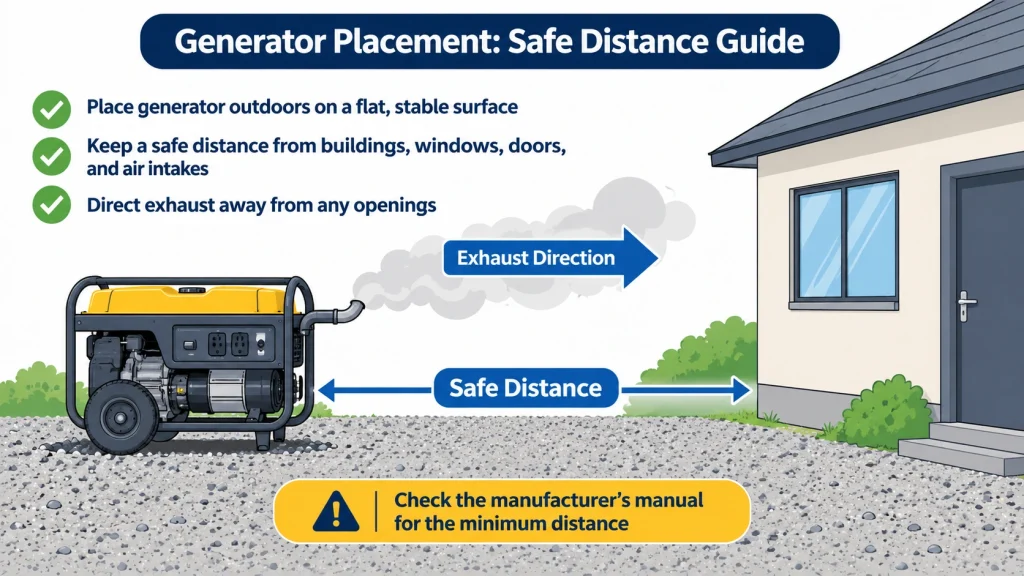
Generators should be positioned well away from any building, tent, or occupied structure, with the exhaust directed away from windows, doors, and air intakes. The minimum distance is set in the manufacturer’s instructions and should be treated as a floor rather than a target, since greater distance and better airflow reduce risk with no real downside.
Weather Protection and Ground Stability
A generator should run on flat, stable, dry ground wherever possible, because an uneven or soft surface increases the risk of the unit tipping, particularly on larger models with a raised fuel tank. Weather protection, such as a purpose made generator canopy rated for ventilated outdoor use, keeps rain off without creating the enclosed space that causes carbon monoxide to build up.
Generators should never be operated on a wet surface or in heavy rain without that kind of purpose made protection, since water pooling around the base of a running generator combines electrical and slip hazards in one place. Noise and exhaust direction also affect where a unit can go, and enclosed canopy models are often the better choice near occupied buildings, as explained in our comparison of silent and open generators.
Load Management to Prevent Overheating and Damage
Running a generator at or near its rated capacity for long periods, or overloading it repeatedly even for short bursts, wears the engine and alternator faster and raises the risk of a failure that becomes a safety problem rather than just a performance one.
Matching Generator Capacity to Actual Load
Confirming the generator’s rated capacity against the combined load of everything connected to it, including the higher starting current that motors and compressors draw, is the most reliable way to avoid overload incidents. If you are unsure which capacity a particular job needs, our guide on what size generator you need works through it step by step.
Other Hazards Worth Planning For
Carbon monoxide, electricity, and fuel get most of the attention, but a few everyday hazards cause injuries too.
Hot surfaces. Engines, exhausts, and silencers stay hot long after shutdown. Let the unit cool before refuelling, opening panels, or moving it, and keep the exhaust away from anything that could be damaged by heat.
Noise. Open frame generators are loud enough to need hearing protection during extended work nearby, and they can breach noise limits close to occupied buildings.
Moving parts. Cooling fans, belts, and drive components are hazardous while the engine runs. Guards should stay in place, and no adjustments should be made on a running machine.
Manual handling and transport. Portable units are heavier than they look, and larger ones need mechanical handling. Secure every generator for transport and check that the ground where it will sit can take its weight.
Where several machines share a site, generator safety sits alongside the wider precautions for working safely around heavy equipment.
Routine Safety Checks and Maintenance
A well maintained generator is inherently safer than one running with deferred servicing, because many of the hazards in this guide, including fuel leaks, damaged wiring, and unstable mounting, are exactly the faults a consistent maintenance routine catches before they become dangerous.
Before every use, a few checks take only a few minutes but meaningfully reduce risk:
- Inspect fuel lines, connections, and the fuel cap for leaks or damage before starting
- Check that the exhaust system is intact and free of obstructions
- Confirm the generator is positioned on stable, level ground with adequate clearance from any structure
- Test that any carbon monoxide detectors in nearby occupied spaces are functioning
- Inspect cables and connections for wear, exposed wiring, or damage before connecting any load
Keeping a record of these checks also helps, since recurring faults are easier to spot in writing than in memory. On construction projects, where units often run long hours in dust and heat, these routines matter even more, and the practical considerations are set out in our guide to generators on construction sites.
Also read: Generator Maintenance Checklist: A Complete Site Guide
Generator Rental and Safety Support in Singapore
Safe operation is easier when the generator suits the job in the first place. When you contact the team, it helps to describe the equipment you need to power, the starting and running loads involved, whether the unit will sit indoors or outdoors, how close it will be to occupied spaces, and how long you expect to need it. With these details, a generator of the right size and type can be recommended from the start.
RR Machinery Pte Ltd offers a wide selection of power generators, professionally maintained and tested before every delivery, backed by expert guidance on safe operation. Contact us today to find the right generator for your needs and get practical safety advice for your specific application.