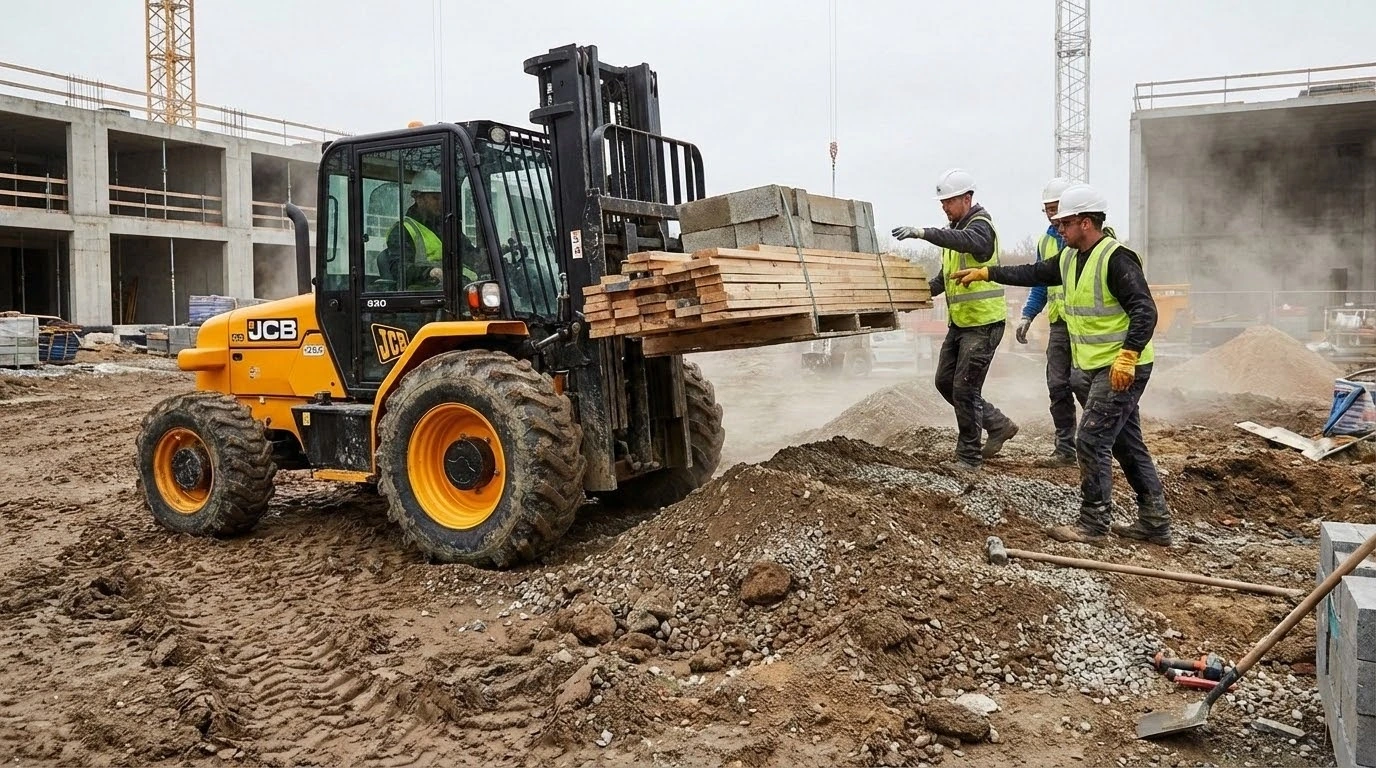
A rough terrain forklift is designed to operate in challenging environments where standard forklifts cannot perform effectively. From construction sites to agricultural fields, these machines are built to handle uneven ground, heavy loads, and demanding conditions.
Unlike traditional forklifts used in warehouses, rough terrain forklifts are equipped with large tires, powerful engines, and enhanced stability. These features make them essential for industries that require reliable lifting solutions in outdoor and rugged environments.
Understanding how these machines work and where they are best used can help businesses improve efficiency, safety, and overall productivity.
What Is a Rough Terrain Forklift?
A rough terrain forklift is a heavy-duty lifting machine specifically designed for outdoor use on uneven surfaces. It is commonly used in construction, mining, and agricultural operations where terrain conditions are unpredictable.
These forklifts are built with reinforced frames, higher ground clearance, and specialized tires that allow them to navigate rough surfaces with ease. Their robust design ensures stability even when carrying heavy loads.
Because of their durability, rough terrain forklifts are often preferred for tasks that involve lifting materials in environments where standard forklifts would struggle.
Key Features of a Rough Terrain Forklift
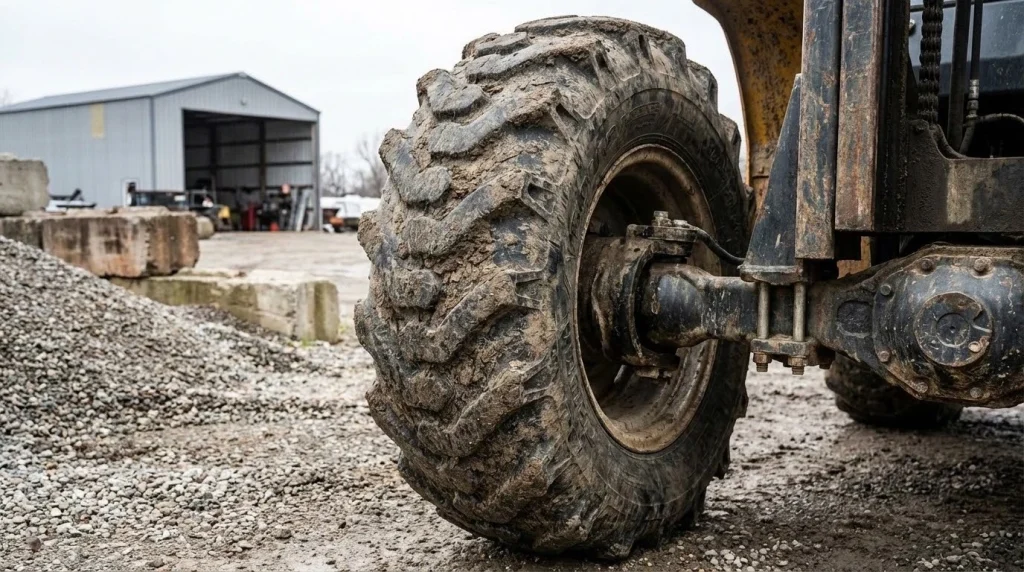
Rough terrain forklifts are equipped with several features that distinguish them from standard models.
Large Pneumatic Tires
These forklifts use large, deep-tread pneumatic tires that provide significantly better traction on uneven, muddy, or loose surfaces than the solid tires fitted to a standard warehouse forklift. The deeper tread pattern grips into soft ground rather than slipping across it, which is what allows the machine to maintain control while carrying a load across terrain a standard forklift would struggle to cross at all.
High Ground Clearance
Increased ground clearance, typically well above what a standard forklift offers, allows the machine to pass over ruts, kerbs, debris, and uneven ground without the chassis or axles making contact with the terrain. This clearance is particularly important on active construction sites, where loose material, temporary trenches, and uneven backfill are common obstacles between a material stockpile and where it needs to be delivered.
Powerful Engine
Most rough terrain forklifts are powered by diesel engines, chosen specifically for the higher torque and sustained power output needed to lift heavy loads while simultaneously driving across soft or inclined ground. Diesel also remains the practical choice for outdoor use since refuelling is quick and the engine performs consistently regardless of ambient temperature or how long the machine runs continuously through a shift.
Enhanced Stability
A wide wheelbase, reinforced chassis, and a lower centre of gravity relative to the machine’s height all contribute to stability when the forklift is operating on a slope, carrying an offset load, or manoeuvring across uneven ground. This structural stability is what allows the machine to lift rated loads safely in conditions that would risk tipping a standard forklift with a narrower stance and lighter frame.
Four-Wheel Drive
Four-wheel drive delivers power to all four wheels simultaneously rather than just two, providing considerably better traction when climbing inclines, crossing soft or muddy ground, or manoeuvring with a heavy load on uneven terrain. Many models also include selectable drive modes, allowing the operator to switch between two-wheel and four-wheel drive depending on the specific ground conditions encountered during a shift.
Also read : Types of Forklifts: Every Configuration Explained and How to Choose the Right One
How Does a Rough Terrain Forklift Work?
A rough terrain forklift operates similarly to a standard forklift but is adapted for outdoor environments. The operator uses controls to lift and transport loads, while the machine’s design ensures stability on uneven surfaces.
Hydraulic systems are used to raise and lower loads, providing smooth and controlled movement. The combination of powerful engines and rugged tires allows these forklifts to perform efficiently in demanding environments.
To understand how these machines fit within broader lifting systems, you can explore types of lifting equipment used in construction and industrial operations.
Common Uses of Rough Terrain Forklifts
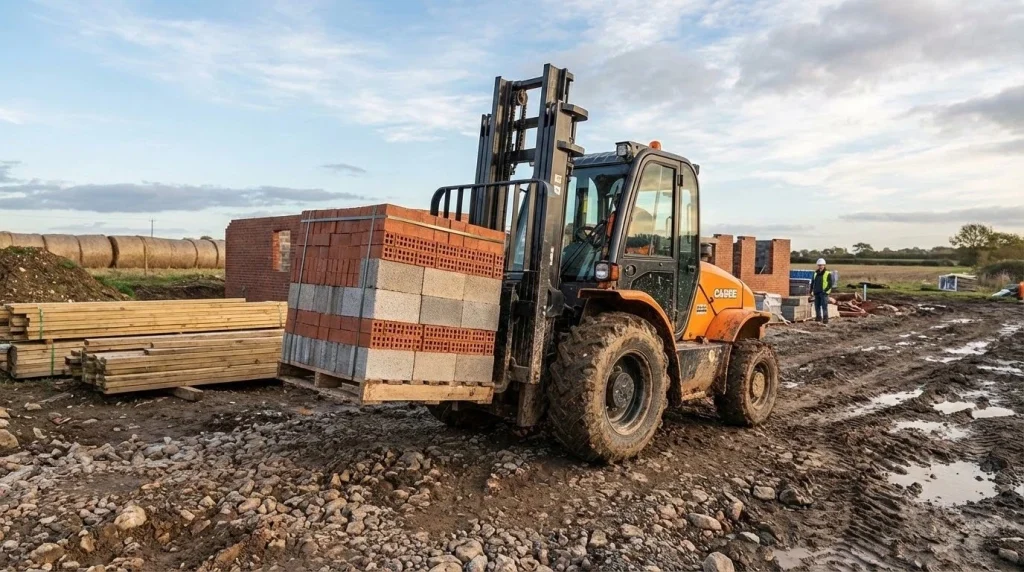
Rough terrain forklifts are widely used across various industries due to their versatility.
Construction Sites
On active construction sites, rough terrain forklifts transport building materials such as bricks, steel beams, timber, and bagged or palletised concrete across ground that is frequently uneven, freshly excavated, or not yet paved. Their ability to travel directly across this terrain, rather than requiring a cleared, levelled path, makes them considerably more practical than a standard forklift for the earliest phases of a construction project.
Agriculture
Agricultural operations rely on rough terrain forklifts to move heavy loads such as feed, baled hay, and equipment across fields, yards, and outdoor storage areas where the ground is rarely flat or paved. Their higher ground clearance and traction are particularly valuable during wet seasons, when softer ground would otherwise make material handling with standard equipment impractical or unsafe.
Mining and Industrial Sites
Mining and heavy industrial sites use rough terrain forklifts to transport materials, equipment, and supplies across terrain that is often unpaved, sloped, or subject to ongoing earthworks. The combination of load capacity and off-road capability makes them well suited to the kind of demanding, constantly changing ground conditions typical of an active mine site or industrial yard.
Outdoor Warehousing
Outdoor storage yards handling bulky or heavy inventory, timber yards and steel stockholders among them, frequently have surfaces that are gravel, compacted earth, or otherwise unpaved, conditions where a rough terrain forklift can operate reliably day to day without the surface preparation a standard forklift would require.
Their ability to handle rough conditions makes them indispensable in many outdoor operations.
Also read : Classes of Forklifts and Their Uses in Material Handling
Advantages of Using a Rough Terrain Forklift
Using a rough terrain forklift offers several benefits:
- Improved Mobility
Improved mobility across uneven, sloped, or unpaved surfaces means a rough terrain forklift can access areas of a site that would simply stop a standard forklift, removing the need to manually relay materials between a paved area and the actual point of use.
- Increased Productivity
Because the machine can travel directly across rough ground rather than requiring a prepared path, tasks that would otherwise involve multiple handling steps, or manual transport over short but difficult distances, can be completed in a single pass, meaningfully reducing the time spent moving materials around an active site.
- Enhanced Safety
The wider wheelbase, reinforced frame, and load-sensing systems fitted to most rough terrain models reduce the risk of tipping when operating on slopes or uneven ground, a risk that is considerably higher for a standard forklift attempting the same terrain.
- Versatility
A single rough terrain forklift can typically serve construction, agricultural, and industrial applications interchangeably, making it a practical investment for businesses whose work spans more than one type of outdoor site.
For businesses handling heavy materials outdoors, these advantages make rough terrain forklifts a valuable investment.
Rough Terrain Forklift vs Standard Forklift
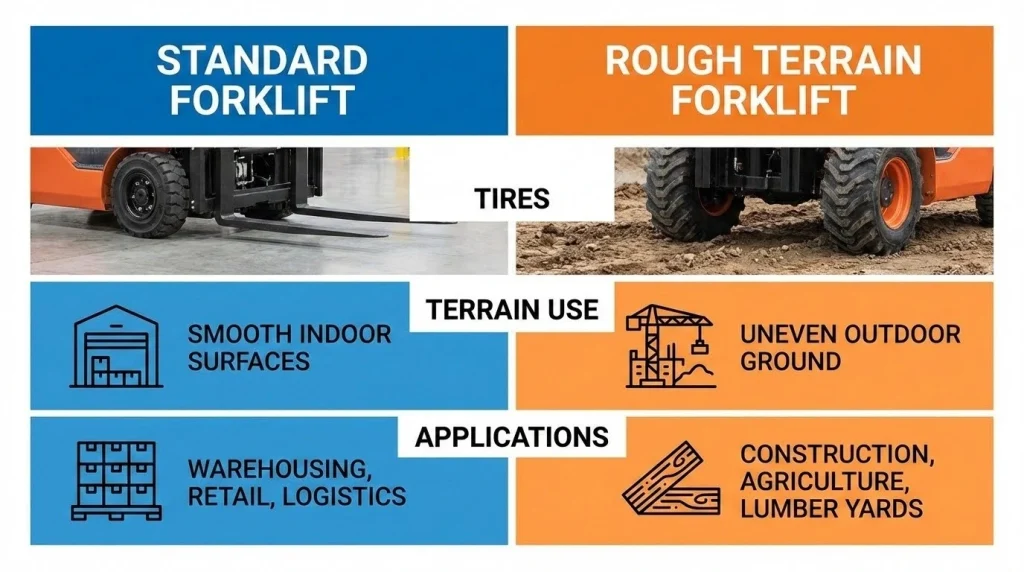
Understanding the difference between a rough terrain forklift and a standard forklift helps businesses choose the right equipment.
- Terrain Capability
Rough terrain forklifts are purpose-built for uneven, unpaved, or sloped ground, while standard forklifts are designed around the smooth, level, indoor surfaces typical of a warehouse floor. Attempting to use a standard forklift on the terrain a rough terrain model handles routinely significantly increases the risk of the machine becoming stuck or unstable.
- Tire Design
Rough terrain forklifts use large, deep-tread pneumatic tyres that absorb impact and grip loose or uneven surfaces, whereas standard forklifts typically use solid or cushion tyres optimised for smooth floors, offering minimal traction benefit but a tighter turning radius suited to confined warehouse aisles.
- Application
Rough terrain forklifts are the practical choice for outdoor construction, agricultural, and industrial applications, while standard forklifts remain better suited to indoor warehouse and distribution centre work where floors are level and aisle space is limited.
To further compare equipment options, you can read reach truck and forklift differences and how to choose the right equipment.
Safety Considerations When Using Rough Terrain Forklifts
Safety is critical when operating heavy machinery in challenging environments.
Key safety practices include:
- Conducting regular inspections, checking tyres, hydraulics, and structural components before every shift to catch developing faults before they cause a failure in the field
- Ensuring proper operator training specific to rough terrain models, since judging slope stability and load behaviour on uneven ground differs meaningfully from standard forklift operation
- Avoiding overloading, since exceeding rated capacity has a greater destabilising effect on sloped or uneven ground than it would on a flat warehouse floor
- Operating on the most stable ground available for a given task, and assessing slope and surface conditions before positioning the machine rather than after a load is already raised
Understanding forklift safety practices for preventing accidents in industrial operations can help reduce risks and improve workplace safety.
Following recognized standards such as Singapore’s Workplace Safety and Health guidelines for lifting equipment also ensures compliance and safe operations.
Maintenance Tips for Rough Terrain Forklifts
Proper maintenance is essential to ensure reliability and longevity.
Maintenance tasks include:
- Checking tyre condition for cuts, uneven wear, or embedded debris, since tyre damage affects both traction and stability more significantly on rough ground than on a smooth warehouse floor
- Inspecting hydraulic systems for leaks, worn hoses, or slow lift response, faults that tend to develop gradually and are easy to miss without a consistent inspection routine
- Monitoring engine performance, including unusual noise, excessive smoke, or reduced power, which often signal a developing issue well before a complete failure occurs
- Replacing worn components such as filters, belts, and seals on schedule rather than waiting for a visible failure, since rough terrain operation accelerates wear on these parts compared to indoor use
Regular servicing helps prevent breakdowns and ensures consistent performance in demanding conditions.
Also read : Forklift Maintenance Tips for Safe and Efficient Operation
How to Choose the Right Rough Terrain Forklift
Choosing the right forklift depends on several factors:
- Load capacity requirements, sized against the heaviest and largest material the machine will realistically need to handle, not just the average load, since capacity decreases as reach increases
- Terrain conditions specific to the site, including slope, surface material, and how conditions change with weather, since a machine suited to dry ground may struggle once the same site turns muddy
- Frequency of use, which affects whether purchasing outright or renting makes more financial sense for a given project or ongoing operation
- The broader operational environment, including whether the machine needs to work alongside other equipment, in confined yard space, or across multiple different sites over its working life
Businesses should evaluate these factors carefully to ensure they select equipment that meets their needs.
Also read : How to Choose a Forklift: A Complete Buyer’s Guide
Operator Training and Certification Requirements
Operating a rough terrain forklift safely requires certification specific to this class of equipment, since the skills involved, judging ground stability, managing a load on a slope, and operating four-wheel drive controls, differ meaningfully from standard forklift operation. Certification should not be treated as interchangeable with a standard forklift licence, even for experienced operators, given how differently the two machines behave once they leave a flat, paved surface.
Refresher training is particularly valuable for operators who use a rough terrain forklift only occasionally, since infrequent exposure to the machine’s specific handling characteristics on slopes and uneven ground makes it easier for bad habits or gaps in judgement to go unnoticed until they cause an incident.
Reliable Equipment Solutions for Your Operations
Understanding the capabilities of a rough terrain forklift helps businesses choose the right equipment for demanding outdoor operations. By selecting suitable machinery, following safety practices, and maintaining equipment properly, companies can improve productivity while minimizing risks.
If you are looking for reliable forklift solutions and professional equipment services, explore our available services to find the right solution for your operational needs. Contact us to assist you in maintaining safe, efficient, and high-performing equipment for your projects.