Steel holds up buildings, reinforces concrete, carries the weight of bridges, and forms the booms, buckets, and frames of the machines that build them. Yet “steel” is not one material. Small changes in what goes into it, and how it is processed, produce materials as different as a soft, easily welded beam and a tool hard enough to cut other metals.
This guide explains what steel is, the four main types and how they differ, the other ways steel is classified, and which types matter most on construction sites and in heavy machinery, along with the practical points to consider when choosing and handling steel on a project.
What Makes Steel Different From Iron
Steel is an alloy of iron and a small amount of carbon, usually well under two percent by weight. That small addition makes an enormous difference. Pure iron is relatively soft, while carbon locks the iron’s structure in a way that makes it stronger and harder, and the exact amount of carbon, together with other added elements and the way the steel is heated and cooled, decides how it behaves.
This is why steel can be tailored so precisely. Raising the carbon content makes steel harder but less ductile and more difficult to weld. Adding chromium makes it resist corrosion. Adding elements such as manganese, nickel, or molybdenum can improve strength and toughness. Further general background on the material, its history, and how it is made is available through Wikipedia’s overview of steel.
The Four Main Types of Steel
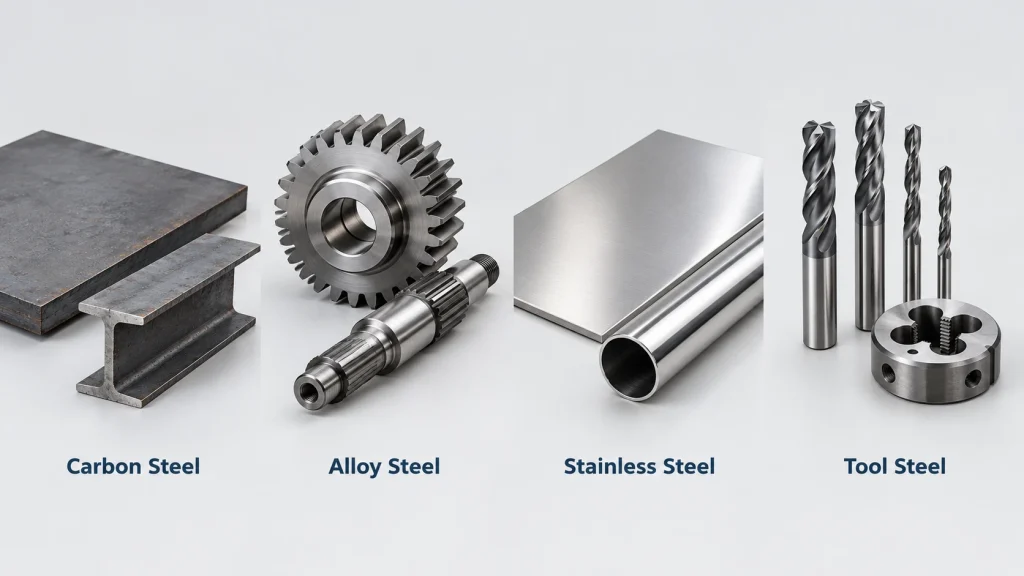
Most steel falls into one of four broad groups, based mainly on its composition. Each group contains many grades, but knowing the four families explains most of the differences that matter in practice.
Carbon Steel
Carbon steel is the most widely produced type of steel, and its properties depend mainly on how much carbon it contains. It is commonly divided into three bands. Low carbon steel, often called mild steel, contains the least carbon and is soft, ductile, and easy to weld and form, which makes it the backbone of structural sections, plates, and general fabrication. Medium carbon steel is stronger and harder, suiting parts such as shafts, axles, and gears. High carbon steel is harder still and holds an edge well, so it is used for springs, wires, and cutting tools.
Carbon steel’s weakness is corrosion. Without protection, it rusts readily, especially in humid or coastal conditions, so it is usually painted, coated, or galvanised when exposed to the weather. Its strength, low cost, and ease of fabrication still make it the default choice for most construction steelwork.
Alloy Steel
Alloy steel contains deliberate additions of elements beyond carbon, such as manganese, chromium, nickel, molybdenum, or vanadium, to improve specific properties. Depending on the mix, alloy steels can be stronger, tougher, more resistant to wear, or better able to keep their strength at high temperatures than plain carbon steel.
A widely used group is high strength low alloy steel, which achieves greater strength with only small alloy additions. Because it can carry the same load with less material, it is common in structural applications, vehicle frames, and the booms and chassis of heavy machinery, where saving weight matters.
Stainless Steel
Stainless steel contains a significant amount of chromium, commonly at least around 10.5 percent, which forms a thin, invisible layer on the surface that protects the steel from rust and repairs itself if scratched. This makes stainless steel the natural choice where appearance, hygiene, or corrosion resistance matter.
There are several families of stainless steel. Austenitic grades, such as the widely used 304 and 316, are non magnetic, easy to form, and highly corrosion resistant, with 316 containing molybdenum for better resistance to salt and chlorides. Ferritic and martensitic grades are magnetic and used where cost or hardness matters more, while duplex grades combine high strength with strong corrosion resistance for demanding environments.
Tool Steel
Tool steel is designed to be extremely hard, wear resistant, and able to keep its shape under heat and repeated impact. It usually contains higher levels of carbon along with elements such as tungsten, molybdenum, vanadium, or chromium, and is carefully heat treated to reach its working properties.
As the name suggests, tool steel is used to make cutting tools, drill bits, dies, moulds, and punches. It rarely appears in the structure of a building, but it is behind many of the tools and machine parts that shape and cut the steel that does.
Other Ways Steel Is Classified
Composition is only one way to describe steel. On a construction project, steel is just as often described by its form, its finish, or the way it was produced.
By form, steel arrives as structural sections such as beams, columns, and channels, as plates and sheets, as hollow sections and tubes, and as bars and wire. By finish, it may be supplied bare, painted, or galvanised with a coating of zinc that protects it from corrosion, while weathering steel is designed to form a stable layer of rust that protects the metal beneath it. By production method, hot rolled steel is shaped while hot and is typical of heavy structural sections, while cold formed steel is shaped at room temperature into lighter, more precise profiles used for purlins, framing, and decking.
These descriptions often matter more to a site team than the chemistry, since they determine how the steel is delivered, lifted, connected, and protected once it is installed.
Which Types of Steel Are Used in Construction?
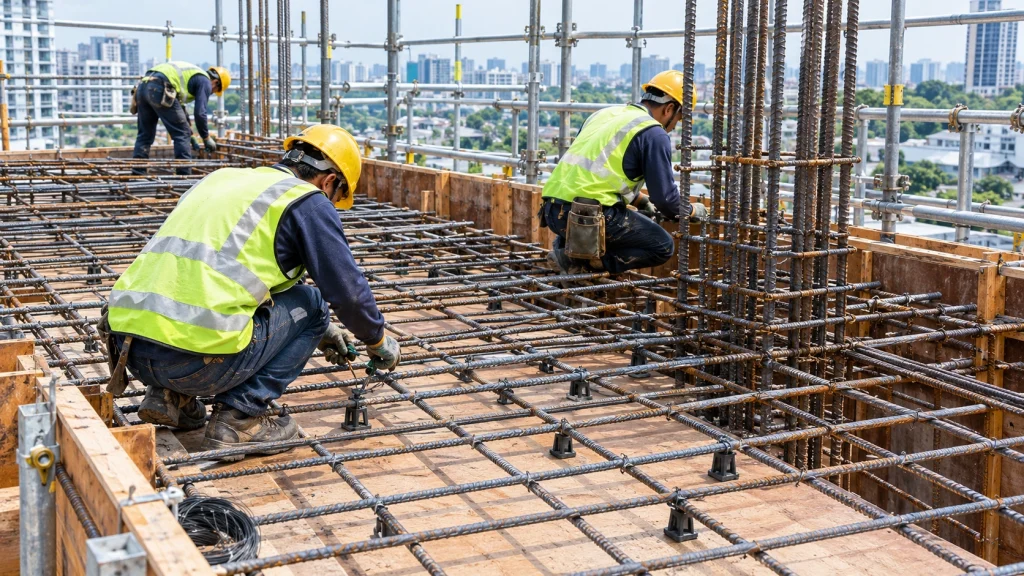
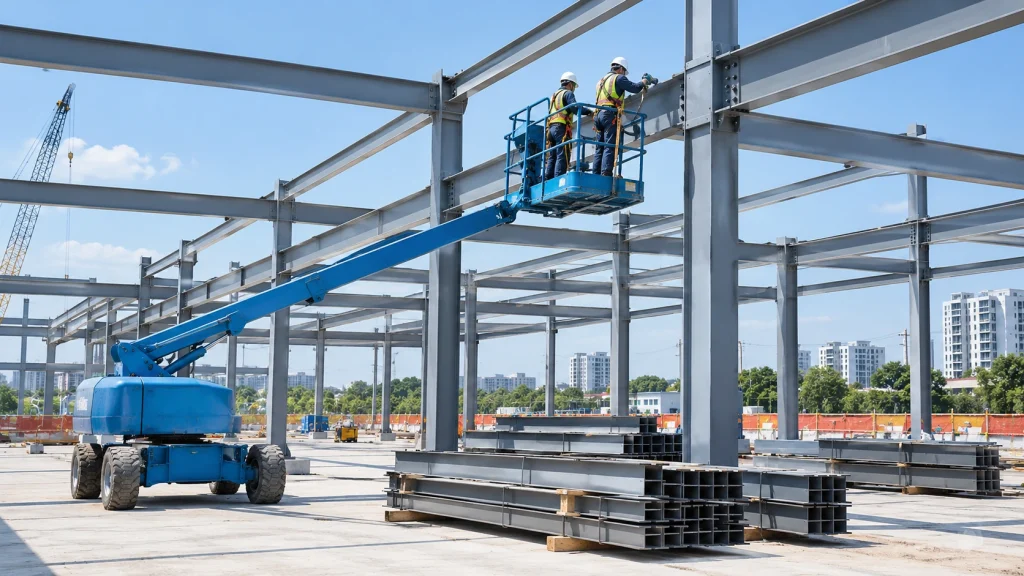
Construction relies on a small number of steel types used in very large quantities. Structural steel, mostly low carbon and high strength low alloy grades, forms the beams, columns, and bracing of steel framed buildings, warehouses, and industrial structures, and is valued for its strength, ductility, and ease of welding and bolting.
Reinforcing bar, or rebar, is carbon steel rolled with surface ribs that grip the surrounding concrete, giving reinforced concrete the tensile strength that concrete alone lacks. It runs through slabs, walls, columns, and the foundations described in Types of Foundations Used in Construction Projects, and its placement inside the formwork is a key part of concrete work, as covered in Types of Concrete Formwork: A Complete Guide.
Galvanised steel is common wherever steel is exposed to the weather, including roofing, cladding supports, handrails, and the tubes and fittings of scaffolding, explained in What Is Scaffolding in Construction? A Complete Guide. Stainless steel appears in facades, balustrades, fixings, and anywhere corrosion resistance and appearance matter, while weathering steel is used in some bridges and architectural features where a natural rust finish is acceptable.
How steel compares with aluminium and timber as a scaffolding material, including weight, strength, and durability, is covered below.
Also read: Types of Scaffolding Materials: A Practical Guide
Steel in Heavy Machinery
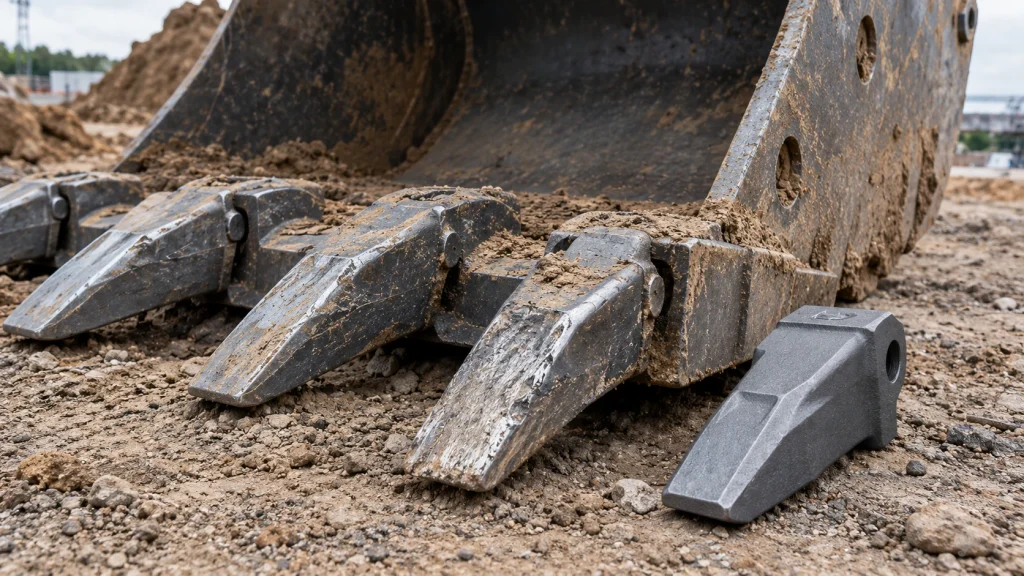
The machines on a construction site are themselves showcases of different steels. Booms, arms, and chassis are typically made from high strength steels that carry heavy loads while keeping the machine’s weight down. Excavator buckets, cutting edges, and teeth use abrasion resistant steel that stands up to constant scraping against soil, rock, and rubble, and is often replaceable as it wears.
Pins, bushings, and other moving joints use hardened alloy steels to resist wear, while hydraulic cylinder rods are often chrome plated to resist corrosion and protect their seals. Understanding these materials helps explain why inspecting wear parts matters, and why a worn cutting edge or tooth is replaced long before the bucket itself. The range of buckets and the jobs each one is built for is explained below.
Also read: Types of Excavator Buckets and Their Uses Explained
How to Choose the Right Steel for a Job
For structural work, the choice of steel is made by the design engineer, who specifies grades to meet the loads, the design codes, and the conditions on site. In Singapore, structural design and the materials used must meet the requirements set by the Building and Construction Authority, and steel delivered to site should come with documentation showing it meets the specified grade.
For other uses, a few practical questions help narrow the choice. How much strength does the part need, and will it be welded? Will it be exposed to rain, humidity, or salt air, which is common in Singapore’s tropical and coastal environment? Does appearance matter? How much can the project spend, given that stainless and alloy steels cost more than carbon steel? Answering these questions usually points clearly to carbon steel with a protective coating, a galvanised finish, stainless steel, or a specialised alloy.
Handling and Working Safely With Steel on Site
Steel is heavy, often long, and frequently has sharp edges, so moving it safely needs planning. Sections and bundles of rebar should be lifted with suitable equipment and rigging, stacked on level ground with spacers, and kept away from walkways. The principles of safe lifting are covered in Lifting Equipment Safety Tips for Safer Worksites.
Cutting, grinding, and welding steel bring their own hazards, including sparks, fumes, noise, and burns, so hot work should be controlled and the right protective equipment used. Singapore’s Ministry of Manpower publishes detailed Workplace Safety and Health guidance covering hot work and safe practices on local worksites, and the wider principles for working around machinery are covered below.
Equipment Support for Moving and Installing Steel
Moving, lifting, and installing steel safely depends on having the right machines on site. When you contact the team, it helps to describe the size and weight of the steel being handled, how high it needs to be lifted or installed, the ground and access conditions, and how long the work is expected to take. With these details, the right equipment can be recommended from the start rather than adjusted after delivery.
RR Machinery Pte Ltd supports Singapore’s construction and industrial sectors with reliable heavy machinery solutions tailored to your specific site conditions. Browse our complete heavy machinery services or contact our team today for practical advice on the right equipment for your project.