An aerial work platform puts people and tools in the air on a machine that can tip, drift into overhead hazards, or trap someone against a structure, and most serious incidents involving these machines come from a short list of causes that are well understood and largely preventable. Safety on an aerial work platform is therefore less about a single rule and more about a set of controls that work together, from planning the job to being ready if something goes wrong.
This guide covers the main hazards across the common types of aerial work platform, how the risks differ between boom lifts and scissor lifts, and the controls that matter most, including planning, inspection, fall protection, weather limits, rescue arrangements, and training.
Why Aerial Work Platform Safety Needs Its Own Approach
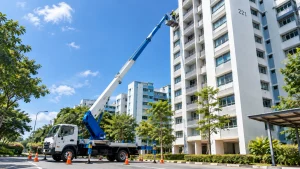
The term aerial work platform covers a family of machines, including scissor lifts, boom lifts, and vehicle mounted lifts, that all raise a person to a working position but do so in different ways. A broader introduction to the category and how its members differ is available in What Is an Aerial Lift? Types, Uses and Safety.
General rules for working above ground still apply, but these machines add their own hazards, such as a moving boom, a platform that can shift under load, and controls that put the operator in the path of nearby structures. Treating an aerial work platform as just another way of working at height misses these machine specific risks, and that gap is where many incidents begin.
The Main Hazards on an Aerial Work Platform
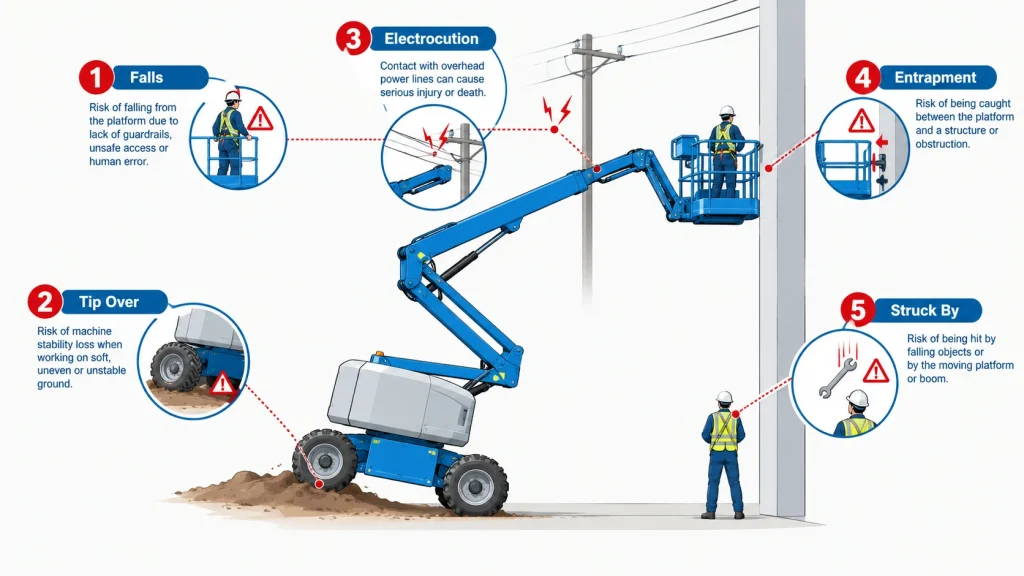
Most incidents trace back to one of five hazard types. Understanding each one makes it easier to see why the controls later in this guide matter, and which of them apply to the machine on your site.
The hazards often combine. A gust of wind on a platform that is already close to its capacity limit, working on slightly soft ground, can turn three manageable risks into one serious event, which is why planning looks at conditions together rather than one at a time.
Falls from the Platform
Falls are the most visible risk, and they happen when workers climb on the guardrails, lean over the edge, step from the platform onto a structure, or are thrown out by a sudden movement or impact. Guardrails, gates, and toe boards are the first line of defence, and they must be intact, correctly fitted, and closed whenever the platform is occupied.
Workers should stay within the platform at all times and never use planks, ladders, or boxes to gain extra height. A harness connected to the designated anchor point adds a second layer of protection, particularly on boom lifts where the platform can move suddenly, and the type of harness and lanyard needed depends on the machine and local requirements.
Tip Over and Loss of Stability
A tip over is among the most dangerous events because it carries the whole platform and everyone on it to the ground. The usual causes are soft or sloping ground, driving or travelling with the platform raised when this is not permitted, overloading the platform, and extending the boom beyond its rated envelope, often in combination with wind.
Every machine has a rated capacity and a safe working envelope, and both must be respected. Capacity includes the weight of people, tools, and materials together, and loads placed on the platform should be spread sensibly and kept within the manufacturer’s limits.
Electrocution and Overhead Hazards
Overhead power lines are a particular danger because the boom can reach them faster than an operator expects, and contact can be fatal even without a direct touch if the machine comes close enough for current to arc. All lines should be treated as live, and the full range of the boom’s movement must be checked, not just its final position.
Other overhead hazards include beams, pipework, roof edges, and cranes working nearby. Surveying the work area from above before the platform is raised, and keeping a clear safe distance from every overhead obstruction, is far easier than avoiding them in a moving boom.
Crushing and Entrapment
Entrapment happens when the platform moves toward a fixed structure and an operator is trapped between the platform and the object. It is a real risk on boom lifts in congested areas, because the operator stands at the end of an arm whose movement is controlled from the platform itself.
Safe practice means keeping a clear view of the space around the platform, moving slowly near structures, and keeping the controls protected from accidental activation. A second person on the ground who can see clearances and can operate the ground controls in an emergency is a sensible precaution for any complex movement.
Struck By and Collision Risks
People and vehicles below the platform are at risk from falling tools and materials, from the machine itself, and from the swing of the boom. Tools should be secured, material kept off the platform edge, and an exclusion zone established below the work area so that no one is working directly underneath.
Machines also collide with site vehicles, forklifts, and other plant, and a platform in motion can be hard for other drivers to see. Traffic management around the work area matters as much as the controls on the machine itself.
How Hazards Differ Between Boom Lifts and Scissor Lifts
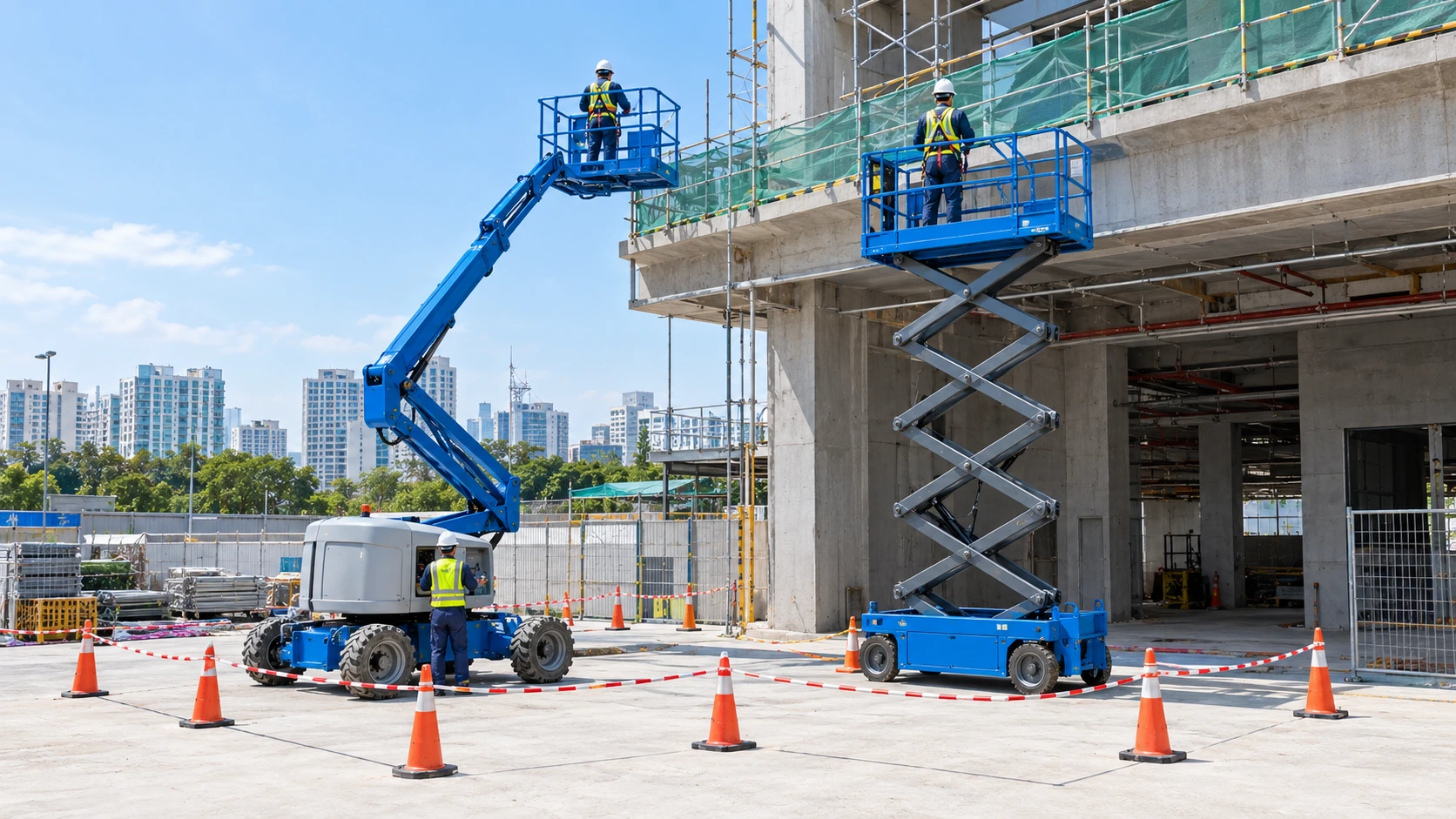
The two most common types of aerial work platform share many hazards but weigh them differently. A scissor lift raises its platform straight up, which keeps its footprint predictable but leaves it exposed to tip over risks when driven on slopes or uneven floors, and its large platform can tempt workers to overload it or to extend the work area with improvised supports.
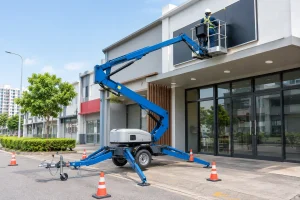
A boom lift can reach out and over, which brings overhead and entrapment hazards much more into play. Its movement is more complex, its platform can shift quickly, and fall protection is generally emphasised more strongly because of the forces generated if the boom moves suddenly. A direct comparison of the two, including where each one suits a task best, is covered in Boom Lift vs Scissor Lift: Which One Should You Choose?, and the wider range of platform designs is described in Types of Aerial Work Platform and Their Common Uses.
For safe operating technique specific to scissor lifts, including positioning, travel, and platform use, the dedicated guide below goes through the practical steps.
Also read: How to Operate a Scissor Lift Safely and Correctly
Planning the Work Before the Machine Arrives
Good outcomes start before the machine is on site. A short risk assessment for each job looks at what the task involves, where the platform needs to go, and what could go wrong on the way there, and it should produce a clear plan rather than a form that is filed and forgotten.
Points worth covering in that plan include:
- The height and outreach needed, and whether the chosen machine covers them with a sensible margin
- Ground conditions, slopes, drains, voids, and underground services beneath the route and the working position
- Overhead hazards, including power lines, and the clearances that must be kept
- Expected wind and weather during the task, and the limit at which work will stop
- Other people, vehicles, and activities in the area, and how they will be kept clear
- Who will operate the machine, who will watch from the ground, and how a rescue would be carried out
A practical set of site level checks that fit alongside this planning is covered in Construction Site Safety Checklist: A Complete Guide. Choosing a machine that genuinely suits the task, rather than the one closest to hand, removes many hazards before they arise.
What Should Be Checked Before Every Use?
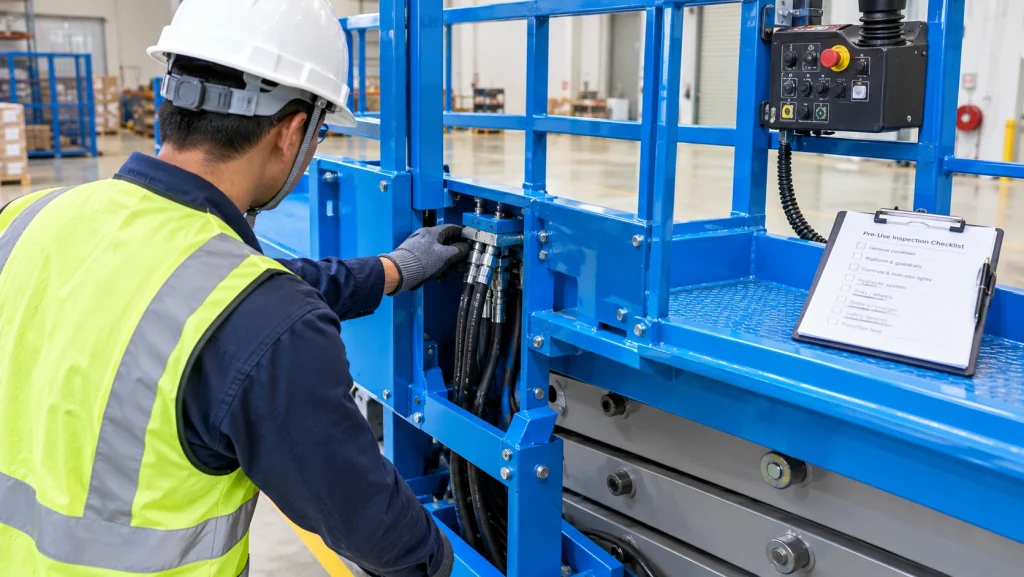
A short inspection before each use catches most faults that would otherwise surface at height. It should be carried out by the operator or another competent person, and any fault should take the machine out of service until it is fixed. The main areas to cover are:
- Guardrails, gates, toe boards, and the harness anchor point, all intact and secure
- Tyres, wheels, and, where fitted, stabilisers or outriggers, in good condition
- Hydraulic hoses, cylinders, and fittings, with no leaks or damage
- Platform and ground controls, tested from both positions, including the emergency stop and emergency lowering system
- Warning devices, such as alarms and lights, and any tilt or overload sensors
- Decals, capacity plates, and the operator’s manual, present and legible
Battery powered machines add a few checks of their own, including the condition of the battery, cables, and charger, and safe charging practice is covered in How to Charge a Scissor Lift Safely. A function test of all movements at low height before anyone climbs in, in a clear area, is a simple way to confirm everything responds as it should.
For a step by step walkthrough of safe boom lift operation, from the checks above through to shutdown, the dedicated guide below covers each stage in turn.
Also read: How to Operate a Boom Lift Safely: A Step-by-Step Guide
Fall Protection and Personal Equipment
Fall protection on an aerial work platform works in layers. Guardrails keep workers inside the platform in normal use, and a harness connected to the designated anchor point provides a back up if something goes wrong. The harness should be properly fitted, inspected, and connected before the platform leaves the ground, not afterwards.
The right type of harness and lanyard depends on the machine and local rules, so the manufacturer’s instructions and the applicable requirements should be followed rather than assumed. Other personal equipment, including a hard hat, safety footwear, and gloves where appropriate, should suit the task and the environment.
Workers should never attach themselves to a structure outside the machine, because if the platform moves away it can pull a worker out. The wider principles that govern fall protection and any task above ground are explained below.
Ground Conditions, Wind, and Weather
Stability starts with the ground. The surface under the machine must be firm and able to carry its weight, and a machine should never be driven or positioned on a slope beyond what the manufacturer allows. Soft ground, recent excavations, drain covers, and basement roofs can all fail under a concentrated load, so surveying the route and working position beforehand matters.
Every machine also has a rated maximum wind speed, and conditions at the platform are stronger than at ground level, so a day that feels calm below can be outside limits aloft. Wind speed should be checked before work begins and monitored throughout, and large flat items on the platform, such as boards or banners, should be avoided because they increase the wind load. Rain, poor visibility, and lightning are further reasons to stop work and lower the platform.
Rescue Plans and Emergency Lowering
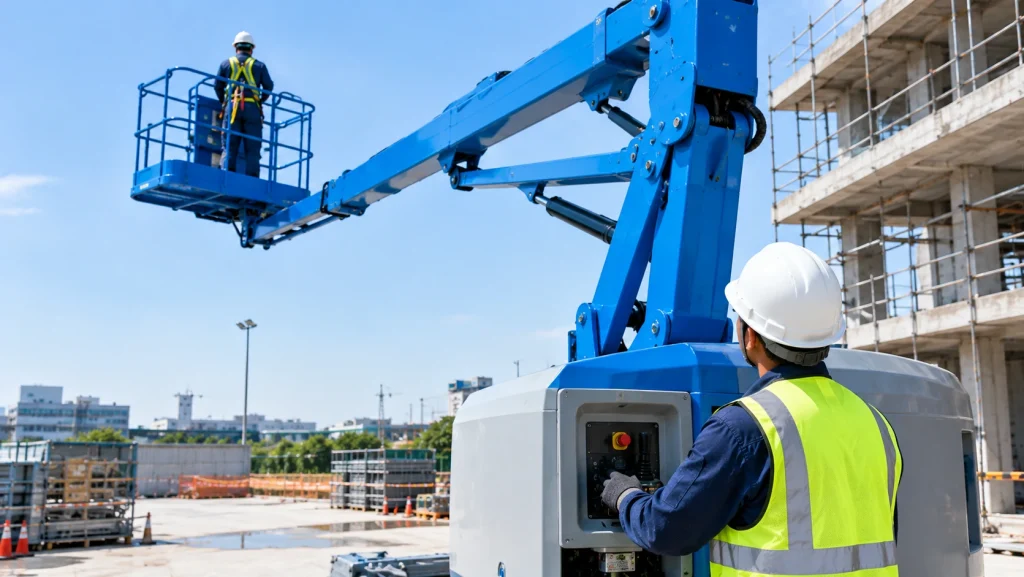
Everyone working on an aerial work platform should know what happens if the operator cannot bring the platform down. Emergency lowering controls at the base of the machine let a trained person on the ground lower the platform, and a rescue plan should be agreed before work starts so there is no delay or improvisation if something goes wrong.
The ground person needs to know where the controls are and how to use them, and should never leave the machine unattended while the platform is occupied. A person left suspended in a harness can come to serious harm in a short time, so rescue arrangements are not an optional extra, and they should be tested rather than assumed to work.
Who Should Be Allowed to Operate One?
Only trained and authorised people should operate an aerial work platform, and training should cover the specific type of machine in use, not just the category. Familiarisation with the controls, the safe working envelope, and the emergency systems should happen before any work at height, and supervisors should confirm that operators are competent for the job in front of them.
The International Powered Access Federation promotes safe use of powered access equipment and publishes training and guidance relevant to operators and supervisors. Singapore’s Ministry of Manpower also publishes detailed Workplace Safety and Health guidance covering work at height and the safe use of aerial work platforms on local worksites, which should be read alongside the manufacturer’s instructions and the requirements of the project.
Working Safely Around Other People and Equipment
An aerial work platform rarely works alone, and many incidents involve other people or plant on the same site. Exclusion zones below and around the platform keep people out of the danger area, and barriers or signage help others see where the machine is working.
Vehicles and other plant moving near the platform need clear traffic routes, and the broader principles for managing machinery on a worksite are covered in Heavy Equipment Safety: A Complete Site Guide. When tools or materials are hoisted onto the platform, the practices in Lifting Equipment Safety Tips for Safer Worksites apply as well, and everything added to the platform counts against its rated capacity.
Safe Access Equipment From RR Machinery
Choosing the right machine for a job is itself a safety decision. When you contact the team, it helps to share the height and outreach needed, the ground and access conditions, whether the work is indoors or outdoors, the number of people and the loads involved, and how long you expect to need the equipment. With these details, the right machine and configuration can be recommended from the start rather than adjusted after delivery.
RR Machinery Pte Ltd offers an extensive range of boom lifts and scissor lifts, backed by factory certified technicians and full servicing support. Contact us today for expert advice on the right equipment and a quote tailored to your project.