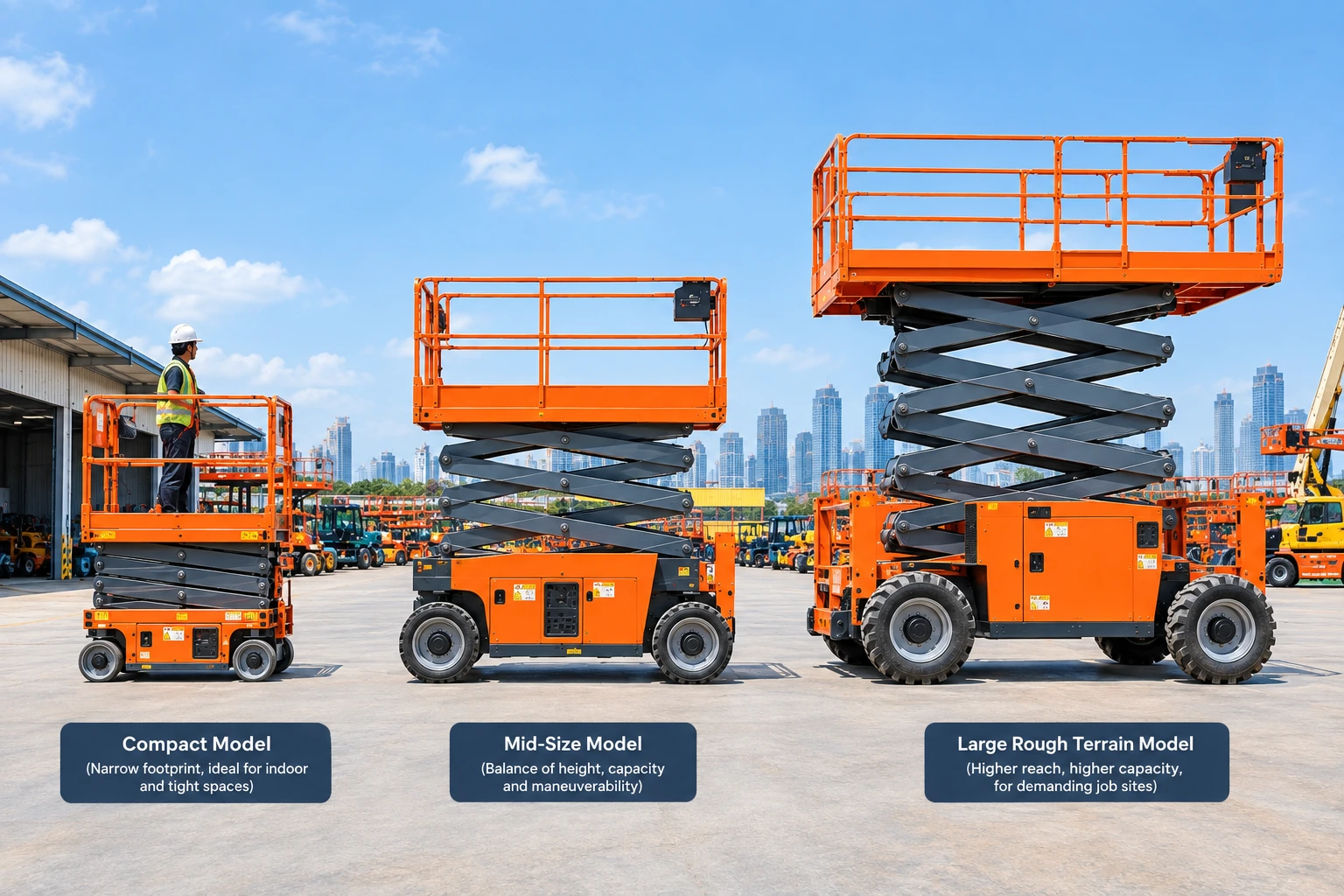
A scissor lift’s size is defined less by the machine’s overall bulk and more by three practical figures, platform height, platform capacity, and stowed width, since these are what actually determine whether a specific machine can complete a specific task. A compact indoor model built to fit through a standard doorway and a large rough terrain unit built for outdoor construction work share the same basic crisscrossing lift mechanism, but they serve genuinely different purposes shaped almost entirely by size, making sizing arguably the single most consequential decision in specifying the right machine.
This guide breaks scissor lift sizing down into three practical classes, compact, mid-size, and large, covering typical platform height, capacity, and footprint in each category, along with the tasks each size class is actually built for.
What Determines Scissor Lift Size?
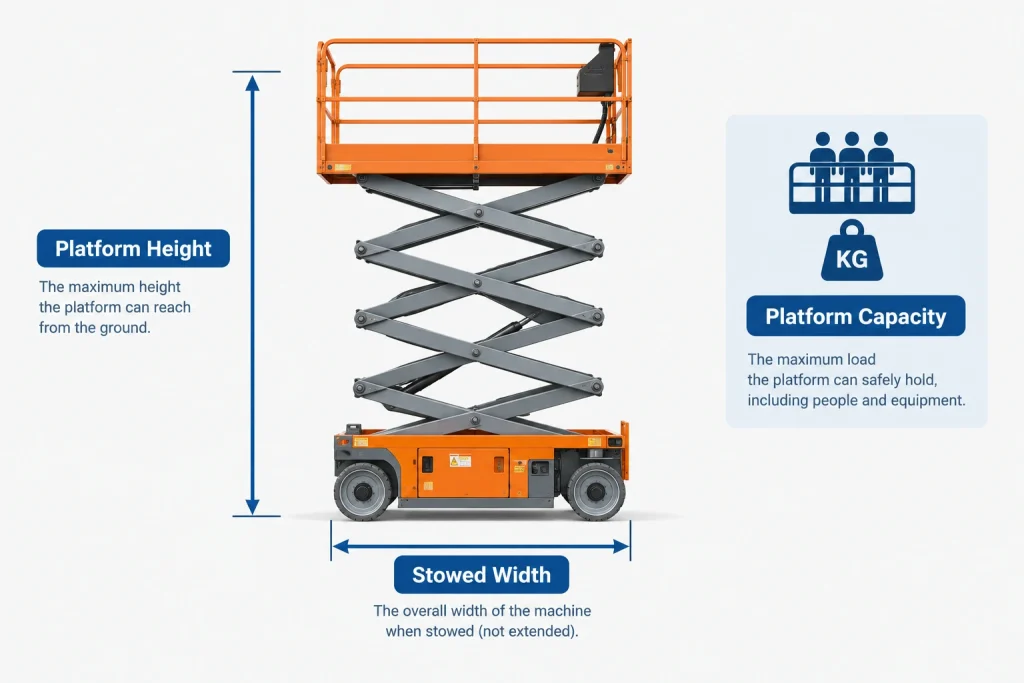
Platform height, the maximum vertical reach of the working platform above ground level, is the headline figure most people focus on first, but platform capacity, how much combined weight of workers, tools, and materials the platform can safely carry, and stowed width, how narrow the machine is when fully lowered, matter just as much for determining whether a specific machine actually fits a task. A tall machine with a wide stowed footprint may be unable to access a confined indoor space at all, regardless of how much platform height it offers once positioned.
These figures do not scale together in a fixed pattern either, some compact models offer surprisingly generous platform height relative to their footprint, while some larger machines prioritise capacity and outdoor stability over maximum height. Reviewing all three figures together, rather than height alone, is what actually determines task suitability. Manufacturers publish these figures together on a machine’s specification sheet and data plate, and comparing models purely on advertised maximum height without checking capacity and stowed width against the actual site is one of the more common ways a poorly matched machine ends up on a job. Confirming all three figures against the site’s actual access points, floor loading, and task requirements before a rental booking is made remains the most reliable way to avoid this mismatch entirely.
Compact Scissor Lifts
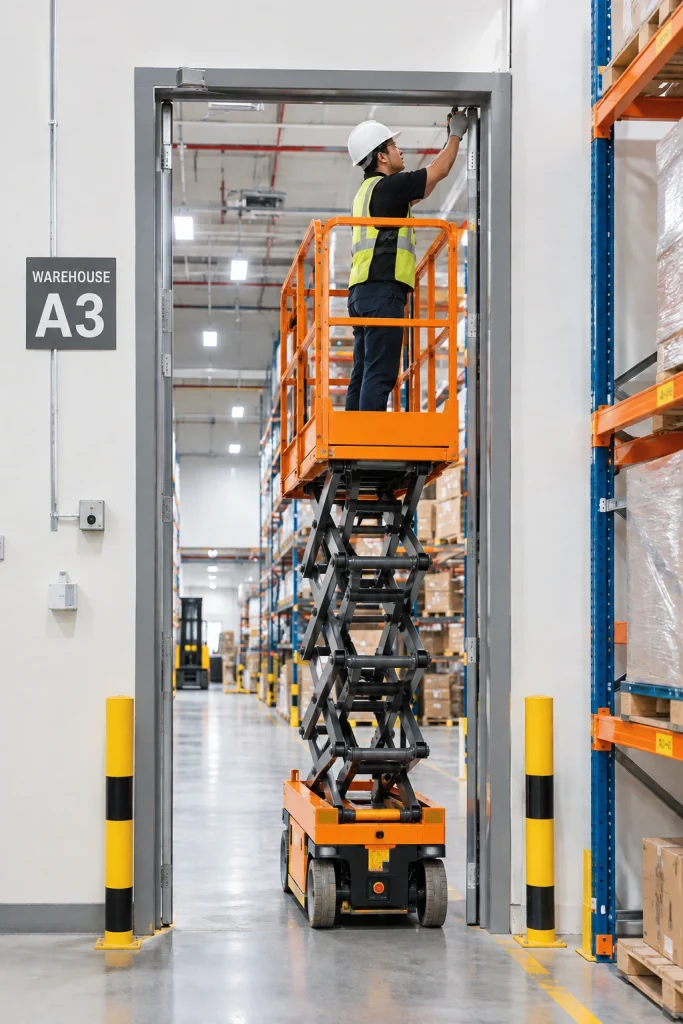
Compact scissor lifts sit at the smaller end of the size range, built specifically to access confined indoor spaces a larger machine could never fit through.
Typical Specifications
Compact scissor lifts typically offer platform heights from around 6 to 10 metres, with a stowed width narrow enough to pass through a standard doorway, often under a metre wide. Platform capacity on compact models generally supports one or two workers with hand tools rather than heavy materials, reflecting the trade-off between a narrow footprint and overall load capacity.
Best Applications
Compact scissor lifts suit indoor maintenance, retail fit-outs, warehouse racking work, and any task where doorway access and manoeuvrability in tight aisles matter more than maximum reach. Their electric power source, standard on nearly all compact models, also makes them well suited to enclosed indoor environments where diesel exhaust would be impractical, a distinction covered in more detail below.
Also read: 6 Types of Scissor Lifts for Construction and Industry
Mid-Size Scissor Lifts
Mid-size scissor lifts represent the most commonly specified category for general commercial and light industrial work, balancing genuine platform height against a footprint that remains practical for most active work environments. This range covers the majority of everyday commercial maintenance and warehouse tasks, making it the default starting point for many rental fleets before narrowing down to a more specific model.
Typical Specifications
Mid-size scissor lifts typically deliver platform heights from around 10 to 14 metres, with platform capacities generally supporting two to three workers along with a reasonable load of tools and materials. Stowed width at this size class is generally wider than compact models but still narrow enough to navigate standard commercial doorways and warehouse aisles in most cases.
Best Applications
Mid-size scissor lifts are the standard choice for commercial building maintenance, signage installation, warehouse operations, and general trade work at moderate height, where the combination of solid platform height and manageable footprint fits the widest range of everyday tasks. Understanding how a scissor lift’s crisscrossing mechanism actually raises the platform to these heights is covered below, useful background before specifying a machine for a task requiring precise platform positioning.
Also read: Scissor Lift Mechanism Explained Simply
Large Scissor Lifts
Large scissor lifts push platform height and capacity well beyond mid-size machines, typically built with a wider, more stable base and often rough terrain capability for outdoor use. This category represents a genuine step change in scale rather than simply a taller version of a mid-size unit, and specifying one brings additional site planning considerations that smaller classes rarely require.
Typical Specifications
Large scissor lifts commonly reach platform heights of 14 metres and beyond, with some specialised models exceeding 18 metres, paired with platform capacities that support larger crews and heavier materials than smaller classes can manage. Many large scissor lifts are also built as rough terrain models, with larger tyres, four-wheel drive, and greater ground clearance suited to outdoor and unpaved conditions rather than smooth indoor floors.
Best Applications
Large scissor lifts are specified for outdoor construction, warehouse racking installation at significant height, and industrial facility work where platform height and capacity genuinely exceed what a mid-size machine could handle. Their footprint and weight also mean considerably more careful attention to ground bearing capacity and site access compared to smaller, more manoeuvrable machines.
Scissor Lift Size vs Boom Lift Size
Sizing logic for a scissor lift differs meaningfully from how boom lifts are classified, and understanding this difference matters when a task could potentially be handled by either category of equipment.
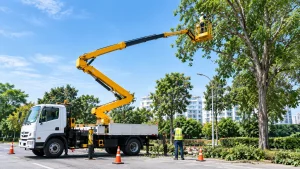
A scissor lift’s platform moves straight up and down, meaning its footprint at ground level closely reflects its platform position at height, whereas a boom lift’s jointed or telescoping arm allows the platform to reach outward well beyond the machine’s own footprint. This means scissor lift sizing focuses heavily on stowed width and vertical platform height, while boom lift sizing needs to account for horizontal outreach as a separate, equally important dimension. Tasks requiring straight-up access within a confined footprint generally favour a scissor lift, while tasks requiring reach over obstacles or out to the side of the machine’s base are better served by a boom lift regardless of how the two compare on size alone.
Matching Scissor Lift Size to the Task
Selecting the right size starts with confirming the actual platform height and capacity a task requires, along with the access constraints, doorway width, aisle clearance, and floor loading, that the site itself imposes on which machine can physically be positioned. Oversizing beyond what a task genuinely requires adds unnecessary footprint and cost without a corresponding productivity benefit, while undersizing risks a machine that simply cannot reach or carry what the task demands.
Load capacity deserves particular attention alongside height, since a machine positioned at its maximum platform height typically has a stricter capacity limit than its rated maximum, a relationship worth confirming against the specific model’s capacity chart rather than assuming the headline capacity figure applies at every height. Correct operating technique also matters as much as size selection itself, worth reviewing once the right size has been identified for a specific task. Further general technical background on aerial work platform classification is available through Wikipedia’s overview of aerial work platforms.
Finding the Right Fit for Your Project
Scissor lift size comes down to matching platform height, capacity, and footprint to the actual demands of a task, across compact, mid-size, and large categories that each suit a distinct range of applications. Getting this decision right from the outset avoids the cost of an oversized machine that cannot fit through a doorway or the productivity loss of one that simply cannot reach the work, a decision worth revisiting for each new project rather than defaulting permanently to whichever size happens to be most familiar.
RR Machinery Pte Ltd offers an extensive range of scissor lifts across every size class, backed by factory-certified technicians and full servicing support. Contact us today for expert advice on the right scissor lift size and configuration for your project.