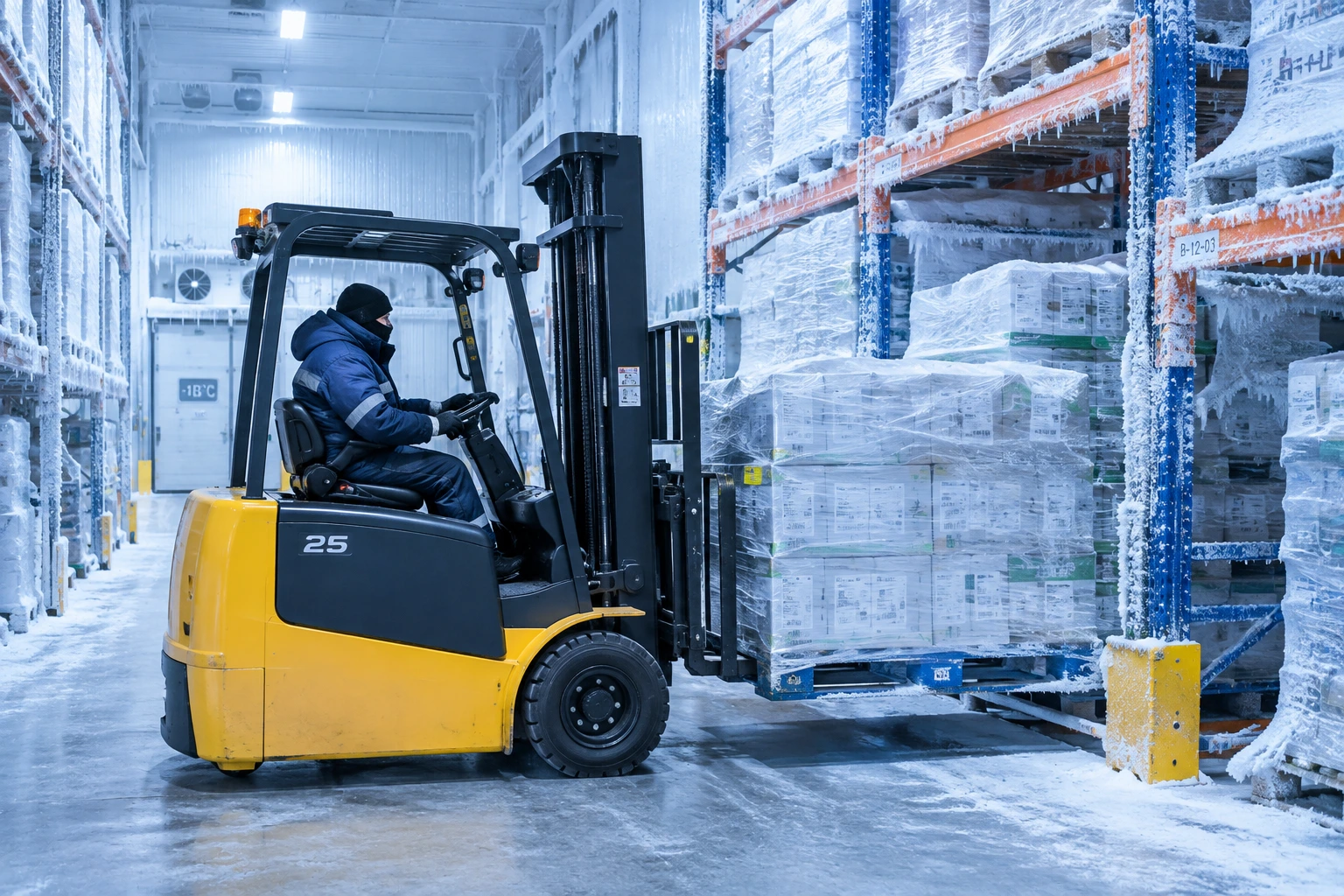
A forklift operating in a sub-zero cold storage facility faces a genuinely different set of conditions than the same machine running on a standard warehouse floor, condensation that turns to ice, visibility that fogs unpredictably, batteries and hydraulics that behave differently in sustained cold, and an operator working in personal protective equipment bulky enough to affect how controls are handled. None of the fundamentals of safe forklift operation change, but nearly every one of them needs to be applied with cold-specific awareness.
This guide focuses specifically on what makes cold storage forklift operation different from standard warehouse work, covering equipment selection, environmental hazards, and the operating adjustments that keep both the equipment and the operator working safely in sustained low-temperature conditions.
Why Cold Storage Forklift Operation Is Different
Cold storage facilities, typically maintained between deep-freeze temperatures well below zero and moderately chilled temperatures just above freezing, create physical conditions that a forklift and its operator do not encounter in a standard ambient warehouse. Extreme temperature differentials between the cold storage interior and the outside loading dock also mean forklifts frequently transition in and out of the cold zone repeatedly throughout a shift, introducing condensation and thermal stress that a machine operating entirely within one temperature zone would not experience.
Understanding these differences matters because many standard forklift safety practices remain necessary but insufficient on their own, cold storage introduces additional, specific hazards that require deliberate attention rather than being assumed to be covered by general warehouse safety practice alone.
Choosing the Right Forklift for Cold Storage
Not every forklift is well suited to sustained cold storage use, and selecting the right configuration from the outset avoids many of the operational problems that surface only after a machine has been in service in a freezer environment for some time.
Power Source Considerations
Electric forklifts are strongly preferred for cold storage work, since diesel and petrol engines produce exhaust emissions that become considerably more hazardous in an enclosed, poorly ventilated cold room than they would in an open or naturally ventilated warehouse space. The choice between battery chemistries also matters more in cold storage than in standard warehouse use, since battery performance and charging behaviour vary considerably by chemistry in sustained low temperatures, a distinction covered in detail below.
Also read: 3 Forklift Battery Types: Which Is Right for You?
Cold-Rated Equipment Features
Forklifts specified for regular cold storage use typically include cold-rated hydraulic fluid, since standard hydraulic fluid can thicken significantly in sustained sub-zero conditions, slowing lift and tilt response until the fluid warms sufficiently through use. Cold-rated seals, cab heating where an enclosed cab is used, and moisture-resistant electrical components all reduce the specific wear and failure modes that sustained cold exposure introduces compared to standard ambient-rated equipment.
Businesses running forklifts primarily in cold storage should confirm with their supplier that a specific unit is rated for sustained low-temperature operation, rather than assuming a standard model will perform equivalently simply because it functions adequately during occasional short exposure to cold conditions.
Common Hazards in Cold Storage Environments
Beyond equipment selection, several hazards specific to cold storage environments require deliberate attention that general warehouse safety practice does not fully address.
Ice and Condensation on Floors
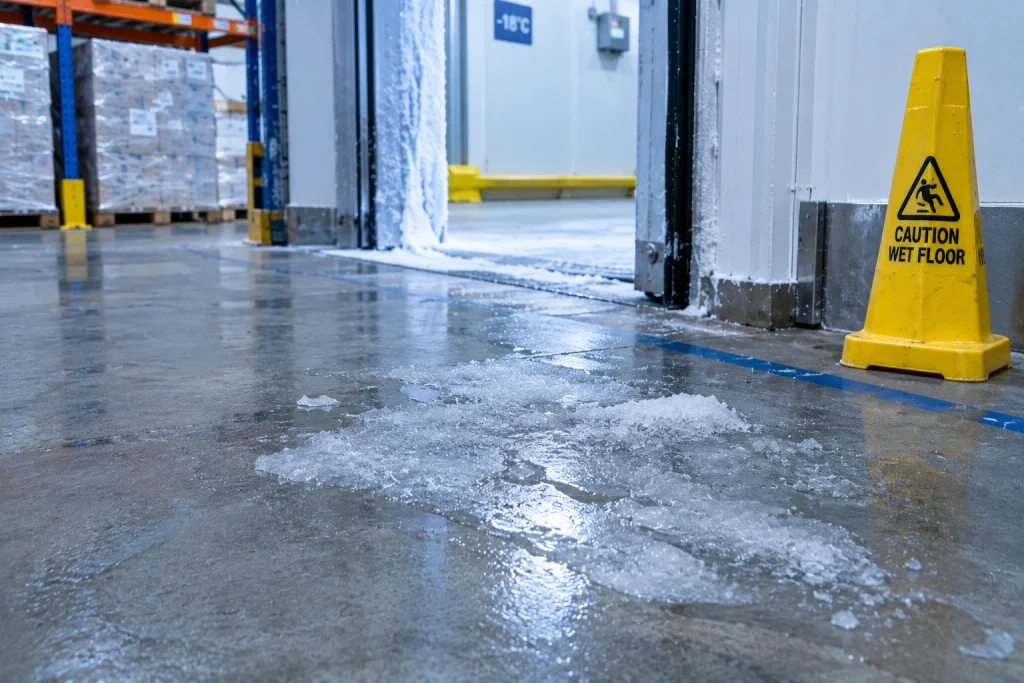
Moisture entering a cold storage facility, from product condensation, door openings, or humid air meeting a cold surface, readily freezes into ice on the floor, creating a slip and traction hazard considerably more severe than a standard warehouse floor presents. Ice patches are often difficult to see, particularly under artificial lighting or where floors are already light-coloured, making regular floor inspection and prompt de-icing an operational necessity rather than an occasional housekeeping task.
Forklift tyres suited to cold storage floors, along with reduced travel speed in areas prone to ice formation, both help manage this risk, though neither substitutes for actively identifying and addressing ice buildup before it accumulates into a genuine hazard.
Reduced Visibility from Fogging
Moving between a cold storage zone and a warmer area causes rapid condensation on glasses, visors, and equipment surfaces, a fogging effect that can obscure an operator’s vision at exactly the moments, entering or exiting a cold zone, when situational awareness matters most. This effect is particularly pronounced for operators wearing prescription glasses or safety glasses beneath a face covering, where trapped warm breath accelerates fogging considerably.
Anti-fog treatments for glasses and visors, along with built-in delays or designated clearing points when transitioning between temperature zones, help manage this hazard, but operators should also be trained to pause rather than continue operating through a period of significantly reduced visibility.
Cold Stress on Equipment Components
Sustained cold exposure affects far more than hydraulic fluid, battery performance degrades measurably in cold conditions, rubber seals and tyres become less pliable and more prone to cracking, and electrical connections are more susceptible to moisture ingress and subsequent corrosion. These effects accumulate gradually, making regular, cold-specific inspection considerably more important for equipment operating primarily in freezer conditions than for equipment used exclusively in ambient environments.
Operator PPE and Cold Weather Practices
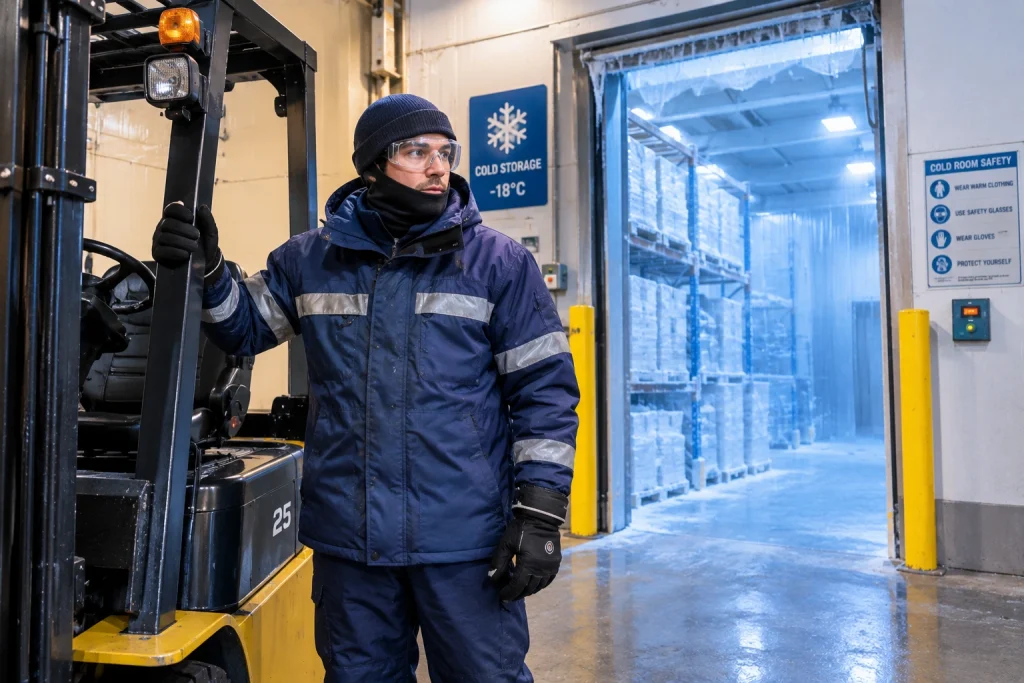
Operators working in cold storage require PPE considerations that go well beyond standard warehouse requirements, and a few practices help manage the added physical demands of sustained cold exposure:
- Insulated, cold-rated clothing appropriate to the specific temperature zone, layered to allow adjustment when moving between cold storage and warmer areas
- Insulated gloves that still permit sufficient dexterity to operate forklift controls precisely, since bulky gloves can reduce control feel and reaction time
- Scheduled warm-up breaks for operators working extended periods in deep-freeze conditions, since cold stress affects alertness and reaction time over time
- Anti-fog treated eyewear or face coverings where fogging is a recurring issue in the specific facility
- Awareness training on recognising early signs of cold stress in themselves and co-workers, since sustained cold exposure can impair judgement gradually and without an obvious single trigger point
Maintenance Considerations for Cold Environments
Forklifts operating primarily in cold storage benefit from a maintenance routine adjusted specifically for cold-related wear patterns, rather than following a generic schedule designed around standard ambient warehouse use.
Cold-rated hydraulic fluid and lubricants should be used and checked more frequently than in standard conditions, seals and tyres inspected specifically for cold-related cracking or hardening, and electrical connections checked for moisture ingress given the condensation cold storage facilities generate constantly. A broader, structured maintenance routine that this cold-specific attention should be layered onto is covered below, useful as the foundational schedule for any forklift regardless of operating environment.
Also read: Forklift Maintenance Tips for Safe and Efficient Operation
Safe Operating Practices Specific to Cold Storage
Beyond equipment and maintenance, day-to-day operating practice in cold storage should account for the specific hazards covered throughout this guide, reduced traction from ice, fogging during zone transitions, and the physical effects of sustained cold exposure on the operator.
Reduced travel speed, particularly near doorways and zone transitions where ice and fogging risk are highest, along with extra following distance and clear, deliberate movements, all help compensate for the reduced margin for error cold storage conditions introduce. These cold-specific practices sit alongside, rather than replace, the broader safety principles that apply to forklift operation generally, covered in detail below. Singapore’s Ministry of Manpower publishes detailed Workplace Safety and Health guidance covering cold stress and equipment safety standards relevant to cold storage and freezer warehouse operations.
Also read: Forklift Safety Tips for Safe and Efficient Operations
Operating Safely in the Cold
Cold storage forklift operation demands the same fundamentals as standard warehouse work, correct equipment, careful maintenance, and disciplined operating practice, applied with deliberate attention to the ice, fogging, and cold stress that sub-zero conditions introduce. Getting equipment selection and cold-specific practice right from the outset protects both the workforce and the equipment expected to perform reliably in one of the more demanding environments a forklift regularly operates in.
RR Machinery Pte Ltd offers a diverse selection of forklifts suited to every application, including cold storage and freezer warehouse operations. Contact us today for expert advice on the right forklift configuration for your facility.