Choosing between a reach truck vs forklift is a common challenge for businesses involved in warehouse operations and material handling. While both machines are designed to lift and transport loads, they serve different purposes depending on the workspace layout, storage system, and operational needs.
Understanding how each equipment works and where it performs best can help improve efficiency, reduce operational costs, and create a safer working environment. This guide explains the key differences, advantages, and how to choose the right equipment for your operations.
What Is a Forklift and How Does It Work?
A forklift is one of the most widely used machines in material handling. It is designed to lift, carry, and transport heavy loads across short distances, making it essential in warehouses, construction sites, and logistics operations.
Forklifts are highly versatile and can operate both indoors and outdoors. They are commonly used for loading and unloading trucks, moving pallets, and transporting goods across open areas. Their strength and durability allow them to handle heavier loads compared to many other lifting machines.
Because of their flexibility, forklifts are often the first choice for businesses that require equipment capable of handling multiple types of tasks.
What Is a Reach Truck and Why Is It Used in Warehouses?
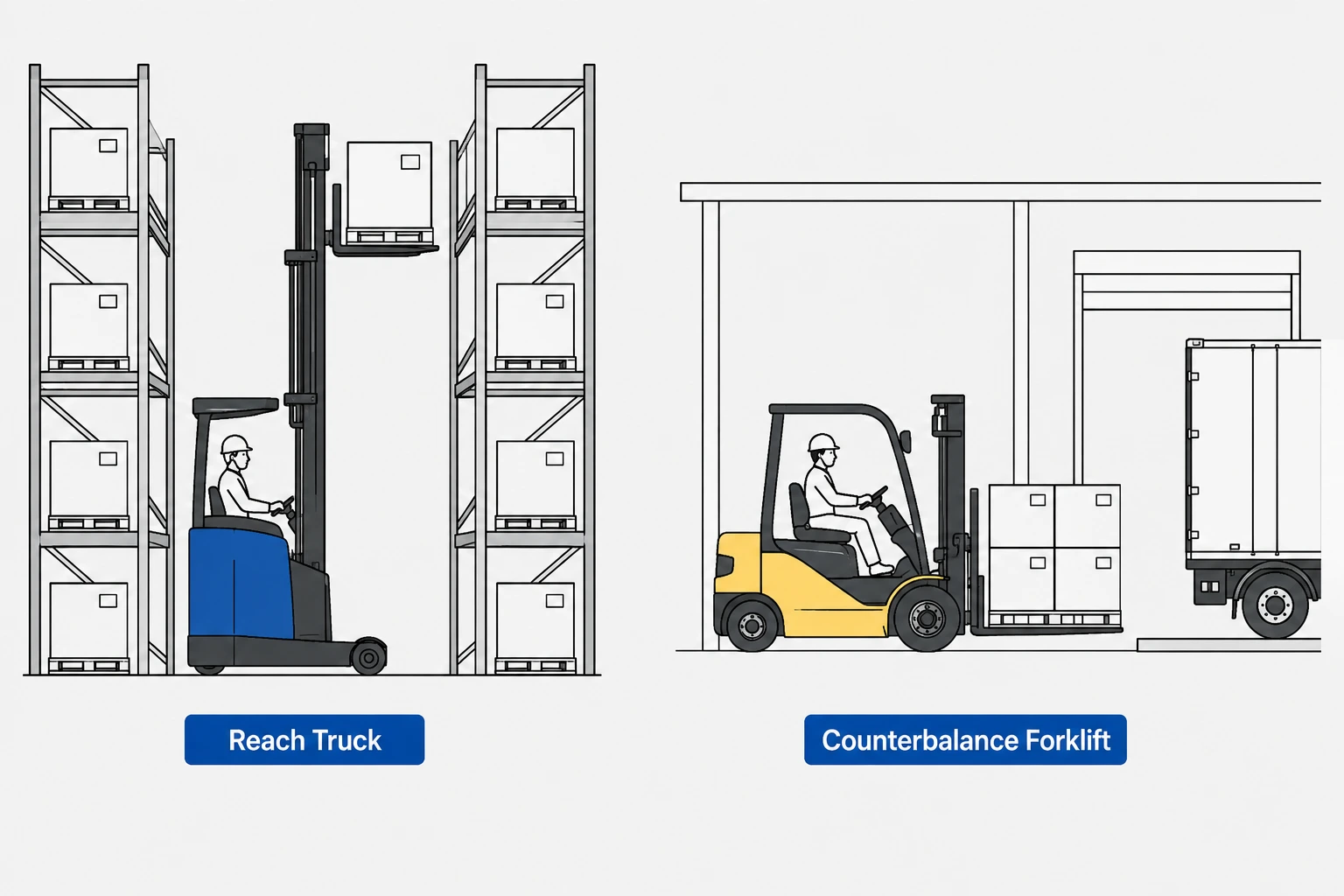
A reach truck is a specialized type of forklift designed specifically for warehouse environments with narrow aisles and high racking systems. Unlike standard forklifts, reach trucks are built to extend their forks forward, allowing them to reach deep into storage racks.
This design makes reach trucks ideal for maximizing vertical storage space. They are commonly used in distribution centers and warehouses where space efficiency is a priority. Their compact structure also allows operators to navigate tight spaces more easily, improving workflow in high-density storage environments.
Also read : What Is an Aerial Lift? Types, Uses, and Safety in Construction
Reach Truck vs Forklift: Key Differences Explained
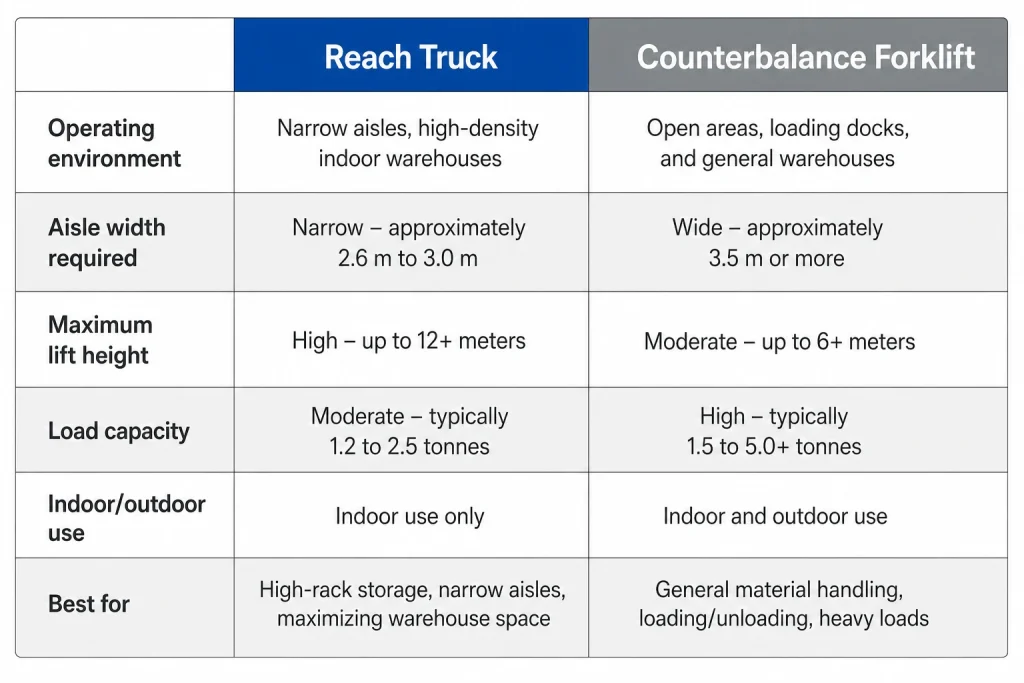
When comparing a reach truck vs forklift, the main differences come down to design, functionality, and application. Forklifts are built for versatility. They can handle rough terrain, operate outdoors, and carry heavier loads over longer distances. Reach trucks, on the other hand, are optimized for indoor use and excel in narrow aisle operations.
Another major difference is lifting height. Reach trucks are designed for higher vertical reach, making them suitable for warehouses with tall shelving systems. Forklifts typically have lower lift heights but offer greater flexibility in movement. Understanding these differences is essential for selecting equipment that matches your operational needs.
Which Equipment Is Better for Warehouse Operations?
For warehouse environments, reach trucks often provide better efficiency due to their ability to operate in narrow aisles and access high storage racks. They help businesses maximize storage capacity without expanding floor space. This is especially important in modern warehouses where optimizing space is critical.
However, forklifts still play an important role in warehouse operations, particularly for loading docks, transporting goods, and handling heavier loads. Many businesses use both machines together to achieve optimal efficiency. To better understand how different equipment supports warehouse workflows, you can explore types of forklift attachments for material handling efficiency.
Also read : Types of Lifting Equipment: A Complete Guide for Safe and Efficient Operations
When Should You Choose a Forklift Over a Reach Truck?
Forklifts are the better choice when operations require flexibility and outdoor capability. They are ideal for environments where loads need to be moved across larger distances or uneven surfaces.
Common use cases include construction sites, loading yards, and general material transport. Forklifts are also more suitable when handling bulky or heavier loads that require additional stability. If your operations are not limited by narrow aisles, forklifts provide a more versatile solution.
When Is a Reach Truck the Right Choice?
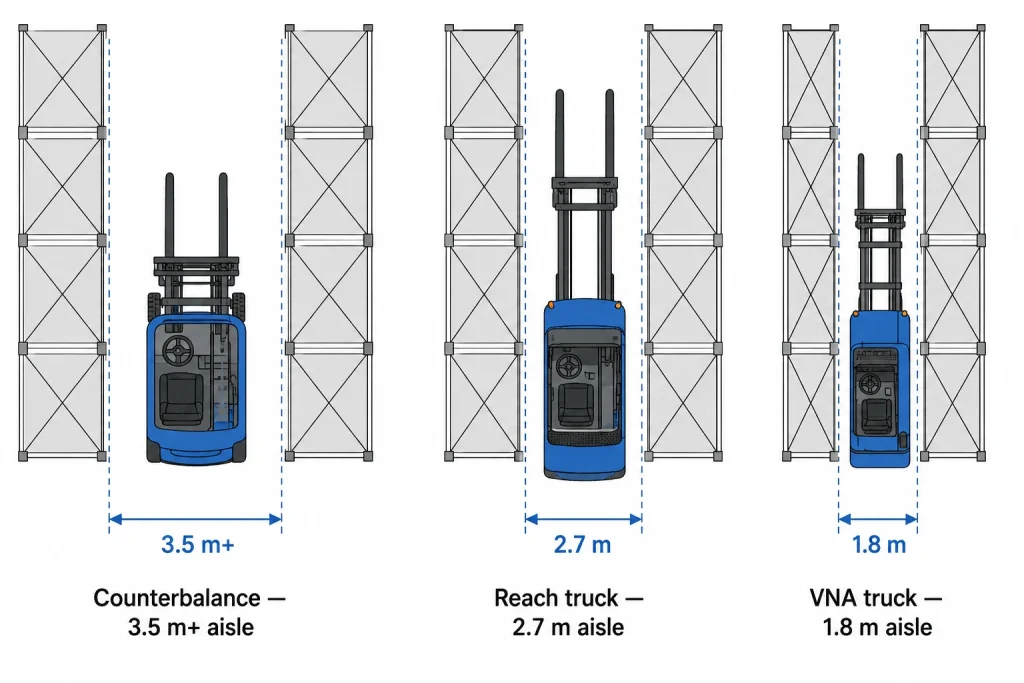
Reach trucks are best suited for indoor warehouse environments where space optimization is critical. Their ability to extend forward and lift to greater heights makes them ideal for high-density storage systems.
They are particularly effective in operations that require precise placement of goods in tall racks. This level of precision improves efficiency and reduces handling time. For businesses focused on maximizing storage capacity, reach trucks are often the preferred option.
Safety Considerations for Reach Trucks and Forklifts
Safety is a critical factor when operating both types of equipment. Improper use can lead to accidents, operational delays, and equipment damage. Operators should always follow safety guidelines, conduct regular inspections, and ensure proper training before using equipment. Maintaining clear pathways and avoiding overloading are also essential practices.
Understanding how to drive a forklift safely and correctly in daily operations can significantly reduce risks and improve workplace safety. Additionally, following established standards such as working load limit guidelines for lifting equipment safety ensures that loads are handled within safe limits.
Maintenance Tips to Improve Equipment Performance
Routine maintenance is essential for ensuring the reliability and efficiency of both forklifts and reach trucks. Regular inspections help identify potential issues before they lead to breakdowns.
Key maintenance tasks include checking hydraulic systems, inspecting tires, and testing control mechanisms. Keeping equipment in good condition not only improves performance but also enhances safety. Well-maintained equipment reduces downtime and ensures smoother operations over time.
Cost and Efficiency: Which One Offers Better Value?
The cost-effectiveness of a reach truck vs forklift depends on how the equipment is used. Reach trucks can improve storage efficiency, which may reduce warehouse expansion costs.
Forklifts, on the other hand, offer versatility and can be used across multiple environments, making them a valuable long-term investment. Businesses should evaluate their operational needs, frequency of use, and workspace conditions before making a decision.
How to Choose the Right Equipment for Your Business
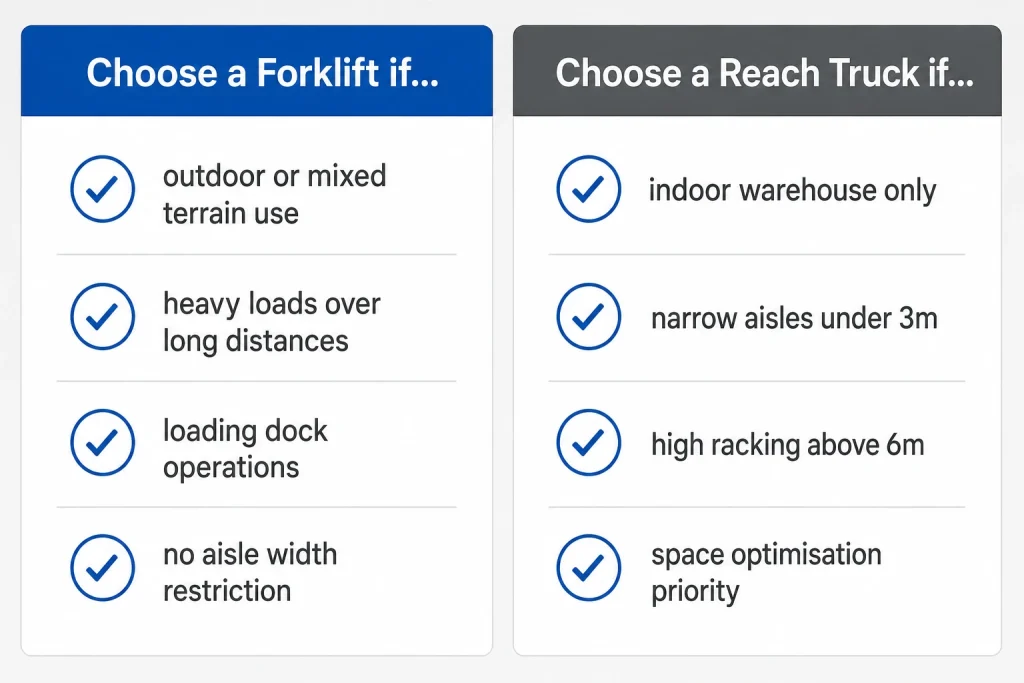
Choosing between a reach truck and a forklift requires careful evaluation of your operational requirements.
Consider factors such as:
- Warehouse layout and aisle width
- Load weight and lifting height
- Indoor vs outdoor usage
- Frequency of equipment use
Selecting the right equipment can improve workflow efficiency, reduce operational costs, and enhance safety.
Also read : Boom Lift vs Scissor Lift: What’s the Difference?
Reliable Equipment Solutions for Your Operations
Understanding the differences between a reach truck vs forklift allows businesses to choose the most suitable equipment for efficient and safe material handling. By selecting the right machinery and following proper operational practices, companies can improve productivity while minimizing risks.
Reliable equipment and professional support are essential for maintaining smooth operations. If you are looking for comprehensive material handling equipment services and maintenance solutions, explore our service offerings or contact us to get expert assistance tailored to your operational needs.