Understanding the various types of scissor lifts is essential for improving safety, efficiency, and productivity in construction, maintenance, and industrial environments. Scissor lifts are vertical access platforms designed to elevate workers and tools safely to required heights. Unlike boom lifts, scissor lifts move straight up and down, providing a stable and spacious working platform.
Selecting the right scissor lift ensures better job site performance, improved safety compliance, and smoother project execution. Many contractors integrate lift planning with broader construction equipment coordination strategies to maintain workflow efficiency across different phases of a project.
What Is a Scissor Lift?
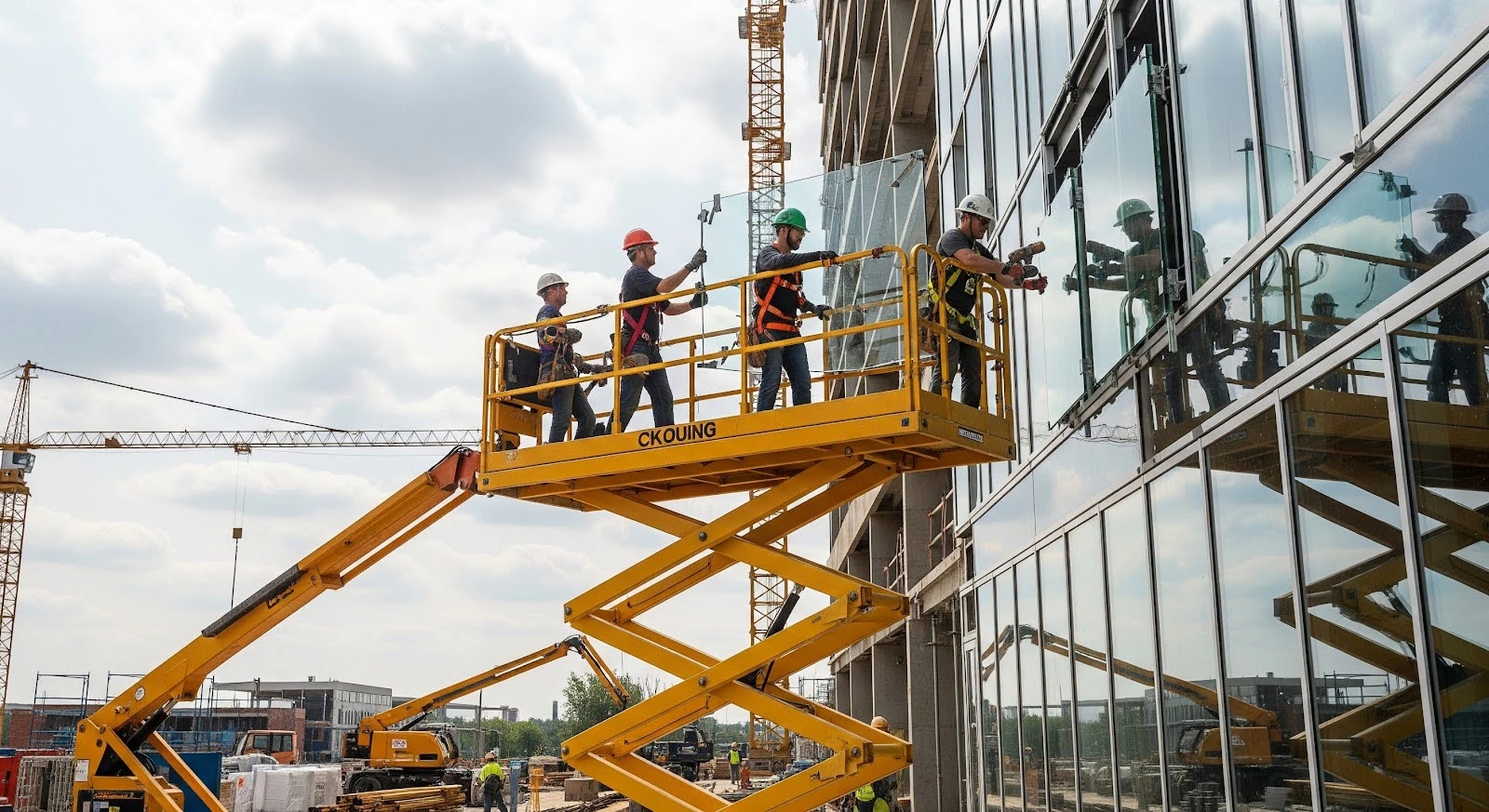
A scissor lift is a type of aerial work platform that uses crisscrossing metal supports, resembling scissors, to raise and lower a work platform vertically. These lifts are widely used for indoor and outdoor elevated tasks that require stability and larger platform space.
Scissor lifts are commonly used in:
- Building construction
- Electrical installation
- Facility maintenance
- Warehouse operations
- Industrial repairs
- Ceiling and lighting installation
They are particularly suitable for tasks that require vertical access without horizontal outreach.
Also read : What Is a Scissor Lift? Definition, Uses & How It Works
Main Types of Scissor Lifts
Different work environments require different scissor lift configurations. Below are the most commonly used types of scissor lifts across construction and industrial sectors. All of them raise the platform using the same hydraulic scissoring mechanism, what actually distinguishes one type from another is the power source, tyre configuration, and ground capability suited to a specific environment.
Electric Scissor Lifts
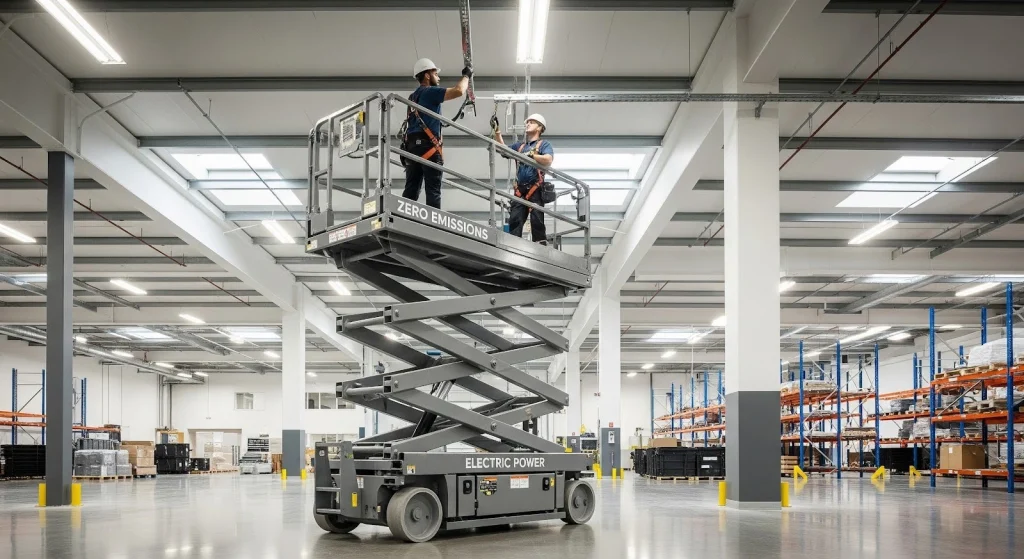
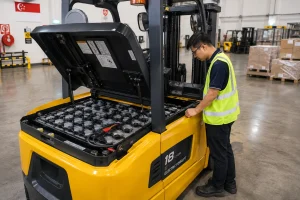
Electric scissor lifts are battery-powered and designed primarily for indoor use. They produce zero emissions and operate quietly, making them ideal for enclosed environments.
Common applications:
- Warehouse maintenance
- Shopping malls
- Airports
- Indoor construction
- Ceiling and lighting installation
Electric models are compact and suitable for smooth surfaces. Their quiet operation improves safety and comfort in confined spaces.
Hybrid Scissor Lifts
Hybrid scissor lifts combine a diesel or petrol engine with an electric drive and battery system, giving operators the flexibility to switch power sources depending on the work environment. This dual-fuel design allows the same machine to run on electric power indoors or in noise- and emissions-sensitive areas, then switch to combustion power outdoors where longer runtime or rough terrain traction is needed.
Common applications:
- Mixed indoor-outdoor construction projects
- Sites transitioning between enclosed and open areas
- Facilities wanting reduced fuel consumption without sacrificing outdoor capability
It is worth noting that virtually all scissor lifts, regardless of power source, raise the platform using the same hydraulic scissoring mechanism described earlier. What differentiates electric, diesel, and hybrid models is not the lifting mechanism itself but the power source driving it.
Rough Terrain Scissor Lifts

Rough terrain scissor lifts are designed for outdoor use and uneven ground conditions. They feature large tires, enhanced stability systems, and higher ground clearance.
Common applications:
- Construction sites
- Infrastructure projects
- Outdoor facility maintenance
These lifts provide durability and stability for challenging job site conditions. Some models are also rated for gradients considerably steeper than standard indoor scissor lifts, making them suitable for sloped sites and areas awaiting permanent hardstanding.
Diesel-Powered Scissor Lifts
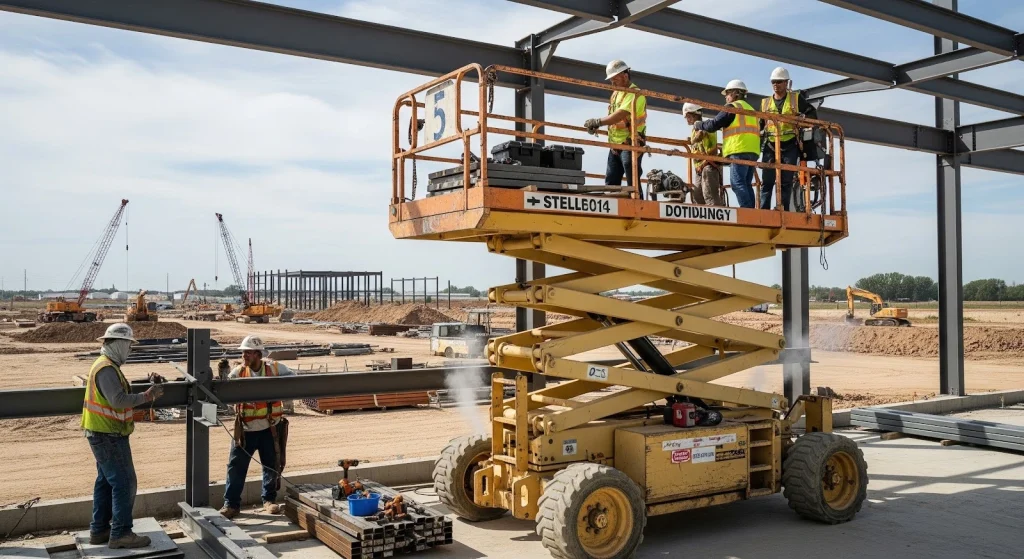
Diesel scissor lifts are powerful machines suitable for heavy-duty outdoor applications. They offer higher load capacity and greater lift heights compared to electric models.
Common applications:
- Large construction projects
- Steel structure installation
- Exterior building work
Diesel models are typically used where strong lifting power and rugged performance are required. Because diesel engines produce exhaust emissions, these models are restricted to outdoor or well-ventilated environments and are not suited to enclosed buildings.
Pneumatic Scissor Lifts
Pneumatic scissor lifts operate using air pressure systems. They are commonly used in controlled industrial environments where hydraulic fluids are not preferred.
Common applications:
- Cleanroom facilities
- Food processing plants
- Sensitive industrial environments
These lifts are ideal where contamination risks must be minimized. Because pneumatic units are less common than electric or diesel models, availability and servicing support should be confirmed with a supplier before specifying one for a project.
Compact and Mini Scissor Lifts
Compact scissor lifts are smaller models designed for tight working areas and narrow access spaces.
Common applications:
- Indoor retail spaces
- Office renovations
- Maintenance in confined areas
Their lightweight design improves mobility and ease of use. Most models retract to a width that fits through standard doorways, making them the practical choice when a task is restricted by horizontal access rather than working height.
Also read : Scissor Lift Mechanism Explained Simply
Choosing the Right Scissor Lift
Selecting the appropriate lift depends on several operational factors:
- Working height requirements
- Indoor or outdoor environment
- Terrain condition
- Load capacity needs
- Power source availability
- Space constraints
Many project managers align lift selection with broader equipment planning and heavy machinery coordination strategies to ensure smooth workflow across construction and material handling tasks.
Understanding different access platforms, including aerial work platforms and lifting equipment systems, helps businesses choose the safest and most efficient solution for elevated work.
Also read : Boom Lift vs Scissor Lift: Which One Should You Choose?
Safety Considerations for Scissor Lift Operations
Safety plays a crucial role in scissor lift usage. Proper training and regular inspection reduce the risk of accidents and equipment failure.
Key safety practices include:
- Pre-operation inspection
- Stable ground positioning
- Guardrail compliance
- Proper load distribution
- Operator certification
Following Singapore’s Ministry of Manpower Workplace Safety and Health guidelines improves operational safety and ensures regulatory compliance.
A detailed, step-by-step guide to operating a scissor lift safely covers the correct pre-use checks and controls for every operator.
Advantages of Using Scissor Lifts
Scissor lifts offer several advantages compared to ladders and scaffolding systems:
- Stable work platform
- Higher load capacity
- Improved worker safety
- Faster setup
- Increased productivity
- Efficient vertical access
They are especially useful when multiple workers and tools must operate at height simultaneously.
The Role of Scissor Lifts in Modern Construction
Modern construction projects rely heavily on efficient vertical access systems. As buildings become taller and more complex, scissor lifts provide reliable support for electrical installation, structural finishing, and maintenance operations.
Integrating lift planning with construction equipment management strategies improves project efficiency and reduces downtime. Coordinated equipment use enhances safety and ensures smoother job site operations.
Improve Efficiency with the Right Lift Solutions
Understanding the different types of scissor lifts allows businesses to choose the safest and most efficient equipment for their operational needs. From electric indoor lifts to heavy-duty diesel models for rugged terrain, selecting the right lift improves productivity and safety performance.
Reliable equipment and professional support are essential for maintaining smooth operations across construction and industrial environments. If you require reliable scissor lifts, expert guidance, or a tailored quotation for your project, contact us today to discuss your requirements and receive professional support designed to enhance your operational efficiency.