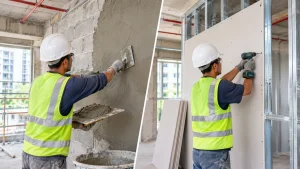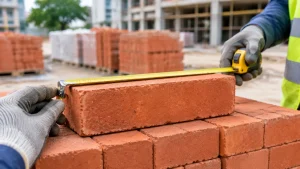
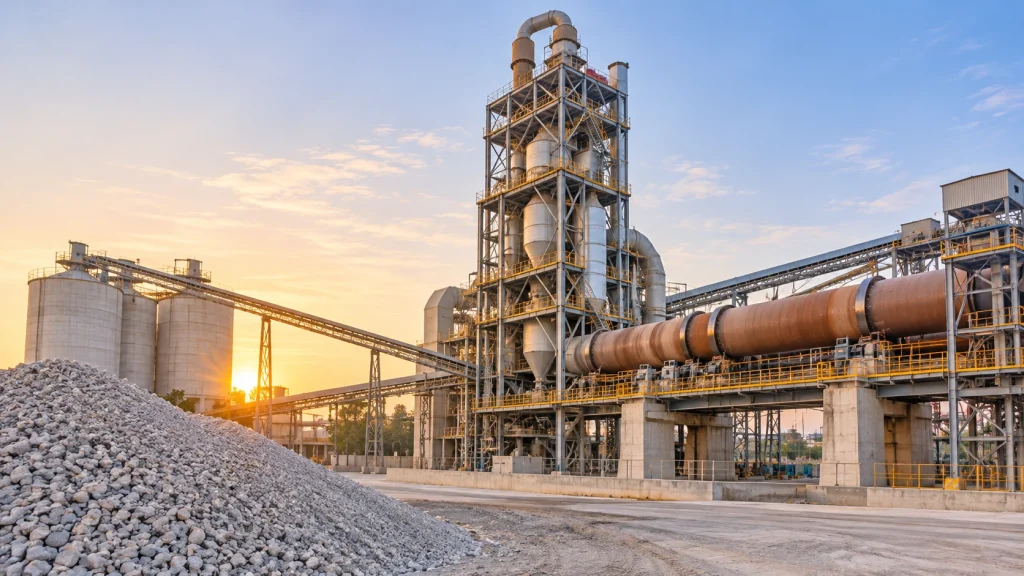
Cement is made by heating a carefully proportioned mix of limestone and clay, or similar materials, in a rotary kiln at around 1,450 degrees Celsius. The intense heat transforms the raw materials into hard nodules called clinker, which are cooled and then ground into a fine powder together with a small amount of gypsum. The result is Portland cement, the grey powder that binds together almost every concrete slab, column, foundation, and block wall in modern construction.
For something used in such vast quantities, cement goes through a surprisingly precise process before it reaches a construction site. This guide explains how cement is made step by step, the raw materials involved, the main types of cement, how cement reaches construction sites, its environmental impact, and how it should be stored, handled, and used once it arrives on site.
Cement and Concrete Are Not the Same Thing
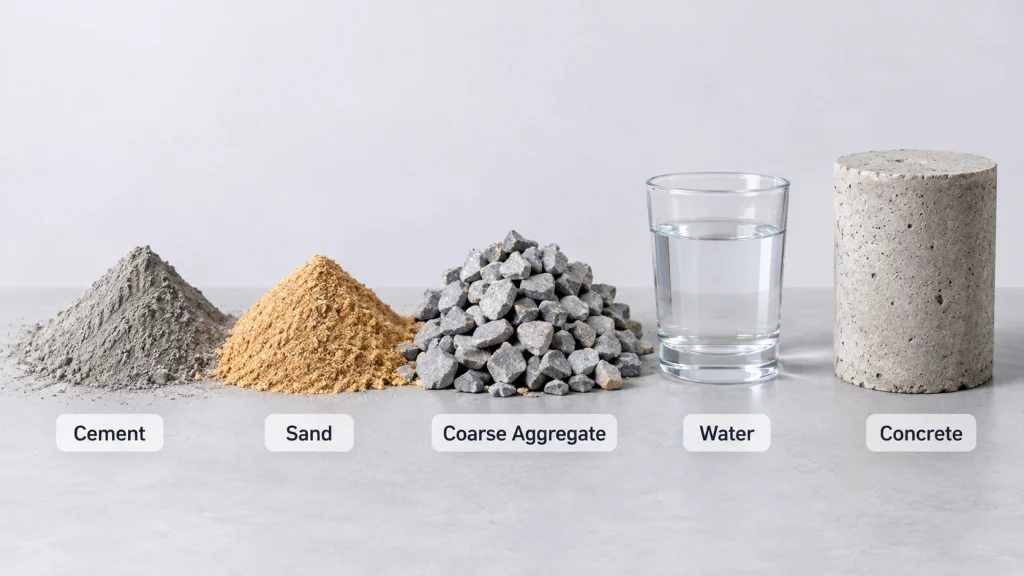
The two words are often used interchangeably, but they describe different materials. Cement is a binder, a fine powder that reacts with water and hardens. Concrete is the finished building material, made by mixing cement with water, sand, and coarse aggregate such as crushed stone. Mortar is a similar mix without the coarse aggregate, used to bond bricks and blocks.
In other words, cement is an ingredient, usually only a modest share of a concrete mix by volume, while concrete is what actually forms the structure. Further general background on cement and its chemistry is available through Wikipedia’s overview of cement. The same confusion of names happens with blocks, as explained below.
Also read: Concrete vs Cinder Blocks: What’s the Real Difference?
The Raw Materials Behind Cement
Cement needs four main chemical ingredients: calcium, silica, alumina, and iron. Limestone or chalk supplies most of the calcium, while clay, shale, or similar materials provide the silica, alumina, and iron. Small amounts of corrective materials, such as sand, iron ore, or bauxite, are added when the natural raw materials do not contain quite the right balance.
Gypsum is added at the very end of the process. It controls how quickly the cement sets once water is added, preventing it from stiffening too fast to be placed and finished properly.
How Cement Is Made, Step by Step
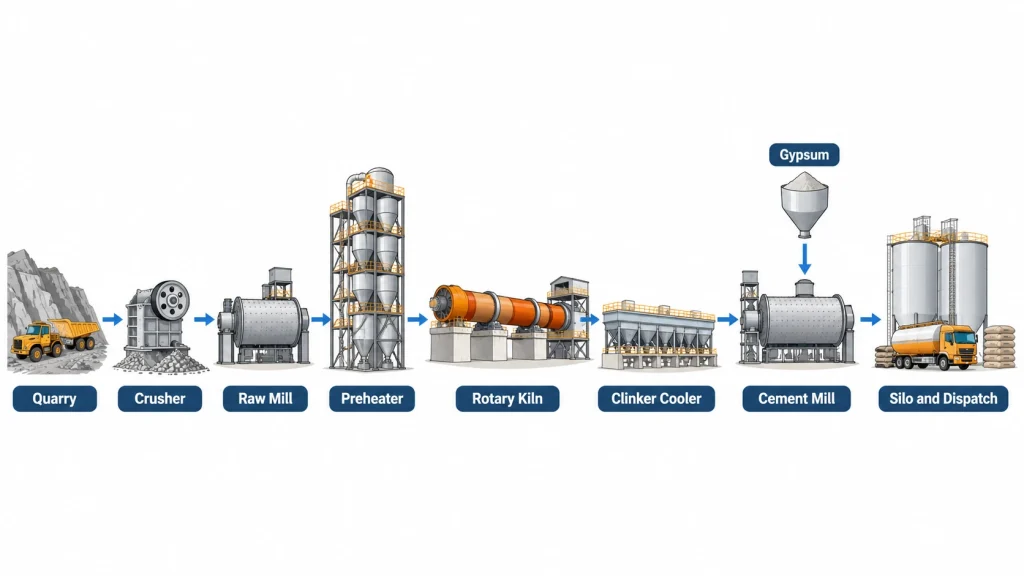
Most modern cement plants use the dry process, in which raw materials are ground and fed into the kiln as a dry powder. The main stages are similar from plant to plant.
1. Quarrying and Crushing
Limestone and clay are extracted from quarries, usually close to the cement plant, using drilling, blasting, and large earthmoving machines. The rock is then crushed into smaller pieces so that it can be handled, stored, and blended.
2. Proportioning and Raw Milling
The crushed materials are sampled, analysed, and combined in precise proportions to give the right chemical balance. The blend is then ground in mills into a very fine powder known as raw meal, which is stored and further blended to keep its composition consistent.
3. Preheating
The raw meal passes through a preheater tower, a series of cyclones in which hot gases from the kiln warm the powder as it falls. In many plants, a precalciner then begins driving carbon dioxide out of the limestone before the material even enters the kiln, which saves fuel and increases output.
4. Burning in the Rotary Kiln
The heart of the process is the rotary kiln, a long, slightly inclined steel cylinder lined with heat resistant bricks that turns slowly as material moves through it. At its hottest point, the material reaches around 1,450 degrees Celsius, where it partly melts and the chemical reactions that form cement compounds take place. The material leaves the kiln as clinker, dark grey nodules roughly the size of marbles. Further general background on how these kilns work is available through Wikipedia’s overview of the rotary kiln.
5. Cooling the Clinker
The hot clinker is cooled rapidly with air in a clinker cooler. Fast cooling helps lock in the right mineral structure for good cement strength, and the heated air is recycled back into the kiln to save energy.
6. Grinding With Gypsum
The cooled clinker is ground in cement mills together with gypsum, and sometimes other materials, into an extremely fine powder. The fineness of the grind affects how quickly the cement gains strength, which is one of the ways different cement products are produced.
7. Storage, Packing, and Dispatch
Finished cement is stored in silos, then dispatched either in bulk tankers for ready mixed concrete plants and large projects, or in bags for smaller works. Quality checks throughout the process confirm that each batch meets the required standards.
Common Types of Cement
Not all cement is the same. Ordinary Portland cement is the general purpose product used in most concrete and mortar. Blended cements replace part of the clinker with materials such as ground granulated blast furnace slag, fly ash, or limestone, often improving durability and reducing the carbon footprint. Rapid hardening cement gains strength faster, which helps where formwork must be removed early or work must proceed quickly. Sulphate resisting cement is used where soil or groundwater could attack ordinary concrete, and white cement is used for architectural finishes where colour matters.
The right type depends on the structure, the exposure conditions, and the programme, and it is specified by the design engineer for structural work.
How Cement Reaches Construction Sites
From the plant, most cement travels in bulk to ready mixed concrete plants, precast factories, and building supply companies. Countries and cities without suitable limestone deposits, such as Singapore, import cement or clinker by sea and distribute it through the same channels. In every case, the cement that reaches a project has usually passed through several hands, and quality certificates travel with it so that buyers can confirm it meets the specified type and standard.
Most concrete on larger projects arrives on site already mixed, delivered by truck from a ready mixed plant and placed straight into formwork. Bagged cement is used for smaller works, mortar, plastering, and repairs, while precast concrete elements such as panels, beams, and piles are made in factories and delivered ready to install. Blended cements are increasingly common in all three, both for durability in hot and humid climates and to reduce the environmental impact of construction.
Cement and the Environment
Cement production is energy intensive and a significant source of carbon dioxide emissions. Emissions come from two main sources: the fuel burned to heat the kiln, and the chemical reaction itself, since heating limestone releases carbon dioxide as it forms the compounds that make up clinker.
The industry is working to reduce this impact through more efficient kilns, alternative fuels, blended cements that use less clinker, and the development of carbon capture technologies. On construction projects, using blended cements where suitable, ordering concrete accurately, and avoiding waste all help reduce the footprint of each building.
From Bag to Building, Using Cement on Site
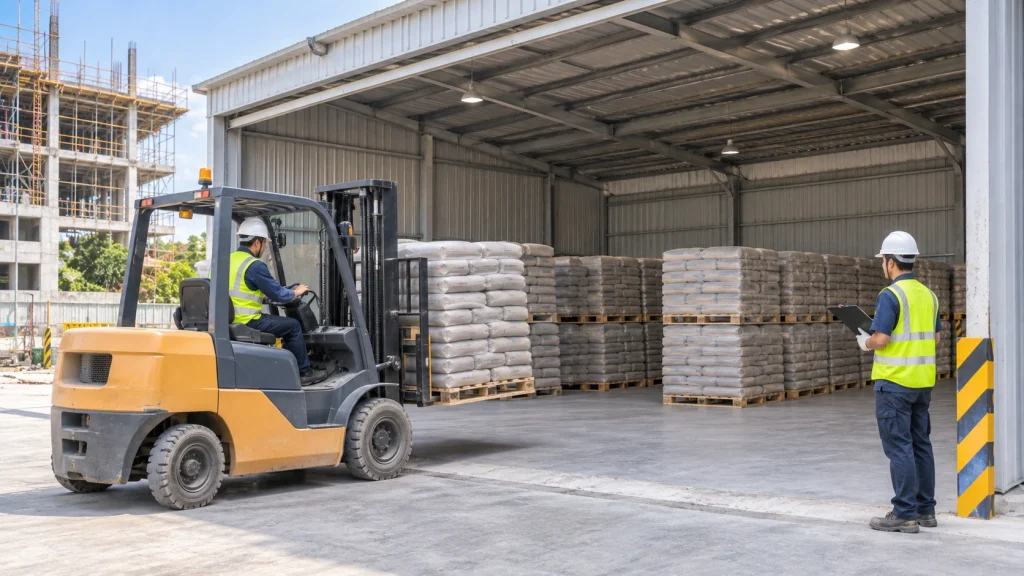
Cement is sensitive to moisture, so storage on site matters. Bagged cement should be kept in a dry, covered store, stacked on pallets off the ground and away from walls, and used in the order it was delivered so that older stock does not sit long enough to absorb moisture and form lumps. Pallets of cement bags are heavy, and moving them with forklifts suited to site conditions is safer and faster than manual handling.
On site, cement becomes part of concrete, mortar, and plaster. Concrete is placed into formwork and compacted, then cured by keeping it moist so that it gains strength properly, and the choice of concrete formwork systems shapes how efficiently that work goes. Mortar made with cement binds the bricks and concrete blocks used in walls, while cement based concrete also forms the piles and footings beneath the building.
Also read: Types of Foundations Used in Construction Projects
Working Safely With Cement
Wet cement is strongly alkaline and can cause serious skin burns and eye injuries, often without immediate pain, so gloves, eye protection, and long sleeves are essential when handling it. Dry cement dust can irritate the lungs, especially when bags are opened, emptied, or mixed in enclosed areas, so dust control and suitable respiratory protection should be used.
Bags are heavy enough to cause strain when lifted repeatedly, so mechanical handling and good lifting practice reduce the risk of injury. Singapore’s Ministry of Manpower publishes detailed Workplace Safety and Health guidance covering chemical hazards, manual handling, and safe work practices on local sites.
Equipment Support for Concrete and Masonry Work
Moving cement, blocks, and other materials around a site, and giving workers safe access to formwork and walls, depends on having the right equipment at each stage. When you contact the team, it helps to describe the materials to be handled, the heights to be reached, the ground and access conditions, and how long the work is expected to take. With these details, the right equipment can be recommended from the start.
RR Machinery Pte Ltd supports Singapore’s construction and industrial sectors with reliable heavy machinery solutions tailored to your specific site conditions. Browse our complete heavy machinery services or contact our team today for practical advice on the right equipment for your project.