Working at height is one of the most common requirements across construction, maintenance, utilities, and industrial operations, and one of the most consequential decisions a project planner or site supervisor makes is which aerial work platform to use. Get the choice right, and your crew works efficiently, safely, and within budget. Get it wrong, and you are either paying for capability you do not need or, more critically, deploying equipment that cannot safely reach or access the work location.
The terms “boom lift” and “cherry picker” are used interchangeably in everyday site conversation, frequently causing confusion when it comes to specifying equipment. They are related, both are categories of aerial work platform (AWP), but they are not identical, and the distinction matters when access geometry, weight capacity, site conditions, and safety requirements are all part of the specification decision.
This guide sets out the key differences between boom lifts and cherry pickers in precise operational terms: what each term actually refers to, how the machines are built, what they can and cannot do, when each is the right choice, and what the safety implications of each decision are.
What Is a Boom Lift?
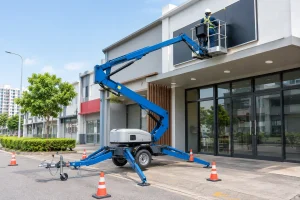
A boom lift is a type of aerial work platform in which the work platform, a basket or bucket that carries the operator and their equipment, is mounted at the end of an extendable arm, or boom, that is itself mounted on a powered base unit. The boom can be extended, elevated, and in most cases rotated, allowing the platform to be positioned at height and at horizontal reach from the machine’s ground footprint.
The defining characteristic of a boom lift is the articulated or telescopic arm structure that provides both vertical height and horizontal outreach simultaneously. The operator can position the platform not just above the machine but offset from it, reaching over obstacles, around obstructions, and into spaces that a simple vertical lift cannot access.
Boom lifts are available in two main configurations:
Telescopic boom lifts extend in a straight line from the base, like a telescope, reaching great horizontal distances and heights in a direct path. They provide the greatest outreach of any aerial work platform type and are suited to open sites where direct access to a point at height and distance is required.
Articulating boom lifts have a jointed arm with multiple sections that can be angled independently of each other, allowing the platform to reach up and over obstacles, down into trenches or between structures, or into spaces that a telescopic boom cannot access due to intervening obstructions. Articulating booms sacrifice some maximum reach in exchange for this positional flexibility.
Both types rotate on a slewing ring mounted on the machine’s base, enabling 360-degree platform positioning without repositioning the machine itself.
Also read : Types of Boom Lifts: Which One Does Your Job Need?
What Is a Cherry Picker?
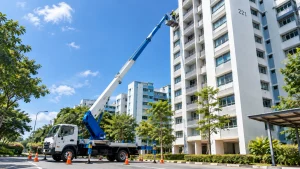
“Cherry picker” is commonly used as an informal, catch-all name for any aerial work platform with a hydraulic boom, a usage that overlaps closely with the general term boom lift. Used more precisely, however, cherry picker refers specifically to a truck-mounted or vehicle-mounted boom lift: a machine that combines road vehicle mobility with a hydraulic lifting arm, allowing it to travel on public roads under its own power and deploy its platform directly at the work location. The name itself has an agricultural origin, dating back to hydraulic platforms mounted on truck chassis that let orchard workers reach fruit at the tops of trees without ladders.
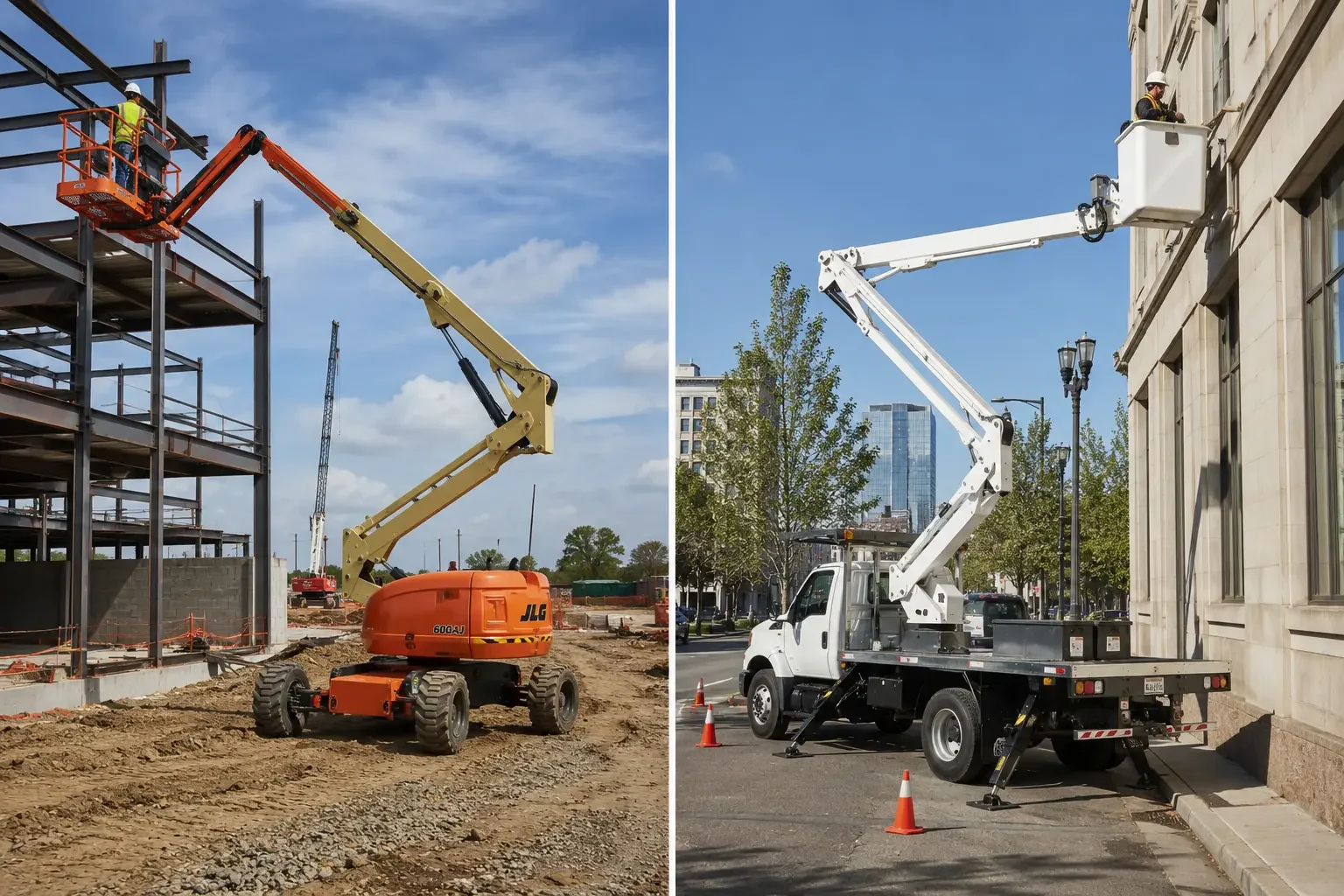
The distinction that matters in practice: all cherry pickers are boom lifts in the sense that they use an articulating or telescopic boom arm. But not all boom lifts are cherry pickers, a self-propelled boom lift on rubber tyres designed for site use is a boom lift but not a cherry picker in the traditional sense. For the full breakdown of what a cherry picker is, its origin, and its main types, see our complete guide: What Is a Cherry Picker?
Also read : What Is a Cherry Picker? Definition, Types, Uses & Safety Guide
Boom Lift vs Cherry Picker: A Direct Comparison
Mobility and Site Access
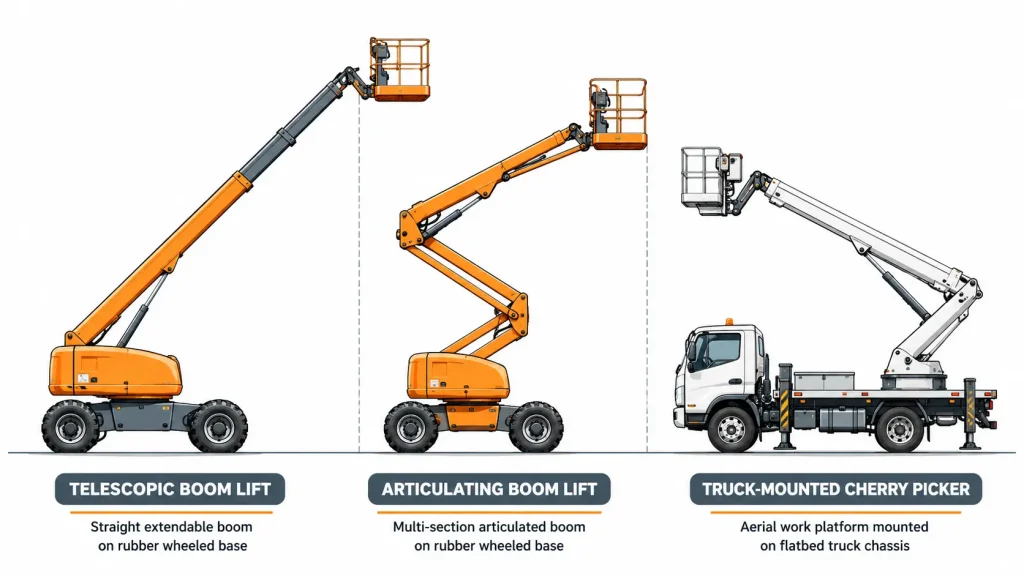
The most fundamental difference between a cherry picker and a self-propelled boom lift is how each machine reaches the work location.
A cherry picker, vehicle-mounted, travels on public roads at normal highway speeds, does not require a low-loader for transport, and can position itself at the work location using the vehicle’s own road drive. It is the right choice when the work locations are spread across multiple road-accessible sites or when rapid deployment along a road corridor is essential, for example, street light maintenance across a borough, or cable inspection along a motorway.
A self-propelled boom lift travels under its own power but at slow site speeds, typically on rubber tyres, and is designed for within-site mobility rather than road travel. It is the right choice when the lift locations are on a single site, a construction project, a warehouse, an industrial plant, and when the lift will be repositioned multiple times across that site between lifts.
Working Height and Outreach
Both cherry pickers and self-propelled boom lifts are available across a wide range of working heights. Smaller cherry pickers on van-based platforms reach working heights of 12 to 20 metres, while large truck-mounted cherry pickers can exceed 40 metres. Self-propelled boom lifts range from compact 10-metre units to large machines exceeding 40 metres in working height, with some specialist models reaching beyond 60 metres.
The critical performance dimension, beyond working height, is outreach, the horizontal distance the platform can be positioned from the machine’s base while at height. For work that requires reaching over a wall, across a void, above an obstruction, or into a recess, outreach is often more decisive than maximum height. Telescopic boom lifts generally provide the greatest outreach at a given height; articulating booms provide the best access to geometrically complex positions.
Ground Conditions
Self-propelled boom lifts are available in configurations suited to a range of ground conditions. Electric-drive models on non-marking tyres are suited to smooth indoor surfaces. Rough terrain models with four-wheel drive, analogous to the capability discussed in relation to rough terrain cranes and their application on unpaved construction sites, can operate on unpaved, uneven, or soft ground typical of active construction sites.
Cherry pickers on truck chassis require adequate road access and a firm, reasonably level surface for deployment. The outriggers fitted to most cherry pickers extend the stability footprint, but the underlying vehicle chassis is not designed for deep mud, significant gradient, or loose fill. For work in challenging terrain, a self-propelled rough terrain boom lift is the more capable option.
Setup Time and Operational Flexibility
Cherry pickers, once positioned at the work location, require outrigger deployment and levelling before the boom can be operated. On road or pavement, this is typically a rapid process: minutes rather than hours. The vehicle can then be repositioned along the road to the next work location without the overhead of loading and transport.
Self-propelled boom lifts require no transport vehicle and reposition themselves across the site under their own power. On a large site with many lift points, this self-mobility reduces the time and cost of repositioning significantly.
Operator Requirements and Certification
Both boom lift and cherry picker operators are required to hold appropriate certification for the machine type. In most jurisdictions, this means completion of an accredited aerial work platform (AWP) operator training course for the specific category of equipment. A truck-mounted cherry picker also requires the operator to hold the appropriate driving licence category for the vehicle.
The full scope of working-at-height certification requirements and the safety obligations that apply to every aerial lift operation are covered in guidance on lifting equipment safety and operator competency requirements.
Also read : How to Operate a Boom Lift: A Step-by-Step Safety Guide
Key Specifications to Compare
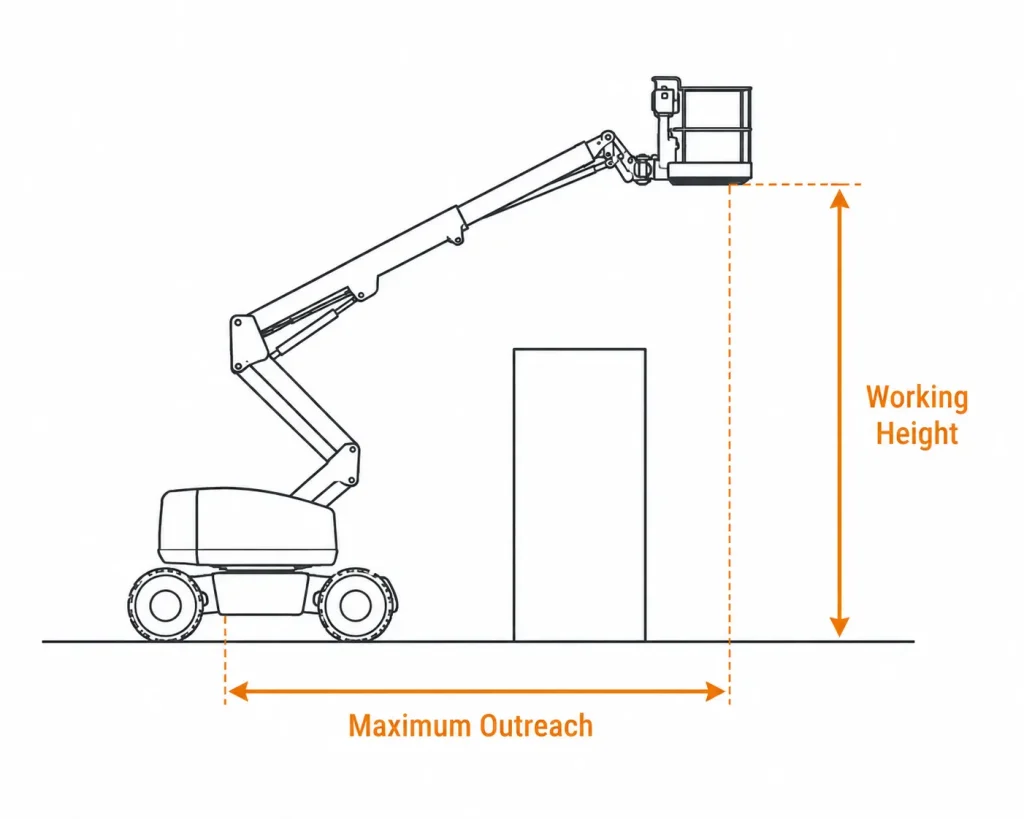
When specifying either type for a project, these are the parameters that must be matched to the job requirements:
Working height: The maximum height above ground the platform floor can be positioned. Ensure the figure is working height, not platform height, working height typically assumes an additional 1.8 to 2 metres for a standing operator.
Maximum outreach: The horizontal distance the platform can be positioned from the machine’s centreline or the edge of its stabiliser footprint. Critical for work over obstructions or at oblique positions.
Platform capacity: The maximum combined weight of personnel, tools, and materials the platform is rated to carry. On most boom lifts, platform capacity is between 200 and 500 kg depending on the model. Overloading a platform is a serious safety violation and a common cause of aerial platform incidents.
Machine weight and ground bearing: The total operating weight of the machine determines the ground bearing requirement at the support points. On soft or fragile surfaces, including finished floors inside buildings, this must be checked against the permissible surface loading before deployment.
Power type: Electric boom lifts produce no exhaust emissions and are suited to indoor or enclosed environments. Diesel models provide greater range, higher tractive effort on rough terrain, and are required where long operating cycles without recharging are needed. Hybrid models are available on some platforms.
When to Use a Boom Lift
Self-propelled boom lifts, the category most often specified on construction and industrial sites, are the right choice when:
The site is an active construction, industrial, or warehouse environment where the machine must reposition frequently across an unpaved or semi-prepared site without road access. The machine’s self-mobility across the site reduces repositioning time and eliminates transport cost.
Working positions are geometrically complex, the work requires reaching over a structure, up and into a recess, or around an obstruction that a simple vertical lift or a telescopic access platform cannot navigate. Articulating boom lifts are specifically designed for this class of access challenge.
Indoor or semi-indoor environments require zero-emission operation. Electric boom lifts on non-marking tyres are the standard solution for warehouse maintenance, industrial plant work, and any enclosed environment where diesel exhaust is not permissible.
Ground conditions are difficult. Rough terrain boom lifts on four-wheel-drive undercarriages can access the same categories of site as rough terrain wheeled plant, unpaved, soft, or uneven ground that would defeat a road-going vehicle.
When to Use a Cherry Picker
Vehicle-mounted cherry pickers are the right choice when:
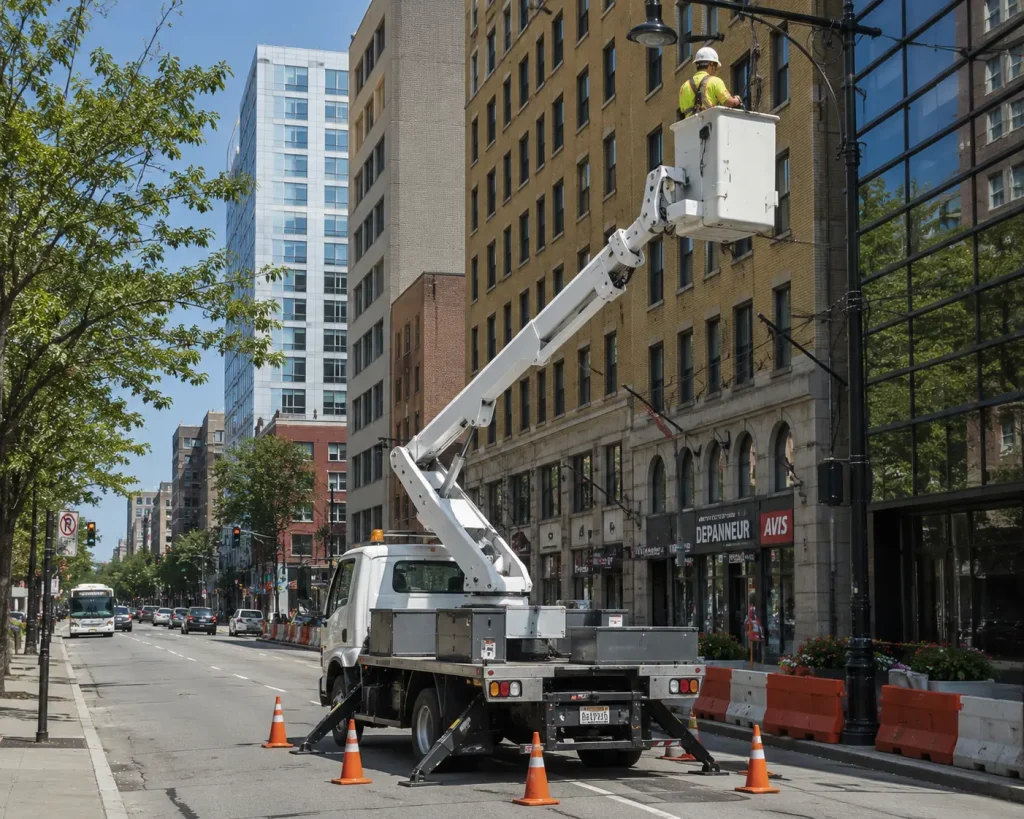
The work is spread across multiple road-accessible locations. Street lighting maintenance, utility line inspection, building facade surveys along a road frontage, and vegetation management on road corridors all require equipment that can travel quickly between locations without being trailered. A cherry picker on a truck chassis drives from location to location under its own power.
Rapid deployment is required. Emergency maintenance, reactive repair, and fast-turnaround access tasks, where setup time and mobilisation speed are critical, favour the cherry picker’s ability to drive to site, deploy outriggers, and begin work in a matter of minutes.
Access is from the road or pavement. For work that is conducted from the road, overhead cable maintenance, bridge soffit inspection, facade cleaning on a public street, the cherry picker’s kerbside positioning capability is a direct operational match. Bringing a self-propelled boom lift onto a public road is typically not practical or permissible.
The work height exceeds the range of smaller self-propelled platforms. Large truck-mounted cherry pickers reach heights of 40 to 60 metres, beyond the range of most compact self-propelled boom lifts and more accessible as a single-machine solution for high-reach facade or infrastructure work.
Safety Considerations Common to Both
Regardless of whether you are deploying a boom lift or a cherry picker, the safety requirements are substantially the same in their underlying logic:
Pre-use inspection: Every platform must be inspected before each shift of use. This includes checking the boom structure for damage, testing all controls from the platform and from the ground, verifying the emergency lowering system functions correctly, and confirming the platform safety gate or chain is operable.
Ground and surface assessment: The ground or surface beneath the machine’s tyres and outriggers must be assessed for bearing capacity before deployment. On soft ground, timber spreader boards or steel plates may be required beneath outrigger pads. On internal floors, the point load from outriggers must be verified against the structural floor capacity.
Stability and levelling: Both machine types must be level within the manufacturer’s specified tolerance before the boom is raised. Operating on a gradient beyond the rated limit significantly reduces effective stability and increases the risk of overturn.
Exclusion zones: A ground-level exclusion zone appropriate to the work being conducted must be established around the machine. The exclusion zone must prevent pedestrians and other site traffic from entering the area beneath the working platform, where falling objects represent a serious hazard. This requirement links directly to the broader site access and segregation principles covered in guidance on construction site planning and safe zone management.
Boom operation near overhead hazards: Both boom lifts and cherry pickers are capable of reaching overhead power lines, overhead structures, and other elevated hazards. Safe operating distances from overhead power lines are specified in national regulations and must be established before any lift near such hazards.
Personal fall protection: Operators working in the platform must wear a full-body harness and lanyard attached to the designated anchor point within the platform basket. A fall from height inside the platform during a tip-over or collision event is survivable if restraint is correctly used, it is typically not survivable without it.
Choosing Between Boom Lift and Cherry Picker: A Practical Summary
The decision is rarely difficult once the operational requirements are clearly stated:
If the work locations are accessed by road, spread across multiple public road or pavement sites, and require rapid deployment without transport overhead, a cherry picker is the correct choice.
If the work is concentrated on a single site, construction project, industrial plant, warehouse, where the machine must reposition across site terrain, access geometrically complex positions, or operate in an enclosed environment, a self-propelled boom lift is the correct choice.
Where very high working heights are required on a road-accessible site, a large truck-mounted cherry picker may be the only single-machine solution that reaches the required height without the complexity of a large self-propelled machine or a separate crane.
Understanding which categories of aerial work platform are available, how they are rated, and how they compare with other types of lifting and access equipment, including the full range of mobile cranes, lifting platforms, and powered access solutions, is the foundation of effective access planning on any project.
Also read : How to Read a Crane Load Chart for Safe Lifting Operations
Work at Height with the Right Equipment, Properly Specified
The difference between a boom lift and a cherry picker is not merely a question of terminology, it reflects a genuine difference in operational design, mobility, and the category of job each machine is built to perform. Deploying the wrong category of platform creates operational inefficiency at best and a serious safety risk at worst.
RR Machinery provides a comprehensive range of aerial work platforms for rental and sale, including articulating boom lifts, telescopic boom lifts, scissor lifts, and supporting access equipment, all maintained to full operational standard and available with guidance from experienced equipment specialists. Explore our full range of boom lift rental and sales options, or contact our team for clear, practical advice and a quotation matched to your specific working-at-height requirements.