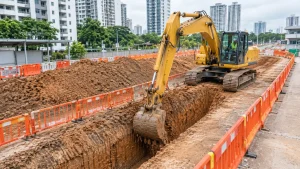
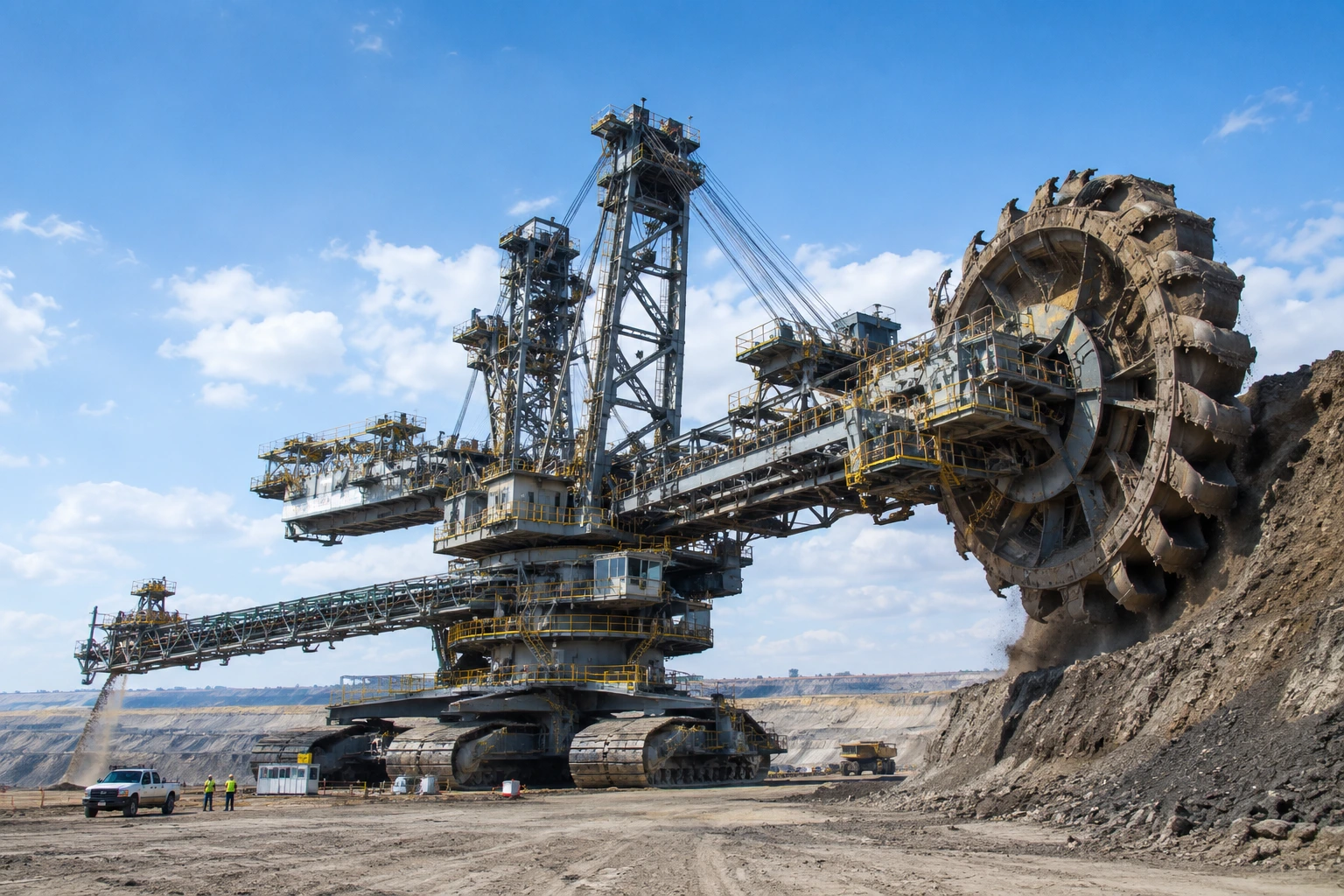
In heavy construction and mining industries, excavators are among the most powerful machines ever created. When people search for the biggest excavator, they are usually referring to ultra-large mining excavators designed to handle massive earthmoving operations under extreme working conditions.
These giant machines are not used for everyday construction. Instead, they operate in large mining environments where productivity, durability, and lifting capacity are critical. Understanding machine capability across industries can also be seen in practical equipment guides such as types of excavators for construction and earthmoving, which explains how different heavy machines are matched to specific job environments.
What Is the Biggest Excavator in the World?
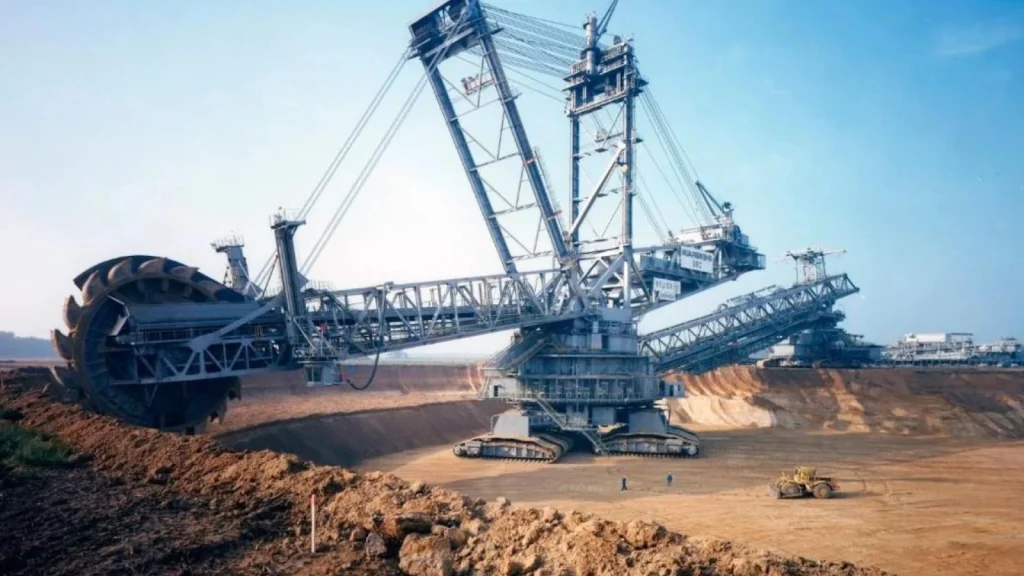
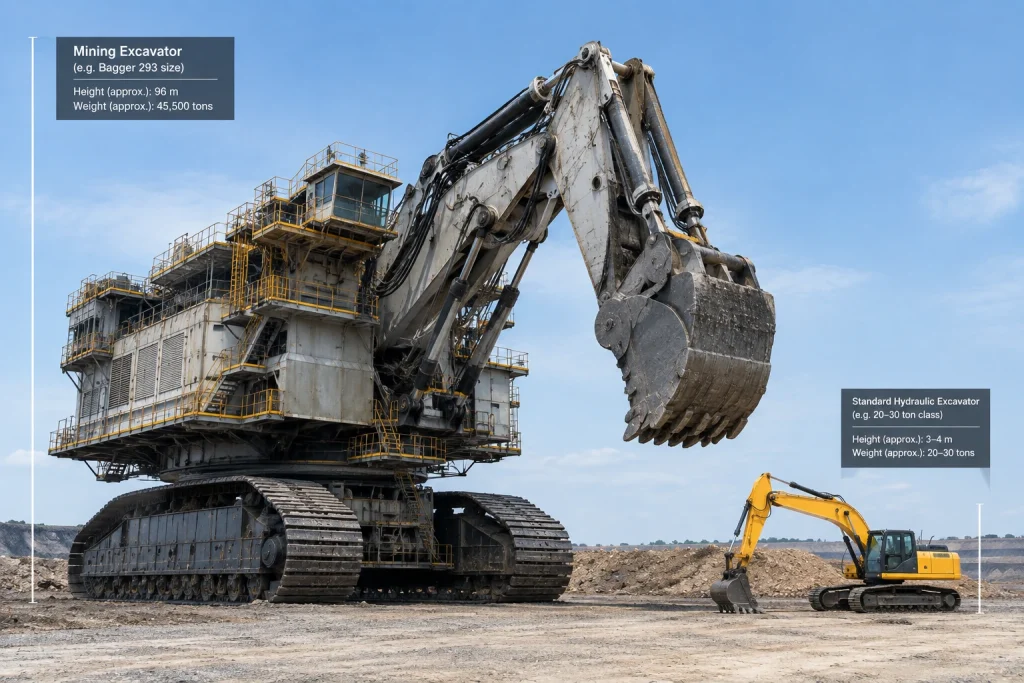
The title of the biggest excavator in the world is often associated with Bagger 293, a massive bucket-wheel excavator used in large-scale mining operations. Although technically not a hydraulic excavator, it remains the largest land machine ever built and represents the extreme scale of modern earthmoving engineering.
Among hydraulic excavators, the Liebherr R 9800 is widely recognized as one of the largest mining excavators ever produced, built for continuous heavy digging and large-scale material handling.
Notable Giant Excavators Around the World
Beyond Bagger 293 and the Liebherr R 9800, several other machines are regularly cited among the largest excavation equipment ever built, each representing a different engineering approach to extreme-scale earthmoving.
Bucyrus RH400 (now Komatsu PC8000): a hydraulic mining shovel with an operating weight around 800 tons, widely used across major open-pit copper and coal mining operations for its combination of high bucket capacity and hydraulic reliability.
Hitachi EX8000: one of the largest hydraulic mining excavators produced by Hitachi, purpose-built for high-volume overburden removal and ore extraction in large surface mining operations.
Bagger 288: a predecessor to Bagger 293 and, at the time of its construction, the heaviest land vehicle ever built, illustrating how this specific category of bucket-wheel excavator has been pushed to record scale across successive generations of German mining engineering.
These machines share a common thread despite their different designs, each was purpose-built for a specific mine’s ore body, overburden ratio, and production targets, meaning “biggest” is rarely a single, universal title but rather a moving benchmark defined by whichever machine currently leads in a specific measurable category, weight, bucket capacity, or engine output.
Also read : What Is a Scraper? Earthmoving Equipment Guide
Key Specifications of the Largest Excavators
The biggest excavators are designed for maximum productivity rather than mobility, and their specifications reflect priorities entirely different from a standard construction excavator, where manoeuvrability and transportability matter far more than raw scale. Typical features of the largest mining excavators include:
- Operating weight exceeding 800–1,000 tons
- Bucket capacity of 40–50 cubic meters
- Engine power above 3,000 horsepower
- Advanced hydraulic lifting systems
- Reinforced structure for mining terrain stability
Understanding how machine scale affects efficiency is important, similar to operational planning explained in how to operate an excavator safely step by step, where equipment capability directly impacts productivity and safety.
Main Components of a Giant Excavator
Even the biggest excavator models share similar core systems with standard excavators, but built on a much larger scale.
Undercarriage and Track System
Supports the enormous machine weight and ensures stability during operation on rough mining terrain. On the largest crawler excavators, multiple track shoes distribute pressure across a wide ground contact area, since concentrating this much weight on a smaller footprint would cause the machine to sink into all but the firmest ground.
Boom, Arm, and Bucket
Heavy-duty digging structures designed for extreme load handling and high-volume excavation. These components are built from thicker, higher-grade steel than standard excavators use, since the forces generated when a bucket this large breaks into dense mining material far exceed what a conventional structure could withstand repeatedly without fatigue failure.
Hydraulic System
Powers lifting, digging, and rotation with significantly higher pressure and flow capacity than standard excavators, requiring multiple large pumps working in parallel rather than the single pump system a conventional excavator uses. This increased hydraulic capacity is what allows the machine to move its massive boom and bucket assembly with enough speed to remain productive despite its scale.
Engine and Power Unit
High-output diesel engines, sometimes multiple engines working together, allow continuous heavy-duty operation in mining conditions where the machine may run nearly around the clock across multiple shifts. Fuel consumption at this scale is substantial, making engine efficiency a genuine economic factor across a mine’s operating lifetime rather than a secondary consideration.
Operator Cabin and Control Systems
Modern excavators include intelligent monitoring, advanced controls, and safety systems to improve productivity and reduce risk, giving operators real-time data on machine performance, structural stress, and maintenance needs that would be impossible to track manually at this scale. Automation and remote monitoring capabilities are increasingly common on the largest mining excavators, allowing operators and engineers to track machine health without needing to physically inspect every component. Similar equipment system integration is also discussed in earth moving equipment types and applications.
Where the Biggest Excavators Are Used
The biggest excavator machines are primarily used in:
- Open-pit mining
- Coal and mineral extraction
- Large-scale earthmoving
- Heavy industrial excavation
- Infrastructure mega-projects
These applications share a common economic logic, the enormous capital cost of acquiring, transporting, and assembling a machine this size only makes sense when spread across years of continuous, high-volume material movement. A project moving a modest volume of material over a short duration would never recoup the investment a machine of this scale requires, which is precisely why these excavators remain concentrated almost exclusively in large, long-life mining and infrastructure operations rather than general construction work.
Also read : Dump Truck Types: A Complete Guide for Construction and Mining
Choosing the right heavy equipment for site conditions is essential. Equipment comparison insights such as bulldozer vs excavator key differences demonstrate how machine selection impacts safety, efficiency, and operational performance.
Biggest Excavator vs Standard Excavator
Feature | Biggest Excavator | Standard Excavator |
Size | Extremely large | Compact to medium |
Usage | Mining & mega projects | Construction |
Mobility | Limited | High |
Bucket Capacity | Very high | Moderate |
Power Output | Ultra-high | Standard |
Selecting the correct machine size improves productivity and reduces long-term operational cost, especially in heavy industrial environments.
Also read : Front End Loader vs Excavator: Key Differences & Uses
Engineering Behind Giant Excavators
Designing the biggest excavator requires advanced engineering, including:
- Structural reinforcement for extreme weight
- High-pressure hydraulic systems
- Thermal management for long operations
- Wear-resistant components
- Intelligent monitoring and automation
Major heavy equipment manufacturers continue developing larger and more efficient excavators to support global mining demand and infrastructure development, though practical limits on transport, assembly logistics, and structural engineering mean growth in maximum size has slowed considerably compared to the rapid scaling seen in earlier decades of mining equipment development.
Choosing the Right Excavator
Not every project requires the biggest excavator. Machine selection depends on:
- Project scale
- Ground and material type
- Required digging capacity
- Operating environment
- Cost efficiency
For many construction and industrial operations, mid-to-large excavators provide the best balance between power, flexibility, and operational efficiency, since the biggest mining-class machines are neither transportable nor cost-effective for anything short of continuous, large-scale extraction work.
Conclusion
The biggest excavator represents the peak of heavy equipment engineering, designed for extreme productivity in mining and large-scale excavation. These machines exist at the intersection of structural engineering, hydraulic power, and economic necessity, built not because bigger is inherently better but because specific mining operations genuinely require this scale of continuous material movement to remain viable. Understanding how these giant machines operate helps contractors and engineers choose the right equipment, improve efficiency, and maintain safe operations in demanding environments.
RR Machinery Pte Ltd supports Singapore’s construction and industrial sectors with reliable heavy machinery solutions matched to your specific project scale. Browse our complete heavy machinery services or contact our team today for practical advice on the right earthmoving equipment for your project.