Table of Contents
Construction projects rely on a wide range of vehicles to move materials, lift loads, prepare ground, and support work at height. From earthmoving and lifting to transport and access, each type of vehicle plays a specific role on site. Understanding the different types of construction vehicles helps project teams plan equipment usage more effectively and improve safety and productivity.
Modern worksites often use multiple vehicles operating together, making it important to choose equipment that suits the task, site layout, and ground conditions.
What Are Construction Vehicles?
Construction vehicles are specialised machines designed to perform heavy-duty tasks on building, infrastructure, and industrial projects. These vehicles are built to handle rough terrain, heavy loads, and demanding working conditions that standard road vehicles cannot manage.
In general construction equipment references, construction vehicles are described as machines used for earthmoving, material handling, lifting, hauling, and access at height across construction and industrial sites.
Main Types of Construction Vehicles
Construction vehicles can be grouped based on the type of work they perform on site. Below are some of the most commonly used categories across modern construction projects.
Also Read : Boom Lift vs Scissor Lift: Which One Should You Choose?
Earthmoving Vehicles
Earthmoving vehicles are used to dig, push, level, and transport soil, sand, and other materials. These machines are typically among the first to arrive on site during the early stages of a project.
Common earthmoving vehicles include:
• Excavators for digging and trenching
• Bulldozers for pushing and clearing material
• Wheel loaders for loading and moving loose material
These vehicles are essential for site preparation, foundation work, and large-scale earthworks.Material Handling Vehicles
Material handling vehicles are used to lift, carry, and place materials such as pallets, equipment, and construction supplies. They are commonly used in warehouses, storage yards, and active construction zones.
Forklifts are one of the most widely used material handling vehicles, particularly for palletised loads and short-distance transport. On many worksites, teams rely on forklifts for lifting and moving materials efficiently between storage and work areas.
For general background, forklifts are commonly classified as industrial vehicles designed for material handling tasks in construction and logistics environments.Lifting and Access Vehicles
Lifting and access vehicles are used when work needs to be carried out above ground level. These vehicles help workers reach elevated areas safely and are widely used for installation, maintenance, and construction tasks.
Boom lifts and scissor lifts are common examples of access vehicles.
Boom lifts provide vertical and horizontal reach, while scissor lifts offer straight vertical access with a larger platform area. Many teams review boom lifts used for work at height when planning façade work or outdoor construction tasks.
For jobs that require stable vertical access, scissor lifts commonly used on construction sites are often selected for installation and maintenance work. For general context, access equipment such as boom lifts and scissor lifts falls under the broader category of mobile elevating work platforms.Hauling and Transport Vehicles
Hauling vehicles are used to move materials such as soil, aggregates, and debris around the site or between locations. Dump trucks and site dumpers are common examples, especially on large or spread-out projects.
These vehicles help keep materials flowing efficiently, reducing downtime caused by manual transport or inefficient handling.Compaction and Road Construction Vehicles
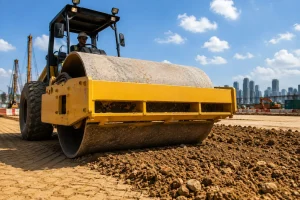
Compaction and road construction vehicles are used to prepare and finish ground surfaces. Rollers, compactors, and graders help ensure stable foundations for roads, pavements, and building bases.
These vehicles are commonly used on infrastructure projects, roadworks, and large commercial developments where ground stability is critical.
Also Read : Heavy Construction Equipment Names and What Each Machine Does
How to Choose the Right Construction Vehicle
Choosing the right construction vehicle depends on the type of work being performed, site conditions, and project duration. Factors such as ground conditions, available space, load requirements, and access constraints all influence equipment selection.
For longer projects, equipment reliability and maintenance support are also important considerations. Working with providers that offer equipment servicing and technical support helps reduce downtime and keeps vehicles operating safely throughout the project.
Common Uses of Construction Vehicles on Site
Construction vehicles are used across all stages of a project, from site preparation and foundation work to installation, finishing, and maintenance. Earthmoving vehicles shape the site, material handling vehicles move supplies, and access vehicles support work at height.
Using the right vehicle for each task helps improve efficiency, reduce safety risks, and keep projects on schedule.
Also Read : Types of Generators and Their Common Uses
Get the Right Construction Vehicles with RR Machinery
Selecting the right construction vehicles is not just about machine size or capacity. It also involves matching equipment to site conditions, job requirements, and operational needs. With proper planning, construction teams can reduce downtime, improve safety, and complete work more efficiently.
At RR Machinery, a range of construction vehicles and access equipment is available to support different project requirements. Many teams start by reviewing equipment options early and planning maintenance support to ensure smooth site operations.
If you need help choosing the right construction vehicles for your project or would like a quotation, you can get in touch with RR Machinery team to discuss your requirements.

Thia Rahmani
Choosing the Right Forklift Battery: A Complete Comparison
How a Forklift Really Works: The Mechanism Explained