
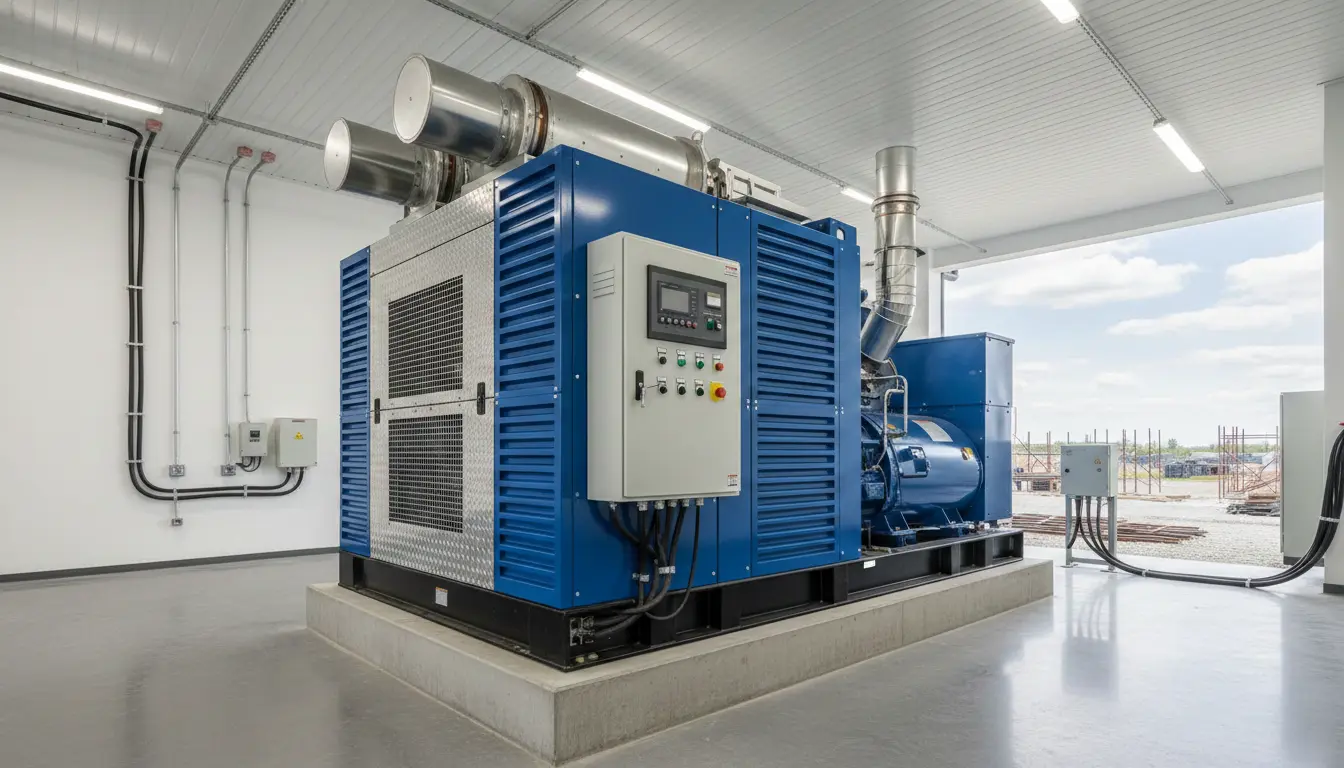
Power generators are among the most relied-upon pieces of equipment in construction, industrial operations, events management, and emergency preparedness. Yet for most people who depend on them, site managers, facility operators, logistics supervisors, the question of how a generator actually works remains surprisingly unclear. Understanding the answer is more than academic. It directly affects how you select, operate, maintain, and troubleshoot a generator in real-world conditions.
This guide explains how a generator works from first principles, covering the underlying physics, the key mechanical and electrical components involved, the main types of generators used across industries, and how that knowledge translates into smarter equipment decisions for your project or facility.
The Core Principle: Generators Do Not Create Energy
The most important thing to understand about how a generator works is also the most counterintuitive: a generator does not create electricity. It converts mechanical energy into electrical energy.
This distinction matters because it explains everything else about generator operation. The fuel, whether diesel, petrol, natural gas, or another source, is not directly converted into electricity. Instead, it powers a mechanical engine, and that engine drives a rotating component that induces an electrical current through a well-established physical phenomenon known as electromagnetic induction.
Electromagnetic induction was first demonstrated by the physicist Michael Faraday in 1831. Faraday showed that when a conductor, typically a coil of copper wire, moves through a magnetic field, an electric current is induced in the conductor. The strength of that current depends on the strength of the magnetic field, the number of turns in the coil, and the speed of relative movement between the conductor and the field.
This is the fundamental principle that every generator, from a small portable petrol unit to a 1,000 kVA industrial diesel machine, relies on. The rest of the generator’s complexity is in the engineering required to make this process reliable, efficient, controllable, and safe at scale.
Also read : What Is Scaffolding in Construction? Types, Uses, and Key Components
How a Generator Works: Step by Step
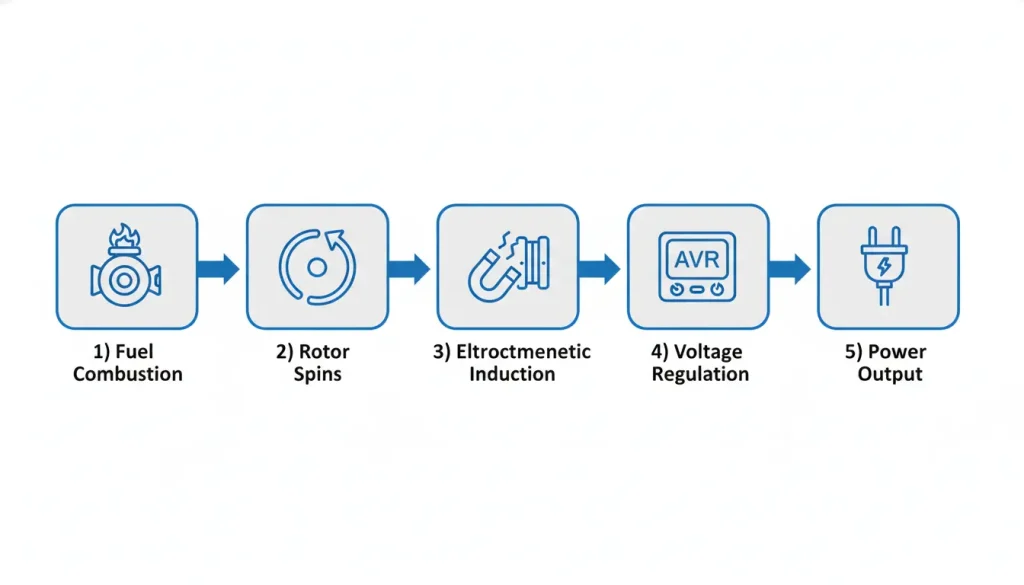
Breaking the process down into clear stages helps demystify what is happening inside the machine during operation.
Fuel combustion powers the engine
When a generator starts, its internal combustion engine begins running on the supplied fuel, diesel, petrol, LPG, or natural gas depending on the model. The engine operates on the same principles as a vehicle engine: fuel combustion drives pistons, which rotate the crankshaft. This rotational mechanical energy is the raw input that the generator will convert into electricity.
The engine’s speed is maintained at a precise rate, typically 1,500 RPM or 3,000 RPM depending on the design, because the frequency of the electrical output (measured in hertz, Hz) is directly related to the engine’s rotational speed. In Singapore and most of Asia, the grid standard is 50 Hz, which corresponds to specific engine speeds calibrated during manufacture.
The rotor spins inside the alternator
The mechanical output of the engine is connected directly to the rotor, the rotating component inside the alternator (also called the generator head). As the engine turns, it spins the rotor at the controlled speed established in step one.
The rotor is wound with copper wire and carries a small direct current (DC) excitation current that creates a magnetic field around it. This rotating magnetic field is the key to inducing electricity in the next stage.
Electromagnetic induction produces AC current
As the rotor’s magnetic field rotates inside the stator, the stationary outer winding of copper coils, it induces an alternating current (AC) in the stator windings. This is Faraday’s law in action: a changing magnetic field passing through a conductor induces a voltage and, if the circuit is complete, a current.
The alternating nature of the current, its regular back-and-forth flow, is a direct result of the rotational motion of the rotor. Each complete rotation produces one full AC cycle. At 3,000 RPM with a two-pole rotor, the generator produces 50 complete cycles per second: 50 Hz, matching Singapore’s grid standard.
The voltage regulator stabilises output
The raw electrical output from the stator must be regulated before it can power equipment safely. The automatic voltage regulator (AVR) monitors the generator’s output voltage continuously and adjusts the DC excitation current to the rotor to compensate for variations caused by changes in load. When more electrical load is connected, the AVR increases excitation to maintain stable voltage output. When load decreases, it reduces excitation accordingly.
Without the AVR, voltage fluctuations would damage sensitive equipment and create safety hazards. The AVR is what makes generator power suitable for powering computers, medical equipment, and precision industrial machinery, not just lights and motors.
Power is delivered through the control panel
The regulated AC output passes through the control panel, which houses the circuit breakers, output terminals, meters, and safety systems. Modern generator control panels include digital displays showing voltage, frequency, current, power factor, fuel level, engine temperature, and operating hours. They also incorporate automatic shutdown systems that cut power if the engine overheats, oil pressure drops, or the output voltage goes out of range.
From the control panel, power is distributed to the connected load, whether that is a construction site’s temporary power distribution board, a building’s transfer switch for backup power, or a direct connection to industrial equipment.
Key Components of a Generator
Understanding what each major component does helps with both selection and maintenance decisions.
Engine
The engine is the mechanical heart of the generator. Its power output, measured in horsepower (HP) or kilowatts (kW) of mechanical power, determines the maximum electrical output the generator can sustain. Engine displacement, fuel type, cooling system, and governor quality all affect how reliably the generator maintains its output under varying loads.
Diesel engines are the most common in industrial and construction generators due to their fuel efficiency, durability, and the energy density of diesel fuel. Petrol engines are used in smaller portable units. Gas-powered generators are increasingly common in facilities with natural gas connections, offering lower emissions and fuel cost advantages where gas supply is reliable.
Alternator (Generator Head)
The alternator is the electrical heart of the system. It contains the rotor and stator assemblies described above, along with the bearings that support the rotor and the excitation system that provides the magnetic field. Alternator quality directly affects the quality of the electrical output, specifically its waveform purity (total harmonic distortion, or THD), which matters greatly when powering sensitive electronics.
Automatic Voltage Regulator (AVR)
As described above, the AVR maintains stable output voltage despite fluctuating loads. In high-quality generators, the AVR responds within milliseconds to load changes, keeping voltage variation within a tight tolerance, typically ±1% to ±2.5% of the rated voltage.
Cooling System
Generators produce significant heat during operation. The cooling system, either air-cooled (using a fan) or liquid-cooled (using a coolant circuit similar to a vehicle’s radiator), removes this heat to prevent engine and alternator damage. Liquid-cooled systems are standard on larger industrial generators and offer more stable temperature management under continuous heavy loads.
Fuel System
The fuel system includes the fuel tank, fuel pump, fuel filters, and injectors. Tank capacity determines how long the generator can run without refuelling. For site or standby applications, generators are often connected to an external bulk fuel tank with a day-tank arrangement that feeds the engine automatically.
Exhaust System
The exhaust system removes combustion gases from the engine. On enclosed industrial generators, the exhaust is typically routed through a silencer and out through a properly designed flue. Exhaust management is important both for operator safety (avoiding carbon monoxide accumulation in enclosed spaces) and regulatory compliance with emissions standards.
Control Panel
The control panel is the operator interface. Basic units offer manual start, basic metering, and circuit breaker protection. Advanced units include automatic mains failure (AMF) systems that detect grid power loss and automatically start and connect the generator, essential for data centres, hospitals, and facilities where power continuity is non-negotiable.
Frame and Enclosure
The frame holds all components in alignment and provides the structural basis for transport and installation. The enclosure, typically a weatherproof powder-coated steel canopy on industrial units, reduces noise, protects components from the elements, and meets site safety requirements. Acoustic enclosures with sound-absorbing lining significantly reduce operating noise levels for urban site or office environment use.
Also read : Forklift vs Pallet Jack: Differences, Uses, and How to Choose
Types of Generators and Their Applications
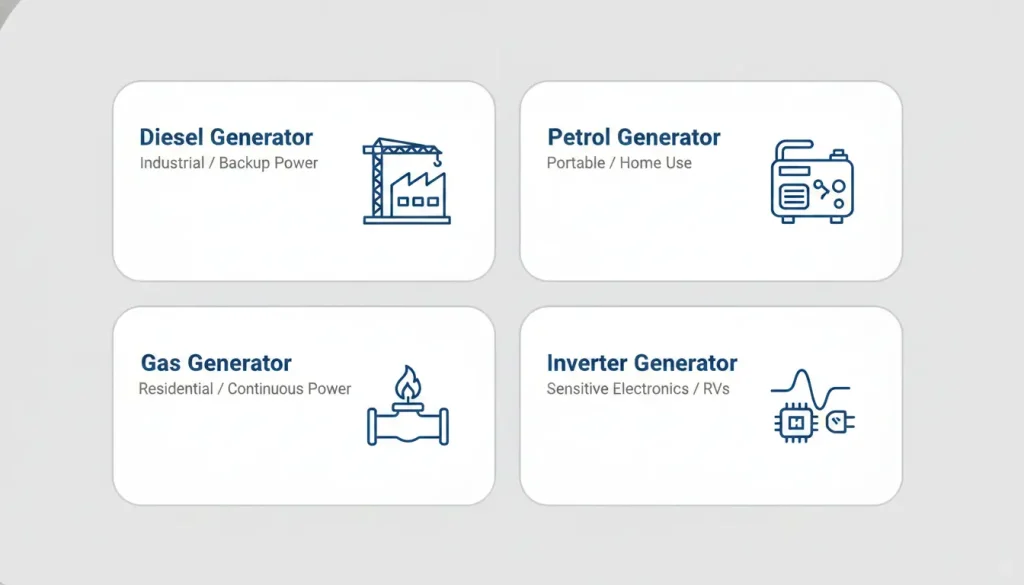
Not all generators are designed for the same purpose. Matching the generator type to the application is essential for efficiency, reliability, and cost management.
Diesel Generators
Diesel generators are the dominant choice for construction sites, industrial facilities, mining operations, and large-scale events. They offer high fuel efficiency at sustained loads, long service intervals, robust durability, and wide availability of fuel. Diesel generators are available from small 10 kVA portable units up to multi-megawatt containerised power stations.
In Singapore’s construction and infrastructure sector, diesel generators are the standard source of temporary power for sites not yet connected to the grid, and a critical backup for facilities where power continuity is essential. For project managers planning power requirements for construction and heavy equipment operations, diesel generator sizing is a foundational planning step.
Petrol Generators
Petrol (gasoline) generators are smaller, lighter, and lower-cost than their diesel counterparts. They are suitable for light-duty applications, powering a small number of tools on a residential project, providing electricity for outdoor events, or serving as emergency backup for small commercial premises. Their fuel efficiency is lower than diesel at sustained loads, and their service life is generally shorter under heavy use.
Gas Generators
Natural gas and LPG generators are connected to a piped gas supply rather than a liquid fuel tank, eliminating refuelling logistics. They produce lower emissions than diesel and can be cost-effective where gas supply is reliable and priced competitively. Gas generators are increasingly used in data centres, hospitals, and large commercial facilities for standby power, often as part of a combined heat and power (CHP) system that captures waste heat for building use.
Inverter Generators
Inverter generators use a more sophisticated electrical system that first generates AC power, converts it to DC, then inverts it back to clean AC at the precise required frequency and voltage. This process produces a much cleaner power waveform with very low total harmonic distortion, making inverter generators the preferred choice for powering sensitive electronics, medical equipment, audio-visual systems, and precision instruments.
Inverter generators are typically smaller and lighter than conventional generators of similar output, and many offer variable-speed engine operation that reduces fuel consumption and noise when the load is low.
Standby vs Prime Power Generators
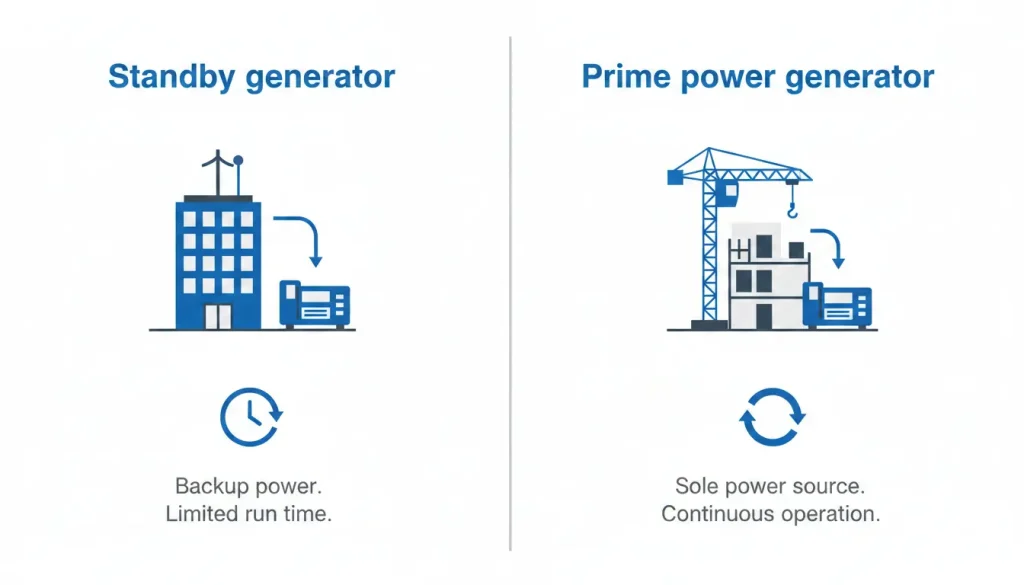
An important distinction that affects generator selection is the difference between standby and prime generator power ratings.
A standby generator is designed to operate only when the main power supply fails. It is rated to run at full load for a limited number of hours per year, typically 200 hours, and is not designed for continuous operation. Using a standby-rated generator as a primary power source will cause premature wear and potential failure.
A prime power generator is designed for continuous operation as the primary power source, with no utility backup. It is built to sustain full-load operation indefinitely and is rated accordingly. Prime power generators are standard on construction sites, remote industrial facilities, and any application where grid power is unavailable.
Understanding this distinction is critical when specifying generator equipment. Operators who underestimate their power requirements or select a standby unit for prime power duty create both equipment and safety risks on site. This principle applies equally to other types of heavy equipment selection decisions, where matching rated capacity to actual operational demand is a fundamental requirement.
Generator Sizing: How Much Power Do You Need?
Correct generator sizing is one of the most common challenges in generator selection. An undersized generator will overload and shut down. An oversized generator will run inefficiently, diesel engines in particular suffer from “wet stacking” (incomplete fuel combustion caused by low load), which leads to carbon buildup and accelerated wear.
Generator sizing involves calculating the total electrical load that will be connected. This includes:
- The running watts of all connected equipment
- The starting surge requirements of motors and compressors, which can draw three to seven times their running current at startup
- A safety margin, typically 20–25% above the calculated peak demand
For construction sites, it is also important to account for which equipment will run simultaneously versus sequentially. A site may have 100 kW of total connected equipment, but if no more than 60 kW runs at any one time, a 75 kVA generator (with margin) may be sufficient.
Working through this calculation with an experienced equipment supplier, rather than defaulting to the largest available unit, saves both capital cost and ongoing fuel expenditure over the life of the project.
Generator Maintenance Essentials
A generator that is not properly maintained will not perform reliably when it is most needed. Core maintenance tasks include:
Regular load testing
Standby generators should be run under load periodically, at least monthly, to verify that they start and deliver power reliably and to prevent wet stacking in diesel units.
Oil and filter changes
Engine oil degrades under heat and contamination. Oil change intervals are specified by the manufacturer based on operating hours, not calendar time, a generator running continuously needs more frequent service than one used only occasionally.
Coolant checks
Coolant level, concentration, and condition should be checked regularly. Degraded coolant accelerates corrosion in the cooling circuit.
Fuel quality management
Diesel fuel degrades over time, particularly in storage. Tanks should be kept clean and treated with biocide where microbial contamination is a risk. Water contamination in diesel is a common cause of injector failure.
Air filter inspection
A blocked air filter starves the engine of combustion air, reducing output and increasing fuel consumption.
Battery maintenance
Generator starting batteries must be kept charged and in good condition. A flat or failed battery is the single most common reason a generator fails to start in an emergency.
For technical guidance on generator maintenance principles, engineering references on power generation systems and industrial electrical equipment provide detailed context on the mechanical and electrical systems involved.
Also read : Understanding Different Types of Cranes and Their Applications
Get Reliable Generator Solutions for Your Operation
Understanding how a generator works, from Faraday’s principle of electromagnetic induction through to the AVR, control panel, and load management, gives you a clearer basis for every decision you make about generator selection, sizing, operation, and maintenance. A well-chosen, properly maintained generator is not just a backup device. It is a critical operational asset that keeps projects running, facilities productive, and people safe.
RR Machinery offers a comprehensive range of power generators for sale and rental across Singapore, from compact units for light site use to heavy-duty industrial generators exceeding 1,000 kVA. Every unit is professionally maintained, tested before delivery, and supported by experienced technicians available for installation, servicing, and 24/7 technical assistance.
Explore our full range of power generator solutions available for sale and rental, or contact our team for a practical recommendation and clear quotation matched to your exact power requirements.