Working at height is a common requirement in industries such as construction, maintenance, warehousing, and industrial operations. Tasks performed above ground level often involve significant risks, making safety a top priority for both employers and workers.
Without proper precautions, working at height can lead to serious accidents, injuries, or even fatalities. Understanding the risks involved and applying the right safety measures is essential to creating a safe and efficient work environment.
This guide explores everything you need to know about working at height, including common hazards, safety practices, equipment, and compliance standards.
What Is Working at Height?
Working at height refers to any task performed at a level where a person could fall and cause injury. This includes working on ladders, scaffolding, rooftops, elevated platforms, or using lifting equipment such as scissor lifts and boom lifts.
Even tasks performed at relatively low heights can be dangerous if proper precautions are not taken. The key factor is the risk of falling, not just the height itself.
Understanding what qualifies as working at height helps businesses implement appropriate safety measures and reduce risks.
Why Working at Height Is High Risk
Working at height is considered one of the leading causes of workplace accidents worldwide. The risks involved can result in serious injuries such as fractures, head injuries, or worse.
Several factors contribute to these risks:
- Unstable working surfaces
- Lack of proper safety equipment
- Poor weather conditions
- Inadequate training
Falls from height are often preventable when proper planning and safety procedures are followed.
Common Hazards When Working at Height
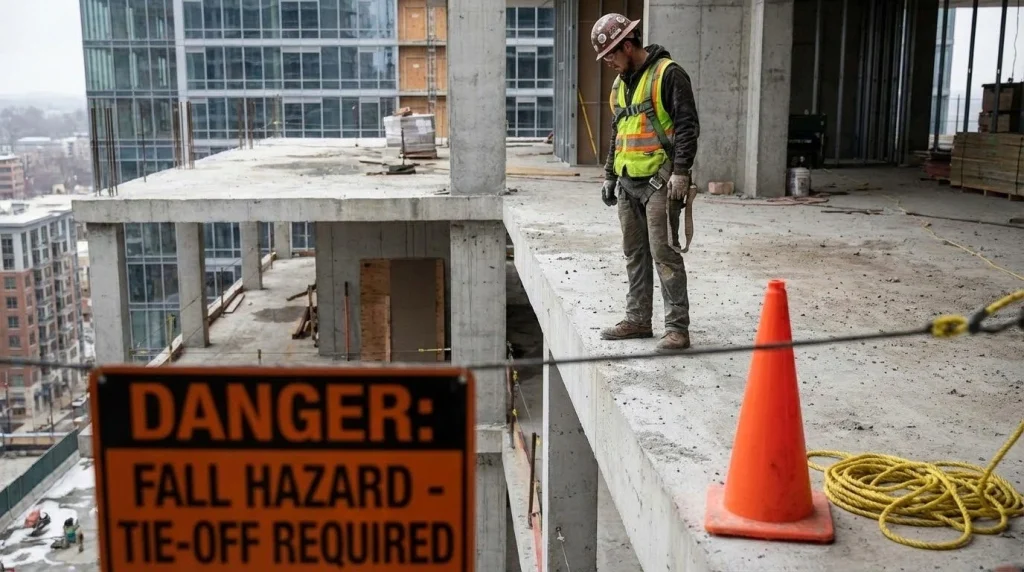
Identifying hazards is the first step in preventing accidents.
-
Unprotected Edges
Working near open edges without guardrails, or with barriers that are damaged or too low, significantly increases the risk of a fall, particularly when a worker is focused on a task rather than their proximity to the edge. Edge protection should be checked and confirmed in place before work begins, not assumed to be adequate simply because it was installed at some earlier point.
-
Slippery Surfaces
Wet, icy, or uneven surfaces reduce footing and can cause a sudden loss of balance at exactly the moment a worker cannot afford one, whether on a ladder rung, a scaffold platform, or the edge of a roof. Surfaces should be inspected and, where necessary, cleared or treated before work begins, and work should be paused if conditions deteriorate during a task.
-
Falling Objects
Tools, fasteners, or materials falling from height can cause serious injury to anyone working or passing beneath, even from a relatively modest height, since falling objects gain damaging force quickly over a short drop. Toe boards, debris netting, and exclusion zones on the ground below all help control this risk, alongside simple discipline around securing loose items before they are needed.
-
Improper Equipment Use
Using equipment that is incorrect for the task, or that has not been properly inspected and maintained, introduces risk that no amount of operator skill can fully offset, whether that means a ladder rated for the wrong duty class or a harness with a damaged stitching. Equipment should always be matched to the specific task and checked immediately before use, rather than selected based on convenience or availability alone.
Understanding these hazards allows organizations to implement effective risk control measures.
Essential Safety Equipment for Working at Height
Using the right equipment is crucial for ensuring safety.
-
Personal Protective Equipment (PPE)
This includes hard hats to protect against falling objects, full-body harnesses connected to a suitably rated anchor point to arrest a fall, and non-slip footwear to maintain traction on ladders, platforms, and roof surfaces. PPE should be treated as the last line of defence rather than the primary control, since it reduces the severity of an incident rather than preventing the underlying hazard from existing in the first place.
-
Guardrails and Barriers
Guardrails and barriers provide passive physical protection along open edges, working platforms, and stairwells, preventing a fall from occurring at all rather than simply arresting one already in progress. Because they require no action from the worker to be effective, properly installed guardrails are generally considered a more reliable control than personal fall arrest equipment alone.
-
Safety Nets
Safety nets are installed beneath a work area to catch a falling worker or falling debris, reducing the severity of injury where edge protection or other primary controls are not practical for a specific task. Nets need to be correctly rated, properly tensioned, and inspected regularly, since a poorly installed net offers a false sense of security without providing genuine protection.
-
Aerial Work Platforms
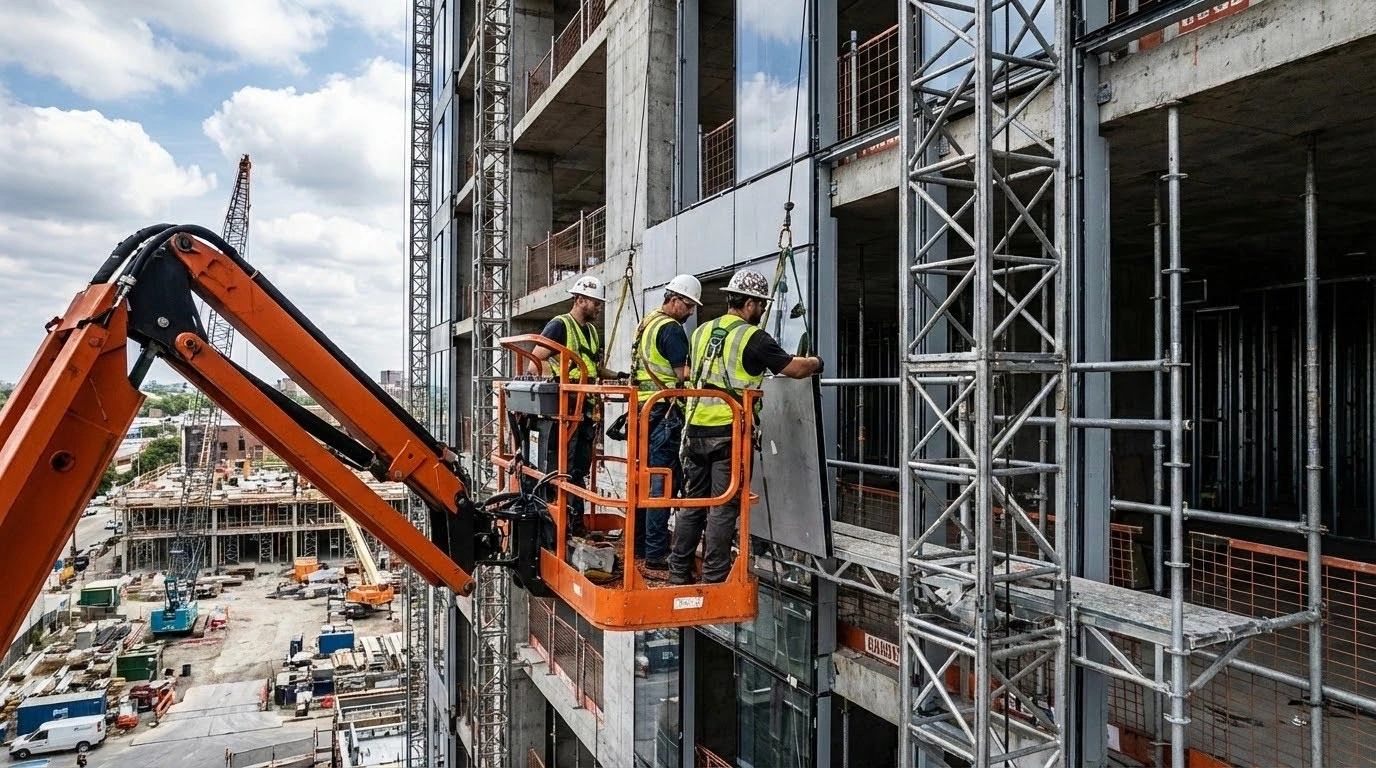
Aerial work platforms such as scissor lifts and boom lifts provide a stable, guarded working platform that eliminates much of the risk associated with ladders, particularly for tasks that take more than a few minutes or require both hands free to work. Their built-in guardrails, controlled elevation, and, in many models, load sensing systems make them a significantly safer option than a ladder for any task where they are practical to deploy.
Also read : Lifting Equipment Safety Tips for Safer Worksites
To better understand these tools, you can explore what is an aerial lift and how it improves safety in elevated work environments.
Best Practices for Safe Working at Height
Implementing best practices significantly reduces risks.
-
Conduct Risk Assessments
A risk assessment carried out before work begins identifies the specific hazards a task will involve, from edge exposure to weather conditions to the equipment required, allowing controls to be put in place proactively rather than improvised once work is already underway.
-
Use Proper Equipment
Equipment should be selected specifically for the task and working environment, and confirmed to be in good working condition through a pre-use check, since suitable equipment that is poorly maintained carries much of the same risk as equipment that was never suitable to begin with.
-
Provide Training
Every worker involved in a task at height should be trained not just generally in safety awareness but specifically in the equipment and procedures relevant to that task, since generic safety training does not substitute for equipment-specific competency.
-
Maintain Clear Communication
Clear communication between workers at height, ground personnel, and supervisors ensures that everyone understands their role, the sequence of work, and what to do in an emergency, reducing the chance of a misunderstanding contributing to an incident.
These practices help create a safer and more controlled working environment.
Safety Regulations and Compliance
Regulations governing work at height exist because falls remain one of the leading causes of serious workplace injury and fatality across nearly every industry that involves elevated work, and they set out the minimum standards employers must meet to manage that risk.
Employers must:
- Provide appropriate safety equipment
- Conduct regular inspections
- Ensure worker training
- Follow established safety standards
Compliance is not simply a legal formality, sites that genuinely embed regulatory requirements into daily practice consistently report fewer incidents than those treating compliance as a paperwork exercise performed only ahead of an audit. Singapore’s Ministry of Manpower also publishes broader Workplace Safety and Health guidance covering training, risk assessment, and equipment standards that apply alongside the work-at-height-specific requirements referenced above.
Also read : 10 Construction Site Safety Rules Every Worker Should Know
Following standards such as working at height safety regulations and international compliance guidelines ensures proper safety management.
Choosing the Right Equipment for Working at Height
Selecting the right equipment depends on the nature of the task and working environment.
-
Ladders
Ladders remain suitable for short-duration, light tasks where a more substantial platform would be impractical, but they offer limited stability, no fall protection beyond the user’s own three points of contact, and no ability to carry materials or a second worker safely.
-
Scaffolding
Scaffolding provides a stable, guarded platform suited to extended work periods, multiple workers, and tasks requiring materials to be staged at height, at the cost of longer setup and dismantling time compared to more mobile equipment options.
-
Aerial Lifts
Aerial lifts such as scissor lifts and boom lifts combine a stable, guarded platform with the ability to reposition quickly between tasks, offering a practical middle ground between a ladder’s simplicity and scaffolding’s stability for many elevated tasks.
Understanding types of lifting equipment used in construction and industrial operations helps businesses choose the most suitable solution.
Common Mistakes to Avoid
Avoiding mistakes is critical for maintaining safety.
-
Ignoring Safety Checks
Skipping pre-use inspections because a task feels routine or time is short is one of the most common ways a developing equipment fault goes unnoticed until it causes a failure during use.
-
Overloading Equipment
Exceeding an ladder, platform, or lifting equipment’s rated load limit, whether through worker weight, tools, or materials, removes the safety margin the equipment was designed around and significantly increases the risk of structural failure or instability.
-
Lack of Training
Assigning work at height to untrained workers, even for tasks that appear straightforward, significantly increases the likelihood of an error, since untrained workers are less likely to recognise developing hazards or respond correctly when something goes wrong.
-
Poor Planning
Failing to assess risks before work begins, or treating a risk assessment as a box-ticking exercise rather than a genuine evaluation, is one of the most common underlying causes when a preventable incident does occur.
The Role of Training in Preventing Accidents
Training plays a vital role in ensuring safe operations. Workers must understand how to use equipment properly and follow safety procedures. Regular training sessions help reinforce safety awareness and improve overall performance.
Understanding how to operate a scissor lift safely and correctly in daily operations is especially important for tasks involving elevated platforms.
Also read : How to Operate a Boom Lift: A Step-by-Step Safety Guide
Maintenance and Inspection for Safety
Regular maintenance ensures that ladders, scaffolding, harnesses, and aerial work platforms all remain safe and functional throughout their working life, rather than only being checked once a fault has already become apparent.
Inspection tasks include:
- Checking structural integrity
- Testing safety systems
- Identifying wear and tear
A preventive maintenance schedule, followed consistently rather than reactively, reduces both unplanned downtime and the likelihood of an equipment failure occurring while a worker is actually at height, when the consequences of a fault are at their most serious.
Benefits of Safe Working at Height Practices
Implementing proper safety measures offers several benefits:
- Reduced workplace accidents
- Improved productivity
- Better compliance with regulations
- Increased worker confidence
A safe working environment leads to better overall performance and long-term success.
Reliable Equipment Solutions for Your Operations
Understanding working at height safety practices helps businesses protect their workforce and maintain efficient operations. By implementing proper safety measures, using the right equipment, and ensuring regular training, companies can significantly reduce risks and improve productivity.
If you are looking for reliable boom lifts or scissor lifts for working at height, explore our range to find the right solution for your operational needs. Contact us to assist you in maintaining safe, efficient, and compliant work environments.