Forklifts all do the same “core job” (move loads safely), but the type you choose affects speed, turning space, racking height, load stability, and even running costs. Below is a practical guide to the most common forklift types and where they fit best, so you can match the machine to your site, not the other way around.
Different Types of Forklifts
1. Counterbalance Forklifts
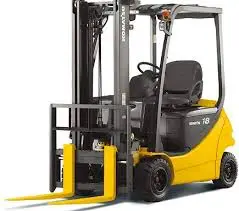
If you picture a standard forklift, it’s usually a counterbalance model: forks in front, counterweight at the back. It’s widely used because it’s straightforward, versatile, and works across many sites.
Best for: loading bays, general warehousing, mixed indoor/outdoor use, pallet handling.
Why it works: stable lift without needing outriggers, easy to operate, broad attachment options.
If you’re starting from zero and your aisles aren’t extremely tight, a counterbalance forklift is often the baseline choice.
2. Reach Trucks
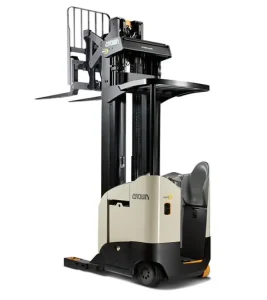
A reach truck is built for warehouses with tall racks and tight aisle widths. It’s designed to extend (“reach”) into racking while keeping the truck compact.
Best for: narrow-aisle warehouses, high-level pallet storage, cold storage.
Key benefits: strong lift height, tight turning, stable manoeuvring in dense racking layouts.
If you’re constantly working above standard rack heights, reach trucks are usually more efficient than “forcing” a counterbalance to do the same job.
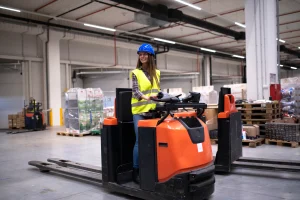
3. Pallet Jacks
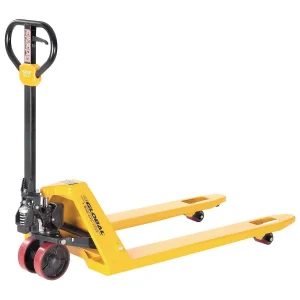
Pallet jacks (pump trucks) are the go-to for ground-level movement and short distances, simple, fast, and cost-effective.
Best for: container unloading, supermarkets, small warehouses.
Manual vs electric: electric helps reduce fatigue and increases throughput; manual is cheaper and fine for light duty.
If your job is mostly “move pallets from A to B on the same level,” a pallet jack may cover 80% of the need without stepping up to a full forklift.
4. Order Pickers
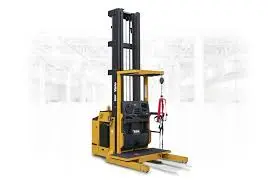
An order picker is made for operations where workers pick individual items directly from shelves/racks rather than moving full pallets.
Best for: e-commerce fulfilment, retail distribution, piece-picking workflows.
Main advantage: lets operators work at height more safely and efficiently for picking.
This is less about “lifting big loads” and more about “moving a person + a small quantity of goods quickly.”
5. Rough Terrain Forklifts
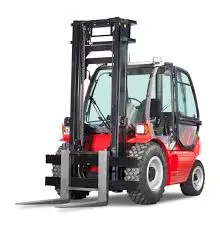
Rough terrain forklifts are designed for outdoor work and uneven surfaces, using large pneumatic tyres and heavier-duty builds.
Best for: construction sites, yards, ports/marine environments.
Why it matters: stability and traction where smooth concrete floors aren’t guaranteed.
If your site conditions are unpredictable, this type can prevent slowdowns and safety risks from wheel slip or poor stability.
6. Side Loader Forklifts
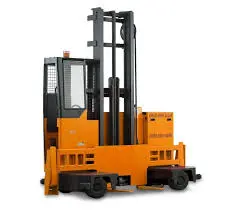
Side loaders carry loads on the side, which makes them ideal for materials that are awkward to transport face-forward (long timber, pipes, etc.).
Best for: timber yards, tube/pipe handling, metal fabrication.
Why they excel: lateral loading reduces tipping risk and improves handling efficiency for long items.
If you routinely handle long stock, side loaders can dramatically reduce manoeuvring time and damage risk.
7. Telehandlers

A telehandler (telescopic handler) is a hybrid: it can lift like a forklift, but with a boom that extends for reach, useful when you need both height and distance.
Best for: construction, landscaping, industrial maintenance.
Pros: extendable boom, high lifting reach, and support for multiple attachments.
Telehandlers shine when a standard mast forklift can’t reach the drop zone, or when you want one machine to cover multiple tasks.
Forklift Power Types
After you choose the forklift type, the next decision is the power source, which affects ventilation needs, noise, refuelling/charging, and operating hours.
- Electric forklifts: quiet, zero emissions, commonly preferred for indoor environments.
- Diesel forklifts: strong torque and suited for outdoor/heavy-duty work, but not ideal for enclosed spaces.
- LPG forklifts: faster refuelling and a practical “middle ground” for mixed environments.
A simple way to decide: if you’re mostly indoors and care about clean operation, start with electric; if you’re outdoors and moving heavy loads all day, diesel often wins; if you’re truly mixed, LPG is worth considering.
How to Choose The Right Forklift
Before picking a model, map your operation using these factors:
- Environment (indoor vs outdoor): indoor often suits electric/reach; outdoor often suits diesel/rough terrain.
- Aisle width: narrow aisles point to reach trucks or order pickers; standard aisles give you more counterbalance options.
- Load type: long materials favour side loaders; high vertical stacking favours reach trucks; palletised loads often work with standard forklifts.
- Usage frequency: daily heavy-duty use often fits diesel/LPG; light–medium usage can lean electric.
Choosing well typically improves productivity and safety while reducing downtime and long-term operating cost.
Get the Right Forklift with RR Machinery
Choosing the right forklift isn’t just about lifting capacity or mast height. What matters even more for day-to-day site and facility operations is having equipment that’s ready to work and backed by responsive servicing. With proper planning, you can reduce downtime, keep productivity steady, and complete jobs more safely and efficiently.
Every project is different. Some teams need a short-term solution for a specific job, while others prefer to invest in ownership for long-term use. Many also rely on technical support and maintenance to keep equipment performing reliably over time. Working with one supplier that can support rental, sales, and servicing makes the process smoother and helps avoid delays on-site.
To explore options, you can browse Forklift options, compare Rental equipment, or check Sales enquiries. If you need servicing help, check Servicing and Support.
Need a quick recommendation or a quotation? Contact our team for a faster response.