Scaffolding is one of the most widely used temporary access systems in construction, maintenance, repair, and industrial work. It allows workers to reach elevated areas safely, work across a wider surface, and access parts of a structure that cannot be reached from ground level. Yet because scaffolds are temporary structures, their safety depends heavily on proper design, erection, inspection, use, and dismantling.
Understanding scaffolding safety requirements is essential for contractors, site supervisors, safety officers, scaffold erectors, and project managers. A scaffold may look simple from the outside, but it must carry workers, tools, materials, platform loads, and environmental forces while remaining stable throughout the work period. A small error in ground support, bracing, access, platform installation, or load control can create serious risks.
Scaffolding safety is not only about preventing falls from height. It also includes preventing scaffold collapse, falling objects, unsafe access, overloading, electrical contact, poor ground support, and unauthorised alteration. For construction projects, these requirements should be treated as part of site planning, not as a final checklist after the scaffold is already built.
This guide explains the main scaffolding safety requirements, how they apply on construction sites, and what project teams should consider before using scaffolding for elevated work. For readers who need a broader introduction to scaffold systems, our guide on what scaffolding is in construction explains the basic purpose, components, and common applications of scaffolding before moving into safety-specific requirements.
Understanding Scaffolding Safety Requirements
Scaffolding safety requirements exist because scaffolds function as temporary working platforms at height. Unlike permanent building structures, scaffolds are assembled, modified, moved, loaded, and dismantled as the project progresses. This means their safety can change from day to day depending on site activity, weather, material storage, and how workers use the platform.
A safe scaffold must provide stable support, sufficient platform width, proper access, fall protection, load control, and regular inspection. OSHA’s scaffold standard states that each scaffold and scaffold component must be able to support its own weight and at least four times the maximum intended load applied to it. (OSHA)
The type of material used also affects scaffold performance. Steel, aluminium, timber, and other scaffold materials have different strengths, weights, handling requirements, and durability characteristics. Before selecting or approving a system, project teams should understand the types of scaffolding materials commonly used in construction and how they affect safety, setup, and site suitability.
In Singapore, scaffolding is also covered under workplace safety and health regulations. The Workplace Safety and Health Scaffolds Regulations apply to workplaces where scaffolds are constructed, erected, installed, used, re-positioned, altered, maintained, repaired, or dismantled. (Singapore Statutes Online)
For project teams, the practical meaning is clear: scaffolding should not be treated as a basic temporary structure that anyone can assemble or modify. It must be selected, erected, inspected, and used according to the work environment, scaffold type, load requirement, height, and site conditions.
Also read: Working at Height: Safety Guidelines, Risks, and Best Practices
Why Scaffolding Safety Matters in Construction
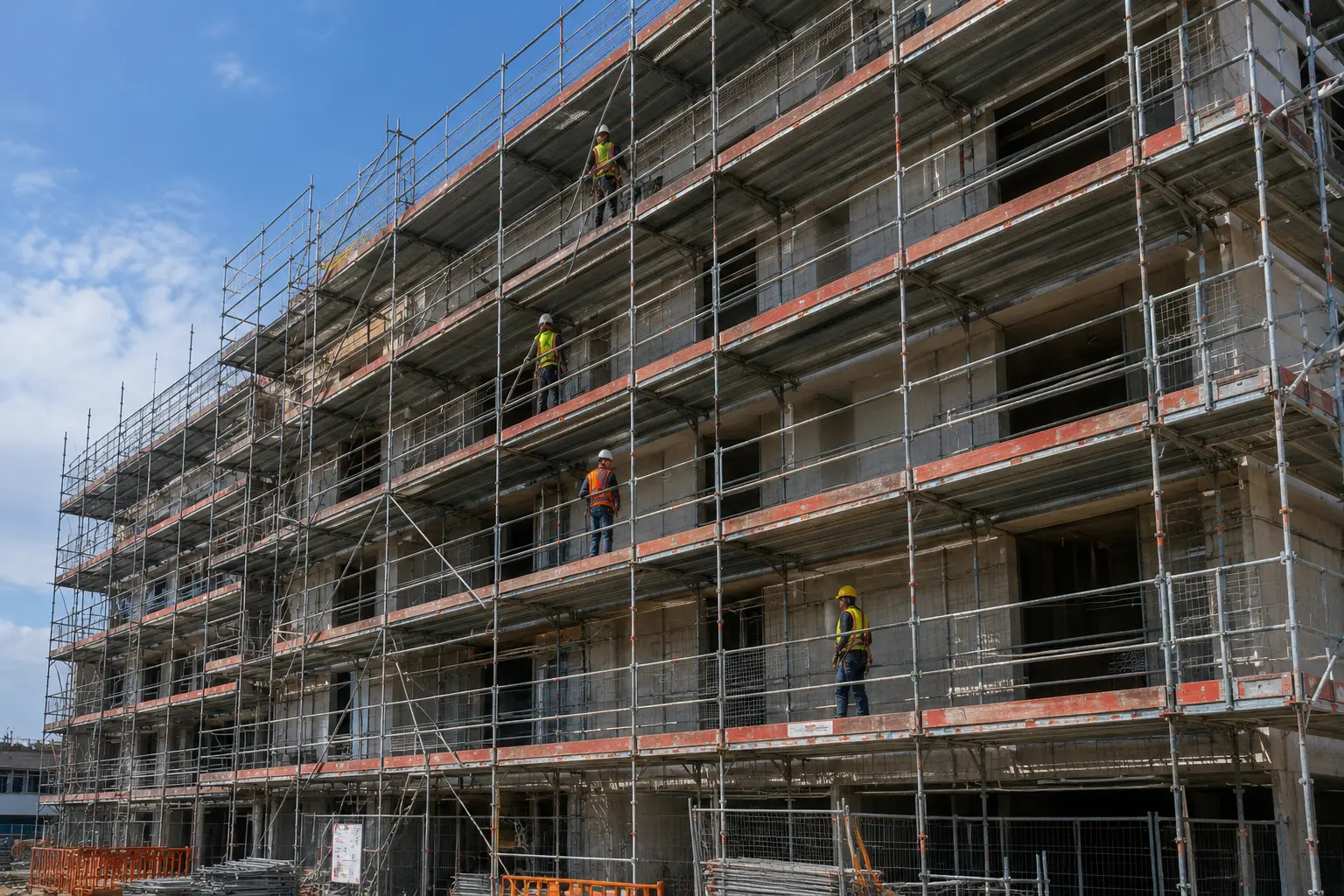
Scaffolding is often installed in areas where work is already complex: façades, building edges, overhead structures, industrial plants, renovation zones, and active construction sites. Workers may be performing masonry, painting, cladding, inspection, MEP installation, repair, or cleaning while standing several metres above ground. In these conditions, the scaffold becomes the main barrier between routine work and serious incident.
Unsafe scaffolding can lead to falls, platform failure, collapse, dropped tools, struck-by incidents, and access-related injuries. These risks do not only affect workers on the scaffold. People below the scaffold, nearby trades, site visitors, and equipment operators may also be exposed if materials fall or if the structure becomes unstable.
Good scaffolding safety begins before erection. The site team must understand the task, height, platform area, loading requirement, ground support, access path, weather exposure, and duration of use. This planning stage is closely connected to wider construction site safety, because scaffold hazards can affect workers on the platform as well as people, vehicles, and equipment operating below.
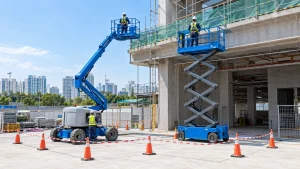
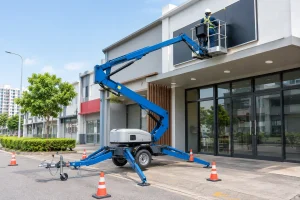
In some cases, a scaffold may not be the most efficient or safest access method. For short-duration work, isolated access points, or tasks requiring frequent movement, equipment such as mobile scaffolding, scissor lifts, or boom lifts may be more practical. The right choice depends on the work area, ground surface, access restriction, height requirement, and whether workers need a fixed platform or mobile elevated access.
Key Scaffolding Safety Requirements
Proper Scaffold Design and Load Capacity
Every scaffold must be capable of supporting the load it is expected to carry. This includes workers, tools, materials, platform boards, guardrails, temporary coverings, and any load transferred during the work. Load capacity is one of the most important scaffolding safety requirements because overloading can cause platform failure or structural instability.
The scaffold type and configuration must match the work activity. A scaffold used for painting or inspection may carry relatively light loads, while one used for brickwork, façade installation, or repair work may need to support heavier materials. Before the scaffold is built, the erection method, component selection, platform layout, and access points should be planned carefully, as explained in our practical guide on how to build scaffolding safely.
Load capacity must also be understood by workers using the scaffold. Even a correctly erected scaffold can become unsafe if materials are stacked unevenly, platforms are overloaded, or loads are concentrated in one bay. Site supervisors should control material storage on scaffolds and ensure workers do not use platforms as general storage areas.
Where materials need to be lifted, moved, or positioned at height, the lifting method should also be considered. A scaffold platform should not be overloaded simply because materials are difficult to move from ground level. Depending on the task, suitable lifting equipment or material handling support may be needed to keep scaffold loading within safe limits.
Stable Foundation and Ground Support
A scaffold is only as safe as the ground or structure supporting it. Before erection, the site must be checked for ground strength, levelness, drainage, voids, underground services, slopes, and nearby excavations. Soft, uneven, or recently disturbed ground can affect scaffold stability, especially as the scaffold height increases.
Base plates, sole boards, and proper levelling methods are essential for distributing load and preventing settlement. The scaffold should not be supported on unstable objects such as loose blocks, bricks, buckets, timber offcuts, or makeshift packing. Any settlement at the base can create distortion through the scaffold frame, affecting platforms, guardrails, bracing, and ties.
Ground conditions can also change during the project. Rain, excavation, vehicle movement, vibration, or material storage near the scaffold can affect support conditions. This is why inspections should not only check the upper scaffold structure, but also the base and surrounding ground.
For mobile scaffold towers, ground condition is equally important. The surface must be level and suitable for movement, and the tower should not be moved while workers or materials remain on the platform. If the project requires movable access for lower-height work, it is useful to understand what mobile scaffolding is and how it differs from fixed scaffold structures.
Guardrails, Toeboards, and Fall Protection
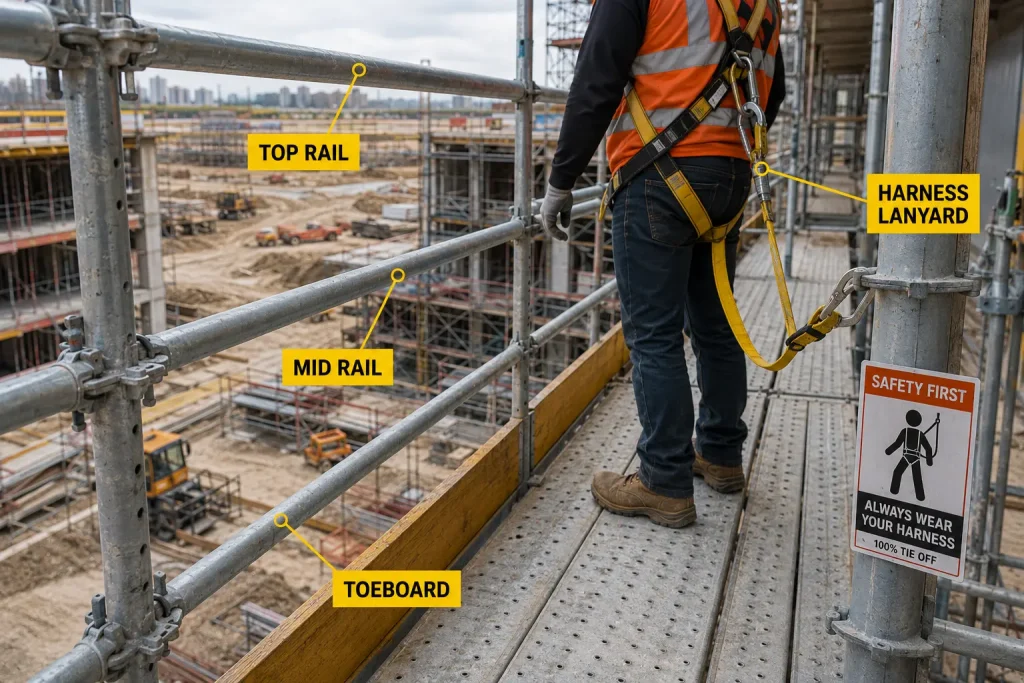
Fall protection is one of the most visible parts of scaffolding safety. Platforms at height should be protected with guardrails, midrails, and toeboards where required. These components help prevent workers from falling from the working platform and reduce the chance of tools or materials falling onto people below.
Because scaffold work is part of a wider work-at-height risk environment, fall prevention should be planned together with the site’s working at height procedures. This includes safe access, edge protection, inspection routines, rescue planning, and clear rules on when personal fall protection may be required.
Guardrails must be properly installed and maintained throughout the work. Removing guardrails to improve access, pass materials, or complete a small task can create a serious fall hazard. Any temporary removal should be controlled, authorised, and restored immediately after the work is complete.
Toeboards are also important because scaffolds are often used above active work areas. A dropped tool or small material can cause injury even from a moderate height. Where there is risk to people below, additional protection such as debris netting, exclusion zones, covered walkways, or tool lanyards may be required.
Safe Access and Egress
Workers must be able to access and leave the scaffold safely. Climbing on scaffold frames, cross braces, guardrails, or temporary supports is unsafe and should not be allowed. Proper access may include ladders, stair towers, access gates, integrated scaffold stairs, or other approved access points.
Safe access is especially important when workers carry tools or small materials. If the access route is narrow, unstable, or poorly positioned, workers may lose balance or use unsafe climbing methods. The access route should be planned so workers can move between ground level and the work platform without exposing themselves to unnecessary fall risk.
Access points should also remain clear throughout the work. Materials should not block ladders, gates, landings, or platform openings. Where several trades use the same scaffold, site coordination is needed to prevent congestion and unsafe movement.
For short-duration tasks or work areas where scaffold access would be slow to erect, powered access equipment may offer an alternative access method. Our guide to mobile elevating work platforms explains how different elevated access equipment can support safer work at height when the task does not require a fixed scaffold structure.
Complete and Secure Working Platforms
The scaffold platform must be properly decked, stable, and suitable for the work being carried out. Platform boards or decking units should be correctly installed, secured, and free from damage. Gaps, loose boards, damaged planks, or incomplete decking can create trip hazards and fall risks.
A working platform should provide enough space for workers to stand, move, and use tools safely. The platform should also match the work activity. A narrow platform may be unsuitable for tasks involving materials, while a platform used for façade or repair work may require more space for safe movement.
Platform condition should be checked regularly because boards and decking can shift, become damaged, or be affected by weather. Wet, oily, muddy, or cluttered platforms increase slip and trip risk. Materials should be stored neatly, and waste should be removed before it creates a hazard.
Platform security is also important during alteration. Workers should not use partially completed scaffolds unless the area has been declared safe for use. If a scaffold is still being erected, modified, or dismantled, access should be restricted and clearly controlled.
Bracing, Ties, and Structural Stability
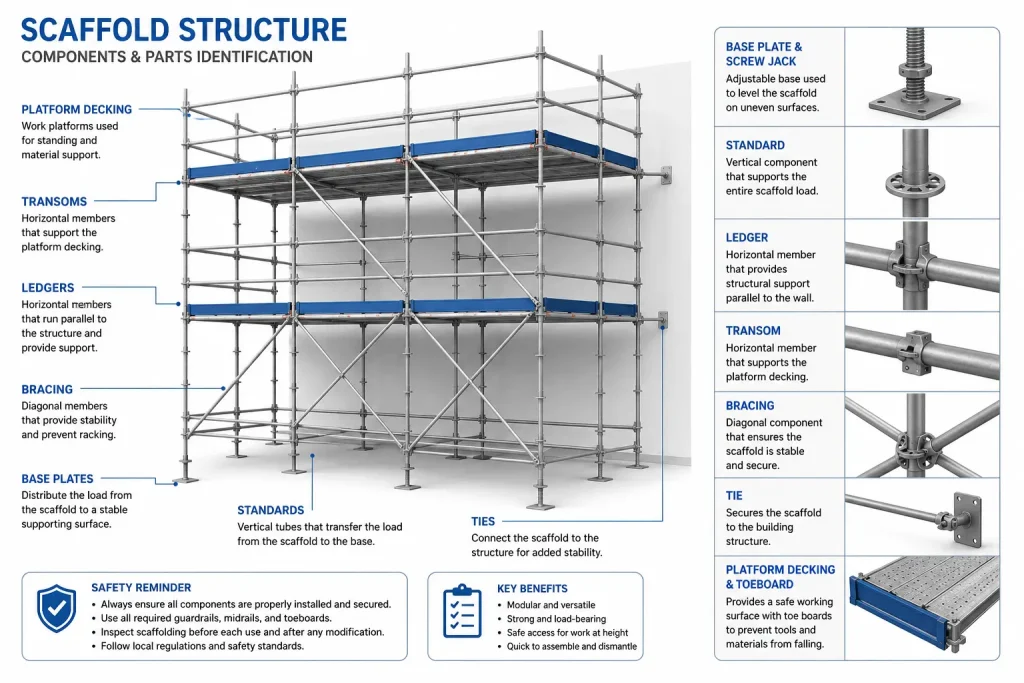
Scaffold stability depends on more than vertical supports. Bracing, ties, anchors, and correct assembly patterns help resist movement, sway, lateral loads, and overturning. Without proper bracing and ties, a scaffold can become unstable even if the platform itself appears level.
Ties are especially important for taller scaffolds or scaffolds installed against buildings. They connect the scaffold to the supporting structure and prevent excessive movement. The number, spacing, and position of ties must follow the scaffold design and relevant safety requirements.
Bracing should not be removed casually to create access or improve movement through the scaffold. Removing a brace can change the structural behaviour of the scaffold and reduce its stability. Any alteration should be carried out by competent personnel according to the scaffold plan.
Wind and weather can also affect scaffold stability. Sheeting, netting, or temporary coverings may increase wind load on the scaffold. If these are added after the scaffold is erected, the scaffold may need to be reassessed because the loading condition has changed.
Inspection Before and During Use
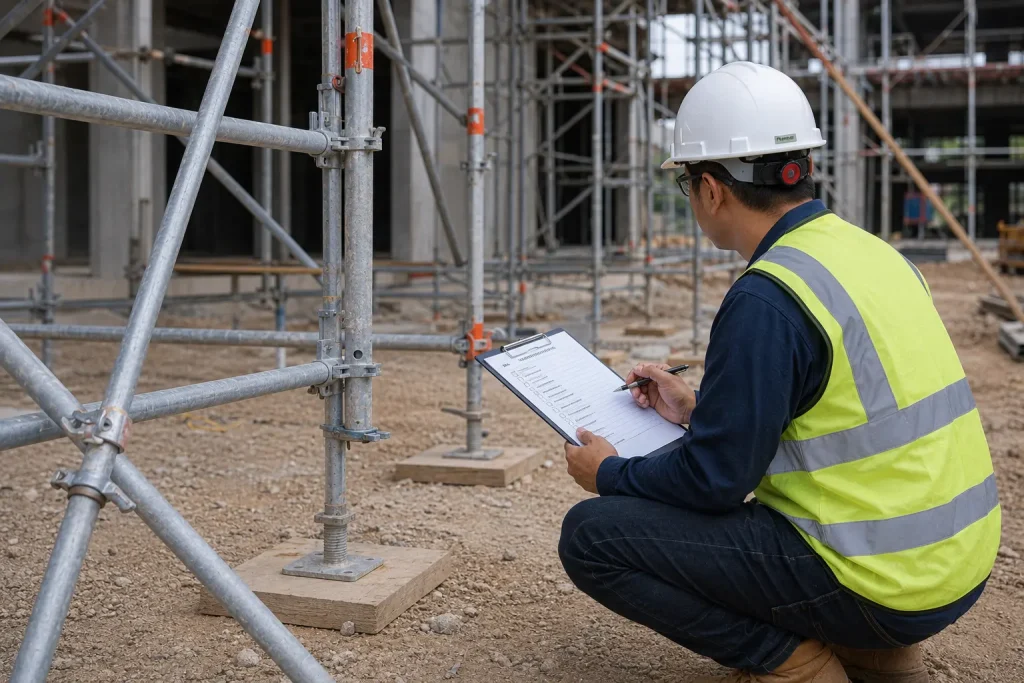
Scaffolds should be inspected before first use, after erection or alteration, after events that may affect stability, and at suitable intervals during the project. Inspection should cover the base, standards, ledgers, transoms, braces, ties, platforms, guardrails, access points, and any visible signs of damage or movement.
Inspection is not only a paperwork exercise. It is a practical safety control that identifies problems before workers are exposed to them. Common issues include missing guardrails, shifted boards, loose fittings, blocked access, damaged components, poor housekeeping, and unauthorised modifications.
Weather and site activity should trigger additional checks. Heavy rain, strong wind, nearby excavation, impact from vehicles, or material overloading can affect scaffold safety. A scaffold that was safe yesterday may not be safe today if site conditions have changed.
Workers should also be encouraged to report scaffold defects immediately. If a platform feels unstable, a guardrail is missing, an access ladder is loose, or the scaffold has been altered without approval, the area should not be used until it has been checked and made safe.
Competent Workers and Authorised Alteration
Scaffold erection, alteration, and dismantling should be performed by competent and authorised personnel. This is one of the most important scaffolding safety requirements because many serious scaffold incidents occur when untrained workers modify the structure to make their task easier.
A common problem on construction sites is unauthorised alteration. Workers may remove guardrails, shift boards, open ties, or adjust access points without understanding the structural effect. Even small changes can create hazards for everyone using the scaffold.
Competent scaffold personnel understand component use, bracing, ties, platform support, load limits, safe access, and dismantling sequence. Singapore’s Work at Heights Regulations define a scaffold as a temporary structure used for work access or to support work activities, which reinforces why scaffold work must be managed as part of a controlled safety system. (Singapore Statutes Online)
Site supervisors should make it clear that scaffold users are not allowed to alter the scaffold unless authorised. If changes are needed, the correct process is to request modification by qualified scaffold personnel and keep the scaffold closed or restricted until it has been inspected again.
Scaffolding Safety Requirements by Work Stage
Before Scaffold Erection
Before scaffold erection begins, the site team should define the work scope, platform height, access needs, loading requirement, duration of use, ground conditions, and surrounding hazards. This planning stage determines whether the scaffold type and layout are suitable for the job.
The erection area should be cleared and assessed. Nearby traffic, excavations, overhead power lines, unstable ground, drainage covers, and material storage areas should be considered. If the scaffold will be installed near public access or active site movement, exclusion zones and protection measures should be planned.
The scaffold components should also be checked before use. Damaged, corroded, bent, cracked, or incompatible components should not be used. Mixing incompatible scaffold systems can affect connection strength and overall stability.
If the job only requires temporary access at lower height, or if the access point changes frequently, the team should consider whether mobile access equipment would be more efficient. The safest option is the one that matches the work task and site conditions, not necessarily the most familiar option.
Also read: How to Build Scaffolding: A Step-by-Step Guide to Safe Erection and Use on Site
During Scaffold Use
During use, the scaffold should be kept within its intended load and working conditions. Workers should not overload platforms, climb on guardrails, remove components, block access points, or use makeshift extensions to gain extra height.
Housekeeping is a major part of scaffold safety. Loose materials, offcuts, tools, cables, wet surfaces, and waste can create slips, trips, and falling object hazards. A scaffold platform should be treated as a controlled work area, not a storage shelf.
Supervisors should monitor how the scaffold is being used, especially when nearby equipment, vehicles, or lifting operations are active. Scaffold safety does not exist separately from wider heavy equipment safety, because machinery movement, material handling, and site traffic can affect workers on and around the scaffold.
Communication between trades is important when several teams share the same scaffold. Electrical, façade, painting, and maintenance crews may have different access needs. Without coordination, workers may modify the scaffold informally, block access, or overload certain sections.
During Alteration and Dismantling
Scaffold alteration and dismantling can be as hazardous as scaffold erection. During these stages, platforms, guardrails, ties, and bracing may be removed in sequence, temporarily reducing stability. Only authorised personnel should carry out this work.
The area below and around the scaffold should be controlled during dismantling. Components, tools, and debris can fall if the work is not properly managed. Exclusion zones, signage, and communication with nearby workers help reduce struck-by risk.
The dismantling sequence matters. Removing ties, braces, or supports too early can make the remaining scaffold unstable. The work should follow the correct method and should not be rushed to clear the area quickly.
After alteration, the scaffold should be inspected before it is returned to use. Workers should not assume that a modified scaffold remains safe simply because it was safe before. Any structural change can affect access, platform security, load capacity, or fall protection.
Common Scaffolding Safety Mistakes to Avoid
Many scaffold incidents are linked to basic mistakes rather than unusual site conditions. Common problems include missing guardrails, incomplete platforms, poor base support, unsafe access, overloading, unauthorised alteration, lack of inspection, and poor housekeeping.
Another common mistake is using the wrong access equipment for the task. A fixed scaffold may be suitable for long-duration façade work, but it may be inefficient for short inspection jobs or isolated repair points. In those cases, aerial lift and boom lift equipment may provide safer and faster access if the ground conditions and operator requirements are suitable.
Workers may also underestimate the importance of weather. Strong wind, heavy rain, wet platforms, and soft ground can all affect scaffold safety. Outdoor scaffolds should be reassessed after adverse weather or any event that may affect stability.
The most effective way to prevent these mistakes is to treat scaffolding as a controlled temporary structure. It should have clear responsibility, defined access rules, inspection routines, load limits, and a process for reporting and correcting defects.
Choosing the Right Scaffold or Access Equipment
Scaffolding is useful when workers need a stable platform over a larger area or for a longer duration. It is commonly used for façade work, painting, masonry, inspection, repair, and building maintenance. The advantage is that multiple workers can access a wider work face without constantly repositioning equipment.
However, not every elevated task requires a fixed scaffold. If the work area is limited, short-duration, or changes frequently, mobile access equipment may be more efficient. Mobile scaffolding can be suitable for lower-height indoor or flat-surface work, while scissor lifts are practical for vertical access and boom lifts are useful for outreach and obstacle clearance.
The decision should be based on work height, platform size, duration, load, ground conditions, access route, and whether the worker needs vertical access or horizontal reach. If the project team is comparing access options, our guide on types of aerial work platforms gives a broader view of equipment used for elevated work.
Cost should not be considered separately from safety and productivity. The cheapest access method may become expensive if it causes delays, requires repeated modification, or creates unsafe work conditions. The right equipment is the one that allows the job to be completed safely, efficiently, and within site constraints.
Also read: What Is Mobile Scaffolding? Types, Uses and Safety
The Right Access Solution for Safe Work at Height
Scaffolding safety requirements are essential because scaffolds are temporary structures used in high-risk work environments. A safe scaffold must be properly designed, erected, supported, accessed, inspected, and used within its intended load limits. Guardrails, stable platforms, safe access, competent personnel, and regular inspection all play an important role in preventing falls, collapse, and falling object incidents.
For construction and maintenance teams, the key is to match the access method to the work task. Scaffolding may be the right choice for longer-duration work across a wide area. For mobile or short-duration access, other equipment may be more suitable depending on height, surface condition, and access constraints.
Our team can help you select suitable access equipment based on your working height, site conditions, movement requirements, and project duration. Explore our mobile scaffolding range or contact our team for practical advice and a clear quotation matched to your project requirements.