What Is a Forklift?
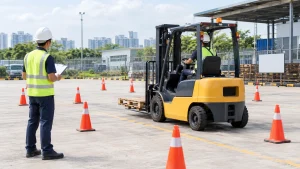
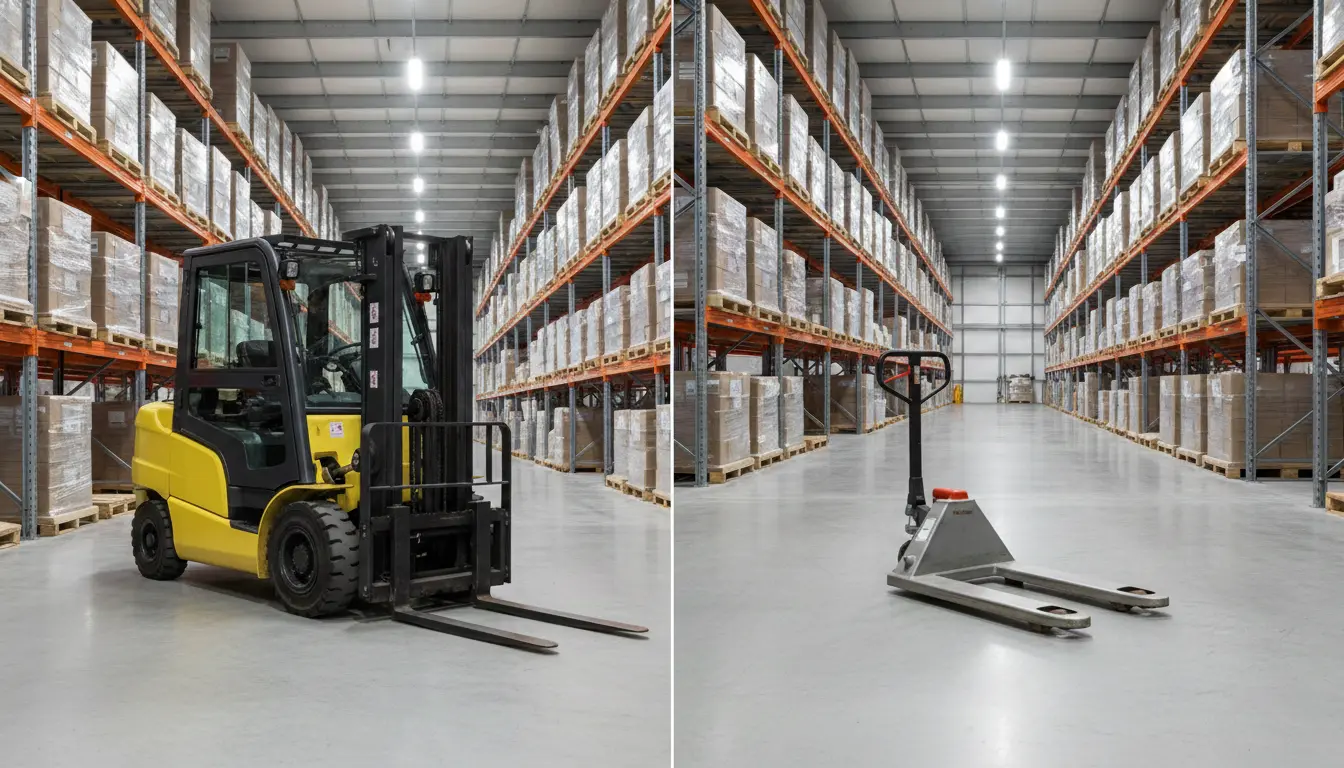
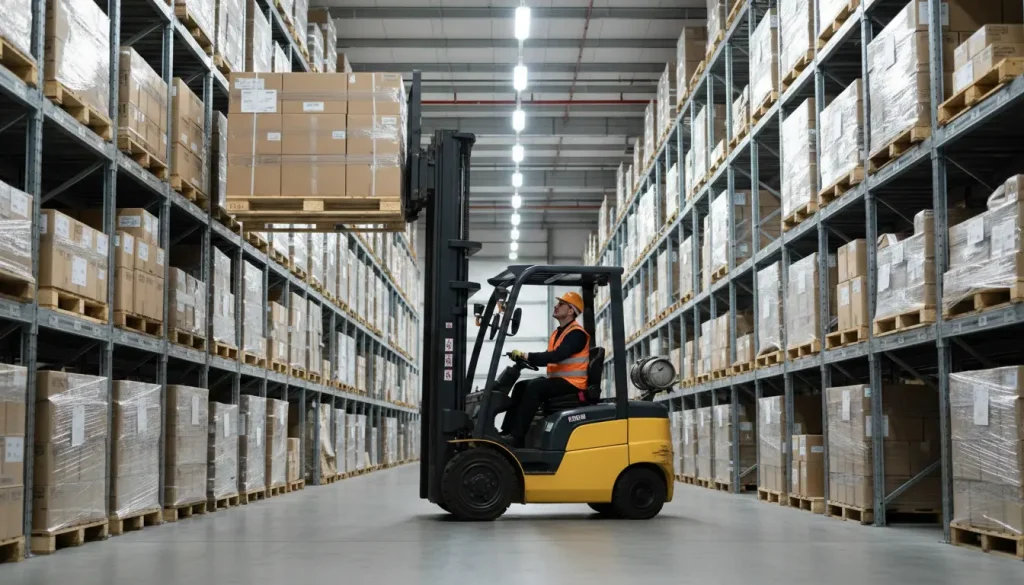 A forklift is a powered industrial truck equipped with a pair of front-mounted forks that can be raised and lowered to lift, transport, and stack loads at various heights. Forklifts are driven by operators seated in a cabin and are powered by diesel, LPG, gasoline, or electric batteries depending on the model and application.
Forklifts are built for heavy-duty work. They can lift loads ranging from 1,000 kg to over 5,000 kg, elevate pallets to significant heights, sometimes exceeding 6 metres, and operate across a wide range of surfaces including uneven terrain, ramps, and outdoor areas.
There are several types of forklifts, each designed for specific environments:
A forklift is a powered industrial truck equipped with a pair of front-mounted forks that can be raised and lowered to lift, transport, and stack loads at various heights. Forklifts are driven by operators seated in a cabin and are powered by diesel, LPG, gasoline, or electric batteries depending on the model and application.
Forklifts are built for heavy-duty work. They can lift loads ranging from 1,000 kg to over 5,000 kg, elevate pallets to significant heights, sometimes exceeding 6 metres, and operate across a wide range of surfaces including uneven terrain, ramps, and outdoor areas.
There are several types of forklifts, each designed for specific environments:
-
- Counterbalance forklifts, the most common type, designed for general warehouse and outdoor use
- Reach trucks, built for narrow aisles and tall racking systems
- Rough terrain forklifts, suited for outdoor and uneven surfaces such as construction sites
- Electric forklifts, ideal for indoor, emission-sensitive environments
Also read : Understanding Different Types of Cranes and Their Applications
What Is a Pallet Jack?
A pallet jack, also known as a pallet truck or pump truck, is a simpler device designed to lift pallets just enough to clear the floor and then transport them horizontally. Unlike a forklift, it does not elevate loads to height and is not designed for stacking. Pallet jacks come in two main variants:-
- Manual pallet jacks, operated entirely by hand using a hydraulic pump handle. The operator pumps the handle to raise the forks a few centimetres off the ground, then pulls or pushes the load to its destination.
- Electric pallet jacks, also known as powered pallet trucks or walkie stackers in some configurations. These use a battery-powered motor to move the load, reducing physical effort and allowing faster movement over longer distances.
Forklift vs Pallet Jack: Key Differences Explained
-
-
Lifting Height and Stacking Capability
-
This is the most fundamental difference between the two types of equipment.
A forklift can raise loads to heights of 3 metres, 5 metres, or even higher depending on the mast configuration. This makes it essential for operations that use vertical racking systems, multi-level shelving, or any kind of high-bay storage. A forklift can place and retrieve pallets from elevated rack positions with precision.
A pallet jack, by contrast, raises its forks only a few centimetres off the ground, just enough to clear the floor surface and move freely. It cannot stack loads vertically. If your operation requires any degree of elevated storage, a pallet jack simply cannot fulfil that function.
Verdict: Forklift wins clearly for any operation requiring vertical lifting or stacking.
-
-
Load Capacity
-
Forklifts are engineered to handle significantly heavier loads. Standard counterbalance forklifts typically carry between 1,500 kg and 5,000 kg, and heavy-duty industrial models can exceed this. The rated capacity is clearly marked on the machine’s data plate and is calculated in relation to the load centre distance.
Manual pallet jacks generally handle loads of up to 2,000–2,500 kg. While this is adequate for many general warehouse tasks, it falls short in industries dealing with heavy machinery components, construction materials, or densely packed industrial goods. Electric pallet jacks can sometimes reach higher limits, but they still lack the structural reinforcement and stability features that forklifts provide for lifting heavier loads.
Verdict: Forklifts offer superior load capacity, particularly for industrial and heavy-duty applications.
-
-
Manoeuvrability and Space Requirements
-
Here, the pallet jack holds a clear advantage. Manual and electric pallet jacks are compact and highly manoeuvrable. They fit through narrow aisles, tight doorways, and confined spaces where a full-sized forklift simply cannot operate. In small retail stockrooms, convenience store backrooms, or compact warehouses, a pallet jack is the practical choice.
Forklifts require wider turning radii and more generous aisle widths. Most standard counterbalance forklifts require aisle widths of 3.5 metres or more. Reach trucks reduce this requirement somewhat, but even they need more space than a pallet jack.
For facilities that were not designed with forklift operations in mind, such as older shophouses or small commercial units common in Singapore, a pallet jack is often the only viable option for internal goods movement.
Verdict: Pallet jack wins for tight, confined, or space-restricted environments.
-
-
Operator Requirements and Training
-
Operating a forklift requires formal certification. In Singapore, operators must hold a valid Forklift Operator Licence issued by the Ministry of Manpower (MOM) or an equivalent recognised qualification. Obtaining this licence involves both theoretical training and practical assessment. This adds to hiring costs and scheduling constraints, as only certified personnel can legally operate a forklift.
Manual pallet jacks, on the other hand, generally require only basic operational familiarisation. While employers still have a duty of care to train staff in safe usage, there is no formal licensing requirement. Electric pallet jacks may require additional training given their powered nature, but the barrier to entry is significantly lower than forklift certification.
Verdict: Pallet jack has a lower training and compliance burden. Forklift requires licensed operators.
-
-
Operating Environment
-
Forklifts are versatile across environments. Diesel and LPG-powered models operate effectively outdoors, on construction sites, loading docks, and uneven terrain. Electric models are well-suited for indoor use with their zero-emission operation. Rough terrain forklifts handle off-road conditions on infrastructure and construction projects.
Pallet jacks perform best on flat, smooth, hard floor surfaces. They are not suitable for outdoor use, ramps beyond a gentle gradient, or uneven ground. Even minor surface irregularities can make a heavily loaded pallet jack difficult and unsafe to manoeuvre.
Verdict: Forklifts are significantly more versatile across different surfaces and environments.
-
-
Cost, Purchase, Rental, and Running Costs
-
Cost is often a decisive factor, especially for small and medium businesses.
Manual pallet jacks are among the most affordable pieces of warehouse equipment available. New units can cost a few hundred dollars, and they require virtually no maintenance beyond occasional hydraulic fluid top-ups and wheel checks.
Electric pallet jacks sit in the mid-range, more expensive than manual units but far less than forklifts. Battery maintenance and charging infrastructure add to ongoing costs.
Forklifts represent a considerably higher investment. Purchase prices vary widely depending on type, capacity, and fuel source, but even entry-level electric forklifts represent a significant capital commitment. Running costs include fuel or electricity, regular servicing, tyres, and operator licensing.
For businesses that need forklift capability without the capital outlay of a purchase, forklift rental is a practical and increasingly common alternative, particularly for project-based or seasonal requirements.
Verdict: Pallet jack is far more cost-effective for light, short-distance horizontal movement. Forklift is a larger investment but delivers far broader capability.
-
-
Productivity and Speed
-
In a large warehouse or distribution facility where goods need to move quickly over longer distances, electric forklifts and powered pallet movers significantly outperform manual alternatives. Forklifts in particular allow a single operator to handle large volumes of stock quickly, simultaneously moving loads and placing them at height in a single pass.
Manual pallet jacks slow down operations when distances are long or loads are heavy, as the physical exertion required increases fatigue and reduces throughput over a full shift.
For high-volume logistics operations, such as those supporting supply chain, e-commerce fulfilment, or cold chain distribution, forklift efficiency is a major operational advantage.
Verdict: Forklifts offer higher throughput in large-scale operations. Pallet jacks are sufficient for small, low-volume environments.
Also read : Types of Material Handling Equipment Used in Industrial Operations
Safety Considerations: Forklift vs Pallet Jack
Both forklifts and pallet jacks present safety risks when used improperly. However, given the weight, height, and power involved, forklifts carry a considerably higher risk profile and require more rigorous safety protocols. Common forklift safety requirements include:-
- Licensed and trained operators only
- Pre-operation inspection checklists
- Clear pedestrian exclusion zones
- Load limit compliance
- Overhead clearance awareness
- Seatbelt usage and stability awareness
-
- Ensuring the load is stable and within rated capacity
- Checking floor surface before moving
- Keeping feet and hands clear of the forks
- Not riding on a pallet jack unless it is specifically designed for it
- Avoiding excessive gradient
When to Use a Forklift
A forklift is the right choice when your operation involves:-
- Stacking and retrieving loads at height, warehouses with racking systems above 2 metres
- Heavy loads, consistent handling of pallets exceeding 2,000 kg
- Outdoor or rough terrain operation, construction sites, loading yards, or uneven surfaces
- High throughput requirements, large distribution centres or logistics hubs
- Mixed lifting tasks, combining horizontal movement with vertical positioning
When to Use a Pallet Jack
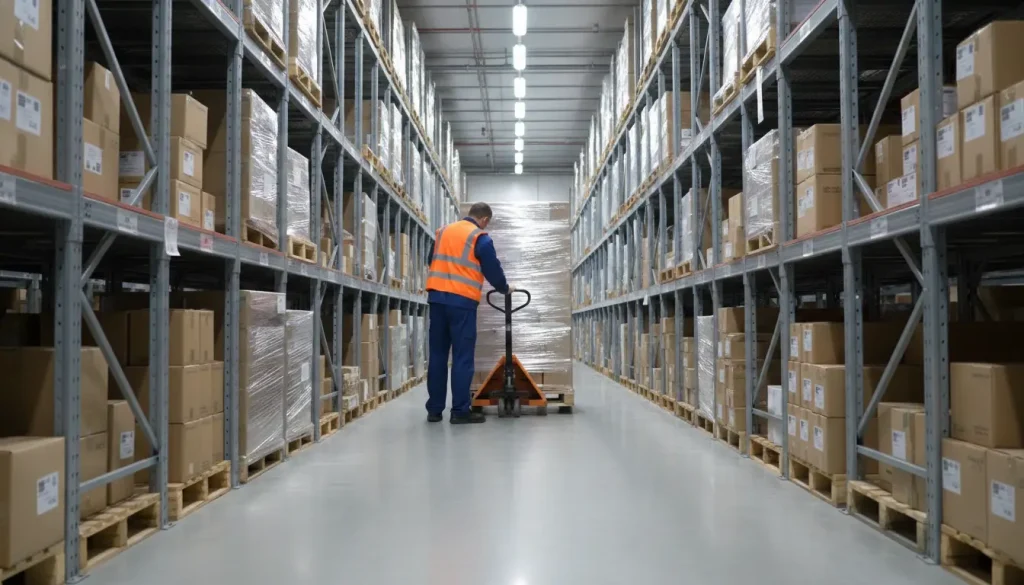 A pallet jack is the right choice when your operation involves:
-
- Short-distance horizontal movement only, moving pallets between receiving docks and storage areas on the same floor level
- Limited space, narrow aisles, small stockrooms, or environments a forklift cannot access
- Light to moderate loads, standard palletised goods under 2,000 kg
- Low frequency of movement, small operations where a forklift would be underutilised
- Budget constraints, where the cost of a forklift purchase or rental cannot be justified
Can You Use Both?
Absolutely. In many operations, forklifts and pallet jacks complement each other rather than compete. A forklift may handle inbound unloading and high-rack placement, while manual or electric pallet jacks handle the last-metre movement within aisles or to packing stations. This combination optimises both cost and productivity by matching the right equipment to the right task. Effective fleet planning, determining how many of each type of equipment is needed and in what configuration, is an important part of warehouse design and logistics management. This is especially relevant for businesses in growth phases or those establishing new facilities. Understanding broader material handling considerations, including how different equipment categories like aerial working platforms and access equipment fit into complete site operations, can support more holistic planning.Choosing Between Forklift and Pallet Jack: A Summary
| Factor | Forklift | Pallet Jack |
| Lifting Height | Up to 6 m+ | A few centimetres only |
| Load Capacity | Up to 5,000 kg+ | Up to 2,500 kg |
| Stacking Ability | Yes | No |
| Indoor/Outdoor | Suitable for both | Indoor, flat surfaces only |
| Operator Licence | Required (MOM) | Not required |
| Space Needed | Requires wide aisles | Suitable for narrow spaces |
| Cost | High | Low to moderate |
| Maintenance | More complex | Minimal |
| Best For | Heavy, high-volume, multi-level handling | Light, short-distance, ground-level use |
Also read : Parts of a Crane: Key Components and How They Work
Get the Right Equipment for Your Operation
The forklift vs pallet jack decision ultimately comes down to what your operation genuinely demands, in terms of load weight, lift height, environment, budget, and throughput. Neither is universally superior; each excels in the context it was designed for. The key is matching equipment to operational reality rather than defaulting to what is familiar or cheapest. For businesses managing warehouses, construction projects, logistics hubs, or industrial facilities in Singapore, working with an experienced equipment provider ensures you get the right machine, whether that is a diesel forklift for a construction yard, an electric model for an indoor warehouse, or a mix of both forklifts and pallet equipment for a full distribution operation. Explore RR Machinery’s full range of forklift solutions available for sale and rental, or contact our team for practical guidance and a clear quotation tailored to your specific requirements.